Connect with us

Brands/Products

Melcom Intensifies Face Masks Protocols in Shops

Published

on

Melcom

The management of Melcom Group has said it will strictly enforce face/nose masks protocols in all its shops across Ghana.

The joint Group Managing Director of Melcom Group, Mr Mahesh Melwani, made this disclosure, stressing that this is to help stop the spread of COVID-19 among its customers and staff.

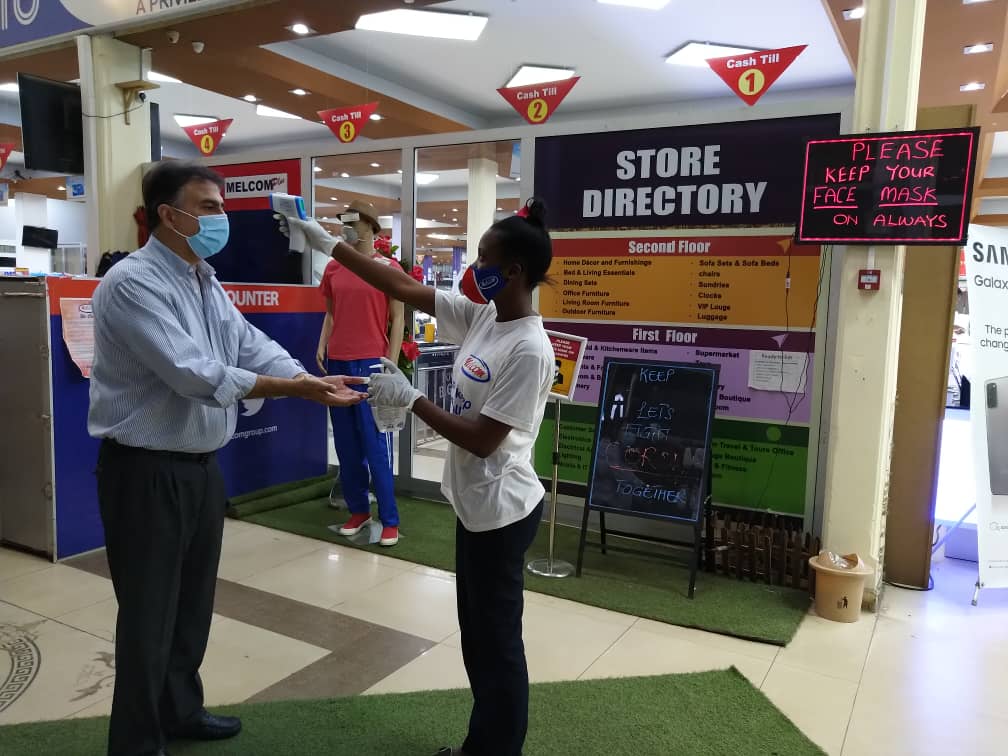
By this, shoppers who go to any of the Melcom shops nationwide are now required to wear nose or face masks or be denied entry.

He further said apart from the compulsorily wearing of masks, customers are also ensured to strictly observe physical distancing, washing of hands with soap under running water, rubbing their hands with sanitizers and have their temperature taken before they can get access into the shops.

“We have given instructions to, and we keep reminding all our shop managers to strictly enforce these containment measures and those who do not wear facemasks will be refused entry,” Mr Melwani said.

He averred that Melcom Group, which has 45 outlets and supermarkets across the country, will continue to enforce these strict measures, although very uncomfortable to shoppers, just to save lives.

“We now appreciate that since we started enforcing the wearing of facemask from the beginning of the outbreak in Ghana, 99 per cent of customers come having one. People now understand that wearing mask is not only for their safety but the safety of all of us,” he said.

Mr Melwani said Melcom was the first to introduce hand-washing to curb the spread of COVID-19 among its customers and employees, as they do well to encourage customers, in the early stages of the pandemic to wear masks.

He also said Melcom had procured several protective equipment including about 8,000 N95 facemasks and pocket hand-sanitizers for its staff nationwide.

“We also have instructed our staff to constantly clean and disinfect the lifts, trolleys, railings on stair cases and ramps. We are doing our level best in hammering this into all our staff that this must be done all the time.

“We also implemented measures such as having queue markers and regulating entry to ensure that the number of customers inside remains manageable,” he said.

This was acknowledged by the President of Ghana, Mr Nana Akufo-Addo, in his Address to the nation on Sunday, April 26, 2020 wherein he tasked all other business to emulate Melcom.

On their social responsibility, Mr Melwani said Melcom had undertaken many corporate social responsibility activities to improve the lots of Ghanaians including the donation of 1,343 units of blood to the various blood banks earlier this year involving staff and members of the public in 22 outlets of Melcom nationwide.

A donation of veronica buckets, liquid soaps, sanitizers, hand and face towels we were made to Korle bu and 37 Military hospitals.

They have also imported and donated portable toilets and accessories to be installed for selected schools valued at over GHC150,000 a donation of GH100,001.00 was given to the COVID-19 National Trust Fund. With all this Melcom has also kept up and is current with its tax obligations with GRA.

The company also donated numerous pocket hand-sanitizers to a number of public institutions including the Ghana Journalists Association (GJA), Ghana Revenue Authority (GRA), Ghana Investment Promotion Centre (GIPC), Ghana Immigration Service, Office of the President< Ghana Police service, Fire Services, SNNIT, ICU, various hospitals including Korle Bu, Ridge, 37 Military, Holy Trinity Hospitals ,Chief Imam and several of their banking partners.


Click to comment

Leave a Reply

Your email address will not be published. Required fields are marked *

Brands/Products

Lagos Raises Alarm Over Circulation of Contaminated Palm Oil

Published

on

contaminated palm oil

By Adedapo Adesanya

The Lagos State Consumer Protection Agency (LASCOPA) has raised concerns over the circulation of adulterated palm oil in markets across the state, warning residents to be cautious when purchasing the product.

General Manager of LASCOPA, Mr Afolabi Solebo, said complaints from consumers and market surveillance operations revealed that some traders were selling contaminated and artificially enhanced palm oil to unsuspecting buyers.

According to him, the adulterated products may contain harmful substances such as candle wax, chemicals, dyes and other impurities capable of causing serious health complications.

Mr Solebo warned that consumption of such products could lead to food poisoning, stomach disorders, tissue and liver damage, as well as other long-term health risks.

He advised consumers to examine palm oil carefully before purchase by checking for unusual colour, offensive odour, excessive thickness, sediments or any suspicious appearance that may suggest contamination.

The LASCOPA boss also urged residents to patronise only trusted vendors and insist on quality products at all times, according to a statement shared on X (formerly known as Twitter).

While reaffirming the state government’s commitment to consumer protection, Mr Solebo disclosed that the agency had sealed a shop allegedly selling adulterated palm oil at Idutafa Lane, off Oluwa Street near Amodu Tijani Oluwa Mosque in Lagos Island Local Government Area.

He warned traders and distributors involved in the sale of adulterated palm oil to desist immediately or face sanctions in line with consumer protection laws in the state.

The agency further appealed to members of the public to report suspected cases of adulterated food products, deceptive trade practices and other consumer rights violations through its official communication channels for investigation and enforcement action.

LASCOPA added that it would continue market monitoring and consumer sensitisation efforts to ensure residents have access to safe and quality products across the state.

Continue Reading

Brands/Products

NAFDAC Declares Bon Bread Safe for Consumption

Published

on

Price of Bread

By Modupe Gbadeyanka

The National Agency for Food and Drug Administration and Control (NAFDAC) has declared that Bon Bread, which had created a controversy after a review by a consumer over a month ago, is safe to consume.

In a statement signed on Sunday by the Director General of NAFDAC, Mrs Mojisola Adeyeye, it was stated that investigations conducted on the safety of the product confirmed that it was not harmful.

A woman named Ms Love Dooshima had posted a video on social media last month claiming that one of the breads in her possession remained free from mould for some weeks, questioning this abnormally.

In her video, she did not mention the name of the bread, but Bon Bread claimed she liked comments mentioning its name in the post, triggering a lawsuit.

In the statement on Sunday night, NAFDAC said it conducted an inspection of the company’s bakery facility in Abuja and collected bread samples from both the production site and the open market for laboratory analysis.

It was revealed that the bread contained calcium propionate, an approved preservative commonly used in bread production, within the permissible limits specified by the Codex Alimentarius, the internationally recognised food standards framework.

According to the agency, the manufacturer of Bon Bread, Food & Food Integrated Company Limited, is in compliance with regulatory standards.

It was stated that although the complainant did not identify the brand, the manufacturer of Bon Bread responded publicly, stating that the product in question was theirs and that the allegation was misleading.

“Laboratory analysis further confirmed that the bread samples did not contain objectionable substances, including bromate or non-nutritive sweeteners.

“NAFDAC also confirmed that the company has maintained regulatory compliance since commencing operations in 2006 and has successfully undergone several licence renewals without penalties or product recalls,” parts of the statement read.

NAFDAC assured “the public that Food & Food Integrated Company Limited is not in violation of any NAFDAC regulation,” encouraging consumers “to report concerns relating to regulated products through any NAFDAC office nationwide or call the agency’s call centre to enable prompt and evidence-based investigation of complaints.”

Continue Reading

Brands/Products

Tony Elumelu-Backed Redtech Ranks 32nd in FT Africa Fastest Growing Companies List

Published

on

Redtech

By Adedapo Adesanya

Redtech, a technology company backed by Heirs Holdings, has been named in the Financial Times (FT) Africa’s Fastest Growing Companies 2026 list.

The Tony Elumelu-backed startup ranked 32nd out of 130 high-growth companies and also secured a position among Africa’s top 15 fastest-growing fintech companies in its debut appearance on the annual FT/Statista ranking.

Produced by the FT in research partnership with Statista, the ranking identifies Africa’s fastest-growing companies based on compound annual growth rate (CAGR) in revenue between 2021 and 2024. Companies also had to meet additional criteria, including minimum revenue thresholds, independence and primarily organic growth. Redtech’s inclusion provides independent validation of its growth as an African payment infrastructure company.

The recognition comes as Redtech’s flagship platform, RedPay, continues to scale across physical and digital payment channels. Through RedPay, the company enables businesses to collect, process, confirm, reconcile, disburse, and manage funds through secure, scalable technology built for African commerce.

Last week, the company announced a rare fintech-bank-telco alliance with MTN’s mobile fintech unit and UBA, to expand cardless payment access for consumers and merchants across Nigeria.

Speaking on the development, Mr Elumelu, the Group Chairman of Heirs Holdings, said, “Africa’s next growth era will be powered by entrepreneurs, enterprises, and the infrastructure that enables them to succeed. Redtech’s recognition among Africa’s fastest-growing companies demonstrates what is possible when we invest in solutions built for Africa’s realities. Through RedPay, Redtech is helping merchants, fintechs, and financial institutions transact with greater speed, security, intelligence, and control. This is Africapitalism in action: building profitable, sustainable businesses that create prosperity across Africa.”

The numbers have also backed up Redtech’s growth. This is visible across four strategic areas, including a boost in transaction as the company processed $27 billion (N37.2 trillion) to date, more than three times the over $8.9 billion (N12 trillion) processed by the end of 2024; it has deployed 55,000 RedPay POS terminals within 16 months across merchant locations in Nigeria, supporting payment acceptance across sectors including hospitality, energy, banking, fintech, retail, utilities, and enterprise services; while its infrastructure supports payments in five UEMOA countries – Benin, Burkina Faso, Côte d’Ivoire, Mali, and Senegal.

Redtech operates with key regulatory approvals, including licences from the Central Bank of Nigeria as a Payment Terminal Service Provider (PTSP), Payment Solution Service Provider (PSSP), and Super Agent, enabling the company to provide POS, payment gateway, and agency banking services. The company also holds relevant Nigerian Communications Commission (NCC) authorisation for communications-enabled value-added services.

As part of its growth roadmap, Redtech is working to expand its payment infrastructure capabilities across African markets, with a long-term ambition to support merchant collections and financial technology services in 29 African countries within the next year.

Adding his input, Mr Emmanuel Ojo, CEO of Redtech, said: “Redtech’s inclusion in the Financial Times Africa’s Fastest-Growing Companies ranking recognises the infrastructure we are building and the African businesses that rely on it every day. At Redtech, growth is not only about transaction value or market reach; it is tied to a belief that when African businesses have payment systems they can trust, they are better placed to trade, serve customers and expand with confidence.

“That is the Heirs Holdings Africapitalism philosophy in practice – private-sector execution building the rails for African prosperity. Our focus is on strengthening the infrastructure that allows businesses across the continent to collect, pay, and grow.”

Continue Reading

Trending