Brands/Products
Verve Vows to Deepen Financial Inclusion in Nigeria
**Controls 95% Market Share in Gambia
By Adedapo Adesanya
Nigeria’s leading electronic paynent platform launched by Interswitch Group, Verve, celebrated its 10th year of operating in the country on Friday, September 27, 2019.
Marking the occasion with a media parley in Lagos, the company spoke on the journey so far, the challenges that followed the innovation, and what it expects to achieve in the future.
Speaking on the Verve story, the Verve International Divisional CEO, Mr Mike Ogbalu III, expressed his excitement about this milestone occasion, saying the idea was born out of the need to serve the general public.
He noted that when the debit based innovation came into existence, Nigerian banks were skeptical about its ability to serve the average customer.
According to Mr Ogbalu, Access Bank and the defunct Intercontinental Bank aligned themselves with the Verve vision and showed more belief in the dream when the idea was sold to them.
He praised these two financial institutions for believing in the innovation which led to the issuance of Verve cards by Nigerian banks, making it possible for the indigenous brand to compete well with other international competitors.
He further said with the introduction of Verve instant issuance technology into the market, bank activity rose drastically as a result of customers being able to get their personalised debit cards on time.
Mr Ogbalu said that despite the competitiveness amid the economic challenges, Verve will continue to evolve as its cards were now issued as both physical and virtual systems in Nigeria and 12 countries across the African continent.
“It is incredible to think about it that a brand that started here in Nigeria is solving problems across Africa.
“With Verve, we are taking a piece of Nigeria to the world,” he added.
Mr Ogbalu further said that Verve has found its way across the international payment space and had even beaten the two year expectation set for it and hopes to expand more.
On his part, the Founder and General Managing Director of Interswitch Group, Mr Mitchell Elegbe, said that Verve had laid down the foundation and is currently being issued in over 20 countries on the continent
He noted that the company had a market share of 95 percent in Gambia and was similarly making name in Kenya and other countries.
According to Mr Elegbe, Verve had also gone global with its launch in New York and is accepted in over 185 countries in the world.
Business Post reports that at the media parley, which featured a panel discussion moderated by Mr Ogbalu III, Verve noted that it was at driving for more financial inclusion in line with the policies on the Central Bank of Nigeria while making electronic payments accessible and affordable, and also ensuring the drive for the acceptance of electronic payments in a cash driven economy.
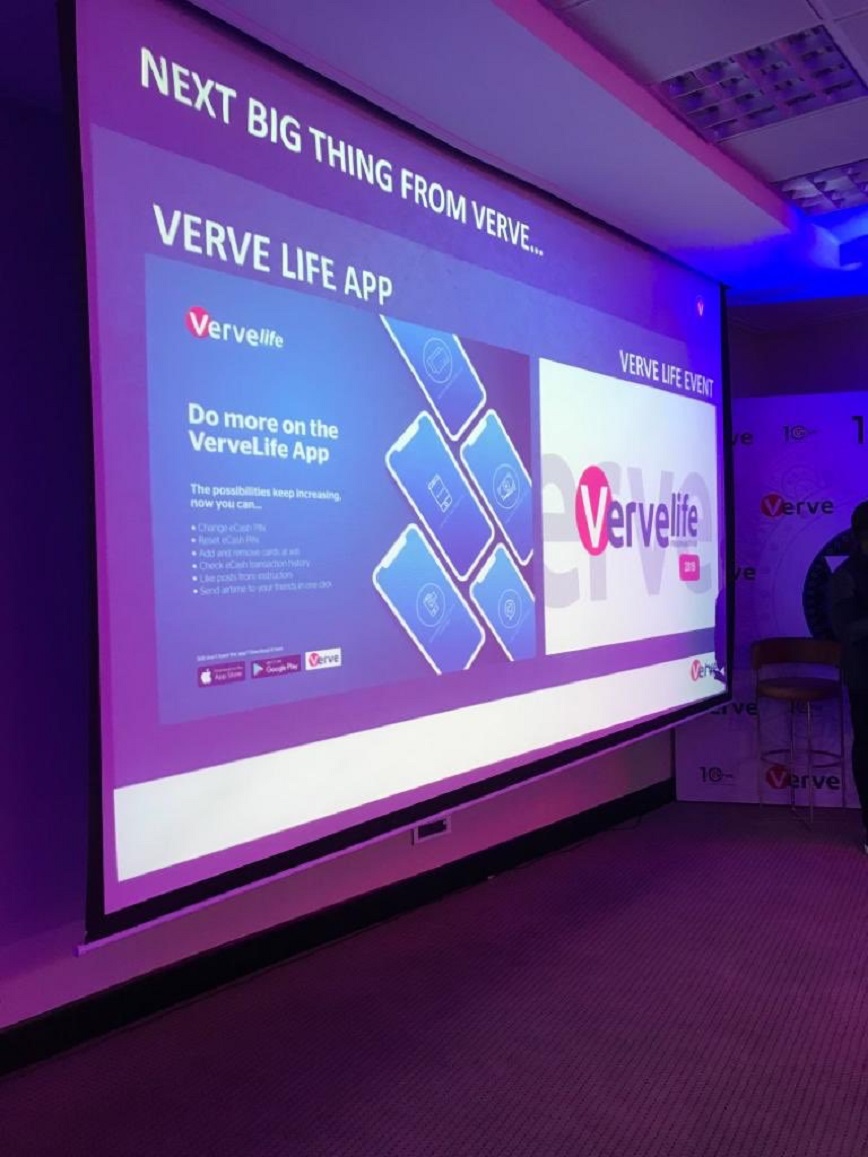
There was also a deliberation on the disruption of telcos in offering financial services. The event also featured the launch and test of the Verve Life Application.
Brands/Products
Airtel Nigeria Expands Retail Footprint with 350 New Experience Centres
By Modupe Gbadeyanka
As part of efforts to expand its national retail footprint, Airtel Nigeria has rolled out 350 of the planned 500 premium experience centres designed to bring faster, more convenient service closer to millions of Nigerians.
Built as compact, high-efficiency touchpoints, the newly launched shops are designed to enable subscribers complete all transactions such as Home Broadband, Fibre and Outdoor Units Subscription, Postpaid Plan Subscription, Enterprise Applications Enquiry and Subscription, as well as Prepaid Product services such as SIM registration and Data Plan purchase, other enquiries and comprehensive account support.
They have been integrated into Airtel Nigeria’s broader customer experience agenda, which have seen the company continue to invest in digital self-service platforms, AI-powered customer support, nationwide customer forums, and significant network expansion across the country.
The rollout emphasises the organisation’s continued investment in customer experience and responds directly to feedback from customers seeking quicker access to everyday services without the longer waiting times that may be associated with larger retail centres.
At a symbolic launch held at City Mall, Onikan, Lagos, the Director of Sales and Distribution for Airtel Nigeria, Mr Joypratip Sengupta, said, “Our goal is to demonstrate our dedication to exceptional quality of service, and these new shops, by their design, location, and equipment fit right within our goal to deliver superior service to every one of our customers.”
He added that the expansion reflects Airtel Nigeria’s belief that excellent customer experience goes beyond technology to ensuring customers can receive support whenever and wherever they need it.
“Our business at Airtel is to ensure that we bring our services closer to our customers, and everything we do is centred on putting the customer first. These experience centres are open to help customers carry out their transactions faster and with greater ease.
“Whether you want to replace a SIM, purchase one of our routers, recharge airtime or data, or resolve any service issue, you can now do so more conveniently and closer to where you are,” he further stated
He explained that the initiative represents a significant update to Airtel’s retail strategy, placing greater emphasis on accessibility, speed, and convenience.
“These express shops are designed to reduce traffic at our larger shops while giving customers faster access to the services they need. More importantly, they reinforce our vision of building the most accessible customer service network in Nigeria. As the telecom operator with the country’s largest retail footprint, we will continue expanding into more neighbourhoods, making it easier for customers to connect with Airtel wherever they are,” Mr Sengupta noted.
In her remarks at the launch, the Head of Shops and Retail Postpaid Business at Airtel Nigeria, Ms Lynda Amechi, disclosed that the new retail model was born from listening to customers and reimagining how Airtel delivers its services.
“At Airtel, some of our best ideas come directly from our customers. One of the recurring concerns we received was the time customers sometimes spent waiting at our larger experience centres, even when they only needed simple transactions completed.
“We listened carefully and realised that many of these requests could be resolved within minutes if we brought our services closer to the communities where customers live and work.” She said.
Brands/Products
Starbase Technologies Launches Yolly to Allow Creators, Viewers Earn Money
By Modupe Gbadeyanka
A new social entertainment platform designed to redefine how people participate in the digital economy by rewarding users for watching, streaming, and creating content has been launched by Starbase Technologies.
The platform, Yolly, features a rich spectrum of content spanning entertainment, sports, lifestyle, education, technology and live events.
The initiative introduces a new approach to online participation by recognising that everyone who contributes to the internet deserves the opportunity to share in the value they help create.
Designed for today’s upwardly-mobile creator economy, the platform enables viewers, creators and brands to participate in a trusted digital ecosystem where meaningful engagement is recognised and rewarded.
Yolly was launched to create value for every participant in its ecosystem through Stars, its native digital rewards currency, which users accumulate through meaningful participation across watching, streaming and creating content.
Unlike conventional social platforms, where monetisation is often reserved for creators with established audiences, Yolly enables creators to earn from their very first stream, removing follower thresholds and equipping emerging talent with features such as gifting, Boosts from day one and the Founder Creator badge to help them grow their communities.
Viewers, meanwhile, can earn Stars simply by watching the content they love, with rewards available from their very first session, under the watch+ category.
For brands, Yolly replaces impression-based advertising with a transparent model built on verified, engaged attention. Supported by per-minute performance metrics, real-time dashboards and brand-safe controls, the platform enables businesses to measure engagement more accurately while connecting with audiences in a trusted digital environment.
The Head of Business for Yolly, Mr Emeka Okenwa, said the platform’s rewards economy has been designed to prioritise wholesome content over viral moments while creating meaningful opportunities for everyone who contributes to the digital ecosystem.
“The platform has been developed on the premise that the future of the creator economy should be more inclusive, more rewarding, and built around genuine communities rather than algorithms alone,” he added.
Mr Okenwa noted that Yolly was built on the principle that social platforms should encourage wholesome, family-oriented content while giving viewers, creators and brands a safe environment to connect, create and grow.
Brands/Products
How Clearer Product Visuals Help Small e-Commerce Brands Look More Trustworthy
A friend of mine runs a small online shop that sells handmade ceramics. Like many independent sellers, she does almost everything herself. She makes the products, photographs them and packs every order.
Hiring the professional photographer has never really fit her budget. So, she relies on her phone for product photography.
Her shop had been running smoothly, but the momentum behind sales seemed to have slowed. She wasn’t getting negative feedback, yet she felt more people were visiting the site than actually buying. She assumed pricing or competition was the problem, and asked me to take a look.
After spending some time browsing her store, one thing stood out right away.
Products themselves looked beautiful—the photos didn’t do them justice.
Some images appeared slightly soft, while others had a warm yellow tint from indoor lighting. A few close-up shots didn’t capture the texture of the glaze that made each piece unique.
Once I pointed it out, she admitted she had noticed the same issues but didn’t think they mattered much.
Her view was simple: if the product was good, customers would see that eventually. But that is actually not true.
Why product visuals matter more than most sellers expect
When customers shop online, product photography carries most of the weight.
Shoppers typically decide in seconds whether to stay on a page or move on. The images that appear flat, inconsistent, or poorly lit can undermine trust in the entire store, regardless of how strong the actual products are.
Professional brands put a lot of money into product photography, and editing to keep every image looking consistent. Most independent sellers don’t have those resources. So, they depend on a phone camera, available daylight, and a simple home setup.
This was exactly the situation with my friend’s products. They looked great in real life, but put next to other products, her photos made them look like low-quality items.
Testing a different approach
Instead of reshooting everything, she started with what was already live on her site.
She picked a few product images that represented her main listings. Two were ceramic mugs taken on a cloudy day near a window. Lighting in these shots was flat, and the colors were greyish. The glazing, which appeared richer in reality, was somewhat less vivid in the photographs.
Another image was a bowl shot under warm kitchen lighting. That one had the opposite issue. The tone shifted too yellow, which made the white glaze look closer to cream instead of neutral white.
She ran the mug photos through Wink’s AI image enhancer to see if they could be improved without changing the actual product or reshooting anything.

There were no dramatic differences in a flashy way, but we noticed a change when the two were compared. There was an improvement in the balance of colors, and the grey tone decreased.
The surface texture of the glaze also became easier to see, which mattered because that texture is part of what makes handmade ceramics appealing.

The other bowl photo improved in a similar way.
The warm cast pulled back toward something neutral. Small details that were slightly lost before became easier to notice.

We first came across Wink while looking for simple tools that could help my friend improve the photos on her ceramic store without needing a full reshoot. The early results were good enough that she decided to update more of her product catalog.
A simple workflow that worked for her

Comparing the outcome of her efforts, she did not want to overthink things. She concentrated on the items which had the most clicks instead of trying to edit everything else.
First, she worked on the main pictures making the colors accurate without making anything blurry or dark because of improper lighting. Next, she improved several short videos in order for customers to see how the glaze looked.
Before replacing the images on her store, she compared the updated versions with the originals on both her phone and laptop. The changes were subtle, but the product pages felt much more consistent.
The biggest benefit wasn’t that the products suddenly looked different.
They looked more like they did in real life.
The handmade details were easier to see, the colors felt more accurate, and the overall presentation gave the store a more polished appearance. She also avoided spending another weekend photographing products she’d already shot once.
Who should actually try this

- Etsy and Shopify sellers: If you take your own photos, this is the quickest upgrade you can make. Product pages look better. Ads look better. Social posts look better.
- Dropshippers and POD brands: Supplier photos are often low-res or inconsistent. Clean them before use. Your store will look more original.
- Marketers running UGC ads: Creator videos are gold, but often noisy or soft. Quick cleanup makes them ad-ready without a re-shoot.
- Makers with archives: Have 2020 product photos that still get traffic? Enhance them instead of re-shooting discontinued SKUs. This isn’t for luxury brands with art directors. It’s for the rest of us.
The takeaway for small brands
Buyers don’t read first. They look.
If your visuals are blurry, dark, or inconsistent, you lose sales before the description loads. You don’t need a studio. You need your current assets to be clear.
Wink makes that practical. It took my “amateur” mug photo and made it professional enough to sell. No new gear. No learning curve.
Test it on your worst product image. For a small business without a studio or a large budget, that’s a practical improvement worth making.