Connect with us

Economy

5 Website Fails Your Business Should Avoid

Published

on

By Adeniyi Ogunfowoke

Businesses today now consider owning a website a necessity rather than a luxury. This is because they recognize the impact an effective website will have, not only, on their businesses but also publicity. This said, there are some business websites that never attract traffic let alone customers. This may be due to some avoidable mistakes. What are these mistakes? Jumia Travel shares some of them.

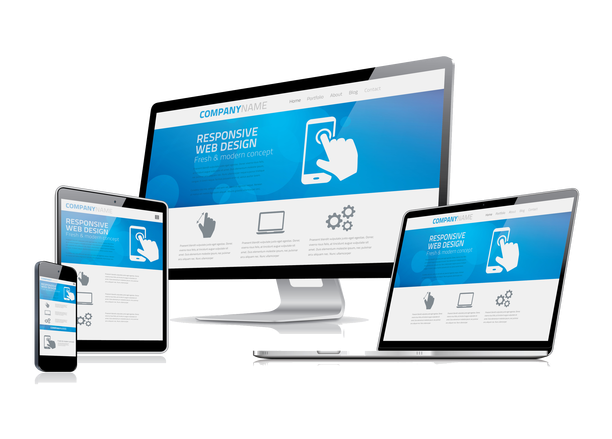
It is not mobile friendly

What is the essence of a website if it is not mobile friendly? Mobile phones that are internet savvy are widely used now. It is, therefore, highly possible that mobile users will spend more time on their phones. In addition to this, mobile friendly websites are responsive and the conversion rate is very high. In order to ensure that your website is mobile friendly, use a responsive design, keep your layout simple and test it using tools like Google’s Search Console Mobile-Friendly Test.

Lacks basic information

Your website should contain important and valuable information or content that will help your customers when they have issues. It should have a list of Frequently Asked Questions (FAQs) that provides practical solutions to some of the problems your customers are likely to have. Also, contact numbers on the website must be available. If it lacks this basic information, no one will visit your website.

Takes forever to load

Customers always want to perform an online transaction as fast as possible. If your website is too slow, you will lose customers. This is because there are other online platforms they can patronize. So, ensure that your website is fast. You can test the speed of your website with tools like Pingdom and GTmetrix.

No clear call-to-action

The secondary reason for owning a website is to convert customer visits to sales. This is why your website must have a clear call-to-action. Give your website visitors clear instructions by creating a conspicuous call-to-action. For example, sign up for free and get a certain % off your first hotel booking in Lagos.

You do not guide users to different pages

Many businesses restrict their traffic to their website’s homepage rather than sending the customer to the actual page they want. This may be due to the fact that they don’t consider it relevant. But, the fact is that the homepage is not as important to overall web traffic as the other pages besides the homepage.

Adeniyi Ogunfowoke is a PR Associate at Jumia Travel.

Dipo Olowookere is a journalist based in Nigeria that has passion for reporting business news stories. At his leisure time, he watches football and supports 3SC of Ibadan. Mr Olowookere can be reached via [email protected]

Click to comment

Leave a Reply

Your email address will not be published. Required fields are marked *

Economy

Capital Inflows to Nigeria Rise 83.8% to $10.37bn in Q1 2026

Published

on

Nigeria's capital inflows

By Adedapo Adesanya

Nigeria attracted $10.37 billion in capital importation in the first quarter of 2026, representing an 83.8 per cent increase from the $5.64 billion recorded in the corresponding period of 2025, according to the National Bureau of Statistics (NBS).

The latest Capital Importation Report released by the stats bureau also showed that capital inflows rose by 60.97 per cent from $6.44 billion recorded in the fourth quarter of 2025.

The report stated, “In Q1 2026, total capital importation into Nigeria stood at $10.37bn, higher than $5.64bn recorded in Q1 2025, indicating an increase of 83.83 per cent. In comparison to the preceding quarter, capital importation increased by 60.97 per cent from $6.44bn in Q4 2025.”

Analysis of the inflows showed that portfolio investment remained the dominant source of foreign capital, accounting for $9.86 billion or 95.09 per cent of the total amount imported into the economy.

The stats office disclosed that foreign direct investment stood at $135.08 million, representing only 1.30 per cent of total capital inflows, while other investments accounted for $374.48 million or 3.61 per cent.

“Portfolio Investment ranked top with $9.86bn, accounting for 95.09 per cent, followed by Other Investment with $374.48m, accounting for 3.61 per cent. Foreign Direct Investment recorded the least with $135.08m, representing 1.30 per cent of total capital importation in Q1 2026,” the report added.

A further breakdown showed that money market instruments attracted the largest share of portfolio investments at $6.50 billion, while investments in bonds amounted to $3.23 billion.

Equity investments under the portfolio category stood at $131.81 million.

The banking sector emerged as the biggest destination for foreign capital during the quarter, attracting $7.55 billion, representing 72.79 per cent of total inflows.

The financing sector followed with $2.43 billion or 23.42 per cent, while the production and manufacturing sector attracted $152.27 million, accounting for 1.47 per cent of total capital imported.

Other sectors that received foreign investments included shares, trading, agriculture, information technology services, telecommunications, oil and gas, transport, construction, healthcare, education, and consultancy services.

The United Kingdom remained Nigeria’s largest source of foreign capital, accounting for $5.08 billion or 49.01 per cent of total inflows. The United States followed with $3.18 billion, representing 30.69 per cent, while South Africa accounted for $983.83 million or 9.49 per cent.

Among financial institutions, Standard Chartered Bank Nigeria Limited received the highest capital inflow during the quarter at $4.41 billion, representing 42.56 per cent of the total.

Stanbic IBTC Bank Plc followed with $2.78 billion or 26.79 per cent, while Rand Merchant Bank handled $930.82 million, accounting for 8.97 per cent.

Other banks that facilitated capital inflows into the country during the period included Citibank Nigeria, Access Bank, First Bank of Nigeria, Guaranty Trust Bank, Zenith Bank, FCMB, Ecobank, Fidelity Bank, and United Bank for Africa.

Continue Reading

Economy

NUPRC Plans Another Licensing Round in Q3 2026

Published

on

Oil Licensing Round

By Aduragbemi Omiyale

The 2026 licensing round for oil fields is expected to commence in the third quarter of 2026, the Nigerian Upstream Petroleum Regulatory Commission (NUPRC) has disclosed.

This followed the approval of President Bola Tinubu, who doubles as the Minister of Petroleum Resources.

A statement issued by the spokesperson of NUPRC, Mr Eniola Akinkuotu, on Wednesday said the authorisation is in compliance with the Petroleum Industry Act (PIA).

“We are also fortunate that the President and Minister of Petroleum Resources has approved the 2026 Licensing Round,” the chief executive of the agency, Mrs Oritsemeyiwa Eyesa, was quoted as saying in the statement when she received representatives of Meren Energy (formerly Africa Oil) in Abuja yesterday.

Mrs Eyesan, who expressed satisfaction with the conduct of the 2025 Licensing Round so far, stated that the commercial bid would take place in July, after which the next licensing round would commence.

The NUPRC boss said the heightened participation in the 2025 Licensing Round was a testament to the fact that Nigeria was headed in the right direction.

She said the rise in investments, coupled with the upswing in production, was evidence that Nigeria’s oil and gas sector, under the leadership of President Bola Tinubu, had become attractive.

“We are in the process of finalising the 2026 launch, which will happen by the third quarter at the latest. So, this is the make-or-break point, and we want to make sure we make it,” she stated.

In his remarks, the chief executive of Meren Energy, Mr Oliver Quinn, said the current reforms had inspired the company to increase its investments in Nigeria, hence its interest in asset divestments and licensing rounds, revealing that his company’s investment priority is Africa, of which Nigeria ranks as number one.

“We have operated in Agbami, Akpo and Egina world-class fields. I think till date, in 20 years, about $11bn in capital from our side has gone into these assets, and about $4bn has gone to tax and royalties,” he said, adding, “Nigeria remains the core of our business today because of the quality of these assets.”

According to Mr Quinn, Meren Energy is pressuring its partners on these assets to deepen their investments and then increase overall production, noting that the energy firm was the first in Nigeria to sell crude oil to the Dangote refinery and will continue to fulfil its Domestic Crude Supply Obligation so long as the price remains right.

Continue Reading

Economy

FrieslandCampina Wamco, MRS Oil Buoy NASD Exchange by 0.91%

Published

on

NASD securities exchange

By Adedapo Adesanya

The NASD Over-the-Counter (OTC) Securities Exchange extended its gains by 0.91 per cent on Wednesday, June 3, spurred by three price gainers led by FrieslandCampina Wamco Nigeria Plc, which rose by N13.90 to sell N210.41 per share versus the previous day’s N196.51 per share. MRS Oil appreciated by N10 to N190.00 per unit from N180.00 per unit, and Food Concepts Plc added 5 Kobo to sell at N3.00 per share versus N2.95 per share.

As a result, the market capitalisation increased by N23.91 billion to N2.660 trillion from N2.636 trillion, and the NASD Unlisted Security Index (NSI) gained 39.97 points to finish at 4,446.27 points, in contrast to Tuesday’s 4,406.30 points.

The NASD exchange witnessed three price losers at midweek, led by Nipco Plc, which shrank by N21.30 to close at N325.97 per unit compared with the previous session’s N347.27 per unit, Nitrox Industrial Gases Plc went down by N1.20 to quote at N24.30 per share versus the preceding session’s N25.50 per share, and Central Securities Clearing System (CSCS) Plc weakened to by 69 Kobo to N75.41 per unit from N76.10 per unit.

The volume of trades yesterday significantly improved by 71.5 per cent to 527,221 units from Tuesday’s 307,363 units, as the value of transactions soared by 49.9 per cent to N64.2 million from the preceding session’s N49.9 million, and the number of deals surged by 9.5 per cent to 46 deals from 42 deals.

When trading activities ended for the day, Great Nigeria Insurance (GNI) Plc remained the most active stock by value on a year-to-date basis with 3.4 billion units valued at N8.4 billion, followed by Infrastructure Credit Guarantee (Infracredit) Plc with 2.3 billion units worth N6.5 billion, and CSCS Plc with 64.6 million units exchanged for N4.4 billion.

GNI Plc also ended the session as the most traded stock by volume on a year-to-date basis with 3.4 billion units sold for N8.4 billion, followed by Infracredit Plc with 2.3 billion units traded for N6.5 billion, and Resourcery Plc with 1.1 billion units transacted for N415.7 million.

Continue Reading

Trending