
Economy
Adebajo Quits Lafarge for Amosun’s Job


By Modupe Gbadeyanka
An Executive Director of Lafarge Africa Plc, Mrs Adepeju Adebajo, has resigned from her position to pick a job in the Governor Ibikunle Amosun administration.
Mrs Adebajo was appointed by Mr Amosun as Commissioner for Agriculture in Ogun State and she is expected to use her experience to revamp the agricultural sector in the state.
Announcing her resignation, Lafarge Africa Plc said it would miss the services of Mrs Adebajo, but wished her well in her new position.
“The Board and Management congratulate Mrs Adebajo on her new appointment and call to service and are grateful to her for her service and contributions to the Lafarge Africa,” the company said in a statement.
“We also wish her all the best in her future endeavours,” it added.
Prior to her resignation, Mrs Adebajo was the Managing Director of Wapco Operations and then Managing Director of Ceo-Cycle & Project Management Office at Lafarge Africa Plc.




By Adedapo Adesanya
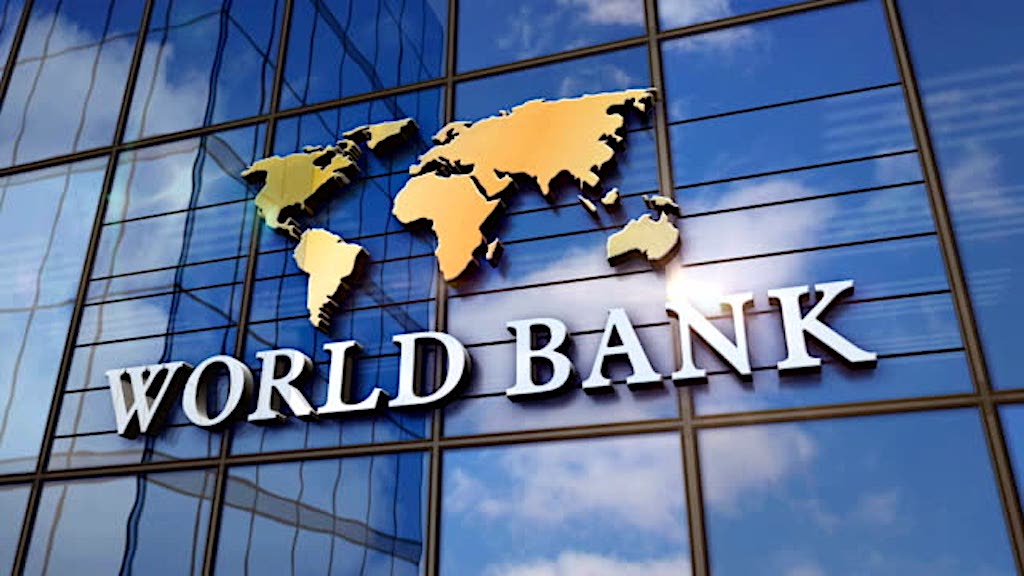
Nigeria’s economy is projected to remain resilient in the face of mounting global uncertainties, with the World Bank forecasting a 4.2 per cent growth rate in 2026.
However, the global lender has warned that rising fuel costs and persistent inflation, worsened by geopolitical tensions in the Middle East, could undermine household incomes and slow poverty reduction.
Speaking in Abuja, the bank’s lead economist for Nigeria, Mr Fiseha Haile, noted that while the ongoing US-Israel-Iran conflict has pushed up prices, overall economic activity has remained largely intact.
“Overall business activity has been expanding over the past few months, suggesting the impact on growth has been relatively contained. But the shock is still being felt through higher inflation,” Mr Haile said.
According to him, business activity has continued to expand in recent months, indicating that the broader impact on growth has been “relatively contained,” even as inflationary pressures intensify.
Nigeria’s inflation rate, though significantly reduced from around 33 per cent in December 2024 to 15.06 per cent in February 2026, remains elevated compared to regional peers.
“Inflation is still elevated and under increasing pressure, and that poses risks to incomes and poverty reduction,” Mr Haile said.
The renewed surge in fuel prices, reportedly rising by over 50 per cent during the Iran conflict, has had a ripple effect on transportation, food, and production costs, amplifying the cost-of-living crisis.
The World Bank urged Nigerian authorities to adopt prudent macroeconomic measures, including tightening monetary policy, avoiding blanket subsidies, and saving windfalls from higher oil prices to strengthen fiscal buffers.
It also recommended reconsidering restrictions on fuel imports as a potential tool to ease inflationary pressures.
The economic reforms under President Bola Tinubu — including the removal of fuel subsidies, exchange rate unification, and tax restructuring — were acknowledged as ambitious steps aimed at stabilising the economy.
These reforms have contributed to improved external buffers, with rising foreign exchange reserves and reduced volatility.
Additionally, Nigeria’s fiscal deficit stood at 3.1 per cent of GDP in 2025, while the debt-to-GDP ratio declined for the first time in a decade.
Yet, the World Bank cautioned that tighter global financial conditions could still pose risks to capital inflows, borrowing costs, and remittances.


By Aduragbemi Omiyale
The Frontier Market status of Nigeria, earlier yanked off by FTSE Russell, has now been fully restored.
The platform earlier reclassified the country’s status to Unclassified following several uncertainties and economic issues.
But after recommendations from its Equity Country Classification Advisory Committee and Policy Advisory Board, the Frontier Market status has been restored by FTSE Russell, marking a significant milestone in the country’s reintegration into global investment indices and signalling renewed opportunity for international investors.
However, this will take effect from September 2026, with the outcome announced as part of the March 2026 interim review and communicated to investors across key global markets.
The decision reflects sustained improvements in Nigeria’s market infrastructure, accessibility, and overall investability, driven in large part by enhancements to the Nigerian Exchange (NGX) platform. These include strengthened trading systems, improved settlement processes, and increased transparency, all of which have contributed to a more efficient and accessible market environment for domestic and international investors.
According to the FTSE Quality of Markets assessment, Nigeria recorded Pass ratings across several core criteria, including regulatory oversight, capital repatriation, brokerage competitiveness, tax framework, and settlement efficiency, with a T+2 settlement cycle in operation. These gains reflect deliberate efforts to align market operations with global standards and improve the investor experience.
While acknowledging this progress, the review also highlighted areas for further development, including foreign exchange market depth, transaction cost efficiency, derivatives market availability, and certain custody and clearing mechanisms. Addressing these gaps will require continued coordination across regulators, market operators, and the broader financial ecosystem.
FTSE Russell noted that its country classification process combines detailed technical assessment with input from global institutional investors, ensuring that both structural conditions and real-world investor experience are reflected. The organisation also commended Nigerian market authorities for their continued engagement.
“This milestone reflects the strength of collaboration across Nigeria’s capital market ecosystem, but importantly, the deliberate efforts to strengthen the underlying market infrastructure that supports efficient trading, transparency, and investor access,” the chief executive of NGX Group Plc, Mr Temi Popoola, said.
“At NGX Group, we have remained focused on building a more resilient, accessible, and globally competitive platform, and this reclassification affirms the progress made.
“We will continue to work closely with regulators, market operators and stakeholders to deepen reforms, address identified gaps, and sustain momentum towards higher market classifications,” he added.
The Frontier Market designation is expected to enhance Nigeria’s visibility among global asset managers and index-tracking funds, potentially unlocking new capital inflows and broadening participation in the market.
As global investors increasingly prioritise markets with strong infrastructure, transparency, and accessibility, Nigeria’s re-entry into the FTSE Frontier Market universe underscores the critical role of market infrastructure in enabling capital formation and connecting local opportunities to global capital.

By Adedapo Adesanya
A 1.61 per cent fall was recorded by the NASD Over-the-Counter (OTC) Securities Exchange on Tuesday, April 7, on the back of selling pressure.
The profit-taking chopped off N38.87 from the market capitalisation of the trading platform, leaving it at N2.378 trillion compared with the N2.417 trillion it ended last Thursday, when the bourse last witnessed trading activity.
Similarly, the NASD Unlisted Security Index (NSI) dropped 22.57 points to close the session at 3,975.34 points, in contrast to the preceding session’s 4,040.30 points.
The market breadth index was at equilibrium yesterday after recording three price gainers and three price losers, led by Okitipupa Plc, which depleted by N15.00 to N260.00 per share from N275.00 per share. Central Securities Clearing System (CSCS) Plc dipped by N6.31 to N71.69 per unit from N78.00 per unit, and FrieslandCampina Wamco Nigeria Plc went down by N1.00 to N92.00 per share from N93.00 per share.
Conversely, First Trust Mortgage Bank Plc appreciated by 20 Kobo to N2.28 per unit from N2.08 per unit, UBN Property Plc also improved by 20 Kobo to N2.18 per share from N1.98 per share, and Impresit Bakalori Plc gained 19 Kobo to sell at N2.20 per unit versus N2.01 per unit.
During the session, the volume of securities dipped by 99.7 per cent to 797,264 units from 260.2 million units, the value of securities went down by 83.1 per cent to N26.1 million from N154.2 million, and the number of deals decreased by 28.3 per cent to 33 deals from 46 deals.
Great Nigeria Insurance (GNI) Plc remained the most traded stock by value (year-to-date) with 3.4 billion units worth N8.4 billion, trailed by CSCS Plc with 57.1 million units sold for N3.9 billion, and Okitipupa Plc with 27.5 million units valued at N1.8 billion.
GNI Plc was also the most traded stock by volume (year-to-date) with 3.4 billion units traded for N8.4 billion, followed by Resourcery Plc with 1.1 billion units exchanged for N415.7 million, and Infrastructure Guarantee Credit Plc with 400 million units transacted for N1.2 billion.
-
 Feature/OPED6 years ago
Davos was Different this year
-
Travel/Tourism10 years ago
Lagos Seals Western Lodge Hotel In Ikorodu
-

 Showbiz3 years ago
Estranged Lover Releases Videos of Empress Njamah Bathing
-
 Banking8 years ago
Sort Codes of GTBank Branches in Nigeria
-

 Economy3 years ago
Subsidy Removal: CNG at N130 Per Litre Cheaper Than Petrol—IPMAN
-

 Banking3 years ago
Sort Codes of UBA Branches in Nigeria
-

 Banking3 years ago
First Bank Announces Planned Downtime
-

 Sports3 years ago
Highest Paid Nigerian Footballer – How Much Do Nigerian Footballers Earn