
Economy
African Utility Week to Showcase Continent’s Business Openings

By Dipo Olowookere
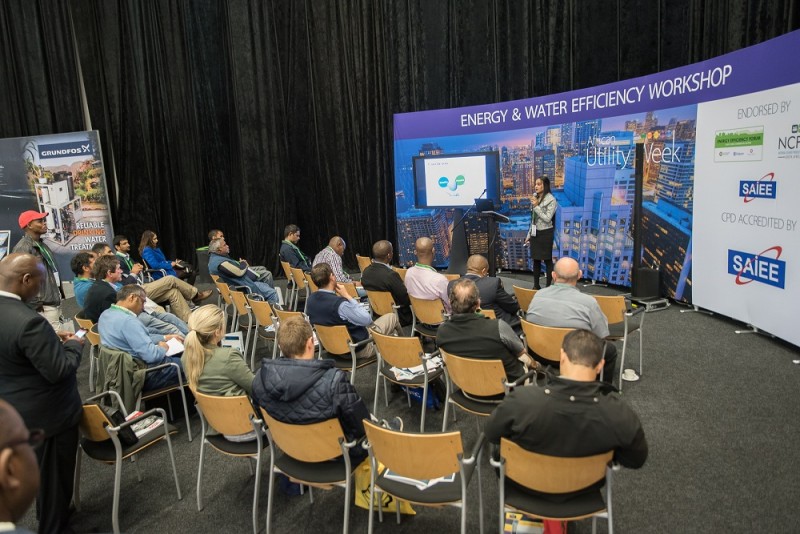
The award-winning African Utility Week, taking place from May 16-18, 2017, in Cape Town, will showcase how the continent is coming up with innovative, home-grown solutions to its energy and water challenges and how these are creating exciting and lucrative opportunities for utilities and industry suppliers alike.
Experts from respected partners in the industry such as the World Bank, KPMG, Power Africa, Huawei, GE, Shell, SAP and leading African utilities will head up the more than 7000 power and water professionals from more than 80 countries, including 30 African nations, who will gather for African Utility Week.
But this year also kick-starts a specific focus on a new trend in the industry: namely smaller, community scale off-grid projects that are starting to make a real difference in the development of the continent.
“The power and energy landscape in Africa is undergoing significant change” says Evan Schiff, African Utility Week event director, adding that current trends include “the availability of private investment for power and energy projects, the fast development of energy storage, renewable energy is becoming cheaper, gas that is an increasingly attractive mode of power generation in Africa, and that in the next 10 years, nuclear will become an increasingly important mode of base-load power generation.”
The investment, trade and development opportunities in the sub-Saharan African electricity sector are estimated at $835 billion of capital investment, $490 billion for generation capacity and $345 billion for infrastructure.
Community scale projects are another important emerging trend in the sector. “Utility-scale developments are decreasing,” says Ahmed Jaffer, Chairman of KPMG in South Africa and the Head of Power and Utilities, “while we see a lot more of community-sized generation projects. Businesses and communities are also showing interest in becoming less dependent on the national grids.
“In rural Africa, especially, the economics of expanding the national grids do not make sense; hence there is a significant trend towards mini-grids and other off-grid solutions.”
Alongside the long-running African Utility Week, a new platform for community scale projects, Energy Revolution Africa, will be launched in May this year.
Energy Revolution Africa will provide a unique forum for solution providers to meet with the new energy purchasers such as metros and municipalities, IPPs, rural electrification project developers and large power users, including mines, commercial property developers and industrial manufacturers. The latest innovations and projects in the sectors of renewables, future technology, energy efficiency, micro/off-grid and energy storage will be showcased.
Speaker highlights at African Utility Week include Lionel Zinsou, Former Prime Minister of the Republic of Benin, member of the West African Energy Leaders Group and investment banker; Matshela Koko, Acting CEO, Eskom, South Africa; Lazarus Angbazo, President and CEO of GE Energy Connections SSA; James Stewart, Global Head of Major Projects (Power and Utilities), KPMG; Bob Lockhart, Vice President of Cyber Security of the Utilities Technology Council; Subha Nagarajan, Managing Director for Africa, Overseas Private Investment Corporation (OPIC), USA; Ambassador Tebogo Seokolo, Chairperson of the Board of Governors of the International Atomic Energy Agency (IAEA); and Lucio Monari, Sector Manager for Africa Energy Group, World Bank.
The 17th annual African Utility Week is the leading conference and trade exhibition for African power, energy and water professionals who will have the opportunity to meet over 300 suppliers of services and technology to the industry.
The expo includes a record number of country pavilions, including from Belgium, Denmark, France, Germany, South Africa, China, Czech Republic, Taiwan and India.
Along with multiple side events and numerous networking functions the event also boasts a five track conference with over 300 expert speakers.
The conference programme will once again address the latest challenges, developments and opportunities in the power and water sectors: ranging from generation, T&D, metering, technology and water.
The African Utility Week expo offers an extensive technical workshop programme that are CPD accredited, free to attend, hands-on presentations that take place in defined spaces on the exhibition floor. They discuss practical, day-to-day technical topics, best practices and product solutions that businesses, large power users and utilities can implement in their daily operations.
More side events as part of the African Utility Week platform include:
African Power Finance & Investment Forum: Financiers and project owners will hear from expert speakers who will identify the key trends impacting project finance in regional energy markets with updates on and insights into market opportunities, sources of capital, financing instruments and access to project finance. A featured session on regional power integration will explore new methods of developing cross-border power projects on a PPP basis, explore the opportunities for investors, and show how regional power integration can substantially save capital investment costs.
The Gas-to-Power World Congress reflects the continuing transformation of the energy ecosystem in Africa and beyond. Gas and renewables are perfect partners to help address an array of future energy challenges, including climate change, energy security and energy finance, currently three of the world’s largest and most important challenges. The event will look at new business and investment opportunities in gas-to-power, energy infrastructure, FSRU, LPG and LNG.
The Utility CEO Forum is held as a 3-day by invitation only board meeting alongside African Utility Week, where the men and women who lead and guide Africa’s power and water sectors discuss the path of transformation. Discussions centre on areas of co-operation, development plans and the advancement of regional centres of excellence throughout Africa.
The Nuclear Power Africa Conference features expert speakers who will address the myths and realities, latest technologies, regulatory and financing challenges and the economic spin offs created by a nuclear new build programme. Nuclear stakeholders and prospective suppliers will gain first hand insights into prospects for new jobs, training programmes, and the business opportunities created by the localisation of the supply chain of a nuclear new build.
The fourth edition of the African Utility Week Power Industry Awards brings together 800 of Africa’s most renowned power and water industry professionals. The Power Industry Awards is the leading gathering to recognise, reward and celebrate the successes of Africa’s power and water sectors during 2016/17.
Africa Utilities Technology Council: Telecommunications/ICT conference track programme to be presented that will cover topics such as: IT/OT convergence, IP networks and utility telecoms network performance measures. The AUTC content will continue in three dedicated sessions – one each in the T&D, Metering and Water tracks of the main strategic conference.
Site visits – these capture practical insights and demonstrate real world case studies of innovative technology combined with a unique experience of South African hospitality. Locations include the Bokpoort CSP plant, Eskom Sterrekus substation, Biomimicry Genius of Space project in Langrug, Koeberg Nuclear Power Station, Africa’s only nuclear power plant and a tour of Cape companies that are shining examples with regards to renewable energy and efficiency including HoHotel Verde, Black River Park and Cape Brewing Company.
Apart from KPMG’s diamond sponsorship, industry stalwarts EPG, GE, Huawei, Landis+Gyr, Lucy Electric, Ontec and Shell are platinum sponsors while Aberdare Cables, Conlog, Oracle Utilities, SAP, SBS Tanks and Vodacom have already confirmed their gold sponsorships.
African Utility Week and Energy Revolution Africa is the flagship energy event organised by the multi-award winning Spintelligent, leading Cape Town-based trade exhibition and conference organiser, and part of Clarion Events Ltd, based in the UK. Other well-known energy events by Spintelligent are Future Energy Nigeria (formerly known as WAPIC), Future Energy East Africa (formerly EAPIC), Future Energy Uganda and Future Energy Central Africa. Other industry-leading events organised by Spintelligent are DRC Mining Week, Kenya Mining Week, Nigeria Mining Week, Agritech Expo Zambia, Property Buyer Show, African Real Estate & Infrastructure Summit and Eduweek.
Earlier this year, Spintelligent won four major awards at the ROAR Organiser and Exhibitor Awards, which honour excellence in the exhibition and events industry on the continent and were organised by the Association of African Exhibition Organisers (AAXO). African Utility Week won for Best Trade Exhibition 6001-12000 sqm category (joint winners with the World Travel Market).




By Adedapo Adesanya
The National Insurance Commission has issued new guidelines for the collection, management, and administration of the Insurance Policyholders’ Protection Fund.
In a circular issued to all insurance institutions on Tuesday, the regulator also set May 31, 2026, as the deadline for insurers to submit their assessment returns for the 2025 financial year.
Recall that on August 5, 2025, President Bola Tinubu signed into law the Nigerian Insurance Industry Reform Act ( NIIRA 2025).
This landmark legislation repeals the Insurance Act 2003, and consolidates related provisions, ushering in a modern regulatory framework. It lays a strong foundation for sustainable growth and increased investment in the country’s insurance sector.
The commission said the guidelines were issued in exercise of its powers under the 2025 Act and other existing insurance laws and regulations to provide regulatory clarity, improve guidance, and ensure ease of compliance across the industry.
According to NAICOM, the guidelines establish a comprehensive structure for the operation of the IPPF, which serves as a statutory safety net to protect insurance policyholders in the event of distress or insolvency of a licensed insurer or reinsurer. The framework also provides direction on the reimbursement of loans by insurers and reinsurers.
NAICOM stated, “The guidelines ensure regulatory clarity, guidance and ease of compliance, as it provides a comprehensive regulatory framework for the collection, management, and administration of the Fund, which serves as a statutory safety net designed to protect insurance policyholders against distress and insolvency of a licensed insurer or reinsurer, including guidance for the reimbursement of loans by an insurer or reinsurer.
“Please be informed that the IPPF Assessment Returns in respect of the year 2025 shall be submitted to the Commission not later than 31st May 2026, while subsequent submissions shall be in line with Section 4.3 of the Guideline on Insurance Policyholders Protection Fund.”
By Adedapo Adesanya
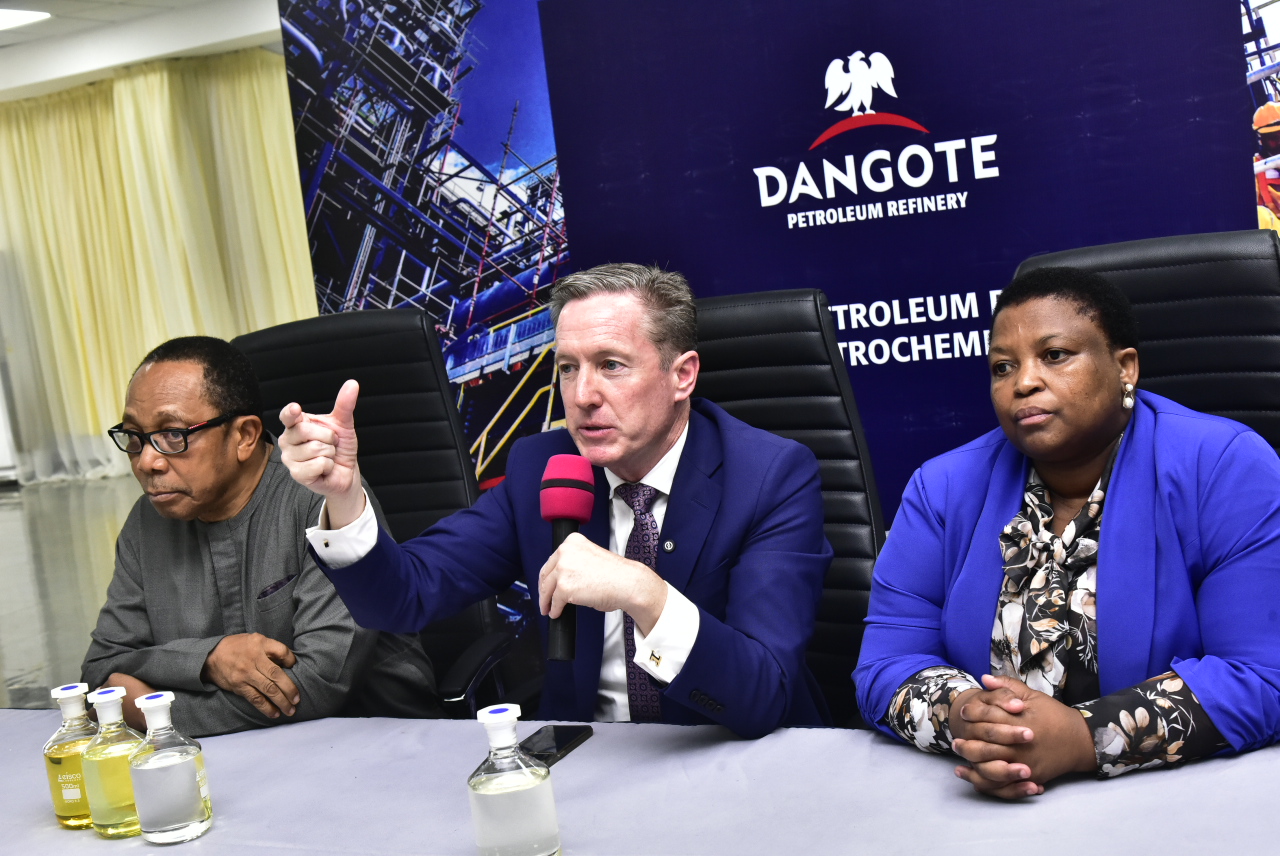
The Dangote Refinery on Wednesday returned the petrol price to N1,200 per litre, less than 24 hours after it increased it by 5 per cent.
The private refinery had raised the ex-depot price by N75 on Tuesday, citing pressure from volatile global oil markets, but quickly brought it back to N1,200 per litre from N1,275 per litre.
The swift downward review is directly linked to a sharp drop in international crude prices. Brent crude has plunged to $95.05 per barrel, after a 13 per cent decline, while the US West Texas Intermediate (WTI) crude closed at $97.18, recording nearly a 14 per cent drop.
This development comes after US President Donald Trump announced a conditional two-week ceasefire with Iran, which eased fears of immediate supply disruptions in the global oil market.
“This will be a double-sided CEASEFIRE!” Trump said on social media, marking a sharp reversal from his earlier warning that “a whole civilisation will die tonight” if Iran failed to comply with US demands.
Iran’s Foreign Minister, Mr Abbas Araqchi, confirmed that the country would halt attacks provided strikes against Iran cease and transit through the Strait of Hormuz is coordinated by Iranian forces.
Despite the breakthrough, tensions remain elevated across the region, with several Gulf states reporting missile launches, drone activity, or issuing civil defence warnings.
While oil prices have fallen back below $100, they remain significantly elevated after surging by a record amount in March. Market analysts noted that regardless of how successful the ceasefire is, geopolitical risk related to the Strait of Hormuz is likely to remain elevated for the foreseeable future under the control of Iran.
By Adedapo Adesanya
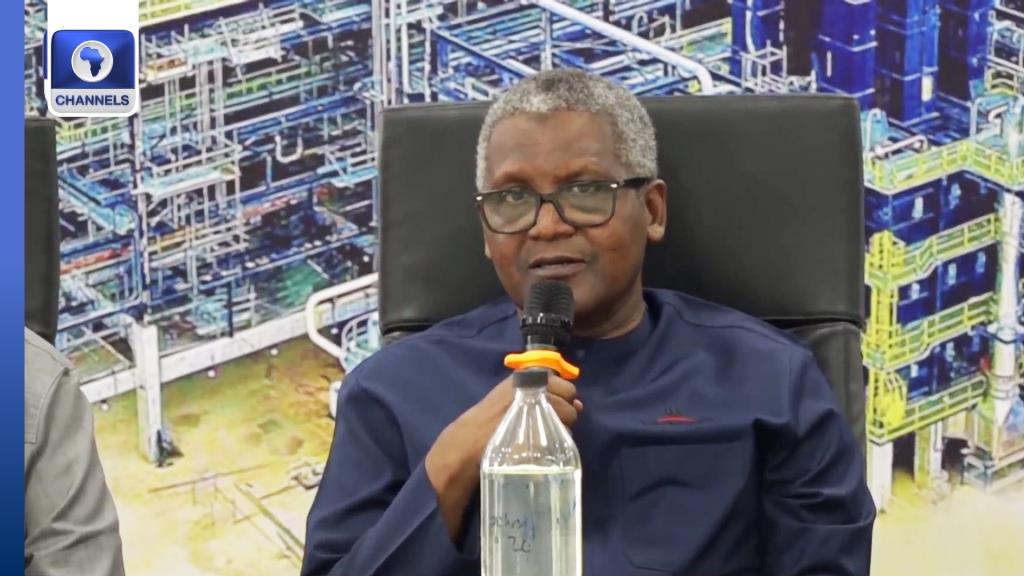
Crude oil deliveries from the Nigerian National Petroleum Company (NNPC) Limited to the Dangote Petroleum Refinery doubled in March, boosting prospects for improved fuel availability.
This was revealed by the chief executive of Dangote Industries Limited, Mr Aliko Dangote, on Tuesday, when he received the Deputy Secretary-General of the United Nations, Mrs Amina Mohammed, at the industrial complex in Ibeju-Lekki, Lagos.
While speaking on feedstock supply, Mr Dangote commended the NNPC for increasing crude deliveries to the refinery in March, noting that volumes rose to 10 cargoes—six supplied in Naira and four in Dollars—to support domestic fuel availability, according to a statement by the Refinery.
“Last month, they gave us six cargoes for Naira and four cargoes for Dollars,” he said.
Despite the improvement, Mr Dangote noted that the supply remains below the 19 cargoes required for optimal operations, with the refinery continuing to bridge the gap through imports from the United States and other African producers.
He also expressed concern over the unwillingness of international oil companies operating in Nigeria to sell to the refinery, stating that their preference for selling crude to traders forces it to repurchase at higher costs, with broader implications for the economy.
Mr Dangote added that the refinery is seeking increased access to domestically priced crude under local currency arrangements as part of efforts to moderate fuel costs and enhance long-term energy and food security across the continent.
On her part, Mrs Mohammed underscored the strategic importance of Dangote Industries Limited -particularly Dangote Fertiliser Limited—in addressing Africa’s mounting food security challenges, while calling for stronger global partnerships to scale its impact.
Mrs Mohammed said the United Nations would prioritise amplifying scalable solutions capable of mitigating the continent’s food crisis, describing Dangote’s integrated industrial model as a critical pathway.
“I think the UN’s job here is to amplify and to put visibility on the possibilities of mitigating a food security crisis, and this is one of them,” she said. “I hope that when we go back, we can continue to engage partners and countries that should collaborate with Dangote Industries.”
-
 Feature/OPED6 years ago
Davos was Different this year
-
Travel/Tourism10 years ago
Lagos Seals Western Lodge Hotel In Ikorodu
-

 Showbiz3 years ago
Estranged Lover Releases Videos of Empress Njamah Bathing
-
 Banking8 years ago
Sort Codes of GTBank Branches in Nigeria
-

 Economy3 years ago
Subsidy Removal: CNG at N130 Per Litre Cheaper Than Petrol—IPMAN
-

 Banking3 years ago
Sort Codes of UBA Branches in Nigeria
-

 Banking3 years ago
First Bank Announces Planned Downtime
-

 Sports3 years ago
Highest Paid Nigerian Footballer – How Much Do Nigerian Footballers Earn