
Economy
Airtel Africa Grows Net Profit by 80% on Stable Net Finance Costs

By Dipo Olowookere
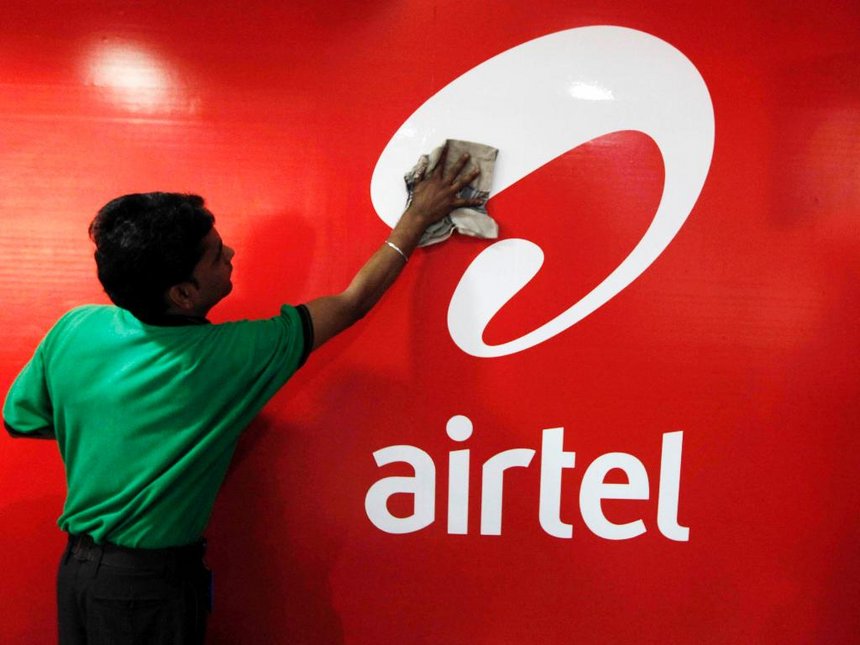
One of the leading telecommunications, Airtel Africa Plc, has reported an 80.2 per cent increase in its net profit for the accounting year ended March 31, 2022, despite a rise in tax charges.
The firm posted a post-tax profit of $755 million in the year under review compared with the $415 million recorded in the preceding year and was driven by higher operating profits and stable net finance costs amid a 48.2 per cent hike in tax payment caused by higher withholding tax on dividends by subsidiaries.
Analysis of the topline of the results showed that the revenue generated in the full year rose to $4.7 billion from $3.9 billion, with growth recorded across all its regions and key services.
Nigeria posted a 27.7 per cent in turnover, East Africa expanded by 22.7 per cent, while Francophone Africa grew by 17.2 per cent.
In terms of services, voice revenue grew by 15.4 per cent to $2.4 billion from $2.1 billion, data revenue increased by 34.6 per cent to $1.5 billion from $1.2 billion, and mobile money revenue grew by 34.9 per cent to $553 million from $401 million.
In the period under consideration, Airtel Africa was able to boost its earnings as a result of the increase in its customer base by 8.7 per cent, with the introduction of new SIM registration regulations in Nigeria contributing to the slow growth, though its customer base in the country, its biggest market, now stands at 128.4 million after addition of 2.4 million new customers.
In the year, the telco said it recorded an operating profit of $1.5 billion, 37.2 per cent higher than the $1.1 billion achieved a year earlier due to strong revenue growth and improvements in operating efficiency across all its regions.
Operating profit included a one-time cost of $32 million consisting of a $12 million provision for the expected settlement of a contractual dispute in which one of the group’s subsidiaries is a party, and $20 million costs relating to an agreement on historical spectrum fees in one of its.
This compared to the prior year which included a gain of $20 million for a one-time settlement in Niger, which was partially offset by one-off costs of $6 million in Francophone Africa.
As for the EBITDA, it grew by 29.0 per cent to $2.3 billion as a result of revenue growth and improved operating efficiencies.
While commenting on the results, the chief executive of Airtel Africa, Mr Segun Ogunsanya, said the company has again demonstrated its desire to continue to create value for customers and shareholders.
“We have delivered strong double-digit growth in revenues across all our regions and all our key services, with improving margins driven by strong cost control, and expanding cash generation which is enabling us to continue to invest in our network and services and expand our distribution, as well as strengthening our balance sheet and increasing our returns to shareholders. We are connecting more customers in new and existing coverage areas and driving usage levels and ARPUs to new highs,” he said.
“While the fundamentals of our six-pillar growth strategy remain unchanged, we are looking to accelerate our performance through a greater focus on digitalisation and we have underpinned our strategic pillars with our sustainability ambition,” he further said.
Mr Ogunsanya disclosed that “long-term opportunities for us remain attractive,” noting that the team will “continue to work actively to mitigate all our material risks and to deliver value for all our stakeholders.”
“There are increasing challenges from global inflationary pressures, but we continue to target revenue growth ahead of the market and moderate margin expansion,” he assured.











By Aduragbemi Omiyale
One of the newest members of the Nigerian Exchange (NGX) Limited, Zichis Agro-Allied Industries Plc, has confirmed its intention to approach the capital market to raise funds, subject to shareholder and regulatory approval.
However, it denied reports suggesting it’s “set to undertake an Initial Public Offering (IPO) or related capital raising activity.”
In a notice on Monday, the firm affirmed proposing “to seek shareholders’ approval at its forthcoming Annual General Meeting (AGM) to raise additional capital, which may be through equity, debt, or a combination of both, subject to regulatory approvals and market conditions.”
“At this stage, the structure, timing, and details of any such capital raising have not been finalised, and no specific transaction has been concluded,” a part of the statement signed by the company secretary, Solomon Itsede, stressed.
Zichis expressed its commitment to upholding “the highest standards of corporate governance, transparency, and timely disclosure.”
“Accordingly, any material corporate actions or capital market activities will be formally communicated through the appropriate regulatory channels,” it said, advising shareholders and the investing public “to rely solely on official disclosures and filings made by the company through the NGX and other authorised regulatory platforms when making investment decisions.”
Zichis welcomed the “continued interest of investors and market participants in its operations and performance,” promising to remain focused on delivering sustainable value through disciplined strategic execution.
It also lauded the continued support of its shareholders, saying it remains committed to maintaining transparency in all its communications.

By Adedapo Adesanya
The Nigerian Electricity Regulatory Commission (NERC) has issued a directive to ensure transparency in reporting the Regional Electricity Transmission Loss Factor, as it remains above the 7 per cent threshold.
In a public notice posted on its official X (formerly Twitter) on Monday, the order, contained in No. NERC/2026/026 is aimed at improving transparency and efficiency in Nigeria’s power grid through enhanced reporting of Regional Transmission Loss Factors (TLF).
The regulator disclosed that the order is backed by the provisions of the Electricity Act 2023, which enables the commission to regulate, monitor, and ensure efficiency in the power sector.
According to the statement, the Data from the Nigerian Independent System Operator (NISO) indicate that the national average TLF was 8.71 per cent in 2024 but was reduced to 7.24 per cent in 2025.
The statement added that the report exceeds the 7 per cent benchmark approved by NERC in the Multi-Year Tariff Order (MYTO).
The statement reads, “The Order dated 8 April 2026 establishes a formal framework for reporting transmission losses across regions operated by the Transmission Company of Nigeria (TCN).
“Taking effect from 13 April 2026, the Order is backed by provisions of the Electricity Act 2023, which empower NERC to regulate, monitor, and ensure efficiency in the electricity market.”
The directive reads, “NISO to install smart meters at all boundary regional interconnection points by December 2026 to accurately measure energy flows for each region of the transmission network.
“NISO to measure and document all energy flow of power transformers at transmission substations.
“NISO to file quarterly reports on TLF to NERC on a regional basis.”
It added, “TCN to file an action plan by July 2026 on the reduction of TLF to a value within the 7 per cent approved benchmarks in the regions.
“TCN to ensure that TLF across transmission regions shall not exceed 6.5 per cent by December 2026.”
NERC concluded that the order is designed to strengthen accountability in transmission operations and support better grid performance through structured loss reporting.
By Adedapo Adesanya
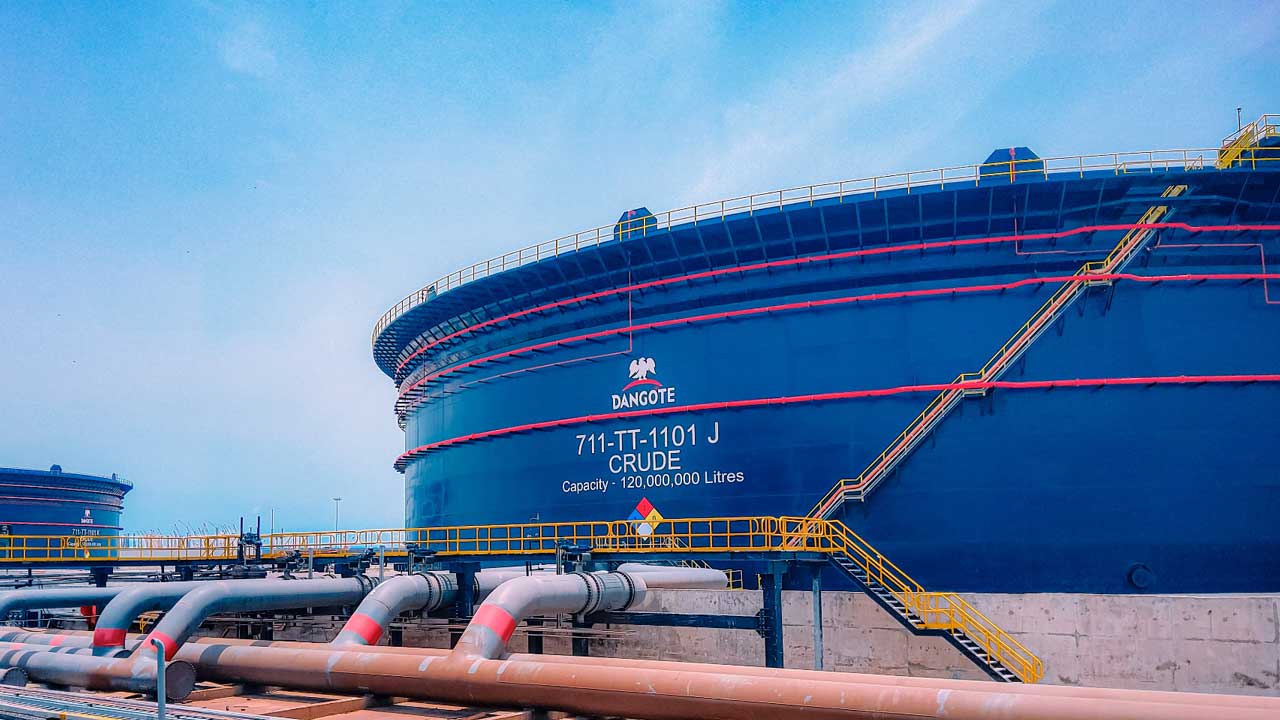
Nigerian businessman, Mr Aliko Dangote, is planning to list shares of his $20 billion oil refinery on multiple African stock exchanges.
The landmark cross-border public offering on the continent was disclosed by the chief executive of the Nairobi Securities Exchange (NSE), Mr Frank Mwiti, following a meeting held last week in Lagos between Mr Dangote and several heads of African exchanges.
Last year, Mr Dangote unveiled plans to list a 10 per cent stake in his Lagos-based refinery on the Nigerian Exchange this year.
According to a Bloomberg report, citing an email from the chief executive of FirstCap, Mr Ukandu Ukandu, Stanbic IBTC Capital Limited, Vetiva Advisory Services Limited, and FirstCap Limited have been appointed as advisers for the initial public offering of Dangote Petroleum Refinery and Petrochemicals FZE.
Mr Mwiti said the proposed listing is designed to cut across multiple markets and deepen investor participation across the continent.
“The plan is to structure a pan-African IPO,” he said.
Bloomberg also reported that a spokesman for the Dangote Group confirmed that discussions had taken place between Mr Dangote and exchange officials but declined to provide further details.
In February 2026, Mr Dangote said that the IPO could be launched within the next five months.
“But individually Nigerians too will have an opportunity in the next maximum four or five months, they will actually be able to buy their shares,” he said at the time.
He added that investors would have flexibility in how they receive returns.
“People will have a choice either to get their dividends in naira or to get their dividends in dollars because we earn in Dollars.”
-
 Feature/OPED6 years ago
Davos was Different this year
-
Travel/Tourism10 years ago
Lagos Seals Western Lodge Hotel In Ikorodu
-

 Showbiz3 years ago
Estranged Lover Releases Videos of Empress Njamah Bathing
-
 Banking8 years ago
Sort Codes of GTBank Branches in Nigeria
-

 Economy3 years ago
Subsidy Removal: CNG at N130 Per Litre Cheaper Than Petrol—IPMAN
-

 Banking3 years ago
Sort Codes of UBA Branches in Nigeria
-

 Banking3 years ago
First Bank Announces Planned Downtime
-

 Sports3 years ago
Highest Paid Nigerian Footballer – How Much Do Nigerian Footballers Earn