Connect with us

Economy

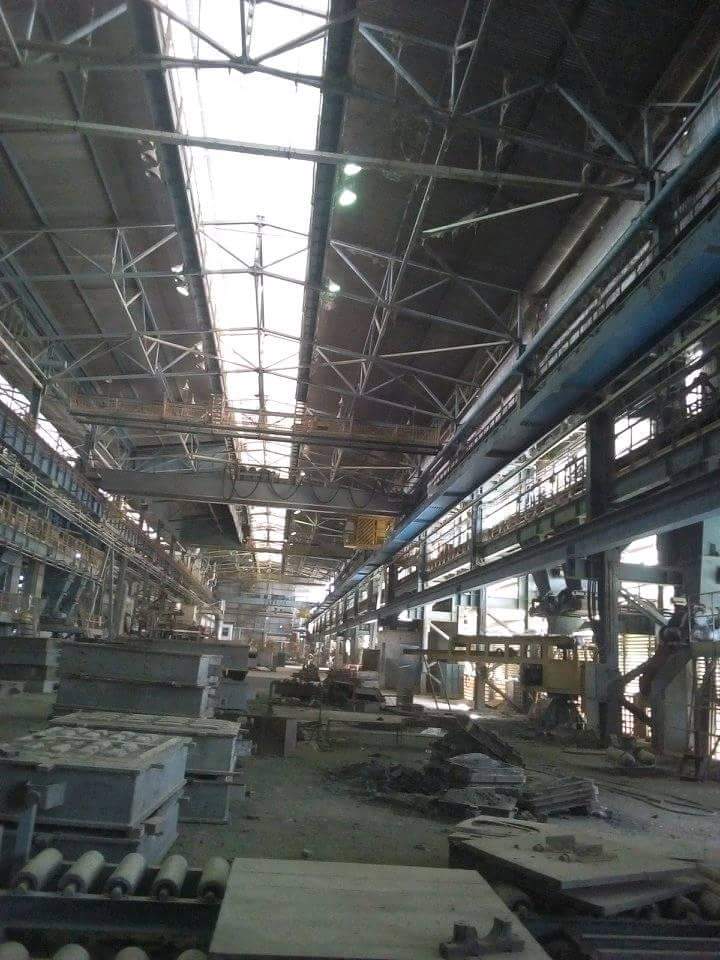
Ajaokuta Steel: Akpoti Backs Bello as Rep Begin Probe Monday

Published

on

By Ebireri Henry Ovie

A lawyer and social reformer, Barrister Natasha Akpoti, on Saturday expressed delight with the high degree of determination so far exhibited by Kogi State governor, Mr Yahaya Bello to move Ajaokuta Steel Company forward.

She also dismissed insinuations of being sponsored by some individuals in the country.

“As a governor, Yahaya Bello must be met daily with tons of ideas. Ajaokuta Kogi Nigeria Limited could have been one of those he ventured into based on recommendations best available to him at that moment in time. I hold no brief for him and I still believe that in the spirit of democracy, his government owes an explanation to the good people of Nigeria.

“However, while focusing ahead, it’s good to know Bello supports the call for TPE of Russia as technical partners and has openly appreciated the resilience of our advocacy. So I chose to hold His Excellency to his words,” she said.

Ms Akpoti, who spoke to newsmen in Abuja Saturday, disagreed with the thinking in some quarters that her recent friendship with Governor Bello was for her own selfish purposes.

“In the past months, there have been some relationships forged between the Kogi State governor, Yahaya Bello and myself. Clearly, we are collaborating towards an accelerated resuscitation of Ajaokuta Steel Company amongst others. This alliance will no way overturn or tamper with our code of ethics and societal ethos which has laid the foundation upon which we seek economic justice for Ajaokuta Steel Company and her captive mine – National Iron Ore Company, Itakpe both in Kogi State”.

According to her, the involvement of the Kogi State government in the alleged lopsided attempted acquisition of the steel complex via a vehicle registered as Ajaokuta Kogi Nigeria Limited as exposed during the March 1, 2018 presentation before the House of Representatives was all true.

“Whether such actions were taken with the full knowledge of Governor Yahaya Bello or not or in the best interest of the state and country or not shall be decided in the course of the House of Reps investigation which commences on Monday, June 4, 2018”

The leader of Ajaokuta/Itakpe Revival Movement provided what may well be an insight into the twists and turns in the journey to revive the steel company

“However, as every journey has a destination, so also before I embarked upon this Herculean task alongside millions of patriotic Nigerians; there was a destination at heart. This was unequivocally to pursue and influence good government decisions towards the judicious revival of Ajaokuta Steel Company and the steel sector in general.

“Without mincing words, we stood against its privatization and pressed for a Government to Government engagement between Russia and Nigeria in order to reengage the original builders TyazhPpromExport (TPE) directly as technical partners for a short term thereby cutting out the middle men/companies to help curb corruption and in turn, yield desired socio-economic benefit of the masses.

“Having set these goals, we embarked upon a journey we had absolute no control of its twists and turns. For three years, a lone voice became a movement of millions. Relationships were bruised, characters were smeared, lives threatened but most importantly patriotism grew as Nigerians from the North to South, East and West found a cause worth uniting and fighting for irrespective of religious and ethnic sentiments,” she said.

The legal practitioner explained that as the case of Ajaokuta Steel Company, there was no cause for alarm as the company was on a sure path of revival.

“On the brighter side, Ajaokuta Steel Company is on a sure path of revival because the much needed political will is being stimulated across the tiers of government.

“I, alongside the reputable Nigerian Society of Engineers (NSE), African Iron and Steel Association (AISA) and a host of other professional stakeholders are working with the National Assembly to create a set of laws to establish a responsive and protective ecosystem for the steel sector.

“We are also advocating for the establishments of a Steel Development Authority (just like we had in the 70s). The rationale behind this is to promote the separation of powers which are presently mumbled up in the Ministry of Solid minerals.

“In essence, the Steel Authority shall oversee the operations and productivity of the steel sector; while the ministry shall serve as regulators for pricing, policy formulations and others. With all the right collaborations being set in place, however late, I have no doubt the resuscitation of Ajaokuta’s steel complex for the good of Nigeria will be a dream come true”.

Ms Akpoti excitely told newsmen that she decided to forge a healthy alliance to promote an accelerated resuscitation of Ajaokuta Steel Company along agreed common grounds.

“From childhood, after the sudden demise of my father at the age of 49; I developed a great appreciation for the value of time being the most precious of resources. We can always make the money we lose, but never the time wasted.

“In addition, I am also one with great respect for authority especially in this part of the world where the pen is still mightier than the voices of the populace; so I had to apply reason to save time for the greater good of Ajaokuta and its delayed promises to Nigeria and her sinking economy.

“So after the expose of conspiracies on the floor of the National Assembly; wise elders counseled on the importance of managing time and authority. We as a movement had a choice to either spend the next moments agitating about the mistakes of the past or cutting our loses, call on the relevant parties together, especially the stakeholders in government and forge a healthy alliance to promote an accelerated resuscitation of Ajaokuta Steel company along agreed common grounds,” she added.


Dipo Olowookere is a journalist based in Nigeria that has passion for reporting business news stories. At his leisure time, he watches football and supports 3SC of Ibadan. Mr Olowookere can be reached via [email protected]

Click to comment

Leave a Reply

Your email address will not be published. Required fields are marked *

Economy

Access Holdings, Fidelity Bank, Chams Emerge Busiest Equities

Published

on

Access Holdings

By Dipo Olowookere

The three busiest equities on the floor of the Nigerian Exchange (NGX) Limited last week were Access Holdings, Fidelity Bank, and Chams Holdco.

The trio accounted for 20.90 per cent and 5.69 per cent of the total trading volume and value, respectively, after trading 485.749 million units worth N7.656 billion in 17,843 deals.

In the week, investors transacted 2.324 billion shares valued at N134.486 billion in 249,328 deals versus the 3.075 billion shares worth N254.614 billion executed in 287,157 deals in the previous week.

The financial services space led the activity chart with 1.523 billion stocks sold for N47.542 billion in 105,230 deals, contributing 65.53 per cent and 35.35 per cent to the total trading volume and value, respectively. The ICT industry exchanged 198.821 million shares worth N32.622 billion in 29,905 deals, and the consumer goods sector posted a turnover of 151.635 million shares worth N10.933 billion in 23,951 deals.

In the five-day trading week, 22 equities appreciated versus 11 equities a week earlier, 57 equities depreciated versus 78 equities of the previous week, and 67 equities remained unchanged versus 57 equities in the preceding week.

McNichols gained 26.47 per cent to trade at N8.60, International Energy Insurance appreciated by 14.43 per cent to N5.79, GTCO expanded by 10.69 per cent to N127.90, First Holdco jumped by 10.00 per cent to N55.00, and Airtel Africa also climbed 10.00 per cent to settle at N4,358.80.

On the flip side, Trans-Nationwide Express declined by 26.79 per cent to N3.28, Deap Capital slipped by 23.31 per cent to N3.75, Abbey Mortgage Bank lost 20.30 per cent to trade at N8.05, Aradel Holdings contracted by 19.00 per cent to N1,417.50, and Regency Assurance dropped 18.56 per cent to close at 79 Kobo.

The All-Share Index (ASI) and the market capitalisation, which measures the performance level of Customs Street, depreciated last week by 1.65 per cent and 1.60 per cent each to 232,049.02 points and N148.905 trillion, respectively.

Similarly, all other indices finished lower except the CG, banking, AFR Bank Value, AFR Div Yield and MERI Value indices, which grew by 2.40 per cent, 3.51 per cent, 3.28 per cent, 9.93 per cent and 0.56 per cent, respectively.

Continue Reading

Economy

Proposed Import Ban Won’t Revive Nigeria’s Textile Industry—CPPE

Published

on

textile ban

By Adedapo Adesanya

The Centre for the Promotion of Private Enterprise (CPPE) has cautioned against the Senate’s resolution seeking to ban the importation of textile fabrics, warning that such a move could be counterintuitive as it would undermine key industries, threaten millions of jobs and fail to revive Nigeria’s struggling textile sector.

According to the chief executive of the think-tank, Mr Muda Yusuf, while the objective of revitalising the textile industry was commendable, an outright import prohibition would likely create more economic challenges than solutions.

The Senate had urged the federal government to implement an import ban for an initial period of five years. The motion, sponsored by Senator Sunday Katung, is to create a protected window for domestic cotton farmers and local textile mills to scale up production.

Mr Yusuf noted that the import ban wasn’t the major driving force behind the country’s ailing textile sector, adding that it was driven mainly by structural constraints such as high energy costs, poor infrastructure, expensive credit and obsolete technology.

Other factors, he said, driving the decline of the sector included logistics bottlenecks, smuggling and policy inconsistency, rather than import competition.

According to him, restricting textile imports will disrupt production across the country’s garment, fashion, tailoring, furniture and interior design industries, which depend heavily on imported fabrics as production inputs.

He said that Nigeria’s fashion, garment-making and tailoring industry, valued at about N10 trillion, supported an estimated 10 million livelihoods and represented one of the country’s most vibrant creative economy sectors.

He further stated that the sector generates significant domestic value addition through design, tailoring, branding, embroidery, merchandising and retailing, often exceeding the value of the imported textile inputs.

“Restricting textile imports would increase production costs, reduce consumer choice and threaten thousands of micro, small and medium enterprises engaged in fashion, tailoring and garment manufacturing,” he said.

Mr Yusuf added that textile fabrics were also critical inputs for the furniture and interior design industry, valued at about N7 trillion, warning that supply disruptions would weaken the competitiveness of manufacturers.

He further noted that imported textile fabrics already attracted a combined Import Duty and Import Adjustment Tax of between 35 per cent and 45 per cent, yet the existing tariff protection had not restored the competitiveness of local textile manufacturers.

“The core problem lies in production economics rather than import penetration. An import ban addresses the symptom while leaving the underlying causes unresolved,” he said.

Mr Yusuf also maintained that local textile manufacturers currently lacked the capacity to meet the quantity, quality and diversity of fabrics required by the country’s fashion, garment, furniture and interior design industries.

He warned that an outright import ban could therefore create supply shortages and negatively affect downstream sectors that generated significantly more employment than textile manufacturing itself.

The CPPE boss advocated a comprehensive value-chain strategy to revive the textile industry and called for the restoration of domestic cotton production through improved security, mechanisation, better seedlings, extension services and guaranteed off-take arrangements.

He also stressed the need for affordable long-term financing, access to modern technology, a reliable energy supply and a more competitive operating environment for manufacturers.

Among other recommendations, Yusuf urged the government to prioritise locally produced textiles and garments for uniforms used by the military, paramilitary agencies, schools and other public institutions.

He also recommended the establishment of a Textile Competitiveness Fund financed from textile-related import tax revenues to support technology upgrades and industry modernisation.

Other measures proposed include strengthening border enforcement to curb smuggling and implementing reforms aimed at reducing energy and financing costs while improving industrial infrastructure.

Mr Yusuf stressed that sustainable revival of Nigeria’s textile industry would depend on improving competitiveness rather than imposing additional import restrictions.

He warned that a blanket import ban could encourage smuggling, reduce customs revenue and weaken a broader value chain that contributed substantially to employment and economic growth.

Continue Reading

Economy

Pathway Advisors Champions Pivot Energy’s N300bn Commercial Paper for Downstream Expansion

Published

on

Pathway Pivot Energy’s N300bn Commercial Paper

By Adedapo Adesanya

Pathway Advisors Limited has announced its role as Lead Issuing House to a N300 billion Commercial Paper Programme for Pivot Integrated Energy Services Limited, reinforcing its leadership in capital market advisory and energy sector finance.

The transaction was formally concluded with the execution of programme documentation at Capital Club, Victoria Island, Lagos, following the completion of all regulatory and programme clearances. The signing ceremony marked a defining milestone in mobilising large-scale short-term capital for Nigeria’s downstream petroleum sector.

Speaking at the event, the chief executive of Pathway Advisors Limited, Mr Adekunle Alade, emphasised the strategic significance of the Commercial Paper issuance in financing working capital, thereby enabling high-growth energy businesses to scale efficiently and sustainably.

“Nigeria’s downstream energy sector is undergoing a profound transformation, accelerated by the removal of fuel subsidies, the emergence of domestic refining capacity, and rising demand for reliable product supply across the country and the broader West African region.

“Companies like Pivot Integrated Energy Services Limited with a vertically integrated model, a strong track record, and a clear growth mandate are exactly the kind of issuers that the capital markets should be financing,” Mr Alade stated.

“Commercial paper, when structured appropriately, gives operationally strong businesses access to a deep and diverse pool of institutional investors, at tenors and costs that support the working capital intensity of petroleum trading and distribution. This transaction is a testament to what is achievable when credible issuers partner with experienced advisers to access the markets,” he added.

“The successful execution of this programme further affirms Pathway Advisors’ position as a trusted financial advisory and investment banking firm in complex, large-scale capital market transactions,” he stated.

In his comments, the chief executive of Pivot Integrated Energy Services Limited, Mr Babajide Babatope, described the commercial paper programme as a pivotal step in the company’s strategy to expand its supply capacity and strengthen its position as a leading integrated energy provider in Nigeria and West Africa.

“Nigeria’s downstream energy market demands scale, speed, and the right capital structure to compete effectively. This commercial paper programme gives us the financial firepower to support our growing volumes, reinforce our supply chain, and serve our customers with greater reliability across the regions we operate in,” Mr Babatope disclosed.

He noted that Pivot is one of the 20 approved off-takers in the Dangote Refinery PMS Consortium, with a target volume of 300 million litres per quarter, a position that underscores the company’s standing in Nigeria’s post-subsidy energy supply architecture. He added that the CP Programme would also support the company’s accelerating regional push, including active operations in Ghana, where Pivot has delivered over 100,000 MT since April 2025, and a planned entry into Tanzania with deliveries targeted in Q3 of 2026.

Mr Babatope further expressed appreciation to Pathway Advisors and other transaction parties for their professionalism, rigour, and commitment throughout the programme’s execution, and signalled his intention to continue deepening these partnerships as Pivot advances to subsequent phases of growth and financing.

Continue Reading

Trending