
Economy
Amosun Wants Insurance Sector Rebranded


By Modupe Gbadeyanka
Governor Ibikunle Amosun of Ogun State has challenged insurance operators in the country to rebrand the industry so as to maximise the untapped potential in the economy.
Mr Amosun made this call while declaring open the Insurance Professionals’ Forum organised by the Chartered Insurance Institute of Nigeria (CIIN) in Abeokuta, the state capital.
The Governor, represented at the occasion by his Deputy, Mrs Yetunde Onanuga, said insurance firms should make maximum use of the investment opportunities available to them to strengthen their liquidity position to enable them meet the claims of policyholders, companies whenever the need arises.
He said the theme of this year’s forum: The insurance industry, national economic shift & new business realities, could not have been more apt, as there were more than ever before in the history of the nation, the need for diversification of the economy.
Mr Amosun stressed that such effort would help restore public confidence in the ability of the industry to deliver and redeem its obligations to clients.
He observed that many Nigerians were yet to embrace the culture of patronising insurance firms, hence, the need for the Institute to engage in public education and enlightenments programmes that would enlist the interest of the people in the business.
He called on the operators to extend some of their programmes to the rural areas, to enable them tap the potentials at the grassroots.
“There is the need too for insurance companies to redesign their products and services in such a way that would meet the need in the ever changing behavioural pattern of our people. In doing so, concerted efforts should be made to ensure that the economic environment and social behaviour of our people are integrated into the policy formulation and marketing strategy objective of the insurance companies.
“Another area which the insurance industry is yet to fully explore is the life policy and pension insurance scheme. This can really make long term funds available for profitable investment in the insurance sector. It seemed to me that lack of insurance life portfolio has made our insurance companies to be caught in the web of low investments and needless competitions with other actors in the money market,” he Governor said.
Speaking on diversification, Mr Amosun said it had dawned on everybody of the need to diversify the economy to the non-oil sector and as major players, insurance professionals must come up with robust ideas and policies that could help cushion the fall in revenue in the economic process.
“Undoubtedly, as the call for the diversification of the economy is on the increase, and investors are being wooed to invest in agriculture, mining, export promotion, among others, this gathering through robust deliberations, must come up with possible template that would not only assure investors of the safety of their investment, but that would ensure them of insurance driven environment which will bring high yields on their investments.
“Without doubt, the prevailing social economic situation in our economy requires that the Institute should attempt a critical reappraisal of some of the contemporary issues in the professional practice of insurance business in order to promote the industry,” he said.
Commissioner for Insurance, Mohammed Kari, urged insurance professionals to act professionally, adding that failure to observe this tenet in the past caused the industry so much injury.
“The time has indeed come for us to speak professionally and act like the true insurance professionals we claim to be in the course of performing or conducting our business. Our failure to observe this tenet in the past has caused the industry so much reputational injury. I am glad to say the current efforts of the underwriters to change the perception of the public about insurance are timely and laudable. All other sectors should join in with their widow’s might to ensure the success of the project,” he said.
CIIN President, Lady Isioma Chukwu, urged insurance professionals to key into the vision of the government’s economic diversification activities and position the industry appropriately.










By Adedapo Adesanya
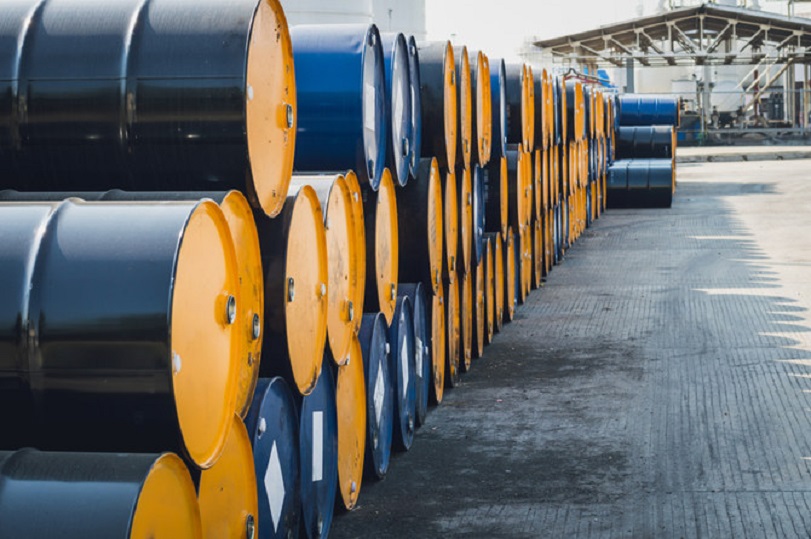
Crude oil plummeted on Wednesday on hopes of the reopening of the Strait of Hormuz after US President Donald Trump agreed to a two-week ceasefire with Iran.
Brent crude futures moderated to $94.75 a barrel, while the US West Texas Intermediate (WTI) crude eased to $94.41 a barrel.
President Trump said on Wednesday that the US will work closely with Iran and will be talking about tariff and sanctions relief with Iran.
However, analysts cautioned that the ceasefire is a temporary two-week reprieve rather than a permanent resolution, and the global energy system remains fragile due to structural damage to regional infrastructure.
Reuters reported that Iran could open the strait in a limited and controlled way on Thursday or Friday ahead of a meeting between U.S. and Iranian officials in Pakistan.
Agence France-Presse (AFP) reported that two ships appeared to have transited the Strait of Hormuz since the US-Iran ceasefire deal. A Greek-owned bulk carrier and a Liberia-flagged vessel both transited the waterway early on Wednesday.
Meanwhile, Israel carried out its heaviest strikes on Lebanon since the conflict with Hezbollah broke out last month, even as the Iran-aligned group paused attacks on northern Israel and Israeli troops in Lebanon under the ceasefire.
Also, Saudi Arabia’s East-West Pipeline, a critical artery bypassing the Strait of Hormuz, was reportedly hit in an Iranian drone attack. Prior to the attack, the pipeline was pumping at its emergency capacity of 7 million barrels per day to bypass the shuttered strait.
The strikes occurred just hours after a US-Iran ceasefire announcement, which has so far failed to halt regional hostilities. Other facilities in the kingdom were also targeted in the wave of strikes, which the Islamic Revolutionary Guard Corps (IRGC) claimed included oil facilities owned by American companies in Yanbu.
US crude stocks rose by 3.1 million barrels to 464.7 million barrels during the week ended April 3, the Energy Information Administration (EIA) said.

By Adedapo Adesanya
The National Insurance Commission has issued new guidelines for the collection, management, and administration of the Insurance Policyholders’ Protection Fund.
In a circular issued to all insurance institutions on Tuesday, the regulator also set May 31, 2026, as the deadline for insurers to submit their assessment returns for the 2025 financial year.
Recall that on August 5, 2025, President Bola Tinubu signed into law the Nigerian Insurance Industry Reform Act ( NIIRA 2025).
This landmark legislation repeals the Insurance Act 2003, and consolidates related provisions, ushering in a modern regulatory framework. It lays a strong foundation for sustainable growth and increased investment in the country’s insurance sector.
The commission said the guidelines were issued in exercise of its powers under the 2025 Act and other existing insurance laws and regulations to provide regulatory clarity, improve guidance, and ensure ease of compliance across the industry.
According to NAICOM, the guidelines establish a comprehensive structure for the operation of the IPPF, which serves as a statutory safety net to protect insurance policyholders in the event of distress or insolvency of a licensed insurer or reinsurer. The framework also provides direction on the reimbursement of loans by insurers and reinsurers.
NAICOM stated, “The guidelines ensure regulatory clarity, guidance and ease of compliance, as it provides a comprehensive regulatory framework for the collection, management, and administration of the Fund, which serves as a statutory safety net designed to protect insurance policyholders against distress and insolvency of a licensed insurer or reinsurer, including guidance for the reimbursement of loans by an insurer or reinsurer.
“Please be informed that the IPPF Assessment Returns in respect of the year 2025 shall be submitted to the Commission not later than 31st May 2026, while subsequent submissions shall be in line with Section 4.3 of the Guideline on Insurance Policyholders Protection Fund.”
By Adedapo Adesanya
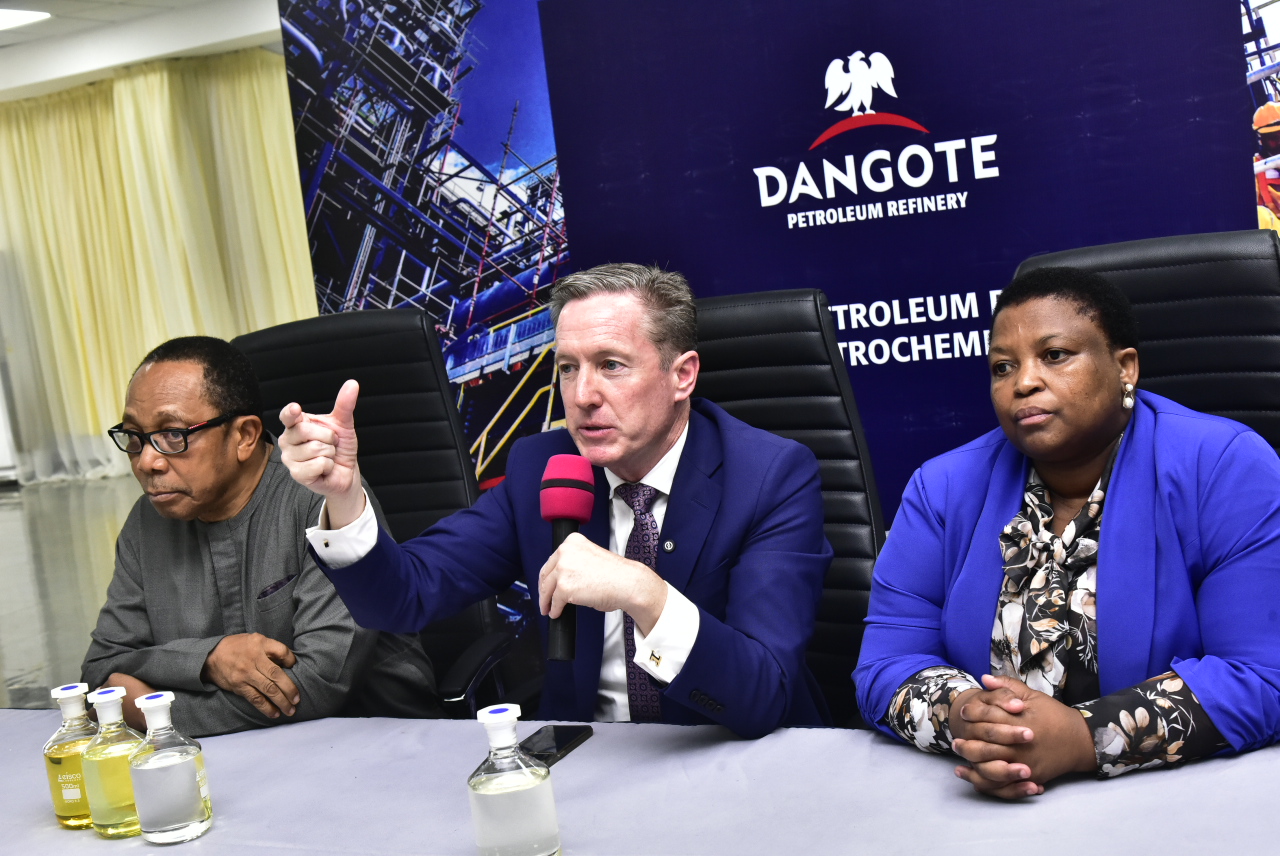
The Dangote Refinery on Wednesday returned the petrol price to N1,200 per litre, less than 24 hours after it increased it by 5 per cent.
The private refinery had raised the ex-depot price by N75 on Tuesday, citing pressure from volatile global oil markets, but quickly brought it back to N1,200 per litre from N1,275 per litre.
The swift downward review is directly linked to a sharp drop in international crude prices. Brent crude has plunged to $95.05 per barrel, after a 13 per cent decline, while the US West Texas Intermediate (WTI) crude closed at $97.18, recording nearly a 14 per cent drop.
This development comes after US President Donald Trump announced a conditional two-week ceasefire with Iran, which eased fears of immediate supply disruptions in the global oil market.
“This will be a double-sided CEASEFIRE!” Trump said on social media, marking a sharp reversal from his earlier warning that “a whole civilisation will die tonight” if Iran failed to comply with US demands.
Iran’s Foreign Minister, Mr Abbas Araqchi, confirmed that the country would halt attacks provided strikes against Iran cease and transit through the Strait of Hormuz is coordinated by Iranian forces.
Despite the breakthrough, tensions remain elevated across the region, with several Gulf states reporting missile launches, drone activity, or issuing civil defence warnings.
While oil prices have fallen back below $100, they remain significantly elevated after surging by a record amount in March. Market analysts noted that regardless of how successful the ceasefire is, geopolitical risk related to the Strait of Hormuz is likely to remain elevated for the foreseeable future under the control of Iran.
-
 Feature/OPED6 years ago
Davos was Different this year
-
Travel/Tourism10 years ago
Lagos Seals Western Lodge Hotel In Ikorodu
-

 Showbiz3 years ago
Estranged Lover Releases Videos of Empress Njamah Bathing
-
 Banking8 years ago
Sort Codes of GTBank Branches in Nigeria
-

 Economy3 years ago
Subsidy Removal: CNG at N130 Per Litre Cheaper Than Petrol—IPMAN
-

 Banking3 years ago
Sort Codes of UBA Branches in Nigeria
-

 Banking3 years ago
First Bank Announces Planned Downtime
-

 Sports3 years ago
Highest Paid Nigerian Footballer – How Much Do Nigerian Footballers Earn