
Economy
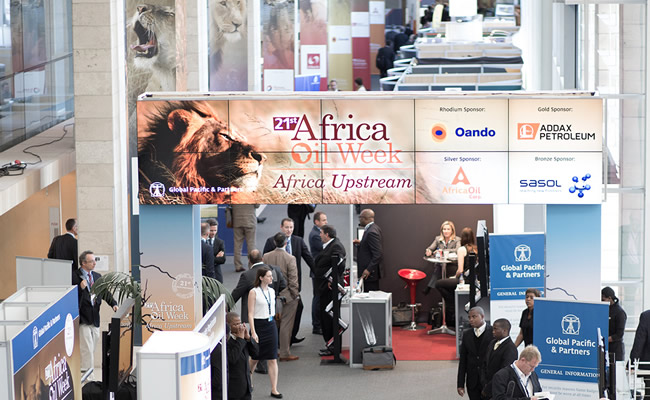
Anxiety as 24th Africa Oil Week Draws Closer

By Dipo Olowookere
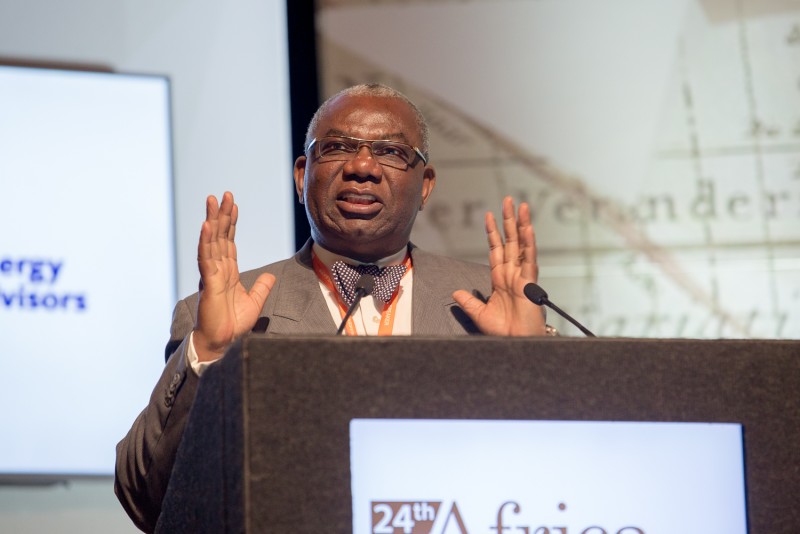
Stakeholders in the oil and gas industry in Africa are eagerly gearing up for the forthcoming 24th Africa Oil Week, which holds in Cape Town, South Africa, from 23-27 October.
At the moment, organisers of leading international oil and gas event have announced highlights of the internationally renowned programme.
The restrained business climate that has reigned over the industry for the past few years demanded that all operators review and adapt their business models and the way they operate. By the same token, the organisers of Africa Oil Week had to radically rethink the content for this year’s edition to meet the needs of delegates in search of solutions for tackling new challenges.
ITE’s Vice President for Africa, Sonika Greyvenstein, says, “We pride ourselves on being recognised as the world’s leading Africa-focused oil and gas event. To retain this title, we really had to think outside the box to design a programme that offers something over and above our renowned networking and deal-making opportunities – we want to give delegates access to revolutionary new ways of working, so they go away with knowledge, tools and methods to help them face a fast-evolving industry”.
The result is a programme strong on skills, solutions and strategies and infused with talks and debates of an ethical, political and motivational nature.
With the aim of providing the most current status of African and international policy, ITE has ramped up the presence of top ranking government officials. Rick Perry, US Energy Secretary, has been invited to speak as guest of honour at a session on global energy policy as well as during his department’s presentation of its LNG Handbook, designed to facilitate LNG projects in Sub-Saharan African nations.
In terms of African oil and gas ministers, participants will be able to engage directly with them on issues crucial to their investment plans and projects at the Ministerial Panel on African government strategies for “Attracting Operators and Investment”.
It includes presentations covering fiscal reforms and investment opportunities from the oil and gas ministers of Egypt, Angola, Equatorial Guinea, Ivory Coast, Republic of Congo and Namibia. South African Minister of Energy, Mmamoloko Kubayi, will open proceedings on Tuesday 24th October with a talk on the right energy mix for meeting environmental and development goals.
The Côte d’Ivoire Roadshow, presided over by Minister Thierry Tanoh, will promote the country’s hydrocarbons code and introduce its energy strategy 2020 along with available blocks coming up for licensing, thereby providing further opportunities for showcasing its investment environment as well as its petroleum code and legal and fiscal framework.
Mali, ranked one of the most dynamic countries in the region by the World Bank’s “Doing Business” report and winner of the AIM “Investment Award” for its incentive-strengthening reforms, is promoting its five oil-rich basins. Mr Hamed Ag Mohamed, Director-General of the Authority for the Promotion of Oil Research, will present the investment framework and its Public-Private Partnership policy.
A not-to-be-missed event is the debate “Phasing Out Fossil Fuels: The Moral Case”. Alex Epstein, Founder and President of the Center for Industrial Progress and author of the New York Times bestseller, “The Moral Case for Fossil Fuels” will pitch his pro-fossil fuels argument against that of renewable energy development and investment pioneer Charlotte Aubin-Kalaidjian, co-Founder and CEO of GreenWish Partners. Later in the day, Mr Epstein is the guest speaker at the invitation-only VIP & CEO Luncheon, to be held in the Exhibition Ballroom.
Contributing to the cutting edge content is the AAPG Science Seminar, comprising three half-day forums focusing on energising the growing world through knowledge and technology. This is especially important considering that the new wave of exploration is spearheaded by digital technology which, in turn, paves the way for new careers.
This digital aspect of the industry is of special interest to the students and graduates attending the Young Professional Roundtable discussions, during which they will be looking at the capabilities and skills that will secure their future in a constrained job market.
With the evolution of the industry requiring operators and stakeholders to be more resourceful and inventive, Africa Oil Week is bringing out some big guns in terms of analysis, inspiration and motivation. Daniel Silke, South African futurist and leading political economy analyst, kicks off the third day of the conference with a keynote on Africa’s resilience.
Mr Silke is renowned for his insights into issues surrounding global change, volatility and the future of the world. Then there’s Gilan Gork, renowned mentalist and master of influence. As a guest speaker at the SA Rugby Museum Cocktail Reception, Gilan will challenge delegates thinking while intelligently entertaining and motivating them.
Along with these exciting and innovative additions to this year’s Africa Oil Week programme, each session now includes an interactive Q&A, during which delegates can engage on a wide range of issues. In addition, there is an official Africa Oil Week App for IOS & Android devices to give delegates up-to-date information about the event, speakers, programme, networking sessions and venues and enabling them to post questions, participate in polls and contact other delegates.
Delegates who register by 30th September qualify for the £300 Early Bird Discount while companies registering three or more delegates benefit from an additional 10% discount.
All registration fees include access to the 17th Africa Independents Forum and the 24th Africa Upstream Conference and Exhibition but exclude the 80th PetroAfricanus Dinner and 9th Global Women Petroleum & Energy Club Luncheon, which must be booked separately. Companies registering three or more delegates benefit from an additional 10% discount.





By Adedapo Adesanya
The National Insurance Commission has issued new guidelines for the collection, management, and administration of the Insurance Policyholders’ Protection Fund.
In a circular issued to all insurance institutions on Tuesday, the regulator also set May 31, 2026, as the deadline for insurers to submit their assessment returns for the 2025 financial year.
Recall that on August 5, 2025, President Bola Tinubu signed into law the Nigerian Insurance Industry Reform Act ( NIIRA 2025).
This landmark legislation repeals the Insurance Act 2003, and consolidates related provisions, ushering in a modern regulatory framework. It lays a strong foundation for sustainable growth and increased investment in the country’s insurance sector.
The commission said the guidelines were issued in exercise of its powers under the 2025 Act and other existing insurance laws and regulations to provide regulatory clarity, improve guidance, and ensure ease of compliance across the industry.
According to NAICOM, the guidelines establish a comprehensive structure for the operation of the IPPF, which serves as a statutory safety net to protect insurance policyholders in the event of distress or insolvency of a licensed insurer or reinsurer. The framework also provides direction on the reimbursement of loans by insurers and reinsurers.
NAICOM stated, “The guidelines ensure regulatory clarity, guidance and ease of compliance, as it provides a comprehensive regulatory framework for the collection, management, and administration of the Fund, which serves as a statutory safety net designed to protect insurance policyholders against distress and insolvency of a licensed insurer or reinsurer, including guidance for the reimbursement of loans by an insurer or reinsurer.
“Please be informed that the IPPF Assessment Returns in respect of the year 2025 shall be submitted to the Commission not later than 31st May 2026, while subsequent submissions shall be in line with Section 4.3 of the Guideline on Insurance Policyholders Protection Fund.”
By Adedapo Adesanya
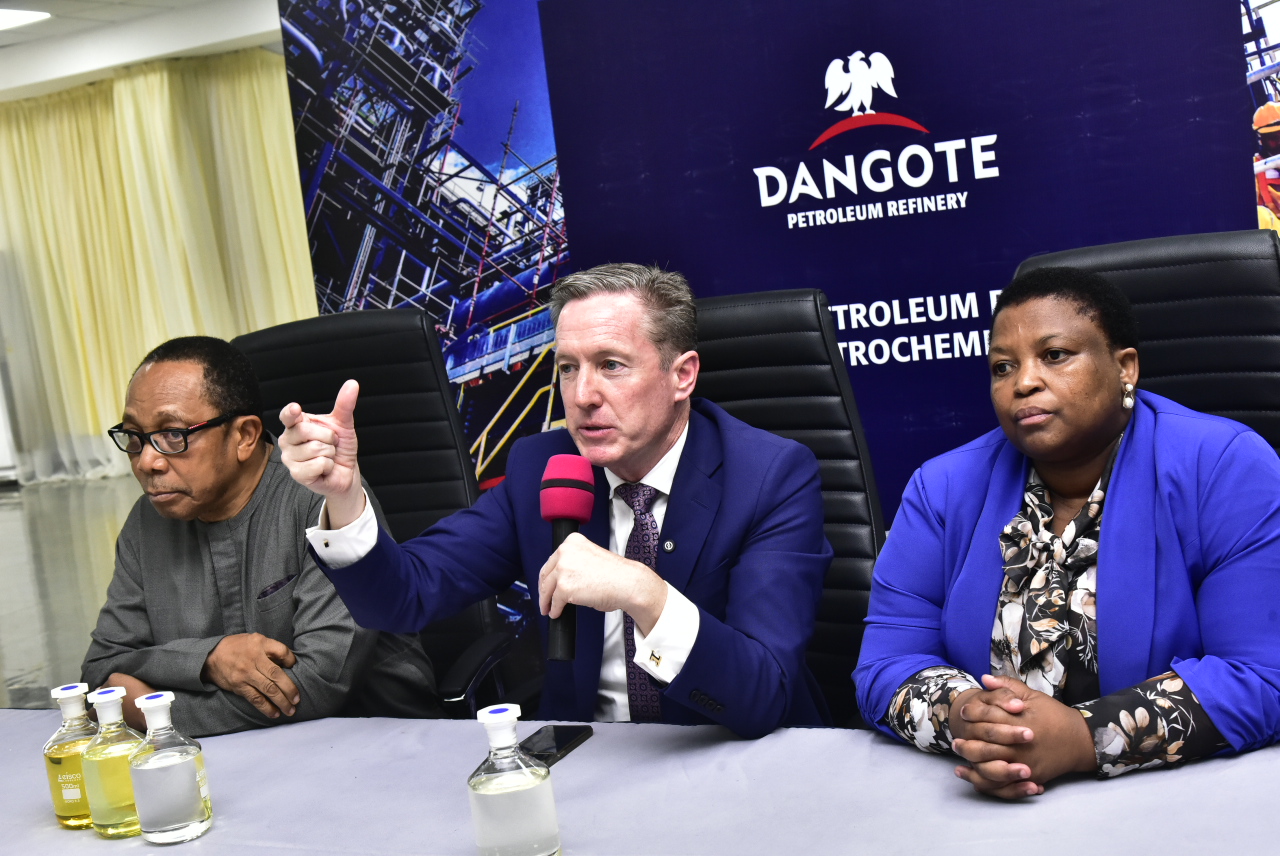
The Dangote Refinery on Wednesday returned the petrol price to N1,200 per litre, less than 24 hours after it increased it by 5 per cent.
The private refinery had raised the ex-depot price by N75 on Tuesday, citing pressure from volatile global oil markets, but quickly brought it back to N1,200 per litre from N1,275 per litre.
The swift downward review is directly linked to a sharp drop in international crude prices. Brent crude has plunged to $95.05 per barrel, after a 13 per cent decline, while the US West Texas Intermediate (WTI) crude closed at $97.18, recording nearly a 14 per cent drop.
This development comes after US President Donald Trump announced a conditional two-week ceasefire with Iran, which eased fears of immediate supply disruptions in the global oil market.
“This will be a double-sided CEASEFIRE!” Trump said on social media, marking a sharp reversal from his earlier warning that “a whole civilisation will die tonight” if Iran failed to comply with US demands.
Iran’s Foreign Minister, Mr Abbas Araqchi, confirmed that the country would halt attacks provided strikes against Iran cease and transit through the Strait of Hormuz is coordinated by Iranian forces.
Despite the breakthrough, tensions remain elevated across the region, with several Gulf states reporting missile launches, drone activity, or issuing civil defence warnings.
While oil prices have fallen back below $100, they remain significantly elevated after surging by a record amount in March. Market analysts noted that regardless of how successful the ceasefire is, geopolitical risk related to the Strait of Hormuz is likely to remain elevated for the foreseeable future under the control of Iran.
By Adedapo Adesanya
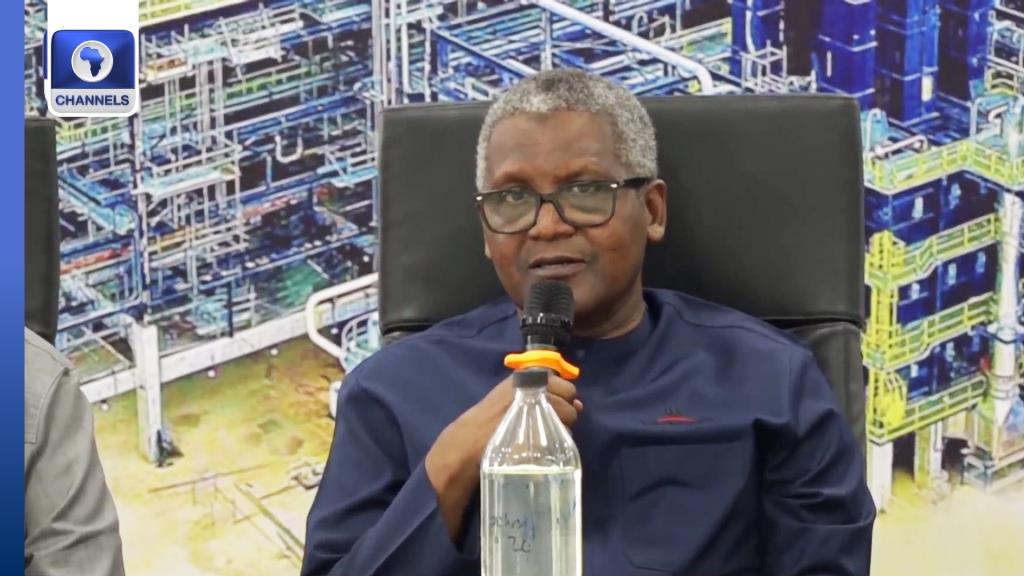
Crude oil deliveries from the Nigerian National Petroleum Company (NNPC) Limited to the Dangote Petroleum Refinery doubled in March, boosting prospects for improved fuel availability.
This was revealed by the chief executive of Dangote Industries Limited, Mr Aliko Dangote, on Tuesday, when he received the Deputy Secretary-General of the United Nations, Mrs Amina Mohammed, at the industrial complex in Ibeju-Lekki, Lagos.
While speaking on feedstock supply, Mr Dangote commended the NNPC for increasing crude deliveries to the refinery in March, noting that volumes rose to 10 cargoes—six supplied in Naira and four in Dollars—to support domestic fuel availability, according to a statement by the Refinery.
“Last month, they gave us six cargoes for Naira and four cargoes for Dollars,” he said.
Despite the improvement, Mr Dangote noted that the supply remains below the 19 cargoes required for optimal operations, with the refinery continuing to bridge the gap through imports from the United States and other African producers.
He also expressed concern over the unwillingness of international oil companies operating in Nigeria to sell to the refinery, stating that their preference for selling crude to traders forces it to repurchase at higher costs, with broader implications for the economy.
Mr Dangote added that the refinery is seeking increased access to domestically priced crude under local currency arrangements as part of efforts to moderate fuel costs and enhance long-term energy and food security across the continent.
On her part, Mrs Mohammed underscored the strategic importance of Dangote Industries Limited -particularly Dangote Fertiliser Limited—in addressing Africa’s mounting food security challenges, while calling for stronger global partnerships to scale its impact.
Mrs Mohammed said the United Nations would prioritise amplifying scalable solutions capable of mitigating the continent’s food crisis, describing Dangote’s integrated industrial model as a critical pathway.
“I think the UN’s job here is to amplify and to put visibility on the possibilities of mitigating a food security crisis, and this is one of them,” she said. “I hope that when we go back, we can continue to engage partners and countries that should collaborate with Dangote Industries.”
-
 Feature/OPED6 years ago
Davos was Different this year
-
Travel/Tourism10 years ago
Lagos Seals Western Lodge Hotel In Ikorodu
-

 Showbiz3 years ago
Estranged Lover Releases Videos of Empress Njamah Bathing
-
 Banking8 years ago
Sort Codes of GTBank Branches in Nigeria
-

 Economy3 years ago
Subsidy Removal: CNG at N130 Per Litre Cheaper Than Petrol—IPMAN
-

 Banking3 years ago
Sort Codes of UBA Branches in Nigeria
-

 Banking3 years ago
First Bank Announces Planned Downtime
-

 Sports3 years ago
Highest Paid Nigerian Footballer – How Much Do Nigerian Footballers Earn