Economy
Anxiety as 24th Africa Oil Week Draws Closer
By Dipo Olowookere
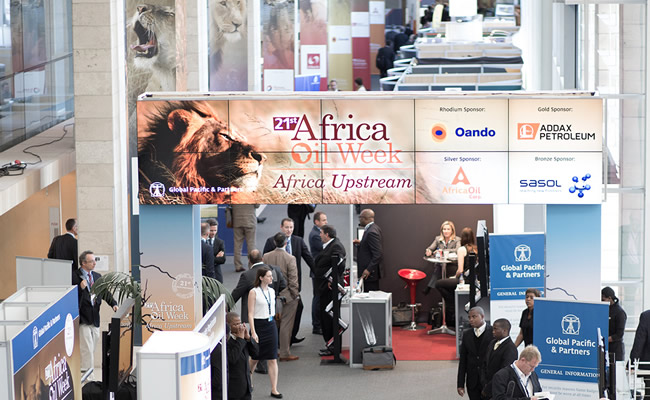
Stakeholders in the oil and gas industry in Africa are eagerly gearing up for the forthcoming 24th Africa Oil Week, which holds in Cape Town, South Africa, from 23-27 October.
At the moment, organisers of leading international oil and gas event have announced highlights of the internationally renowned programme.
The restrained business climate that has reigned over the industry for the past few years demanded that all operators review and adapt their business models and the way they operate. By the same token, the organisers of Africa Oil Week had to radically rethink the content for this year’s edition to meet the needs of delegates in search of solutions for tackling new challenges.
ITE’s Vice President for Africa, Sonika Greyvenstein, says, “We pride ourselves on being recognised as the world’s leading Africa-focused oil and gas event. To retain this title, we really had to think outside the box to design a programme that offers something over and above our renowned networking and deal-making opportunities – we want to give delegates access to revolutionary new ways of working, so they go away with knowledge, tools and methods to help them face a fast-evolving industry”.
The result is a programme strong on skills, solutions and strategies and infused with talks and debates of an ethical, political and motivational nature.
With the aim of providing the most current status of African and international policy, ITE has ramped up the presence of top ranking government officials. Rick Perry, US Energy Secretary, has been invited to speak as guest of honour at a session on global energy policy as well as during his department’s presentation of its LNG Handbook, designed to facilitate LNG projects in Sub-Saharan African nations.
In terms of African oil and gas ministers, participants will be able to engage directly with them on issues crucial to their investment plans and projects at the Ministerial Panel on African government strategies for “Attracting Operators and Investment”.
It includes presentations covering fiscal reforms and investment opportunities from the oil and gas ministers of Egypt, Angola, Equatorial Guinea, Ivory Coast, Republic of Congo and Namibia. South African Minister of Energy, Mmamoloko Kubayi, will open proceedings on Tuesday 24th October with a talk on the right energy mix for meeting environmental and development goals.
The Côte d’Ivoire Roadshow, presided over by Minister Thierry Tanoh, will promote the country’s hydrocarbons code and introduce its energy strategy 2020 along with available blocks coming up for licensing, thereby providing further opportunities for showcasing its investment environment as well as its petroleum code and legal and fiscal framework.
Mali, ranked one of the most dynamic countries in the region by the World Bank’s “Doing Business” report and winner of the AIM “Investment Award” for its incentive-strengthening reforms, is promoting its five oil-rich basins. Mr Hamed Ag Mohamed, Director-General of the Authority for the Promotion of Oil Research, will present the investment framework and its Public-Private Partnership policy.
A not-to-be-missed event is the debate “Phasing Out Fossil Fuels: The Moral Case”. Alex Epstein, Founder and President of the Center for Industrial Progress and author of the New York Times bestseller, “The Moral Case for Fossil Fuels” will pitch his pro-fossil fuels argument against that of renewable energy development and investment pioneer Charlotte Aubin-Kalaidjian, co-Founder and CEO of GreenWish Partners. Later in the day, Mr Epstein is the guest speaker at the invitation-only VIP & CEO Luncheon, to be held in the Exhibition Ballroom.
Contributing to the cutting edge content is the AAPG Science Seminar, comprising three half-day forums focusing on energising the growing world through knowledge and technology. This is especially important considering that the new wave of exploration is spearheaded by digital technology which, in turn, paves the way for new careers.
This digital aspect of the industry is of special interest to the students and graduates attending the Young Professional Roundtable discussions, during which they will be looking at the capabilities and skills that will secure their future in a constrained job market.
With the evolution of the industry requiring operators and stakeholders to be more resourceful and inventive, Africa Oil Week is bringing out some big guns in terms of analysis, inspiration and motivation. Daniel Silke, South African futurist and leading political economy analyst, kicks off the third day of the conference with a keynote on Africa’s resilience.
Mr Silke is renowned for his insights into issues surrounding global change, volatility and the future of the world. Then there’s Gilan Gork, renowned mentalist and master of influence. As a guest speaker at the SA Rugby Museum Cocktail Reception, Gilan will challenge delegates thinking while intelligently entertaining and motivating them.
Along with these exciting and innovative additions to this year’s Africa Oil Week programme, each session now includes an interactive Q&A, during which delegates can engage on a wide range of issues. In addition, there is an official Africa Oil Week App for IOS & Android devices to give delegates up-to-date information about the event, speakers, programme, networking sessions and venues and enabling them to post questions, participate in polls and contact other delegates.
Delegates who register by 30th September qualify for the £300 Early Bird Discount while companies registering three or more delegates benefit from an additional 10% discount.
All registration fees include access to the 17th Africa Independents Forum and the 24th Africa Upstream Conference and Exhibition but exclude the 80th PetroAfricanus Dinner and 9th Global Women Petroleum & Energy Club Luncheon, which must be booked separately. Companies registering three or more delegates benefit from an additional 10% discount.
Economy
NASD Exchange Falls 0.22% After Investors Lose N4.8bn
By Adedapo Adesanya
The NASD Over-the-Counter (OTC) Securities Exchange weakened by 0.22 per cent on Tuesday, April 28, with the market capitalisation down by N4.8 billion to N2.420 trillion from N2.425 trillion, and the NASD Unlisted Security Index (NSI) down by 9.01 points to 4,044.96 points from 4,053.97 points.
During the session, the price of Central Securities Clearing System (CSCS) Plc went down by N1.82 to N767.05 per share from N78.87 per share, while FrieslandCampina Wamco Nigeria Plc appreciated by N1.90 to N100.00 per unit from N98.10 per unit.
According to data, the value of trades increased by 265.7 per cent to N27.1 million from N7.4 million units, and the volume of transactions surged by 305.2 per cent to 1.3 million units from 319,831 units, while the number of deals decreased by 6.9 per cent to 27 deals from 29 deals.
Great Nigeria Insurance (GNI) Plc remained the most traded stock by value on a year-to-date basis, with the sale of 3.4 billion units valued at N8.4 billion, followed by CSCS Plc with 59.8 million units exchanged for N4.0 billion, and Okitipupa Plc with 27.8 million units traded for N1.9 billion.
GNI Plc also finished as the most traded stock by volume on a year-to-date basis, with a turnover of 3.4 billion units worth N8.4 billion, trailed by Resourcery Plc with 1.1 billion units transacted for N415.7 million, and Infrastructure Guarantee Credit Plc with 400 million units sold for N1.2 billion.
Economy
Naira Crashes to N1,380/$ at Official Market, N1,390/$1 at Black Market
By Adedapo Adesanya
Pressure is beginning to mount on the Nigerian Naira in the different segments of the foreign exchange (FX) market despite an oil windfall triggered by the Middle East crisis.
On Monday, April 27, the domestic currency further weakened against the United States Dollar in the Nigerian Autonomous Foreign Exchange Market (NAFEX) by N16.47 or 1.2 per cent to N1,380.71/$1 from the previous day’s N1,364.24/$1.
It was not different against the Pound Sterling in the same market window, as it lost N16.04 to trade at N1,863.76/£1 versus Monday’s closing rate of N1,847.72/£1, and against the Euro, it slipped by N12.72 to close at N1,615.01/€1 versus N1,602.29/€1.
The Naira also depreciated against the Dollar at the black market yesterday by N5 to quote at N1,390/$1 compared with the previous price of N1,385, and at the GTBank forex counter, it further crashed by N9 to settle at N1,379/$1 compared with the preceding session’s N1,370/$1.
The continued decline of the Naira comes as traders increasingly seek other safe-haven currencies amid continued global disruptions.
The benefit awash in the global market is making foreign portfolio investors stay short in Nigerian markets. Despite this, the daily FX publication released showed that interbank turnover rose to $98.829 million across 78 deals, up from $76.65 million.
Meanwhile, the cryptocurrency market remained cautious, with Bitcoin (BTC) trading at $77,216.66 despite surging oil prices and geopolitical tensions over a potential extended US naval blockade of the Strait of Hormuz.
Analysts say the supply overhang has finally dried up, and the sellers who were spooked by macro shifts or quantum fears have already exited, leaving the market much thinner on the sell-side.
Investors will await decisions made by central banks this week. The US Federal Reserve will announce its rate decision later on Wednesday, while the European Central Bank (ECB) follows on Thursday.
Ethereum (ETH) gained 1.5 per cent to trade at $2,324.59, Dogecoin (DOGE) chalked up 1.4 per cent to sell for $0.1016, Solana (SOL) appreciated by 0.6 per cent to $84.85, Cardano (ADA) grew by 0.5 per cent to $0.2483, and Binance Coin (BNB) advanced by 0.2 per cent to $627.15.
However, TRON (TRX) depreciated by 0.6 per cent to $0.3224, and Ripple (XRP) lost 0.03 per cent to sell at $1.39, while the US Dollar Tether (USDT) and the US Dollar Coin (USDC) were unchanged at $1.00 each.
Economy
Oil up 3% as Hormuz Disruption Outweighs UAE OPEC Exit
By Adedapo Adesanya
Oil was up by nearly 3 per cent on Tuesday as persistent worries about supply constraints from the closed Strait of Hormuz continued, with Brent futures for June rising by $3.03 or 2.8 per cent to $111.26 a barrel, and the US West Texas Intermediate (WTI) crude futures growing by $3.56 or 3.7 per cent to $99.93 a barrel.
An earlier round of negotiations between the United States and Iran collapsed last week after face-to-face talks failed.
Ship-tracking data showed significant disruptions in the region, with six Iranian oil tankers forced to turn back due to the US blockade, but some traffic is still moving.
Prices trimmed some of the advances after the United Arab Emirates (UAE), the fourth-largest producer in the Organisation of the Petroleum Exporting Countries (OPEC), said on Tuesday it would exit the group on this Friday, May 1, 2026.
This dealt a blow to the oil-exporting group and its de facto leader, Saudi Arabia.
The UAE could quickly add between 1 million and 1.5 million barrels per day of output. However, with the Strait of Hormuz effectively closed, analysts said that there’s nowhere for that supply to go.
The UAE joined OPEC in 1967, but tension with Saudi Arabia over production quotas has been building for years.
Under the OPEC+ deal, the country has been held to roughly 3 million barrels per day while sitting on capacity above 4 million. It has been pushing toward 5 million barrels per day by 2027, and that target is hard to achieve with quotas built around someone else’s view of the market.
The war in Yemen broke whatever was left of diplomatic patience.
President Donald Trump said he was unhappy with the latest Iranian proposal to end the war. The proposal would avoid addressing the nuclear programme until hostilities cease and Gulf shipping disputes are resolved.
The Idemitsu Maru, a Panama-flagged tanker carrying 2 million barrels of Saudi oil, and an LNG tanker managed by the Abu Dhabi National Oil Company (ADNOC) crossed the Strait on Tuesday, shipping data showed.
Vortexa data showed that the amount of crude oil held around the world on tankers that have been stationary for at least seven days rose to 153.11 million barrels as of April 24.
The American Petroleum Institute (API) estimated that crude oil inventories in the United States fell by 1.79 million barrels in the week ending April 24. The official data from the US Energy Information Administration (EIA) will be released later on Wednesday.
-
Feature/OPED6 years agoDavos was Different this year
-
Travel/Tourism10 years ago
Lagos Seals Western Lodge Hotel In Ikorodu
-
Showbiz3 years agoEstranged Lover Releases Videos of Empress Njamah Bathing
-
Banking8 years agoSort Codes of GTBank Branches in Nigeria
-
Economy3 years agoSubsidy Removal: CNG at N130 Per Litre Cheaper Than Petrol—IPMAN
-
Banking3 years agoSort Codes of UBA Branches in Nigeria
-
Banking3 years agoFirst Bank Announces Planned Downtime
-
Sports3 years agoHighest Paid Nigerian Footballer – How Much Do Nigerian Footballers Earn