Connect with us

Economy

Appeal Court Affirms SEC Powers to Regulate Public Firms

Published

on

sec capital market

By Dipo Olowookere

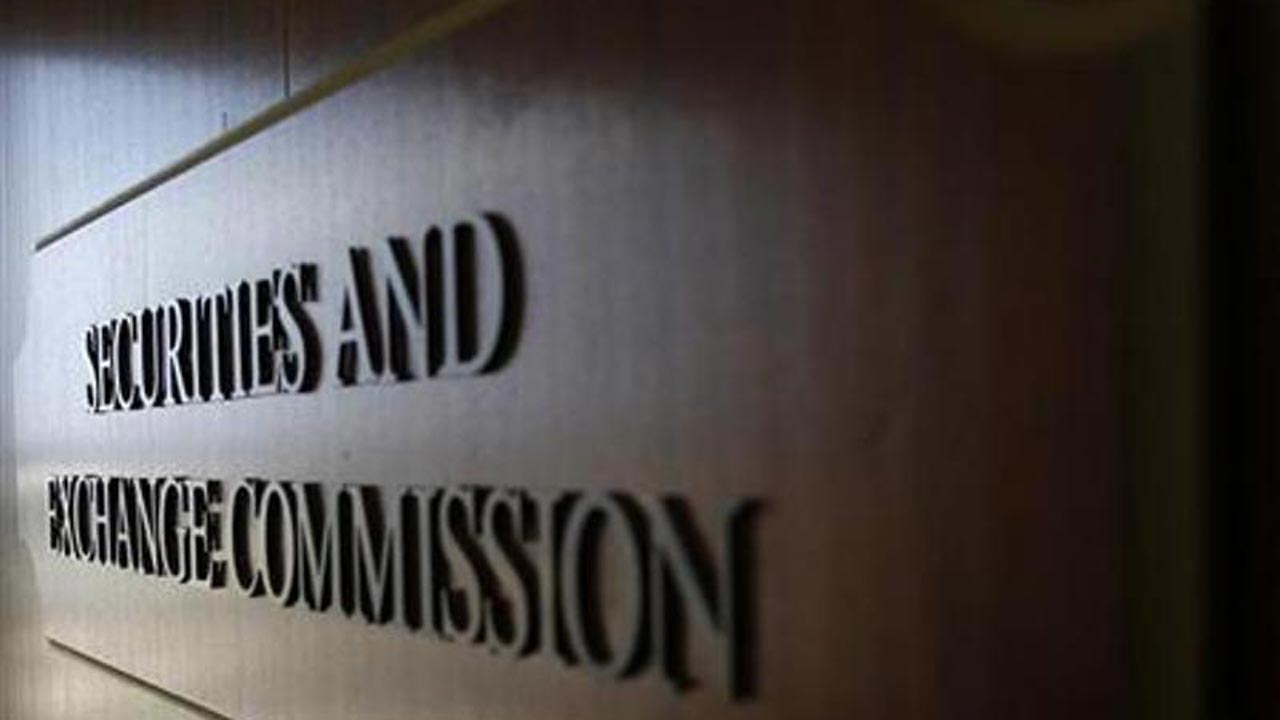
A Court of Appeal in Nigeria has said the Securities and Exchange Commission (SEC) has been authority to oversee affairs in any publicly listed companies in the capital market so as to protect interest of investors.

The judgment, which was given on January 31, 2019, emphasised that SEC, being the apex regulator in the capital market in Nigeria, has powers to intervene in the management and control of any public company which is considered to have failed, is failing or is in crises. 

The ruling noted that the commission was statutorily mandated to ensure the protection of investors and maintain a fair, efficient and transparent market.

In 2008, SEC had conducted an investigation on Big Treat Plc, a public listed company (firstrespondent) and its directors which revealed several infractions of the Investments and Securities Act (ISA) 2007 such as inadequate internal control systems and a breakdown of corporate governance in the company.

Based on the foregoing, and pursuant to the provisions of Section 13 (v) of the ISA 2007, the commission in 2010 approached the Federal High Court seeking a number of reliefs against Big Treat Plc (first respondent), three of its directors – Pamela Wu, Harries Wu, Steve Wu – and two entities owned by them – New Frontier Engineering and Construction Company Ltd and Skyone Group of Companies Ltd with a view to preserving the assets of the first respondent.

In the course of the proceedings, SEC applied for and was granted an ex-parte order of interim injunction restraining the second– sixth respondents, their agents, servants or privies from obstructing the commission in the exercise of its statutory oversight responsibilities to the first respondent including the appointment of an interim management to take charge of the day to day administration of the first respondent with a view to preserving its assets in the interest of its stakeholders pending the determination of the motion on notice already filed in this suit.

However, the ex-parte order was subsequently vacated on the grounds that the first respondent (Big Treat Plc) “was not a capital market operator amenable to the control and management of the appellant in times of financial distress”.

The commission appealed against the decision of the Federal High Court and the sole issue for determination as raised by SEC before the Court of Appeal was “whether the lower court was right when it held that the first respondent (Big Treat Plc) is not a capital market operator because it does not play any specific role in the capital market and as such, not registerable or subject to the control of the appellant (the commission)”.

In the judgment, the appellate court held, “That the first respondent, an issuer of securities, having been duly registered with the appellants and was at all material times performing the specific function of issuing securities in the capital market was subject to the intervention of the statutory powers of the appellant as the pinnacle regulatory authority for the Nigerian capital market whose sole purpose is to ensure the protection of investors and to maintain fair, efficient and transparent capital market as well as reduction of systemic risk as stated in the preamble of the ISA- the beacon light to the powers of the appellant under the ISA.”

“In conclusion, I most respectfully hold that the court below should not have vacated the interim preservative order made by it to protect the imminent collapse of the first respondent but the appellant who at all material times was exercising statutory powers under the ISA to stem the tide of decay in the internal management of the first respondent,” the court further held.


Dipo Olowookere is a journalist based in Nigeria that has passion for reporting business news stories. At his leisure time, he watches football and supports 3SC of Ibadan. Mr Olowookere can be reached via [email protected]

Click to comment

Leave a Reply

Your email address will not be published. Required fields are marked *

Economy

NASD Bourse Edges Up 0.23% as NSI Nears 3,970 Points

Published

on

NASD OTC Bourse

By Adedapo Adesanya

The NASD Over-the-Counter (OTC) Securities Exchange further appreciated by 0.23 per cent on Thursday, April 23, with the Unlisted Security Index (NSI) adding 8.99 points to close at 3,969.96 points against the previous day’s 3,968 points.

The rise in the share price of Central Securities Clearing System (CSCS) Plc by N2.86 to N69.34 per unit from N66.48 per unit raised the market capitalisation of the NASD bourse by N5.38 billion to N2.380 trillion from N2.375 trillion.

Yesterday, there were two price losers, led by Food Concepts Plc, which lost 29 Kobo to sell at N2.65 per share versus N2.94 per share, while UBN Property Plc dipped by 22 Kobo to N2.03 per unit from N2.25 per unit.

During the session, the volume of securities traded declined by 97.9 per cent to 451,522 units from 21.5 million units on Wednesday, the value of securities depreciated by 52.32 per cent to N23.6 million from N49.5 million, and the number of deals depreciated by 3.6 per cent to 27 deals from 28 deals.

At the close of business, Great Nigeria Insurance (GNI) Plc remained the most active stock by value on a year-to-date basis with 3.4 billion units valued at N8.4 billion, followed by CSCS Plc with 59.5 million units exchanged for N4.0 billion, and Okitipupa Plc with 27.8 million units traded for N1.9 billion.

GNI Plc also closed the day as the most traded stock by volume on a year-to-date basis with 3.4 billion units worth N8.4 billion, trailed by Resourcery Plc with 1.1 billion units transacted for N415.7 million, and Infrastructure Guarantee Credit Plc with 400 million units sold for N1.2 billion.

Continue Reading

Economy

Naira Weakens to N1,353/$ at Official Market

Published

on

Naira appreciates

By Adedapo Adesanya

Fresh foreign exchange (forex) demand pressure saw the Naira depreciate against the United States Dollar in the Nigerian Autonomous Foreign Exchange Market (NAFEX) on Thursday, April 22, by N5.46 or 0.4 per cent to trade at N1,353.91/$1 compared with the preceding day’s value of N1,348.45/$1.

It was the same outcome for the local currency in the official market after it depreciated against the Pound Sterling by N4.13 to close at N1,825.88/£1, in contrast to the preceding session’s N1,821.75/£1, and against the Euro, it dropped 72 Kobo to finish at N1,582.72/€1 versus N1,582.00/€1.

But the Nigerian Naira appreciated against the US Dollar at the GTBank FX desk by N2 during the session to quote at N1,361/$1 compared with Wednesday’s closing price of N1,361/$1, and at the parallel market, it closed flat at N1,375/$1.

FX Pressure came as data showed that NFEM interbank turnover was N28.117 million, lower than the N66.084 million recorded the previous day.

Concerns over liquidity pressures, policy transparency, and confidence in Nigeria’s FX market continue to grip the market while the country’s foreign reserve declines further, even as the Central Bank of Nigeria (CBN) recently said that the recent decline in Nigeria’s external reserves should not be a cause for concern.

Global developments also played a significant role, as rising geopolitical tensions boosted demand for the US Dollar, further weakening emerging market currencies, including the Naira.

As for the cryptocurrency market, there was a mixed outcome as traders reacted to rising geopolitical tensions from the Iran war and fresh inflation data from Japan.

Japanese inflation ticked higher in March, stoking expectations that the Bank of Japan may soon signal rate hikes, which could strengthen the yen and unsettle global risk assets.

The Iran conflict has disrupted oil flows through the Strait of Hormuz, raising energy costs and inflation risks worldwide and potentially complicating efforts by the Federal Reserve to cut interest rates.

Ethereum (ETH) declined by 1.8 per cent to $2,316.53, Bitcoin (BTC) lost 0.6 per cent to sell at $77,935.53, Solana (SOL) fell by 0.5 per cent to $85.67, and Binance Coin (BNB) dropped 0.4 per cent to sell for $634.85.

However, Dogecoin (DOGE) appreciated by 1.4 per cent to $0.0976, Ripple (XRP) grew by 0.7 per cent to $1.43, Cardano (ADA) expanded by 0.6 per cent to $0.2493, and TRON (TRX) improved by 0.2 per cent to $0.3279, while the US Dollar Tether (USDT) and the US Dollar Coin (USDC) traded flat at $1.00 each.

Continue Reading

Economy

NB Plc’s Strong Recovery, Improved Profitability Excite Shareholders

Published

on

Nigerian Breweries NB Plc shareholders

By Aduragbemi Omiyale

The resilience shown by Nigerian Breweries Plc in the 2025 fiscal year, despite a volatile macroeconomic environment, which consumed several businesses, has not got without notice.

Shareholders of the brewery giant applauded the board and management for the strong recovery and improved profitability recorded in the year.

At the company’s 80th Annual General Meeting (AGM) on Wednesday, April 22, 2026, in Lagos, they attributed these achievements to disciplined cost management and a significant reduction in finance expenses.

“We are proud of how the company has withstood the ups and downs of a challenging environment. The return to profitability and the reversal of the negative cash position recorded in the previous two financial years are commendable,” a member of the Noble Shareholders Association, Mr Owolabi Opeyemi, said at the gathering.

Also, the immediate past Secretary of the Independent Shareholders Association of Nigeria (ISAN), Mr Eke Emmanuel, noted that the company’s resilience reflects strong leadership and a sound strategic direction.

“It is good news that we have been here for 80 years. There is no reason why we will not be here for the next 80 years with what we have achieved. To return to this level of profitability and cash position shows the Board has done an enormous amount of work,” he said.

Addressing investors at the AGM, the board chairman, Mrs Juliet Anammah, expressed confidence that the company is firmly on a recovery path following the net losses recorded in the past two years due to macroeconomic pressures and fiscal reforms.

She thanked shareholders for their continued support and reaffirmed that the company will build on its 2025 performance as it accelerates growth ambitions.

 “We have a solid foundation built over eight decades, anchored on a strong portfolio of brands, an extensive nationwide sales and supply chain network, ongoing digital transformation, and most importantly, our people. These strengths remain critical to sustaining our leadership position,” the former chief executive of Jumia Nigeria said.

Ms Anammah also addressed the company’s dividend position, noting that the decision not to declare a dividend reflects the need to rebuild retained earnings impacted by prior macroeconomic shocks, particularly foreign exchange-related losses.

“We recognise the importance of dividend payments to our shareholders and sincerely appreciate your continued understanding. While we are not declaring a dividend at this time due to negative retained earnings, we are working diligently to restore the company’s financial position and return to dividend payments as soon as it is sustainable to do so,” she added.

She further noted that the board remains vigilant to external risks, including the Middle East crisis and broader macroeconomic challenges, which may impact the pace of improvement in the 2026 financial year.

Continue Reading

Trending