Connect with us

Economy

Asharami Synergy Highlights Growth Enablers for African Downstream Sector

Published

on

By Modupe Gbadeyanka

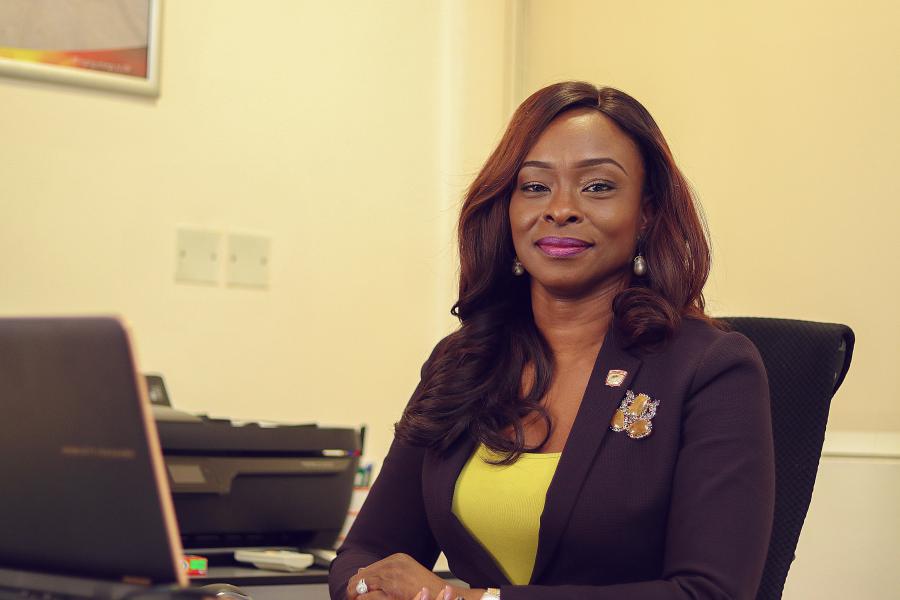
Managing Director of Asharami Synergy Plc, Mrs Moroti Adedoyin-Adeyinka, has said the emerging ‘downstream of the future’ will require a change in operating business model to accommodate a more integrated downstream value chain, service differentiation through technology and shift to importing cleaner fuel.

Mrs Adedoyin-Adeyinka made this disclosure while speaking ahead of the OTL Africa Downstream Conference held in Lagos from October 29 to 31, 2018.

According to her, the sector’s future would require increased Investments in Downstream Infrastructure, Regional and Pan-African Expansion Opportunities and Increased Integration along the Downstream Value Chain.

Asharami Synergy Plc, a Sahara Group Company, was one of the frontline participants at the OTL conference where the organization facilitated conversations that bolstered the downstream sector with practical solutions.

Mrs Adedoyin-Adeyinka joined other leading sector experts to deliver a keynote address on ‘Takeovers and Markets: The changing roles of Independents and Majors in downstream petroleum’ at the conference.

“There is a strong prospect for growth in Africa’s downstream sector that will be driven by the emergence of ‘New Majors’ like Asharami Synergy. We are passionate about transforming the sector and believe the OTL platform will throw up key issues all stakeholders need to address as we align with regional and global trends in the sector,” the Asharami CEO noted.

According to Mrs Adedoyin-Adeyinka, Asharami Synergy Plc was formed as a result of the consolidation of Sahara Group’s downstream entities and has through the integration of its business divisions enhanced its position as a leading vertically integrated downstream business with vast experience in delivering fuelling solutions across Sub-Saharan Africa.

“It’s a new dawn for the downstream sector and Asharami Synergy remains committed to spearheading and supporting thought leadership platforms on the continent to enhance stakeholder capacity for leveraging downstream growth opportunities and negotiating industry challenges.”

During the confab, Asharami engaged various stakeholders at the OTL exhibition to discuss its suite of specialized services, including Product Importation, Vessel Chartering, and Product Sourcing on behalf of Third-Party Clients.

Other services included construction and bulk storage of Premium Motor Spirit (PMS), Aviation Turbine Kerosene (ATK) and Automotive Gas Oil (AGO) as well as marketing and distribution of bulk, retail, industrial, commercial and door-to-door white product sales and lubricant sales.

Asharami currently supplies 27% of Nigeria’s aviation fuel demand and supplies a significant share of Nigeria’s Premium Motor Spirit (PMS) and Automotive Gas Oil (AGO) requirements.


Modupe Gbadeyanka is a fast-rising journalist with Business Post Nigeria. Her passion for journalism is amazing. She is willing to learn more with a view to becoming one of the best pen-pushers in Nigeria. Her role models are the duo of CNN's Richard Quest and Christiane Amanpour.

Click to comment

Leave a Reply

Your email address will not be published. Required fields are marked *

Economy

Nigeria Accesses $1.5bn from UAE Lender’s $5bn Swap Deal

Published

on

First Abu Dhabi Bank

By Adedapo Adesanya

Nigeria has received the first tranche of its $5 billion derivatives financing arrangement with the First Abu Dhabi Bank (FAB), the United Arab Emirates’ largest lender.

According to a Bloomberg report published on Friday, the federal government drew about $1.5 billion over the past two weeks through a Total Return Swap (TRS) transaction with the lender.

The report stated that Nigeria will provide naira-denominated securities valued at 133.3 per cent of the loan amount as collateral for the transaction, while international financial institutions continue to express concerns about the risks associated with such derivative-based financing structures.

The financing is expected to support the government’s debt management strategy by replacing more expensive borrowings while helping finance the country’s fiscal deficit.

The first tranche is priced at 395 basis points above the Secured Overnight Financing Rate (SOFR), rising to SOFR plus 400 basis points thereafter.

The transaction further expands Nigeria’s financial relationship with First Abu Dhabi Bank, which had earlier provided about $1.2 billion to support the construction of a section of the ongoing Lagos-Calabar Coastal Highway.

The swap deal has come with much scrutiny from critics and international organisations. Recall that the International Monetary Fund (IMF), after a consultation visit, warned Nigeria against the deal, noting that such transactions are ‌often opaque and complex.

“Our view is that the transactions in these types of structures carry risks. Usually they are opaque, so the terms are not always ⁠very transparent when we reviewed these instruments across countries,” according to the IMF’s mission chief in Nigeria, Mr Christian Ebeke.

Mr Ebeke said Nigeria could instead issue eurobonds to finance its deficits or other means to raise funding, including on concessional terms.

The Senate in April gave its approval to the agreement put forward by President Bola Tinubu, who said his administration intends to use proceeds from the total return swap to refinance expensive debt and pay for infrastructure.

Continue Reading

Economy

Nigeria Needs More Taxpayers, Not Higher Taxes—Oyedele

Published

on

FIRS taxes

By Adedapo Adesanya

The Minister of Finance and Coordinating Minister of the Economy, Mr Taiwo Oyedele, yesterday clarified that the federal government is not increasing taxes but making efforts to raise the tax net.

Mr Oyedele made this remark on Thursday while receiving a delegation from the Chartered Institute of Taxation of Nigeria (CITN) at his office in Abuja.

He hailed the institute for introducing a National Tax Awareness Day and for supporting the current tax reforms of the federal government.

The minister charged the institute to double its effort in public enlightenment, stressing that many Nigerians still view taxation as a means for the government to take money from citizens.

He reiterated that the priority of the government is not to increase tax rates but to broaden the tax base by ensuring that all eligible taxpayers meet their obligations.

“We are still not getting enough revenue from taxes.

“It is not about increasing taxes but making sure that those who are supposed to pay taxes. We want to promote fairness in tax administration,” he said.

Nigeria is challenged by the inability to generate adequate revenue from taxation despite ongoing reforms, stressing that a significant number of eligible taxpayers have yet to fulfil their civic obligations.

He said the challenge facing the country was not necessarily about raising tax rates but ensuring that individuals and businesses that ought to pay taxes do so in a fair and transparent system.

The minister also commended the institute for supporting the federal government’s tax reform agenda and promoting public understanding of taxation, but urged it to intensify its advocacy efforts, noting that many Nigerians still harbour misconceptions about taxation.

According to him, many citizens continue to view taxation merely as a tool for the government to take money from the people rather than as a critical instrument for national development.

“We are still not getting enough revenue from taxes. It is not about increasing taxes, but making sure that those who are supposed to pay taxes. We want to promote fairness in tax administration,” he added.

Mr Oyedele stressed that if Nigeria succeeds in building an efficient and equitable tax system, the impact on infrastructure, public services and economic development would be transformative, challenging the institute to introduce annual awards for the country’s most tax-compliant individuals and organisations as a means of encouraging voluntary compliance and recognising responsible taxpayers.

Continue Reading

Economy

Akara, Kulikuli, Roasted Corn Business Not Capital Intensive—Remi Tinubu

Published

on

remi tinubu

​By Modupe Gbadeyanka

Nigeria’s First Lady, Mrs Oluremi Tinubu, has given Nigerians business advice that may not involve a lot of money to start.

Speaking with newsmen recently, the wife of President Bola Tinubu said businesses like akara (fried bean cake), kulikuli (a crunchy snack from roasted peanuts or groundnuts) and roasted corn can be set up without breaking the bank.

She disclosed that to support her husband’s Renewed Hope agenda, she has provided funding packages to traders and others to the tune of N3.5 billion.

“To start akara business doesn’t take a lot of money. To start roasting corn and kuli-kuli doesn’t take much. We didn’t give them a loan; we gave it to them as a grant,” she stated.

She further said, “We’ve encouraged Nigerians as best as we could, what is within our hands, I have given, and I keep giving. Those are the things we’ve done.”

“I remember giving for TB (tuberculosis) when I heard of many TB cases; I gave N2 billion, to breast cancer, I gave N1 billion, and to [tackle] malnutrition, I gave N500 million.

“These are the things we’ve been doing to assist the government. So, we’ve had impact in agriculture, social investment, education (as scholarship and ICT training) and others. We are still open to doing more,” she disclosed.

Continue Reading

Trending