Connect with us

Economy

August Inflation Rate Will Remain Flat at 11.14%—FSDH

Published

on

inflation rate Nigeria

By Modupe Gbadeyanka

Analysts at FSDH Research are predicting that the inflation rate for the month of August 2018 will remain unchanged at 11.14 percent year-on-year.

This was contained in the Inflation Watch report released by the investment company last Friday.

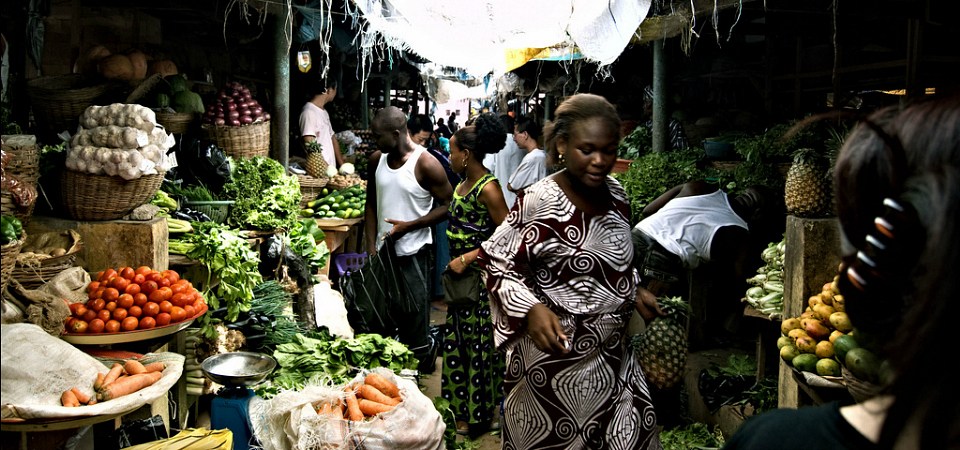
According to FSDH Research, although there was moderation in the prices of some food items in August, the contraction in the agriculture sector may place pressure on food prices in coming months.

The National Bureau of Statistics (NBS) is expected to release the inflation rate for the month of August on Friday, 14 September 2018.

The Food Price Index (FPI) report that the Food and Agriculture Organization (FAO) published for the month of August 2018 noted that food prices in the international market increased marginally in August from the July levels.

The prices of sugar, edible oil and dairy dropped in August compared with July while the prices of cereal and meat increased. The depreciation of currencies in Brazil and India against the US Dollar resulted in the decrease in sugar prices. However, tight export in wheat and maize forced prices up.

FSDH Research’s analysis indicated that the value of the Naira depreciated at both the Nigerian Autonomous Foreign Exchange (NAFEX), and the parallel market at end-August 2018.

At the NAFEX and parallel markets, the value of the Naira depreciated by 0.40 percent and 0.08 percent to close at N362.65/$ and N306.15/$ respectively at the end of August.

The marginal increase in the international prices of food coupled with the depreciation in the value of the Naira placed an upward pressure on prices of some consumer goods in August.

The prices of food items that FSDH Research monitored in August 2018 moved in varying directions. The movement in the prices of food items during the month led to a 1.10 percent increase in the Food and Non-Alcoholic Index.

This Index increased year-on-year by 12.76 percent, up from 251.66 points recorded in August 2017.

“We also observed an increase in the prices of Transport and Housing, Water, Electricity, Gas & Other Fuels divisions between July and August 2018.

“We estimate that the increase in the Composite Consumer Price Index (CCPI) in August would produce an inflation rate of 11.14 percent, same as the figure recorded in July,” the firm said.


Modupe Gbadeyanka is a fast-rising journalist with Business Post Nigeria. Her passion for journalism is amazing. She is willing to learn more with a view to becoming one of the best pen-pushers in Nigeria. Her role models are the duo of CNN's Richard Quest and Christiane Amanpour.

Economy

Weak Investor Participation Shrinks NAFEM Inflows to $2.86bn in April

Published

on

fx inflows nigeria

By Adedapo Adesanya

Total inflows into the Nigerian Autonomous Foreign Exchange Market (NAFEM) fell sharply in April 2026 as geopolitical tensions and weaker participation from both domestic and foreign investors impacted liquidity in the FX market.

Data from the FMDQ Securities Exchange showed that total foreign exchange inflows declined by 30.1 per cent month-on-month to $2.86 billion in April, down from $4.09 billion recorded in March.

The decline was driven by reduced inflows from the Central Bank of Nigeria (CBN), exporters, importers, foreign portfolio investors and non-bank corporates, reflecting growing investor caution amid rising tensions in the Middle East and uncertainty surrounding the US-Iran conflict.

Local inflows, which accounted for 42.8 per cent of total market inflows, dropped by 38.7 per cent to $1.22 billion from $2.00 billion in March.

The steepest decline came from the CBN, whose interventions in the market fell by 83 per cent month-on-month. Inflows from exporters and importers declined by 19.3 per cent, non-bank corporates by 18.2 per cent, while inflows from individuals fell by 33.3 per cent.

Foreign inflows, which contributed 57.2 per cent of the total, also weakened by 21.9 per cent to $1.63 billion compared to $2.09 billion in March.

A breakdown of the foreign component showed that foreign portfolio investment (FPI) inflows dropped by 17.8 per cent, foreign direct investment (FDI) plunged by 78.9 per cent, while inflows from other corporates declined by 54.6 per cent.

Despite the drop in inflows, the local currency posted a modest gain against the US Dollar during the week, appreciating by 1.2 per cent to close at N1,360/$1, supported largely by offshore investor inflows that helped offset domestic demand pressures.

However, the local currency ended the week slightly weaker at the official market, depreciating by 0.22 per cent to N,361.40 per Dollar while gaining 44 basis points at the parallel market to close at N1,363.15/$1.

In the forwards market, the Naira strengthened across all tenors, with the one-month contract appreciating by 1.2 per cent to N1,384.53 to the Dollar, the three-month contract by 1.2 per cent to N1,424.08/$1, the six-month contract by 1.3 per cent to N1,478.39/$1, and the one-year contract by 1.5 per cent to N1,586.56/$1.

Nigeria’s gross external reserves continued their downward trend, declining by $40 million to $48.33 billion as of May 7, 2026. This marked the eighth consecutive week of decline, attributed to sustained CBN interventions, debt service obligations, subdued oil receipts and foreign capital outflows.

Meanwhile, crude oil prices rose in the international market as renewed hostilities between the US and Iran in the Strait of Hormuz raised concerns over potential supply disruptions.

Brent Crude gained 1.2 per cent to $101.30 per barrel while the US West Texas Intermediate (WTI) rose 0.5 per cent to $95.28 per barrel.

Continue Reading

Economy

Renaissance Targets 500,000bpd Crude Oil Output by 2030

Published

on

west texas intermediate WTI crude

By Adedapo Adesanya

Renaissance Africa Energy Company Limited has unveiled plans to increase crude oil production to 500,000 barrels per day by 2030, while simultaneously expanding healthcare investments across its host communities in Rivers State.

The company, which operates the NNPC/Renaissance/TotalEnergies/AENR Joint Venture, disclosed this during the launch of its four-day Vision First Plus healthcare outreach programme in B-Dere community, Gokana Local Government Area in Rivers State, where thousands of residents received free eye surgeries, cancer screening, dental care, and treatment for chronic ailments.

Vice President, Relations and Sustainable Development, Renaissance Africa Energy Company Limited, Mr Igo Weli, said the company’s growth strategy combines energy production with sustained investment in community wellbeing.

“Renaissance is helping Nigeria reclaim production momentum, boosting national crude output by over 200,000 barrels per day and delivering 1.9 billion cubic feet of gas daily to Bonny NLNG within our first year of operations,” Weli stated.

“Our ambition to reach 500,000 barrels per day by 2030 is anchored not just in volume but in value; value for the economy, value for people, and value for the planet.”

Last year, Renaissance acquired the joint venture onshore assets under Shell Petroleum Development Company (SPDC), making it Nigeria’s biggest upstream operator by asset portfolio and installed capacity.

Mr Weli, represented by the General Manager, Health Renaissance, Mr Akinwumi Fajola, noted that the healthcare outreach reflects Renaissance’s commitment to sustainable development in host communities, stressing that access to quality healthcare should not be treated as a privilege.

“At Renaissance, our purpose is clear; to stand with our communities, invest in people, and create opportunities for healthy and thriving lives,” he said.

“Vision First Plus reflects our belief that access to quality and affordable healthcare is not a privilege, but a shared responsibility.”

According to Mr Weli, the programme was designed to take healthcare directly to underserved communities rather than waiting for residents to visit hospitals and clinics.

“We have designed Health in Motion to take essential healthcare services beyond the walls of hospitals and clinics, delivering care directly to the communities where and when it is most needed,” he said.

The outreach includes eye surgeries, eye screening and consultation, distribution of reading glasses, dental services, mammography, cryotherapy for cancer screening, cardiovascular checks, laboratory services, treatment of chronic and minor ailments, deworming, and insecticide-treated mosquito nets.

Mr Weli disclosed that the company also trained community-based health volunteers known as “Vision Finders” to identify people suffering from visual impairments and connect them to treatment.

“This is not just a health intervention. It is an act of empowerment; investing in people, building local capacity, and ensuring that the work we started together does not end when we leave,” he added.

Representing the Chief Upstream Investment Officer of NNPC Upstream Investment Management Services (NUIMS), Mrs Nkechi Anaedobe, said the joint venture remained focused on improving living conditions in host communities.

“Even though we do exploration and production, it’s important for us as companies that we work on the sustainability path of our lives in the host community,” she said.

Mrs Anaedobe revealed that the programme is expected to exceed its initial target of 5,000 beneficiaries.

“We had over 5,000 as our target, and we’re on track to not only meet that but surpass it as well,” she added.

Continue Reading

Economy

Investors Transacted 7.075 billion Shares Worth N324.4bn in One Week

Published

on

domestic investors NGX

By Dipo Olowookere

A total of 7.075 billion shares worth N324.351 billion were transacted in 474,436 deals on the floor of the Nigerian Exchange (NGX) Limited last week, in contrast to the 4.842 billion shares valued at N287.756 billion traded in 332,453 deals in the preceding week.

Further analysis showed that the financial sector led the activity chart with 4.260 billion stocks sold for N131.483 billion in 179,609 deals, contributing 60.22 per cent and 40.54 per cent to the total trading volume and value, respectively.

The ICT industry recorded a turnover of 769.239 million equities worth N45.315 billion in 61,820 deals, and the investment segment traded 544.809 million shares valued at N5.776 billion in 2,243 deals.

The trio of Access Holdings, VFD Group, and CWG accounted for 1.589 billion units sold for N30.098 billion in 24,954 deals, contributing 22.46 per cent and 9.28 per cent to the total trading volume and value, respectively.

Bargain-hunting persisted on Customs Street in the week, with the All-Share Index (ASI) and the market capitalisation up by 0.71 per cent each to 244,775.83 points and N157.094 trillion, respectively.

Also, all other indices finished higher except the CG, premium, pension, AFR Bank Value, MERI Growth, MERI Value, energy, and commodity indices, which depreciated by 0.26 per cent, 1.69 per cent, 0.60 per cent, 2.12 per cent, 0.16 per cent, 2.80 per cent, 3.27 per cent and 2.26 per cent, respectively, while the sovereign bond index remained unchanged.

In the five-day trading week, 69 equities gained weight versus 52 equities of the previous week, 36 shares lost weight versus 53 shares a week earlier, and 41 stocks closed flat versus 41 stocks of the preceding week.

CAP led the gainers’ group after it chalked up 60.95 per cent to trade at N233.70, Zichis gained 53.17 per cent to close at N33.36, FTN Cocoa rose by 50.91 per cent to N8.30, RT Briscoe expanded by 40.98 per cent to N15.00, and Dangote Sugar grew by 33.43 per cent to N93.00.

Conversely, NAHCO shed 20.95 per cent to settle at N203.95, Guinness Nigeria shrank by 18.99 per cent to N402.60, Access Holdings depreciated by 12.59 per cent to N23.60, MTN Nigeria declined by 12.45 per cent to N801.10, and UPDC slipped by 12.24 per cent to N4.30.

Continue Reading

Trending