Economy
Best 5 Apps to Convert Gift Card to Naira in Nigeria
Gift cards are a great way to shop, pay for services, or send thoughtful gifts, especially from popular platforms like Amazon, iTunes, or Google Play. However, there are times you get a gift card you can’t use, maybe because the brand doesn’t operate in Nigeria, or you just need the cash instead. In moments like that, turning your gift card into Naira is the smart move.
The good news is that several trusted apps in Nigeria make it easy to convert gift cards into cash safely and quickly. Essentially, to get cash from your gift card, you have to sell it, either to a trading platform or another buyer.
In this guide, you’ll find the best apps to use to sell your gift card in Nigeria, and what to expect from each one.
Top 5 Apps to Convert Gift Cards to Cash in Nigeria
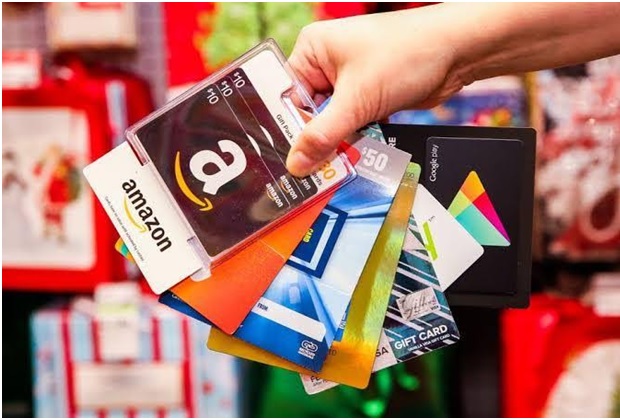
Here are five reliable platforms that help you exchange gift cards for Naira with ease:
- Nosh
- Jiji Nigeria
- Kusnap
- eBay
1. Nosh
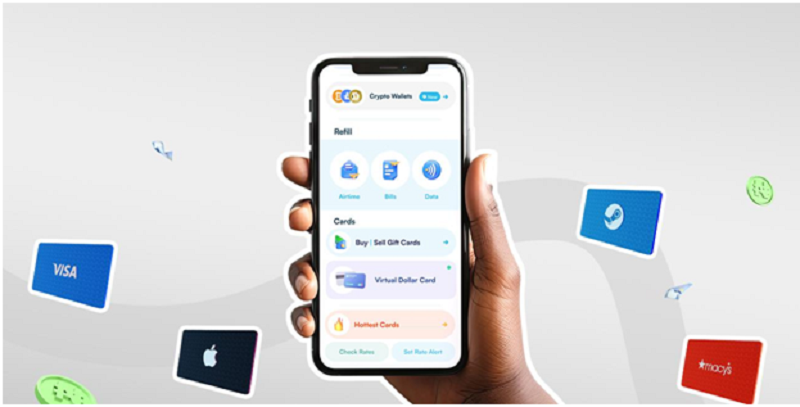
Nosh is one of the most trusted apps in Nigeria when it comes to trading gift cards. It supports several kinds of cards, such as Amazon, Steam, iTunes, Google Play, and more, and gives you a smooth, fast experience from start to finish.
You can access the platform via the web app or download the app on App Store or Google Play Store depending on your device.
Key Features:
- Great Rates: You get some of the best exchange rates available, which allows you to get the most value for your card.
- Instant Payments: Once your card is confirmed, your payment is sent to your wallet right away.
- Easy to Use: Even if you’re new to trading, the app is simple to explore, and you can complete your transaction without feeling lost or confused.
- Rate Calculator: You can check how much you will receive before trading.
- Multi-service Platform: Nosh works as a multi-service platform for digital transactions. So, beyond gift card trading, it lets you buy airtime, pay bills, sell crypto and more.
With its secure platform, transparent rates, and fast payouts, Nosh is a top choice for anyone looking to buy or sell gift cards in Nigeria.
Drawback:
- Less common gift card brands are not supported for trading.
2. Jiji.ng
Jiji is one of Nigeria’s largest online marketplaces, best known for listings like cars, phones, and electronics. However, beyond that, it’s also a place where many people go to sell their gift cards directly to interested buyers, making it a convenient option for quick, peer-to-peer exchanges.
Key Features:
- Direct to buyer selling: You connect directly with buyers, so you set your price and negotiate on your terms.
- Large user base: Jiji’s huge user base gives your listing a good chance of getting noticed.
- Negotiable Rates: You are free to set your own price and work out a deal with buyers that suits you both.
Disadvantages:
- There is a higher risk of scams because of the peer-to-peer transaction nature.
- Deals can take longer to close compared to apps like Nosh.
3. Kusnap
Like Jiji, Kusnap is a Nigerian online marketplace where you can list and sell your gift cards. The app is available for download on both App Store and Google Play Store.
Key Features:
- Post for Free: Posting to notify buyers that you are available to trade gift cards is free, and the site is easy to use.
- Beginner-friendly platform: The platform is simple and easy to use, even if it’s your first time. You don’t need any special skills to post, browse, and connect with others without feeling overwhelmed.
Drawbacks:
- Since transactions are not automated, you will need to put in a bit more effort, like chatting with buyers, agreeing on a price, and arranging the trade yourself.
- Trading directly with other people can sometimes come with risks, like dealing with unreliable buyers or facing payment issues.
4. eBay
If you are open to a global audience, eBay offers a way to sell your gift cards to people beyond Nigeria. It is an online marketplace where you can list your gift card for sale and potential buyers can bid for it.
Key Features:
- Access to a global audience: You reach more potential buyers, which can help you sell faster.
- You can set your own price: You are in control, and you decide how much you want to sell for.
Drawbacks:
- International trading comes with extra fees that could reduce your profits.
- Payments might take longer because of international exchange processes.
5. Facebook
You can sell your gift cards for cash on Facebook, using Facebook Marketplace. Facebook marketplace is an online market platform created by Facebook for people to buy and sell. It is a simple way to get buyers for your gift card, especially within your local community.
Key Features:
- Community-based: You can trade directly with buyers in your vicinity.
- Free Listings: You can post your gift cards and start connecting with buyers at no charge.
Drawbacks:
- Like other peer-to-peer platforms, you need to be cautious to avoid scams.
- It might take time to find a trustworthy buyer and close the deal.
How to Sell Gift Cards for Naira
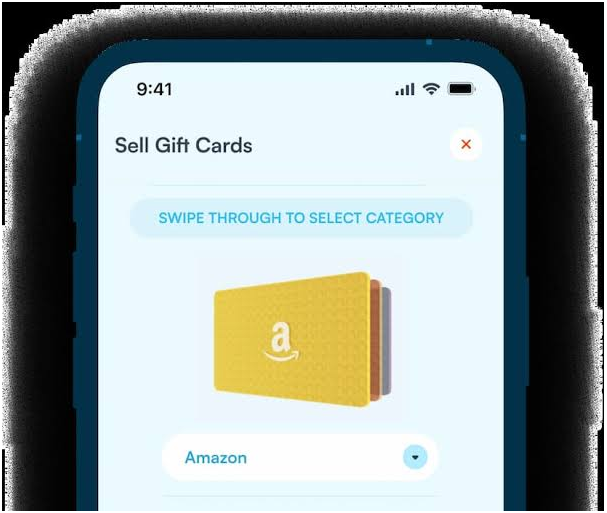
If you’re looking to turn your unused gift cards into Naira, Nosh makes the process quick and stress-free. Here’s how you can do it, step by step:
Step 1: Download the App
Start by downloading the Usenosh app from the Google Play Store or the Apple App Store. It’s fast, secure, and easy to install.
Step 2: Sign Up and Verify Your Account
Create your account and go through a simple verification process. This helps keep your transactions safe and secure.
Step 3: Select “Sell Gift Card”
Once you’re logged in, tap on the “Buy/Sell Gift Card” button on the homepage, then select the option to “Sell Gift Card” to begin your trade.
Step 4: Enter the Gift Card Details
Pick the gift card brand, select the right sub-category, and enter the amount you want to sell. Make sure everything matches your card to avoid delays.
Step 5: Upload the Card Image
Upload a clear image of the gift card if it’s a physical one. Once you’ve entered all the details, you will see how much you will be paid in Naira.
Step 6: Complete the Transaction
Review your trade summary and proceed with the transaction to receive your payout instantly.
Frequently Asked Questions About Apps to Sell Gift Cards in Nigeria
- What is the best app to redeem gift cards in Nigeria?
Nosh is widely considered the best app to redeem gift cards in Nigeria, thanks to its fast payouts, good rates, and secure platform.
- Which app can I use to change my gift card to Naira?
You can use Nosh, Jiji.ng, Kusnap, eBay, or Facebook Marketplace to trade your gift card for Naira, depending on your preference.
- How do I convert a gift card to Naira?
Pick a trusted gift card trading app like Nosh, create an account, upload your gift card details, and receive your Naira payout once the transaction is confirmed.
- What is the best gift card exchange in Nigeria?
Nosh remains a top-rated option for its high gift card rates, reliability, transparency, and ease of use.
- Where can I trade gift cards for cash in Nigeria?
You can trade your unused gift cards on Nosh, Jiji.ng, Kusnap, eBay, or Facebook Marketplace. If you don’t want to go through middlemen or deal with vendors, Nosh is your best option. However, if you prefer P2P trading, Jiji.ng or Facebook Marketplace works best.
Final Thoughts
Selling a gift card you don’t need is a smart way to turn unused value into cash. Whether you go with an instant payout app like Nosh or choose a marketplace like Jiji or Kusnap, you have good options. Just be sure to pick a platform that’s secure, easy to use, and trusted by other users.
If you want a smooth and safe experience, register on the Nosh app today and start trading your gift cards at the best rates available in Nigeria.
Economy
NASD Bourse Edges Up 0.23% as NSI Nears 3,970 Points
By Adedapo Adesanya
The NASD Over-the-Counter (OTC) Securities Exchange further appreciated by 0.23 per cent on Thursday, April 23, with the Unlisted Security Index (NSI) adding 8.99 points to close at 3,969.96 points against the previous day’s 3,968 points.
The rise in the share price of Central Securities Clearing System (CSCS) Plc by N2.86 to N69.34 per unit from N66.48 per unit raised the market capitalisation of the NASD bourse by N5.38 billion to N2.380 trillion from N2.375 trillion.
Yesterday, there were two price losers, led by Food Concepts Plc, which lost 29 Kobo to sell at N2.65 per share versus N2.94 per share, while UBN Property Plc dipped by 22 Kobo to N2.03 per unit from N2.25 per unit.
During the session, the volume of securities traded declined by 97.9 per cent to 451,522 units from 21.5 million units on Wednesday, the value of securities depreciated by 52.32 per cent to N23.6 million from N49.5 million, and the number of deals depreciated by 3.6 per cent to 27 deals from 28 deals.
At the close of business, Great Nigeria Insurance (GNI) Plc remained the most active stock by value on a year-to-date basis with 3.4 billion units valued at N8.4 billion, followed by CSCS Plc with 59.5 million units exchanged for N4.0 billion, and Okitipupa Plc with 27.8 million units traded for N1.9 billion.
GNI Plc also closed the day as the most traded stock by volume on a year-to-date basis with 3.4 billion units worth N8.4 billion, trailed by Resourcery Plc with 1.1 billion units transacted for N415.7 million, and Infrastructure Guarantee Credit Plc with 400 million units sold for N1.2 billion.
Economy
Naira Weakens to N1,353/$ at Official Market
By Adedapo Adesanya
Fresh foreign exchange (forex) demand pressure saw the Naira depreciate against the United States Dollar in the Nigerian Autonomous Foreign Exchange Market (NAFEX) on Thursday, April 22, by N5.46 or 0.4 per cent to trade at N1,353.91/$1 compared with the preceding day’s value of N1,348.45/$1.
It was the same outcome for the local currency in the official market after it depreciated against the Pound Sterling by N4.13 to close at N1,825.88/£1, in contrast to the preceding session’s N1,821.75/£1, and against the Euro, it dropped 72 Kobo to finish at N1,582.72/€1 versus N1,582.00/€1.
But the Nigerian Naira appreciated against the US Dollar at the GTBank FX desk by N2 during the session to quote at N1,361/$1 compared with Wednesday’s closing price of N1,361/$1, and at the parallel market, it closed flat at N1,375/$1.
FX Pressure came as data showed that NFEM interbank turnover was N28.117 million, lower than the N66.084 million recorded the previous day.
Concerns over liquidity pressures, policy transparency, and confidence in Nigeria’s FX market continue to grip the market while the country’s foreign reserve declines further, even as the Central Bank of Nigeria (CBN) recently said that the recent decline in Nigeria’s external reserves should not be a cause for concern.
Global developments also played a significant role, as rising geopolitical tensions boosted demand for the US Dollar, further weakening emerging market currencies, including the Naira.
As for the cryptocurrency market, there was a mixed outcome as traders reacted to rising geopolitical tensions from the Iran war and fresh inflation data from Japan.
Japanese inflation ticked higher in March, stoking expectations that the Bank of Japan may soon signal rate hikes, which could strengthen the yen and unsettle global risk assets.
The Iran conflict has disrupted oil flows through the Strait of Hormuz, raising energy costs and inflation risks worldwide and potentially complicating efforts by the Federal Reserve to cut interest rates.
Ethereum (ETH) declined by 1.8 per cent to $2,316.53, Bitcoin (BTC) lost 0.6 per cent to sell at $77,935.53, Solana (SOL) fell by 0.5 per cent to $85.67, and Binance Coin (BNB) dropped 0.4 per cent to sell for $634.85.
However, Dogecoin (DOGE) appreciated by 1.4 per cent to $0.0976, Ripple (XRP) grew by 0.7 per cent to $1.43, Cardano (ADA) expanded by 0.6 per cent to $0.2493, and TRON (TRX) improved by 0.2 per cent to $0.3279, while the US Dollar Tether (USDT) and the US Dollar Coin (USDC) traded flat at $1.00 each.
Economy
NB Plc’s Strong Recovery, Improved Profitability Excite Shareholders
By Aduragbemi Omiyale
The resilience shown by Nigerian Breweries Plc in the 2025 fiscal year, despite a volatile macroeconomic environment, which consumed several businesses, has not got without notice.
Shareholders of the brewery giant applauded the board and management for the strong recovery and improved profitability recorded in the year.
At the company’s 80th Annual General Meeting (AGM) on Wednesday, April 22, 2026, in Lagos, they attributed these achievements to disciplined cost management and a significant reduction in finance expenses.
“We are proud of how the company has withstood the ups and downs of a challenging environment. The return to profitability and the reversal of the negative cash position recorded in the previous two financial years are commendable,” a member of the Noble Shareholders Association, Mr Owolabi Opeyemi, said at the gathering.
Also, the immediate past Secretary of the Independent Shareholders Association of Nigeria (ISAN), Mr Eke Emmanuel, noted that the company’s resilience reflects strong leadership and a sound strategic direction.
“It is good news that we have been here for 80 years. There is no reason why we will not be here for the next 80 years with what we have achieved. To return to this level of profitability and cash position shows the Board has done an enormous amount of work,” he said.
Addressing investors at the AGM, the board chairman, Mrs Juliet Anammah, expressed confidence that the company is firmly on a recovery path following the net losses recorded in the past two years due to macroeconomic pressures and fiscal reforms.
She thanked shareholders for their continued support and reaffirmed that the company will build on its 2025 performance as it accelerates growth ambitions.
“We have a solid foundation built over eight decades, anchored on a strong portfolio of brands, an extensive nationwide sales and supply chain network, ongoing digital transformation, and most importantly, our people. These strengths remain critical to sustaining our leadership position,” the former chief executive of Jumia Nigeria said.
Ms Anammah also addressed the company’s dividend position, noting that the decision not to declare a dividend reflects the need to rebuild retained earnings impacted by prior macroeconomic shocks, particularly foreign exchange-related losses.
“We recognise the importance of dividend payments to our shareholders and sincerely appreciate your continued understanding. While we are not declaring a dividend at this time due to negative retained earnings, we are working diligently to restore the company’s financial position and return to dividend payments as soon as it is sustainable to do so,” she added.
She further noted that the board remains vigilant to external risks, including the Middle East crisis and broader macroeconomic challenges, which may impact the pace of improvement in the 2026 financial year.
-
Feature/OPED6 years agoDavos was Different this year
-
Travel/Tourism10 years ago
Lagos Seals Western Lodge Hotel In Ikorodu
-
Showbiz3 years agoEstranged Lover Releases Videos of Empress Njamah Bathing
-
Banking8 years agoSort Codes of GTBank Branches in Nigeria
-
Economy3 years agoSubsidy Removal: CNG at N130 Per Litre Cheaper Than Petrol—IPMAN
-
Banking3 years agoSort Codes of UBA Branches in Nigeria
-
Banking3 years agoFirst Bank Announces Planned Downtime
-
Sports3 years agoHighest Paid Nigerian Footballer – How Much Do Nigerian Footballers Earn