
Economy
Best Laptop For Trading Forex In 2023: Trading Experts’ Recommendations

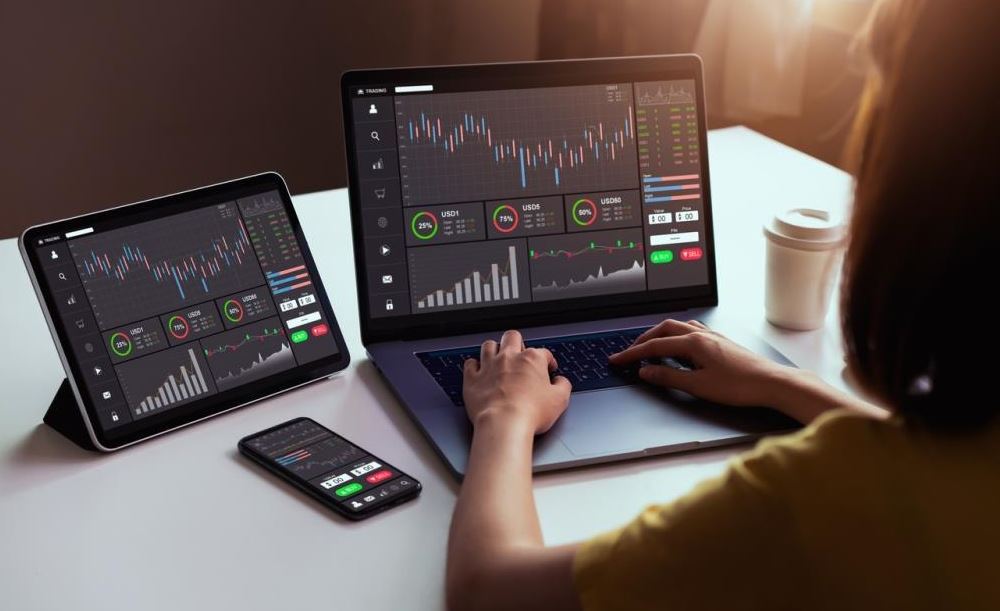
For successful Forex trading, having a reliable and powerful laptop is crucial. It needs to be fast and accurate because trading demands your full attention and quick decision-making. You can’t afford technical issues like running out of battery or slow performance. That’s why Traders Union (TU) experts recommend investing in a high-spec, up-to-date laptop to stay competitive in the Forex market.
Top trading laptops
Choosing the best laptop for trading Forex is crucial. TU’s analysts have compiled a list of laptops that are not only great for trading but also cater to gaming fans:
1. MSI Stealth 15M Laptop
This laptop is a powerhouse with its 11th Gen Intel Core i7 processor and a 144Hz refresh rate, ensuring smooth Forex trading and gaming. Its efficient cooling system and lightweight design make it a top choice.
2. Huawei MateBook X Pro Signature Edition
Despite its small size, this laptop delivers exceptional performance. With a 13.9-inch 3K resolution screen, Intel Core i7-7500U processor, and 8 GB of RAM, it’s suitable for trading tasks and more.
3. Acer Aspire 5 Slim Laptop
An affordable option for beginners, it features an AMD Ryzen 3 3200U Dual-Core Processor, 4 GB of RAM, and a 15.6-inch FHD display. Its portable design and long-lasting battery make it a practical choice.
4. LG Gram 15Z995 Laptop
Known for its lightweight build and long battery life (up to 17 hours), this laptop is powered by an Intel 10th Generation i5-10210U processor and offers excellent performance for trading.
5. Lenovo IdeaPad 3 15
If you’re on a budget, this laptop is a solid choice. It comes with 4 GB of RAM, a 128 GB SSD, and features a 15.6-inch HD screen with narrow bezels. While it may not be top-of-the-line, it’s a great starting point for traders.
These laptops offer various features and cater to different needs, from power and performance to affordability. Choose the one that aligns with your trading requirements.
Choosing the right trading laptop
To be a successful trader, your device matters as much as your skills and trading platform. Traders Union analysts outlined what you need in an ideal trading laptop:
- Processor – a powerful CPU like Intel Core i7 or AMD Ryzen with high clock speed is essential for quick calculations.
- RAM – 8GB is recommended, but 16GB is better for running multiple apps efficiently.
- Storage – look for a laptop with ample storage, especially a 125GB or larger SSD hard disk, for faster performance.
- GPU – a good graphics card, like NVIDIA GeForce GTX 2070 or RTX 30-series GPUs, ensures clear trade updates.
- Display – full HD resolution (1920 x 1080) or higher is crucial for viewing data effectively.
- Screen size and design – consider a larger screen for comfort, but also look for a well-designed laptop with adequate heat dissipation.
- Battery life – choose a laptop with an energy-efficient CPU (like the Intel “U” series) for longer battery life.
- Connectivity – ensure it has Bluetooth and Wi-Fi adaptors, with 802.11ax (Wi-Fi 6) for reliable and fast connections.
- Ports – having multiple ports, including Thunderbolt, is essential for connecting external devices like monitors.
A trading laptop with these specifications will help you trade effectively and reduce errors.
Budget-friendly trading laptop
TU’s experts recommend that for trading, you don’t need an expensive laptop. Models priced between $1,000 to $1,500 strike the right balance of cost and quality. These laptops offer standard quality without breaking the bank.
However, be cautious when considering laptops priced significantly lower than this range, especially if they’re claimed to be new. Certain offers could appear exceptionally favorable but might turn out to be deceptive.
To save money, you can explore refurbished laptops. Just ensure they are less than five years old and ensure the specifications meet your trading needs. Buy only from a reputable seller to avoid scams. This way, you can have a reliable trading laptop without overspending.
Conclusion
Having a dependable and fast laptop is essential for successful Forex trading, as it requires your full attention and quick decision-making. Traders Union has recommended a range of laptops, including the MSI Stealth 15M, Huawei MateBook X Pro Signature Edition, Acer Aspire 5 Slim, LG Gram 15Z995, and Lenovo IdeaPad 3 15, each catering to different needs and budgets. These laptops come with various features, from powerful processors to affordability, ensuring there’s an option for every trader. Remember, your laptop plays a crucial role in your trading success, so choose one that aligns with your trading requirements and budget.










By Adedapo Adesanya
The NASD Over-the-Counter (OTC) Securities Exchange rallied by 1.41 per cent on Wednesday, March 25, with the market capitalisation adding N35.04 billion to close at N2.512 trillion versus the previous session’s N2.477 trillion, and the Unlisted Security Index (NSI) expanding by 58.55 points to 4,198.85 points from 4,140.30 points.
The growth came amid a weak investor sentiment, as the OTC securities exchange recorded two price gainers and three price losers.
The advancers were led by Okitipupa Plc, which chalked up N25 to sell at N275.00 per share compared with the previous day’s N250.00 per share, and Central Securities Clearing System (CSCS) Plc grew by N7.43 to N86.37 per unit from N78.94 per unit.
On the flip side, FrieslandCampina Wamco Nigeria Plc lost N7.04 to sell at N101.13 per share versus Tuesday’s closing price of N108.73 per share, Geo-Fluids Plc went down by 9 Kobo to N2.89 per unit from N2.98 per unit, and Industrial and General Insurance (IGI) Plc dipped 3 Kobo to 50 Kobo per share from 53 Kobo per share.
Yesterday, the volume of securities rose by 135.6 per cent to 2.2 million units from 933,125 units, the value of securities increased by 2.4 per cent to N46.7 million from N45.6 million, and the number of deals grew by 27.6 per cent to 37 deals from 29 deals.
The most active stock by value on a year-to-date basis was CSCS Plc with 39.1 million units exchanged for N2.4 billion, followed by Infrastructure Guarantee Credit Plc with 400 million units valued at N1.2 billion, and Okitipupa Plc with 6.5 million units traded for N1.2 billion.
The most traded stock by volume on a year-to-date basis was Resourcery Plc with 1.1 billion units worth N415.7 million, followed by Infrastructure Credit Plc with 400 million units sold for N1.2 billion, and Geo-Fluids Plc with 132.9 million units transacted for N510.7 million.
By Adedap0 Adesanya
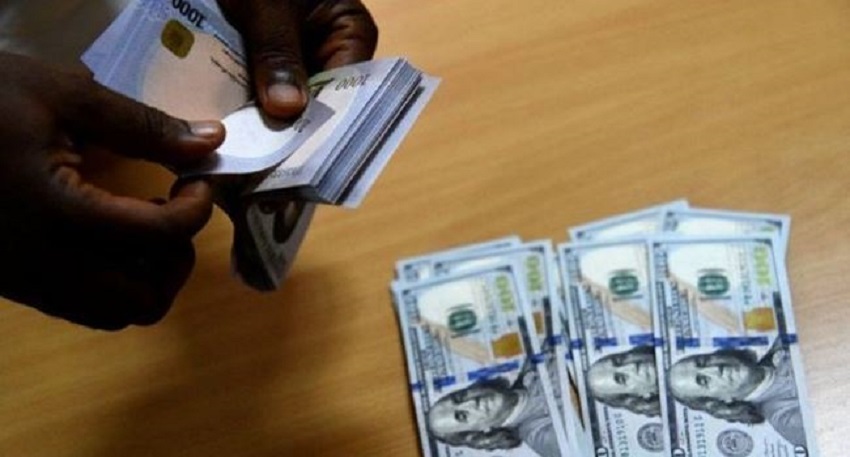
The value of the Naira fell against the Dollar in the Nigerian Autonomous Foreign Exchange Market (NAFEX) on Wednesday, March 25, by N4.07 or 0.29 to N1,386.70/$1 compared with Tuesday’s closing price of N1,382.63/$1.
This was due to forex demand pressure without substantial supply from the Central Bank of Nigeria (CBN) and other sources. Lately, the central bank has not conducted any FX sales to eligible financial institutions, where Bureaux de Change (BDC) operators are allowed to access $150,000 weekly.
Also, in the official market, the Nigerian Naira depreciated against the Pound Sterling at midweek by N7.52 to close at N1,856.38/£1 versus the previous day’s N1,848.86/£1, and retreated against the Euro by N5.82 to trade at N1,605.80/€1 versus N1,599.98/€1.
The domestic currency further lost N3 against the greenback at the GTBank FX desk yesterday to sell for N1,391/$1, in contrast to the preceding session’s N1,388/$1, and at the black market, it depreciated by N5 to quote at N1,405/$1 compared with the N1,400/$1 it was exchanged a day earlier.
The prolonged conflict in the Middle East continues to heighten risk aversion, reducing appetite for emerging-market assets despite Nigeria’s attractive yield environment, which could help sustain offshore inflows and support the local currency in the near term, though structural challenges remain.
The country is making efforts that could help shield it further, including reviewing timelines for approval of resuscitation of moribund oil wells and boosting production, which accounts for over 60 per cent of FX earnings.
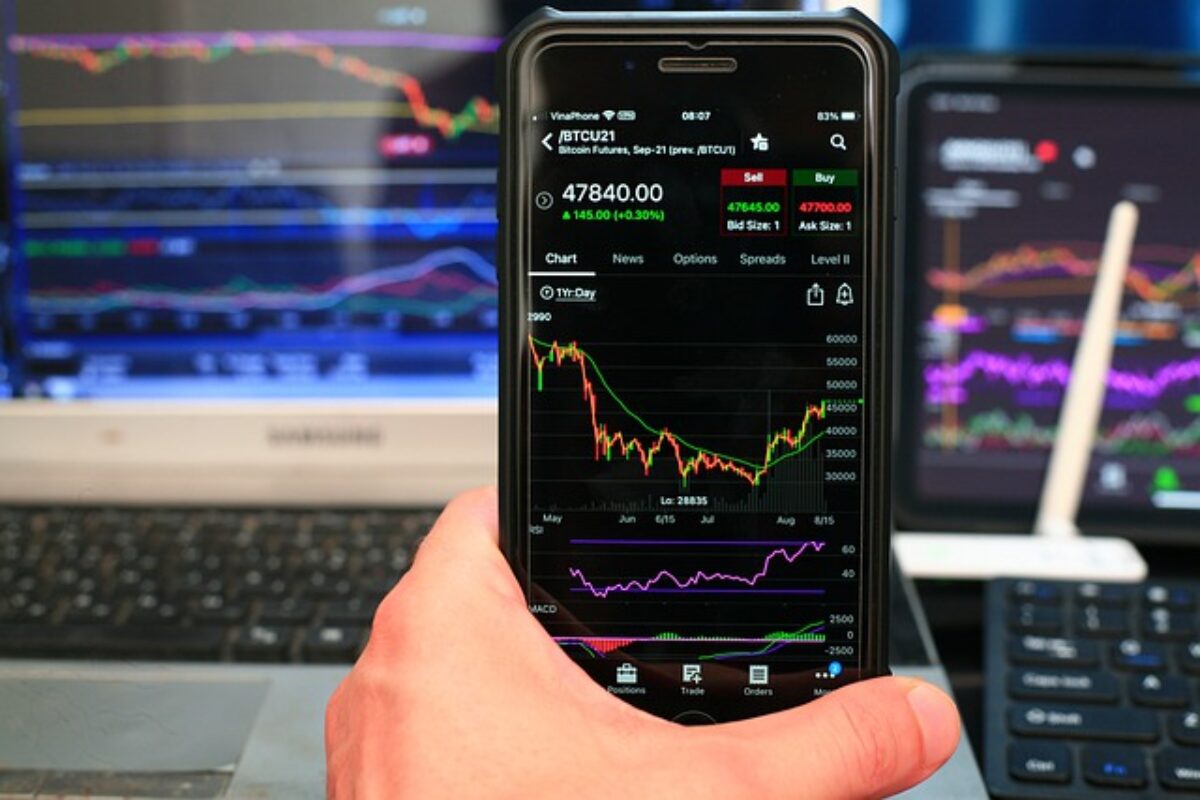
As for the cryptocurrency market, it was under pressure on Wednesday, as implied volatility and weakening suggest geopolitical risk concerns remain as macro headlines remain in focus.
Dogecoin (DOGE) depleted by 3.8 per cent to $0.0937, Solana (SOL) depreciated by 3.5 per cent to $89.10, Cardano (ADA) dipped 2.4 per cent to $0.2621, Ethereum (ETH) went down by 2.2 per cent to $2,117.47, Ripple (XRP) slumped 1.9 per cent to $1.38, Bitcoin shrank by 1.5 per cent to $70,012.58, and Binance Coin (BNB) dropped 1.4 per cent to sell for $634.82.
However, TRON (TRX) appreciated by 2.3 per cent to $0.3144, while the US Dollar Tether (USDT) and the US Dollar Coin (USDC) traded flat at $1.00 apiece.

By Adedapo Adesanya
The oil market slid about 2 per cent on Wednesday after paring deeper losses earlier in the trading session, as Iran reviewed a proposal by the United States to end the war that has disrupted global energy flows.
Brent futures fell $2.27 or 2.2 per cent to settle at $102.22 a barrel, while the US West Texas Intermediate (WTI) crude futures lost $2.03 or 2.2 per cent to trade at $90.32 per barrel.
It was reported that Iran was still reviewing a US proposal to end the war in the Gulf, despite an initial response that was negative, indicating that it had so far stopped short of rejecting it outright.
Pakistan delivered the 15-point proposal on behalf of the US government, and the consideration appeared to signal that at least some figures in Iran may be considering it.
Meanwhile, the White House Press Secretary, Mrs Karoline Leavitt, said President Donald Trump would hit Iran harder if it fails to accept that the Middle East country has been “defeated militarily”.
Currently, the market is facing the biggest-ever oil supply disruption as the US-Israel war has halted shipments of oil and liquefied natural gas through the Strait of Hormuz, which typically carries about 20 per cent of the world’s LNG and crude supply.
Market analysts noted that this has resulted in around 20 million barrels of crude losses daily, or some 500 million barrels, or five full days of global supply, since the war began on February 28. Countries have started rationing fuel use.
India, one of the world’s largest oil consumers, has bought its first cargo of Iranian liquefied petroleum gas in years after the US temporarily removed sanctions.
Meanwhile, Japan has called on the International Energy Agency (IEA) for an additional coordinated release of oil stockpiles, as it seeks to shield consumers from higher energy prices.
In Venezuela, oil production, including condensate and gas liquids, reached 1.1 million barrels per day in March.
Amid these developments, Russia’s major export terminals suspended crude oil and oil products loadings after massive Ukrainian drone attacks sparked blazes. At least 40 per cent of Russia’s oil export capacity has been halted following Ukrainian drone attacks on its energy infrastructure.
The US Energy Information Administration (EIA) said energy firms added 6.9 million barrels of crude into stockpiles during the week ended March 20.
That was higher than the build of 2.4 million barrels reported by the American Petroleum Institute (API) on Tuesday.












-
 Feature/OPED6 years ago
Davos was Different this year
-
Travel/Tourism10 years ago
Lagos Seals Western Lodge Hotel In Ikorodu
-

 Showbiz3 years ago
Estranged Lover Releases Videos of Empress Njamah Bathing
-
 Banking8 years ago
Sort Codes of GTBank Branches in Nigeria
-

 Economy3 years ago
Subsidy Removal: CNG at N130 Per Litre Cheaper Than Petrol—IPMAN
-

 Banking3 years ago
Sort Codes of UBA Branches in Nigeria
-

 Banking3 years ago
First Bank Announces Planned Downtime
-

 Sports3 years ago
Highest Paid Nigerian Footballer – How Much Do Nigerian Footballers Earn