
Economy
Best Trading Monitors In 2023: Enhance Your Trading Performance

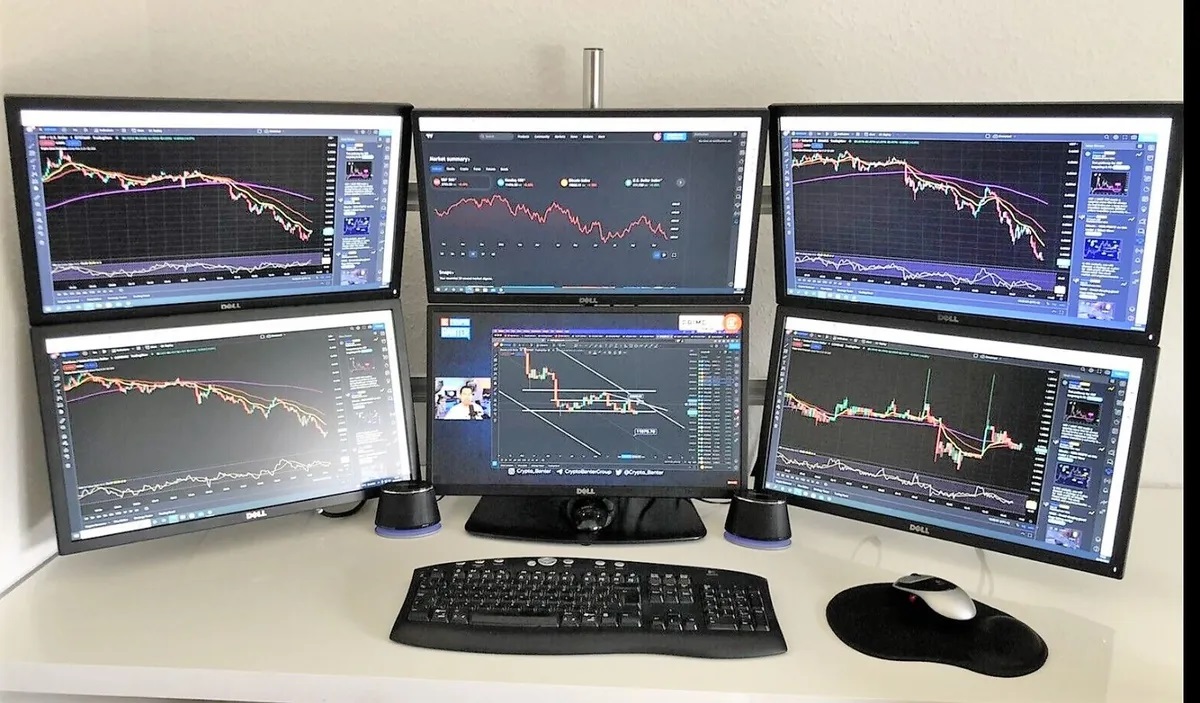
In order to trade effectively, you require the best brokerage, a reliable trading strategy, and a dependable output device. A top-notch trading monitor is essential for accessing critical trading information and staying updated on market patterns and economic conditions. Selecting the right monitor can significantly enhance your trading performance. Here, Traders Union experts explore the six best trading monitors for forex traders in 2023.
Best trading monitors
If you’re serious about trading, finding the best monitor for trading can significantly boost your performance and stay ahead in the markets. Discover top trading monitors that elevate your trading experience and help you achieve financial goals:
- Samsung CHG90 Series 49“ – Best trading monitor with an ultrawide screen
Pros: Quantum Dot Technology, reduced input lag and ghosting, excellent image quality, High Dynamic Range (HDR) integration.
Cons: Some users may find it expensive.
- Dell U4320Q
Pros: Picture-by-Picture feature for multitasking, auto-restore feature, supports multiple charts, 4K technology with Vesa interface.
Cons: Not suitable for novices, requires a sizable desk space.
- LG 34WN80C-B UltraWide Monitor
Pros: On-Screen control options, built-in speakers and sensors, excellent gradient handling, height adjustment feature.
Cons: Relatively high price considering its size.
- HP X27q 27″ WQHD
Pros: Wide viewing angles with AMD FreeSync Premium, vertical tilt and rotation options, thin edges for dual monitor setup.
Cons: Eye-ease coating lessens image quality, limited swivel options.
- ViewSonic 32 Inch 1080p Widescreen
Pros: Dividable screen with ViewSplit software, premium IPS panel for clear charts, bezel-free design.
Cons: Features could have been richer.
- Samsung J791
Pros: Intel Thunderbolt 3 display splitter, HDR support, 1 ms response time, wide horizontal workspace.
Cons: Poor viewing angles, potential glare issues.
Choose the right trading monitor that suits your preferences and enhances your trading performance.
How much does a trading monitor cost?
According to TU analysts, trading monitors come in a wide price range, from slightly above $100 to well beyond $2000, but most are priced between $200 and $500. In this range, you can find 1-2 monitors with exceptional features. If you’re new to trading, starting with budget-friendly monitors is recommended, and as you advance in your trading career, investing in high-quality monitors with configurations priced between $500 and $800 becomes a viable option.
Laptop vs Trading monitor
Analysts at Traders Union consider that it is important to recognize that both desktops and laptops have their merits for trading, but one may better suit a trader’s specific needs. Desktops excel in providing more processing power and built-in customization options, making them a top choice. On the other hand, laptops offer undeniable portability, allowing swing traders and long-term investors to access the necessary information from anywhere, providing flexibility.
However, when it comes to day trading, a desktop offers a significant advantage due to the abundance of data to scale and monitor. Setting up multiple screens becomes easier, and the quick and powerful nature of desktops is particularly beneficial for day traders. For optimal productivity and reliability in day trading, choosing the best trading monitor becomes essential. Check also the TU experts’ article about weekend trading on Forex which is very important.
How to choose the best day trading computers?
When considering the best trading monitor, the computer’s functionality becomes a crucial factor for optimal performance. Real-time data requires sufficient processing power to avoid missed trading opportunities. Here are essential system requirements for a successful trading experience:
- RAM: A minimum of 8 GB RAM is necessary for speed and adaptability. For multitasking, 16 GB or more is recommended.
- Processor Speed: A quad-core 2.8GHz processor (such as Intel i5 or i9) is preferred for quick operations.
- Hard Drive: Opt for a 250GB SSD hard drive for swift data storage, using the primary hard drive for reliability and a separate SSD drive solely for trading.
- Battery Life: Longer battery life (at least eight hours) is beneficial, especially for traders in areas with power issues or emergencies.
- Display: Choose a high-quality monitor to ensure clear images and top-notch performance in trading. Consider important factors when selecting screens for trading.
Conclusion
Having the right trading monitor is crucial for effective trading, providing access to critical information and enhancing performance. Traders Union analysts have explored the top trading monitors for forex traders in 2023, offering a range of options to suit different preferences and budgets.









By Aduragbemi Omiyale
In the 2025 financial year, Beta Glass Plc grew its revenue by 27 per cent to N149.12 billion from N117.58 billion in 2024, reflecting continued demand for the company’s glass packaging products across key sectors of the Nigerian economy.
Despite market challenges, the organisation performed well due to improved production efficiency, effective cost management, and a clear focus on its key customers and segments.
In the year, the gross margin improved to 35.3 per cent from 26.3 per cent, operating margin rose to 32.3 per cent from 20.0 per cent, reflecting improved operating efficiency and effective cost management.
A look at the bottom-line showed that profit after tax (PAT) went up by 144 per cent to N33.25 billion from N13.63 billion, demonstrating the resilience of its operations despite evolving global and regional market conditions, while the Earnings Per Share (EPS) stood at N55.41 versus N22.71 in 2024.
The chief executive of Beta Glass, Mr Alex Gendis, said, “This year’s results reflect the resilience of our business model and the successful execution of our strategic initiatives.
“Despite market challenges, our commitment to delivering value to our shareholders was and remains strong. Our performance was underpinned by improved production efficiency, effective cost management, and a clear focus on our key customers and segments.
“At the same time, we continued to invest significantly in our asset base, with the rebuild of our furnace in Delta, positioning the business for sustainable long-term growth.”

By Adedapo Adesanya
If Nigeria continues producing crude oil at its current pace, its proven reserves would be exhausted in about 59 years, according to the Nigerian Upstream Petroleum Regulatory Commission (NUPRC).
The regulator disclosed this on Wednesday in Abuja, as it released the nation’s official petroleum reserves position as of January 1, 2026.
In a statement signed by its chief executive, Mrs Oritsemeyiwa Eyesan, the commission said Nigeria’s total oil and condensate reserves stand at 37.01 billion barrels, while total gas reserves are about 215.19 trillion cubic feet.
“The Nigerian Upstream Petroleum Regulatory Commission, in keeping with its mandate, is committed to improving upstream sector performance, enhancing the growth of oil and gas reserves, and ensuring stable production for shared prosperity via the operationalisation of the Petroleum Industry Act, 2021, and implementation of the strategic pillars of the commission,” she said.
Providing a breakdown, she stated that “2P crude oil and condensate reserves stand at 31.09 billion barrels and 5.92 billion barrels, respectively, amounting to a total of 37.01 billion barrels.”
On gas, she said, “2P associated gas and non-associated gas reserves stand at 100.21 trillion cubic feet and 114.98 trillion cubic feet, respectively, resulting in total gas reserves of 215.19 trillion cubic feet.”
Explaining the changes recorded within the period, Mrs Eyesan noted that crude volumes declined slightly due to production activities during the previous year.
While Nigeria’s reserves life index stands at 59 years for oil, it was put at 85 years for gas, indicating the estimated duration the resources would last at current production levels.
“The Reserves Life Index is 59 Years and 85 Years for Oil and Gas, respectively. The reason for the slight change in 1.1.2026 oil and condensate reserves by 0.74 per cent is attributable to production in 2025 and reserves update due to field performance and technical evaluation based on subsurface studies.
“The reason for the increase in 1.1.2026 AG and NAG reserves by 2.21 per cent is largely because reserves update is based on discoveries and the result of robust reservoir studies,” she said.
In contrast, she said gas reserves increased on the back of fresh discoveries and improved technical assessments.
“The reason for the increase in 1.1.2026 associated gas and non-associated gas reserves by 2.21 per cent is largely because the reserves update is based on discoveries and the result of robust reservoir studies,” she added.
Declaring the figures official, Mrs Eyesan said, “Consequently, and in furtherance of the provisions of the Petroleum Industry Act, I hereby declare the total oil and condensate reserves of 37.01 billion barrels and total gas reserves of 215.19 trillion cubic feet as the official national petroleum reserves position as of 1st January 2026.”
Findings show that Nigeria’s reserves position in 2026 reflects a modest shift from 2025, when total oil and condensate reserves were slightly higher at about 37.3 billion barrels, while gas reserves stood at approximately 210–211 trillion cubic feet.
The 2026 data, therefore, indicates a 0.74 per cent decline in oil reserves, largely driven by sustained production and limited new oil discoveries, while gas reserves expanded by 2.21 per cent due to ongoing exploration success and renewed focus on gas development.
By Adedapo Adesanya
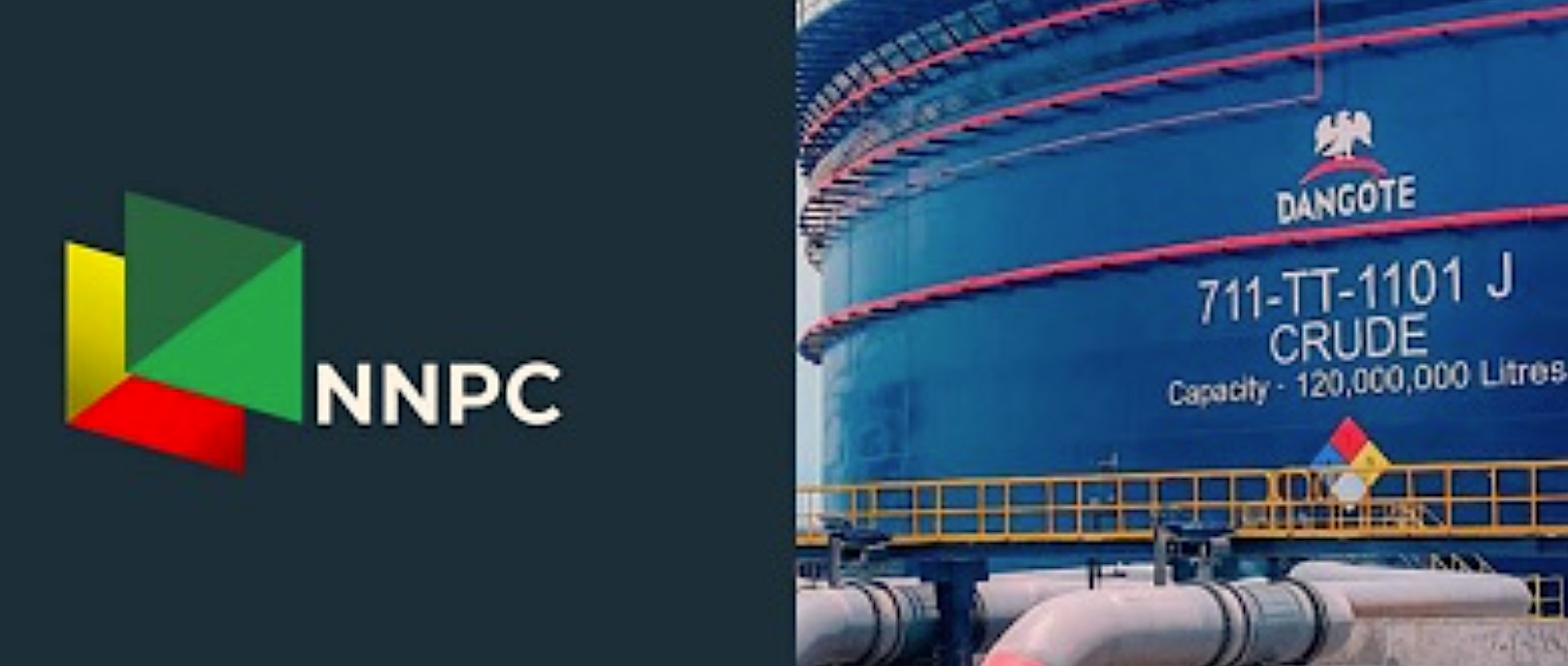
The Nigerian National Petroleum Company (NNPC) Limited has allocated seven cargoes to the Dangote Refinery and Petrochemicals for May 2026, up from five in previous months, to boost fuel production and ease rising costs.
The 650,000 barrels per day Dangote Refinery, which is responsible for over 60 per cent of domestic supply, has not been able to get its expected feedstock from the national oil company under the Crude-for-Naira initiative. It has received about 40 per cent of local feedstock in recent months, according to the chief executive of the oil refinery, Mr David Bird.
He said the refinery currently gets only about five cargoes of crude monthly, against an expected 13 to 15 cargoes, noting that this was below its agreed crude oil supply under the federal government’s Crude-for-Naira arrangement.
Business Post reports that the majority of Nigeria’s crude production is tied to Joint Venture (JV) contracts, which constrain the optimal supply of crude oil to the Dangote Refinery.
According to Reuters, an unnamed senior Dangote official said, “NNPC has allocated more cargoes to Dangote for May,” adding that, “While this will not completely meet our demands, it can help. We are also in negotiation with NNPC for more volumes.”
The increase in crude allocations to the 650,000 barrel per day refinery could also curb volumes of Nigerian crude available for export at a time when the Iran war has drastically cut supply from the Middle East.
Due to the shortfall in the crude-for-Naira policy, the company will still have to purchase crude at international benchmark prices. The company sources crude from Brazil, Equatorial Guinea, Angola, Algeria, and the US, among others.
The official said Dangote recently had to pay premiums as high as $18 a barrel over the Brent crude benchmark to secure cargoes from the international market.
Since NNPC cargoes are cheaper for the refinery because of lower shipping costs. This could translate to higher fuel prices with Nigerians buying as high as N1,300 – N1,400 at the pump.
Fuel prices in Nigeria have reached record highs as Dangote has had to increase petrol depot prices by about 13 per cent in the last month.












-
 Feature/OPED6 years ago
Davos was Different this year
-
Travel/Tourism10 years ago
Lagos Seals Western Lodge Hotel In Ikorodu
-

 Showbiz3 years ago
Estranged Lover Releases Videos of Empress Njamah Bathing
-
 Banking8 years ago
Sort Codes of GTBank Branches in Nigeria
-

 Economy3 years ago
Subsidy Removal: CNG at N130 Per Litre Cheaper Than Petrol—IPMAN
-

 Banking3 years ago
Sort Codes of UBA Branches in Nigeria
-

 Banking3 years ago
First Bank Announces Planned Downtime
-

 Sports3 years ago
Highest Paid Nigerian Footballer – How Much Do Nigerian Footballers Earn