Economy
BREAKING: Ekiti, Lagos Sign Agreement on Rice Production
By Dipo Olowookere
The Ekiti State government and its Lagos State counterpart have signed a Memorandum of Understanding (MoU) on the cultivation of rice.
Governor of Ekiti State, Mr Ayodele Fayose, confirmed this development on his Twitter page on Thursday.
According to him, his government will provide land for the rice cultivation, while the Lagos State government would provide the funds and expertise.
This development follows a similar deal signed between Lagos State and Kebbi State on the production of LAKE Rice few years ago.
The move was applauded then by many Nigerians, who challenged other state governments to look at ways to work together to boost their respective economies.
“Ekiti government has signed an MoU with Lagos State government on rice cultivation.
“Land [for the project is] to be provided by the Ekiti government while Lagos government [will] provide fund and technical expertise,” Mr Fayose disclosed today.
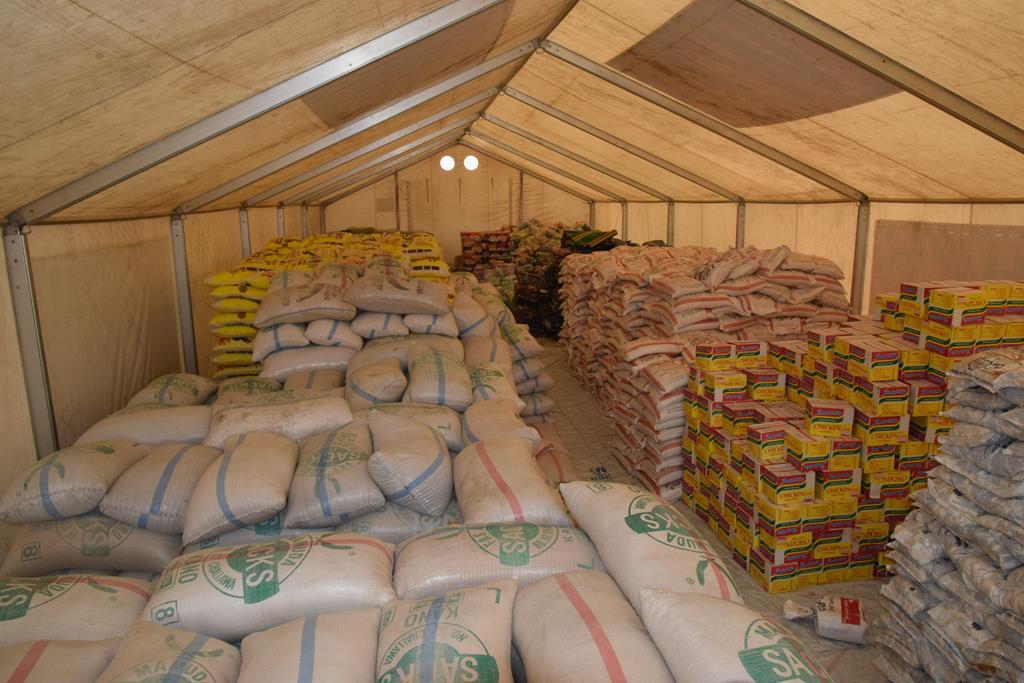
Rice is a staple food consumed by many Nigerians, but it is unfortunate that the country relies on importation of the commodity to meet local demands.
Since the inception of this present administration, there have been efforts to stop importation of rice into the country.
Few days ago, federal government threatened to close a border with a neighbouring country over the smuggling of foreign rice into Nigeria.
“Our other problem is smuggling. As we speak, a neighbour of ours is importing more rice than China is importing.
“They do not eat parboiled rice, they eat white rice, they use their ports to try and damage our economy.
“I am telling you now because in a few days, you will hear the border has been shut, we are going to shut it to protect you, us and protect our economy.
“You will start seeing all sorts of negative things on the internet.
“Let me tell you why we need to shut the border, I grow rice, I was the first Nigerian to mill rice free of stones, if you plant rice in certain parcels of land, some poisonous materials get into the rice,” the Minister of Agriculture and Rural Development, Mr Audu Ogbeh, had told youths in a leadership clinic under the auspices of Guardians of the Nation International in Abuja.
In March this year, Africa’s richest man, Mr Aliko Dangote, had said he was determined to ensure rice importation in Nigeria became a thing of the past.
This he said he was doing by aggressively investing in the rice sector by laying a foundation stone for the construction of a multi-billion Naira rice processing mill in Hadin, Jigawa State.
According to him, the plant will in one year process paddy rice worth N14 billion bought directly from the famers in Jigawa at market rate.
Recalling that the Dangote Rice limited started the outgrowers scheme in 2016 with thousands of hectares of land in Hadejia, Jigawa state, creating over 10,000 jobs (direct and indirect) to farmers, the business mogul said with the new ultra-modern mill enough paddy rice will be grown and harvested for processing.
Last year, WACOT Rice Limited, a member of the TGI Group, commissioned its newly built rice processing mill with 120,000 metric tonnes capacity in Argungu, Kebbi State.
In August 2017, Managing Director and CEO of First Bank of Nigeria, Dr Adesola Adeduntan, claimed Nigeria imports nearly a shipload of rice every week despite the nation being one of the most agriculturally fertile countries in Africa.
Business Post recalls that in November 2017, Minister of Information and Culture, Mr Lai Mohammed, had said the importation of rice into Nigeria had significantly dropped from 644,131 Metric Tonnes to about 21,000 MT between September 2015 and September 2017.
Economy
Nigeria Records Five-Year Peak in Oil Output at 1.71mbpd
By Adedapo Adesanya
Nigeria’s oil production recorded a five-year high of 1.71 million barrels per day, marking a significant rebound for the country’s upstream sector amid renewed efforts to restore output and improve operational stability.
The latest figure, released by Nigerian National Petroleum Company (NNPC) Limited, covers the period from April 2025 to April 2026 and underscores a steady recovery in crude production after years of disruptions caused by theft, pipeline vandalism and underinvestment.
According to the chief executive of the national oil company, Mr Bayo Ojulari, the performance reflects measurable progress across the company’s upstream, gas and downstream operations, with production gains supported by improved asset management and stronger field performance.
Within its exploration and production business, NNPC recorded a peak daily output of 365,000 barrels in December 2025, the highest level ever achieved by its upstream subsidiary. The company also advanced key contractual reforms, including revised production-sharing terms for deepwater assets aimed at unlocking additional gas reserves.
Nigeria’s gas ambitions are also gaining traction. Gas supply rose to 7.5 billion standard cubic feet per day in 2025, driven by major infrastructure milestones such as the River Niger crossing on the Ajaokuta-Kaduna-Kano pipeline and the commissioning of the Assa North-Ohaji South gas processing plant.
These investments are beginning to strengthen domestic gas utilisation. New supply agreements with major industrial consumers, including Dangote Refinery, Dangote Fertiliser and Dangote Cement, are expected to deepen gas penetration across manufacturing and power generation.
On the downstream front, NNPC has continued crude supply to Dangote Refinery under the crude-for-naira arrangement, a policy designed to reduce foreign exchange demand, support local refining and improve fuel market stability. The company also reaffirmed its 7.25 per cent equity stake in the refinery as part of its long-term energy security strategy.
Financially, the national oil company said it has resumed full monthly remittances to the Federation Account since July 2025. It has also reinstated regular performance reporting and held its first earnings call, moves widely seen as part of a broader push towards greater transparency and corporate accountability.
Despite the progress, challenges remain. Crude theft, pipeline outages and infrastructure bottlenecks continue to threaten production stability. Sustaining this recovery will depend on stronger security, reliable infrastructure and policy consistency as Nigeria seeks to maximise the benefits of rising domestic refining capacity.
Economy
UAE to Leave OPEC May 1
By Adedapo Adesanya
The United Arab Emirates has announced its decision to quit the Organisation of the Petroleum Exporting Countries (OPEC) to focus on national interests.
This dealt a heavy blow to the oil-exporting group at a time when the US-Israel war on Iran had caused a historic energy shock and rattled the global economy.
The move, which will take effect on May 1, 2026, reflects “the UAE’s long-term strategic and economic vision and evolving energy profile”, a statement carried by state media said on Tuesday.
“During our time in the organisation, we made significant contributions and even greater sacrifices for the benefit of all,” it added. “However, the time has come to focus our efforts on what our national interest dictates.”
The loss of the UAE, a longstanding OPEC member, could create disarray and weaken the oil cartel, which has usually sought to show a united front despite internal disagreements over a range of issues from geopolitics to production quotas.
UAE Energy Minister Suhail Mohamed al-Mazrouei said the decision was taken after a careful look at the regional power’s energy strategies.
“This is a policy decision. It has been done after a careful look at current and future policies related to the level of production,” the minister said.
OPEC’s Gulf producers have already been struggling to ship exports through the Strait of Hormuz, a narrow chokepoint between Iran and Oman through which a fifth of the world’s crude oil and liquefied natural gas supplies normally pass, because of threats and attacks against vessels during the war.
The UAE had been a member of OPEC first through its emirate of Abu Dhabi in 1967 and later when it became its own country in 1971.
The oil cartel, based in Vienna, has seen some of its market power wane as the US has increased its production of crude oil in recent years.
Additionally, the UAE and Saudi Arabia have increasingly competed over economic issues and regional politics, particularly in the Red Sea area.
The two countries had joined a coalition to fight against Yemen’s Iran-backed Houthis in 2015. However, that coalition broke down into recriminations in late December when Saudi Arabia bombed what it described as a weapons shipment bound for Yemeni separatists backed by the UAE.
Economy
NASD OTC Exchange Inches Up 0.03% as CSCS Outshines Four Price Decliners
By Adedapo Adesanya
Central Securities Clearing System (CSCS) Plc bested four price decliners on the NASD Over-the-Counter (OTC) Securities Exchange on Monday, April 27. The alternative stock market opened the week bullish during the session with a 0.03 per cent uptick.
According to data, the security depository company added N2.61 to its share price to close at N76.26 per unit compared with the preceding session’s N78.87 per unit.
As a result, the market capitalisation of the platform increased by N820 million to N2.425 trillion from N2.424 trillion, and the NASD Unlisted Security Index (NSI) gained 1.38 points to finish at 4,053.97 points compared with the 4,052.58 points it ended last Friday.
The four price losers were led by NASD Plc, which slumped by N3.80 to sell at N34.70 per share versus N38.50 per share. FrieslandCampina Wamco Nigeria Plc fell by N1.45 to N98.10 per unit from N99.55 per unit, Food Concepts Plc slid by 27 Kobo to N2.43 per share from N2.70 per share, and Geo-Fluids Plc dipped by 9 Kobo to N2.91 per unit from N3.00 per unit.
The value of securities transacted by market participants went down by 82.0 per cent to N7.4 million from N41.3 million units, the volume of securities declined by 28.5 per cent to 319,831 units from 447,403 units, and the number of deals dropped by 34.1 per cent to 29 deals from 44 deals.
Great Nigeria Insurance (GNI) Plc was the most active stock by value on a year-to-date basis with 3.4 billion units worth N8.4 billion, followed by CSCS Plc with 59.6 million units sold for N4.0 billion, and Okitipupa Plc with 27.8 million units exchanged for N1.9 billion.
Also, GNI Plc was the most traded stock by volume on a year-to-date basis with 3.4 billion units valued at N8.4 billion, followed by Resourcery Plc with 1.1 billion units traded for N415.7 million, and Infrastructure Guarantee Credit Plc with a turnover of 400 million units worth N1.2 billion.
-
Feature/OPED6 years agoDavos was Different this year
-
Travel/Tourism10 years ago
Lagos Seals Western Lodge Hotel In Ikorodu
-
Showbiz3 years agoEstranged Lover Releases Videos of Empress Njamah Bathing
-
Banking8 years agoSort Codes of GTBank Branches in Nigeria
-
Economy3 years agoSubsidy Removal: CNG at N130 Per Litre Cheaper Than Petrol—IPMAN
-
Banking3 years agoSort Codes of UBA Branches in Nigeria
-
Banking3 years agoFirst Bank Announces Planned Downtime
-
Sports3 years agoHighest Paid Nigerian Footballer – How Much Do Nigerian Footballers Earn