Economy
Brent Hits $112 as Iran Escalates Attacks on Middle East Energy Facilities
By Adedapo Adesanya
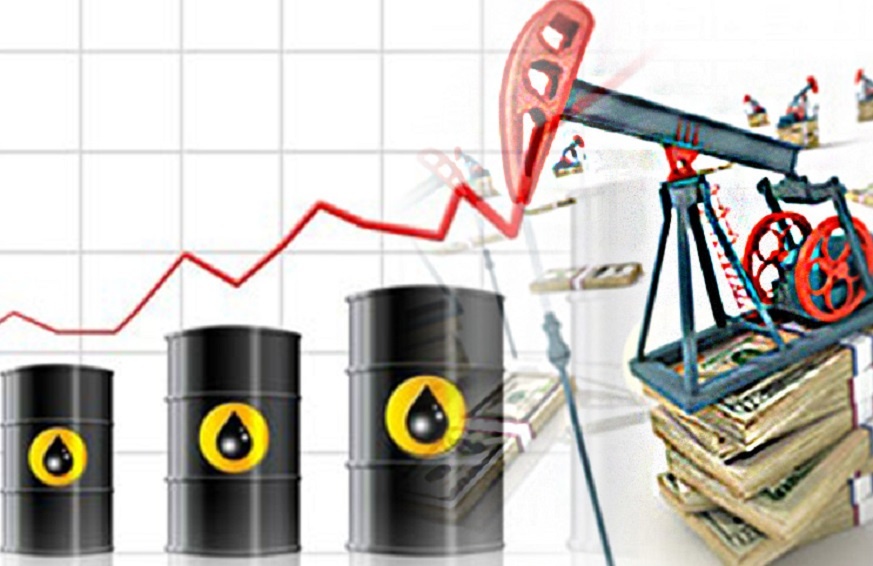
Brent crude moved higher by 4.27 per cent to $112.00 per barrel on Wednesday as Iran attacked several energy facilities across the Middle East, creating a major escalation in its war with the United States and Israel.
Also, the US West Texas Intermediate grew by 2.73 per cent to $98.95, as the Middle East conflict continues to escalate, and energy infrastructure is targeted across the Gulf, as Iran hit energy infrastructure across the Middle East in retaliation for earlier strikes on its South Pars gas field.
Qatar confirmed that Iranian missile strikes had caused “extensive damage” around the Ras Laffan industrial complex, the world’s largest liquefied natural gas (LNG) facility and a cornerstone of global gas supply.
Meanwhile, the United Arab Emirates (UAE) suspended operations at its Habshan gas facility after missile-related incidents, with debris from intercepted projectiles reportedly affecting additional energy infrastructure, including the Bab oil field.
Saudi Arabia, Kuwait, Iraq, and Bahrain continue to be targeted by Iran, with Saudi Arabia reporting that air defences had destroyed a total of 19 drones in the Eastern Province and four missiles launched toward Riyadh.
Earlier on Wednesday, Iran issued an evacuation warning for several energy facilities across Saudi Arabia, the UAE and Qatar, saying they would be targeted by strikes “in the coming hours.”
Shipping also remained under threat, with the UK’s maritime security agency reporting that a vessel east of the Strait of Hormuz caught fire after being struck by an “unknown projectile.”
The war has halted shipments via the Strait of Hormuz, which handles 20 per cent of global oil and LNG supply. Total oil output cuts in the Middle East are estimated at 7 million to 10 million barrels per day, or 7 per cent to 10 per cent of global demand.
To ease worries, the administration of US President Donald Trump on Wednesday announced a 60-day waiver of the Jones Act shipping law, temporarily allowing foreign-flagged vessels to move fuel, fertiliser, and other goods between US ports.
It is also working on measures that could help slow the surge in fuel prices in the US, but are unlikely to have much of an effect on global energy prices.
In Iraq, the North Oil Company said crude exports from Iraq’s Kirkuk fields to Turkey’s Ceyhan port have resumed via pipeline, after Iraq and the Kurdistan Regional Government agreed to restart flows. The company said exports would resume with an initial capacity of 250,000 barrels per day.
The US Energy Information Administration (EIA) said crude inventories rose by 6.2 million barrels to 449.3 million barrels in the week ended March 13.
Economy
UAE to Leave OPEC May 1
By Adedapo Adesanya
The United Arab Emirates has announced its decision to quit the Organisation of the Petroleum Exporting Countries (OPEC) to focus on national interests.
This dealt a heavy blow to the oil-exporting group at a time when the US-Israel war on Iran had caused a historic energy shock and rattled the global economy.
The move, which will take effect on May 1, 2026, reflects “the UAE’s long-term strategic and economic vision and evolving energy profile”, a statement carried by state media said on Tuesday.
“During our time in the organisation, we made significant contributions and even greater sacrifices for the benefit of all,” it added. “However, the time has come to focus our efforts on what our national interest dictates.”
The loss of the UAE, a longstanding OPEC member, could create disarray and weaken the oil cartel, which has usually sought to show a united front despite internal disagreements over a range of issues from geopolitics to production quotas.
UAE Energy Minister Suhail Mohamed al-Mazrouei said the decision was taken after a careful look at the regional power’s energy strategies.
“This is a policy decision. It has been done after a careful look at current and future policies related to the level of production,” the minister said.
OPEC’s Gulf producers have already been struggling to ship exports through the Strait of Hormuz, a narrow chokepoint between Iran and Oman through which a fifth of the world’s crude oil and liquefied natural gas supplies normally pass, because of threats and attacks against vessels during the war.
The UAE had been a member of OPEC first through its emirate of Abu Dhabi in 1967 and later when it became its own country in 1971.
The oil cartel, based in Vienna, has seen some of its market power wane as the US has increased its production of crude oil in recent years.
Additionally, the UAE and Saudi Arabia have increasingly competed over economic issues and regional politics, particularly in the Red Sea area.
The two countries had joined a coalition to fight against Yemen’s Iran-backed Houthis in 2015. However, that coalition broke down into recriminations in late December when Saudi Arabia bombed what it described as a weapons shipment bound for Yemeni separatists backed by the UAE.
Economy
NASD OTC Exchange Inches Up 0.03% as CSCS Outshines Four Price Decliners
By Adedapo Adesanya
Central Securities Clearing System (CSCS) Plc bested four price decliners on the NASD Over-the-Counter (OTC) Securities Exchange on Monday, April 27. The alternative stock market opened the week bullish during the session with a 0.03 per cent uptick.
According to data, the security depository company added N2.61 to its share price to close at N76.26 per unit compared with the preceding session’s N78.87 per unit.
As a result, the market capitalisation of the platform increased by N820 million to N2.425 trillion from N2.424 trillion, and the NASD Unlisted Security Index (NSI) gained 1.38 points to finish at 4,053.97 points compared with the 4,052.58 points it ended last Friday.
The four price losers were led by NASD Plc, which slumped by N3.80 to sell at N34.70 per share versus N38.50 per share. FrieslandCampina Wamco Nigeria Plc fell by N1.45 to N98.10 per unit from N99.55 per unit, Food Concepts Plc slid by 27 Kobo to N2.43 per share from N2.70 per share, and Geo-Fluids Plc dipped by 9 Kobo to N2.91 per unit from N3.00 per unit.
The value of securities transacted by market participants went down by 82.0 per cent to N7.4 million from N41.3 million units, the volume of securities declined by 28.5 per cent to 319,831 units from 447,403 units, and the number of deals dropped by 34.1 per cent to 29 deals from 44 deals.
Great Nigeria Insurance (GNI) Plc was the most active stock by value on a year-to-date basis with 3.4 billion units worth N8.4 billion, followed by CSCS Plc with 59.6 million units sold for N4.0 billion, and Okitipupa Plc with 27.8 million units exchanged for N1.9 billion.
Also, GNI Plc was the most traded stock by volume on a year-to-date basis with 3.4 billion units valued at N8.4 billion, followed by Resourcery Plc with 1.1 billion units traded for N415.7 million, and Infrastructure Guarantee Credit Plc with a turnover of 400 million units worth N1.2 billion.
Economy
Naira Opens Week Weaker at N1,364/$ at NAFEX After N5.80 Loss
By Adedapo Adesanya
The first trading day of the week in the currency market was bearish for the Naira in the Nigerian Autonomous Foreign Exchange Market (NAFEX) on Monday, April 27.
Yesterday, it lost N5.80 or 0.43 per cent against the United States Dollar to trade at N1,364.24/$1, in contrast to the N1,358.44/$1 it was traded last Friday.
In the same vein, the Nigerian currency depreciated against the Pound Sterling in the official market by N13.70 to close at N1,847.72/£1 versus the preceding session’s N1,834.02/£1, and slumped against the Euro by N11.56 to sell at N1,602.29/€1 versus N1,590.73/€1.
Also, the Nigerian Naira tumbled against the greenback during the trading day by N5 to quote at N1,385/$1 compared with the previous rate of N1,380/$1, and at the GTBank FX desk, it traded flat at N1,370/$1.
The poor performance of the domestic currency could be attributed to liquidity shortage at the official currency market on Monday, which came amid surging demand for international payments. At $76.50 million, interbank liquidity printed higher across 79 deals, up from the $43.572 million reported on Friday.
Nigeria’s gross external reserves declined to $48.45 billion amid a month-long decline in inflows, amid uncertainties in the global commodity market. The depletion of foreign reserves could be partly attributed to the Central Bank of Nigeria’s intervention in the FX market.
The market remains perturbed by persistent concerns over liquidity constraints, policy transparency, and weakening confidence in Nigeria’s FX market, while boosters, including oil prices, continue to look rocky due to stalled discussions and unclear ceasefire negotiations between the US and Iran.
A look at the cryptocurrency market, Bitcoin (BTC) has been rejected near $79,000 three times in eight sessions, leaving the level as the de facto ceiling of its current trading range even as major cryptocurrencies trade lower over the past day. It lost 0.9 per cent to sell at $77,003.61.
Analysts say that upcoming US Federal Reserve policy decisions and top tech firms’ earnings this week could provide the catalyst to push bitcoin decisively above $80,000.
The market also continued to weigh Iran’s interim deal proposal to reopen the Strait of Hormuz, which failed to advance over the weekend. The White House said US officials were discussing the latest Iranian proposal but maintained “red lines” on any deal to end the eight-week war.
Solana (SOL) dropped 1.8 per cent to $84.25, Ripple (XRP) went down by 1.6 per cent to $1.39, Ethereum (ETH) depreciated by 1.3 per cent to $2,290.00, Binance Coin (BNB) declined by 0.5 per cent to $625.18, and Cardano (ADA) fell by 0.2 per cent to $0.2480.
However, Dogecoin (DOGE) rose by 2.0 per cent to $0.1002, and TRON (TRX) appreciated by 0.2 per cent to $0.3242, while the US Dollar Tether (USDT) and the US Dollar Coin (USDC) remained unchanged at $1.00 apiece.
-
Feature/OPED6 years agoDavos was Different this year
-
Travel/Tourism10 years ago
Lagos Seals Western Lodge Hotel In Ikorodu
-
Showbiz3 years agoEstranged Lover Releases Videos of Empress Njamah Bathing
-
Banking8 years agoSort Codes of GTBank Branches in Nigeria
-
Economy3 years agoSubsidy Removal: CNG at N130 Per Litre Cheaper Than Petrol—IPMAN
-
Banking3 years agoSort Codes of UBA Branches in Nigeria
-
Banking3 years agoFirst Bank Announces Planned Downtime
-
Sports3 years agoHighest Paid Nigerian Footballer – How Much Do Nigerian Footballers Earn