
Economy
BudgIT Urges Transparency as FG Defers 70% of 2025 Capital Projects to 2026

By Adedapo Adesanya
BudgIT, a leading civic-tech organisation promoting transparency and accountability in Nigeria’s public finance, has called on the federal government to be transparent after it deferred the implementation of 70 per cent of capital projects initially appropriated in the 2025 fiscal year to 2026.
“From our analysis, while this development is not entirely surprising, we hold cautious reservations about the implications of this decision,” it said in a statement.
The group said the deferment suggests the federal government intends to limit the number of capital projects under implementation, to use available funds more efficiently, prioritise critical projects, and reduce the long-standing problem of abandoned projects.
“In this sense, the move appears to be an attempt to retain the 2025 capital projects—many of which are based on existing economic plans and strategies—rather than introduce an entirely new set of projects in the next fiscal year.
“We view this as an effort by the federal government to restructure the sequencing of capital project implementation. Rather than rolling out a fresh budget filled with new capital projects, the government appears to be attempting a reset by carrying forward existing projects and improving implementation discipline,” it said.
BudgIT said this approach, if properly managed, could help salvage a challenging fiscal situation and strengthen budget credibility.
Recall that BudgIT has consistently raised concerns about Nigeria’s budgeting process, particularly the government’s failure to adhere to the approved budget calendar and its practice of running multiple fiscal programmes concurrently.
“We have maintained that budget timelines must be treated as sacrosanct and that unfinished but still relevant projects should be consolidated through a supplementary budget passed within the same fiscal year, rather than endlessly rolled over,” it said.
“Consequently, the continued inclusion of numerous uncoordinated and low-priority projects has bloated federal capital expenditure and increased public debt, often without clear developmental value.
“This pattern weakens the impact of capital investment, as spending decisions increasingly appear driven by project insertions rather than sound planning, prioritisation, and fiscal discipline. This is compounded by the fact that the federal government does not publish disaggregated reports on capital expenditure implementation. So, citizens are at a loss in knowing precisely what has or has not been implemented,” the statement added.
This challenge, it said, is further illustrated by developments during the 2024 fiscal year, in which the federal government extended the implementation of capital expenditure components of both the 2024 Appropriation Act and the 2024 supplementary Appropriation Act into mid-2025, and subsequently to December 2025.
“As a result, although the 2025 Appropriation Act was duly passed and assented to, it appears that only its recurrent components—such as personnel and overhead costs—were implemented in 2025. This is further evidenced by the absence of federal budget implementation reports for the 2025 period and official statements indicating that revenues from the 2025 fiscal year were used to fund the implementation of the 2024 budget.”
It revealed that it remains unclear whether the 2024 fiscal year has been formally closed.
“The recently published Q4 2024 federal budget implementation report is explicitly described as “provisional,” raising concerns about proper fiscal closure. Formal closure of fiscal accounts is essential, as failure to do so undermines financial reporting, fiscal transparency, and consolidation standards.”
In light of these, BudgIT stressed that this decision to defer capital project implementation must be robustly defended during the upcoming budget defence sessions at the National Assembly.
“The Executive arm of government must clearly demonstrate to the Legislature that this action is necessary to restore order to Nigeria’s fiscal framework and to end the damaging practice of implementing multiple budgets concurrently. By the time the annual Appropriation Act is passed by the National Assembly and transmitted for presidential assent, it is often heavily bloated with additional projects. While the National Assembly’s power to increase or decrease the budget is constitutionally recognised, BudgIT has long argued that this power has been widely abused, often disregarding fiscal planning and national development priorities.”
Commenting, BudgIT’s Deputy Country Director, Mr Vahyala Kwaga, underscored the need for discipline and clarity in implementing the deferment.
“Deferring 70 per cent of capital projects is neither a solution nor a setback on its own. What matters is whether this decision marks a clear break from the cycle of bloated budgets, overlapping fiscal years, and weak project implementation. Without strict adherence to budget timelines, proper fiscal closure, and transparent payment processes, the risk is that we simply postpone inefficiencies rather than resolve them,” Mr Kwaga said.
In addition, BudgIT urged the federal government to fully adhere to its “Bottom-Up Cash Plan” as outlined by the Federal Ministry of Finance.
“This approach—where payments are made directly to verified contractors rather than routed through MDAs—has the potential to improve efficiency and accountability in capital project implementation. The government must ensure strict compliance with payment protocols, contractor verification processes, and timely disbursement of funds.
“To this end, we call on the Ministry of Finance, the Ministry of Budget and Economic Planning, the Budget Office of the Federation, the Bureau of Public Procurement, relevant MDAs, and the President of the Federal Republic of Nigeria, Bola Ahmed Tinubu, to uphold the principles of transparency, legal compliance, and accountability in the management of public funds and public projects.
“We also encourage citizens, civil society, the private sector, and the media to actively support and scrutinise capital expenditure implementation, as the benefits of effective public spending ultimately accrue to all Nigerians.”









By Dipo Olowookere
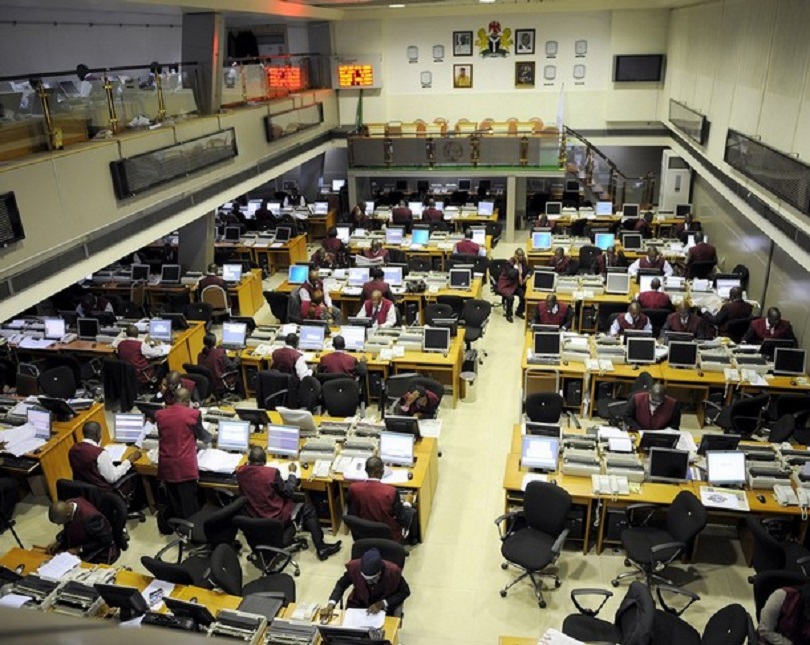
After going down for two straight trading sessions, the Nigerian Exchange (NGX) Limited returned to winning ways on Thursday, closing higher by 0.52 per cent.
Renewed bargain-hunting rescued Customs Street from the snarl of the fowler, as the bears were not ready to let go.
Data obtained by Business Post from the bourse confirmed this, as investor sentiment remained bearish after a negative market breadth index. There were 31 price gainers and 35 price decliners yesterday.
Also, the sustained selling pressure weakened three of the five indices tracked by this newspaper, with the insurance space down by 0.71 per cent, the banking counter down by 0.45 per cent, and the energy industry down by 0.29 per cent.
However, the industrial goods sector appreciated by 1.88 per cent, while the consumer goods index improved by 0.25 per cent.
As a result, the All-Share Index (ASI) went up by 1,010.23 points to 196,908.76 points from 195,898.53 points, and the market capitalisation expanded by N649 billion to N126.399 trillion from N125.750 trillion.
FTN Cocoa topped the advancers’ chart after it grew by 10.00 per cent to N6.27, Fidson surged by 9.97 per cent to N105.35, Deap Capital advanced by 9.89 per cent to N7.00, Caverton rose by 9.40 per cent to N6.40, and Livestock Feeds increased by 9.30 per cent to N7.05.
On the flip side, Eterna lost 10.00 per cent to trade at N42.30, Omatek deflated by 10.00 per cent to N2.52, SCOA Nigeria crashed by 9.94 per cent to N22.65, Fortis Global Insurance contracted by 9.24 per cent to N1.08, and Sovereign Trust Insurance slipped 9.09 per cent to N2.10.
During the session, market participants traded 549.8 million equities worth N44.7 billion in 55,465 deals versus the 671.3 million shares valued at N26.1 billion transacted in 58,792 deals on Wednesday.
This indicated that the value of transactions soared by 71.26 per cent, while the volume of trades and the number of deals decreased by 18.10 per cent and 5.66 per cent apiece.
Fortis Global Insurance finished the day as the busiest stock with 32.2 million units valued at N34.8 million, Access Holdings traded 28.1 million units worth N701.0 million, First Holdco exchanged 27.7 million units for N1.4 billion, Zenith Bank transacted 27.5 million units worth N2.6 billion, and Dangote Cement sold 26.9 million units valued at N20.7 billion.
By Dipo Olowookere
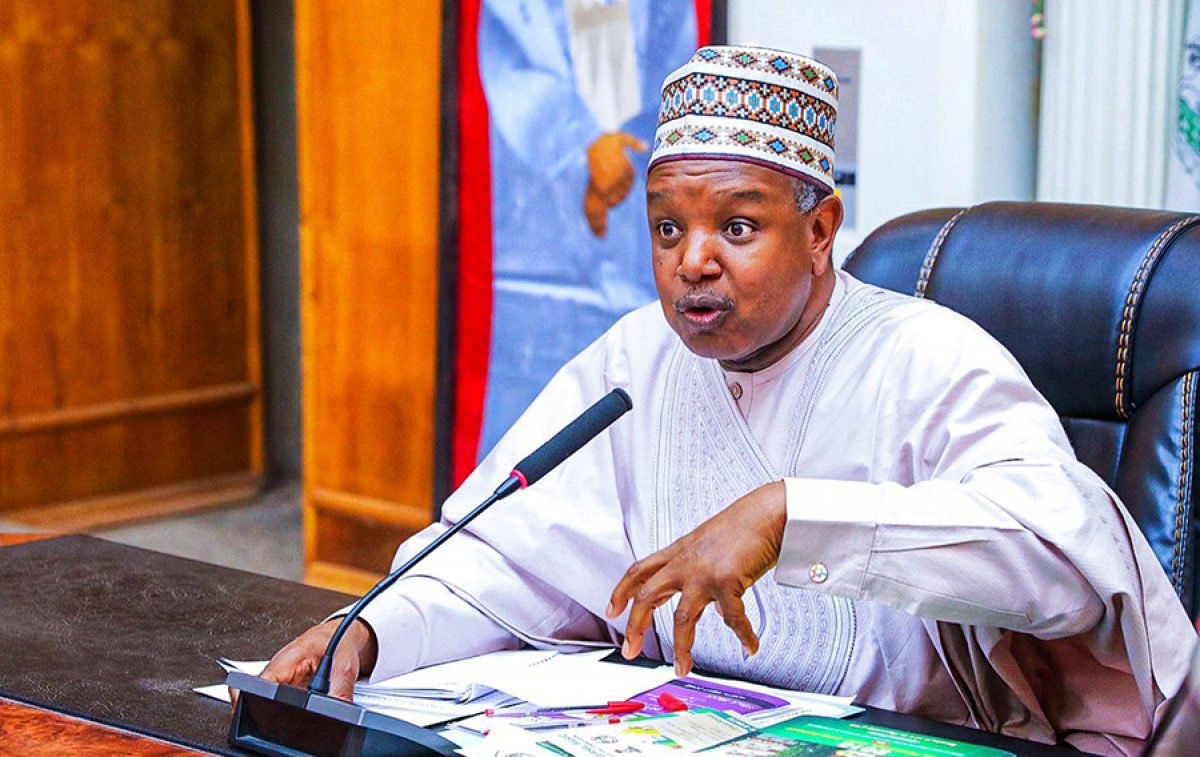
The Minister of Budget and Economic Planning, Mr Abubakar Bagudu, has stressed the key role decentralised initiatives play in unlocking economic opportunities across the country.
Speaking in Abuja on Wednesday when he received members of the Crop, Aquaculture, Livestock Farmers and Value Chain Economic Actors Association of Nigeria (CALFAN), the Minister noted that initiatives like the Renewed Hope Ward Development Programme of President Bola Tinubu concentrate development planning at the ward level, which is the lowest administrative unit in Nigeria’s governance structure.
He welcomed the decision of the farmers’ group to collaborate with the federal government to accelerate the programme’s implementation.
Mr Bagudu explained that the project aims to enable communities to identify their development opportunities rather than relying solely on a top-down approach, adding that Nigeria has 8,809 wards, each with unique economic prospects that can be accessed through targeted interventions.
Under the initiative, wards will determine their priority economic opportunities, after which the federal government, state governments, local authorities, and development partners will work together to provide the necessary support.
According to him, Nigeria’s constitutional framework assigns development responsibilities to the three tiers of government, but in practice, these roles have not always been well coordinated, often resulting in duplication, inefficiencies, and interruptions in development initiatives.
“Our belief is that every ward in Nigeria is an acre of diamonds waiting to be uncovered. Each community has its own strengths and potential, and development strategies must reflect these distinctive qualities,” he said.
In his remarks, the president of CALFAN, Mr Aliyu Abdulraheem, outlined the association’s proposal to serve as a field-level implementation partner for the Renewed Hope Ward Development Programme.
He highlighted CALFAN’s extensive grassroots structure, including Ward-Level Extension Service Offices (WESOs) and a digital platform that supports real-time beneficiary identification, community mobilisation, data collection, and monitoring of development activities.
He disclosed that the proposed platform would facilitate economic mapping of rural communities, infrastructure assessments, digital surveys, and real-time data collection to support evidence-based policy decisions and programme monitoring.
The CALFAN boss highlighted the inclusive approach that encompasses the entire agricultural value chain, including farmers, input suppliers, processors, transporters, traders, and service providers.
Unveiled in 2025 by President Tinubu, the Renewed Hope Ward Development Programme aims to reset development planning by boosting economic activities at the ward level through collaboration among the federal, state, and local governments.
By Adedapo Adesanya
The Nigerian Midstream and Downstream Petroleum Regulatory Authority (NMDPRA) has granted import permits for Premium Motor Spirit (PMS) or petrol to six depot owners and petroleum marketers.
This step comes as the federal government moved to ensure stability and balance in the country’s downstream fuel sector after it was widely reported that the country suspended the issuance of petrol import licenses for a second straight month
The regulator recently issued these permits to six importers, with each authorised to import approximately 30,000 metric tonnes of the fuel into the country to help cushion against the effects of escalating conflict in the Middle East.
This development also occurs against the backdrop of ongoing discussions about supply concentration, with recent data showing that the Dangote Petroleum Refinery supplied roughly 92 per cent of Nigeria’s petrol in February.
At present, the Dangote refinery is the sole facility in Nigeria producing petrol, while most modular refineries primarily focus on diesel output.
The Crude Oil Refineries Association of Nigeria (CORAN) also confirmed that none have been issued so far in March, signalling a shift towards prioritising local output. However, this has since changed, spurred by the latest development.
Industry statistics show that local refining provided an average of about 36.5 million litres per day that month, with imports adding roughly 3 million litres daily, resulting in a total supply of around 39.5 million litres per day.
According to reports, until recently, no petrol import permits had been issued under the current NMDPRA leadership, suggesting that the new approvals signal a deliberate policy shift to preserve supply diversity and adaptability as the domestic market continues to develop.
Nigeria’s average daily petrol consumption fell to 56.9 million litres per day in February 2026, down from 60.2 million litres in January.
In February, the Dangote Refinery supplied 36.5 million litres of petrol and 8 million litres of diesel to the local market, leaving a daily deficit of 20 million litres that was covered by previously imported stock.
According to NMDPRA, these volumes were sufficient, leading to its earlier decision to withhold import licenses.











-
 Feature/OPED6 years ago
Davos was Different this year
-
Travel/Tourism10 years ago
Lagos Seals Western Lodge Hotel In Ikorodu
-

 Showbiz3 years ago
Estranged Lover Releases Videos of Empress Njamah Bathing
-
 Banking8 years ago
Sort Codes of GTBank Branches in Nigeria
-

 Economy3 years ago
Subsidy Removal: CNG at N130 Per Litre Cheaper Than Petrol—IPMAN
-

 Banking3 years ago
Sort Codes of UBA Branches in Nigeria
-

 Banking3 years ago
First Bank Announces Planned Downtime
-

 Sports3 years ago
Highest Paid Nigerian Footballer – How Much Do Nigerian Footballers Earn