
Economy
CardinalStone Closes $64m Fund, Invests in Two Firms

By Aduragbemi Omiyale
The maiden private equity fund of CardinalStone Capital Advisers (CCA), a Lagos based private equity fund manager, has been closed.
In a statement made available to Business Post on Tuesday, it was disclosed that the fund, CardinalStone Capital Advisers Growth Fund LP (CCAGF), was closed at $64 million.
The CCAGF is a generalist fund that makes equity investments of $5 million to $10 million in high growth SMEs operating across a range of sectors which include industrials, agribusiness, consumer goods and services, education, healthcare and financial services.
Those who invested in the fund were a mix of commercial and development finance institutions like the Kuramo Capital, the UK Government’s CDC Group, FMO – the Dutch Entrepreneurial Development Bank, the International Finance Corporation (IFC, part of the World Bank Group), the Nigerian Sovereign Investment Authority (NSIA) and a number of high-net-worth individuals.
Recall that in December 2018, the fund recorded its first close and final close in September 2020.
It was established to support the growth and institutionalisation of small and medium-sized enterprises (SMEs) operating in two of West Africa’s leading economies—Nigeria and Ghana.
Already, the fund manager has invested in two companies; iFitness Centre Limited and AppZone Group Limited. It promised to make further investments in another six to seven organisations over the next two years.
iFitness, Nigeria’s leading and fastest-growing fitness chain, operates with a mission of improving the overall health and well-being of the average Nigerian by providing high quality, yet affordable fitness offerings.
On its part, AppZone, the foremost fintech solutions provider in Africa, provides a bouquet of offerings, developed with proprietary intellectual property, targeted at accelerating economic prosperity across Africa by leveraging technology to deepen financial inclusion.
“We are excited about our investments in both iFitness and AppZone. The founders of both businesses have ambitions to disrupt and consolidate key segments of their respective industries and have done an amazing job establishing solid foundations that complement CCA’s brand of bold, yet collaborative, investing.
“We look forward to partnering with more like-minded founder/promoter teams towards building businesses with transformational impact across our target markets,” the co-founder and Managing Director of CCA, Mr Yomi Jemibewon, commented on both investments.
On his part, Mr Femi Ogunjimi, the co-founder and MD of CCA expressed his satisfaction with the “successful close of our fund in the prevailing challenging environment.”
“We are very grateful to all of our limited partners for the resounding support shown through the process; their support is an endorsement of our hands-on approach to building SMEs into sector champions,” he added.





By Aduragbemi Omiyale
One of the newest members of the Nigerian Exchange (NGX) Limited, Zichis Agro-Allied Industries Plc, has confirmed its intention to approach the capital market to raise funds, subject to shareholder and regulatory approval.
However, it denied reports suggesting it’s “set to undertake an Initial Public Offering (IPO) or related capital raising activity.”
In a notice on Monday, the firm affirmed proposing “to seek shareholders’ approval at its forthcoming Annual General Meeting (AGM) to raise additional capital, which may be through equity, debt, or a combination of both, subject to regulatory approvals and market conditions.”
“At this stage, the structure, timing, and details of any such capital raising have not been finalised, and no specific transaction has been concluded,” a part of the statement signed by the company secretary, Solomon Itsede, stressed.
Zichis expressed its commitment to upholding “the highest standards of corporate governance, transparency, and timely disclosure.”
“Accordingly, any material corporate actions or capital market activities will be formally communicated through the appropriate regulatory channels,” it said, advising shareholders and the investing public “to rely solely on official disclosures and filings made by the company through the NGX and other authorised regulatory platforms when making investment decisions.”
Zichis welcomed the “continued interest of investors and market participants in its operations and performance,” promising to remain focused on delivering sustainable value through disciplined strategic execution.
It also lauded the continued support of its shareholders, saying it remains committed to maintaining transparency in all its communications.

By Adedapo Adesanya
The Nigerian Electricity Regulatory Commission (NERC) has issued a directive to ensure transparency in reporting the Regional Electricity Transmission Loss Factor, as it remains above the 7 per cent threshold.
In a public notice posted on its official X (formerly Twitter) on Monday, the order, contained in No. NERC/2026/026 is aimed at improving transparency and efficiency in Nigeria’s power grid through enhanced reporting of Regional Transmission Loss Factors (TLF).
The regulator disclosed that the order is backed by the provisions of the Electricity Act 2023, which enables the commission to regulate, monitor, and ensure efficiency in the power sector.
According to the statement, the Data from the Nigerian Independent System Operator (NISO) indicate that the national average TLF was 8.71 per cent in 2024 but was reduced to 7.24 per cent in 2025.
The statement added that the report exceeds the 7 per cent benchmark approved by NERC in the Multi-Year Tariff Order (MYTO).
The statement reads, “The Order dated 8 April 2026 establishes a formal framework for reporting transmission losses across regions operated by the Transmission Company of Nigeria (TCN).
“Taking effect from 13 April 2026, the Order is backed by provisions of the Electricity Act 2023, which empower NERC to regulate, monitor, and ensure efficiency in the electricity market.”
The directive reads, “NISO to install smart meters at all boundary regional interconnection points by December 2026 to accurately measure energy flows for each region of the transmission network.
“NISO to measure and document all energy flow of power transformers at transmission substations.
“NISO to file quarterly reports on TLF to NERC on a regional basis.”
It added, “TCN to file an action plan by July 2026 on the reduction of TLF to a value within the 7 per cent approved benchmarks in the regions.
“TCN to ensure that TLF across transmission regions shall not exceed 6.5 per cent by December 2026.”
NERC concluded that the order is designed to strengthen accountability in transmission operations and support better grid performance through structured loss reporting.
By Adedapo Adesanya
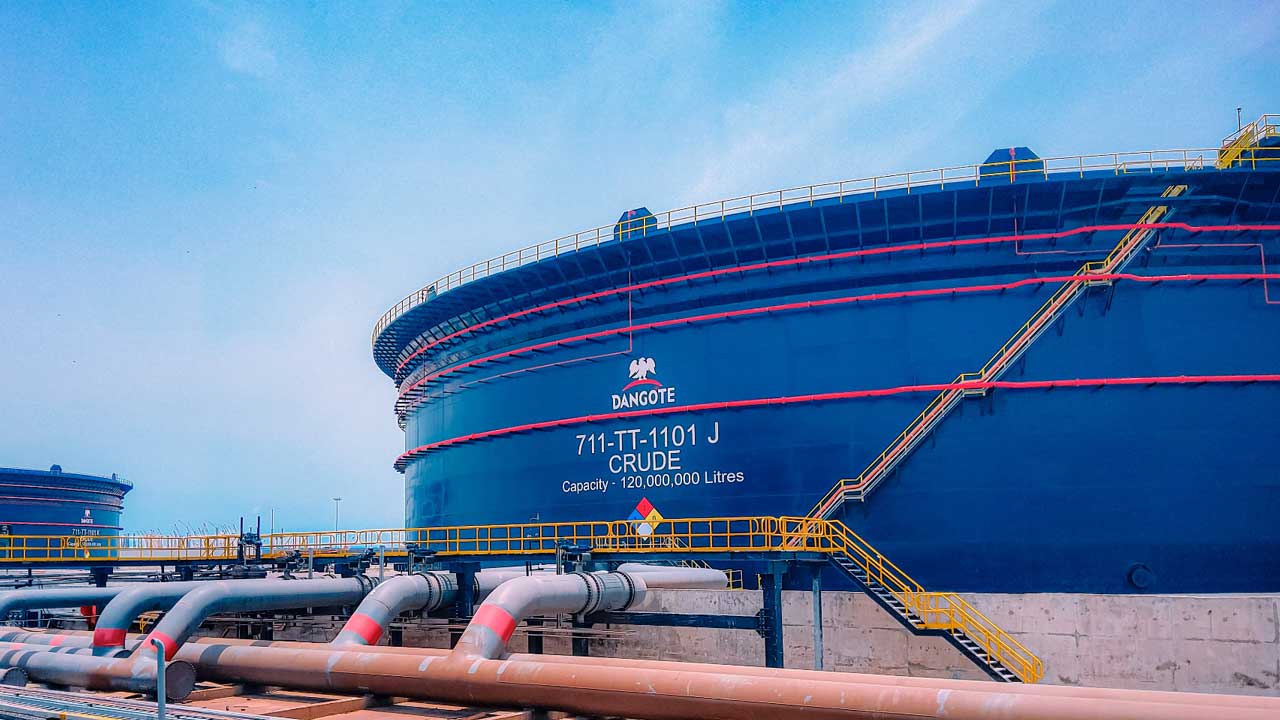
Nigerian businessman, Mr Aliko Dangote, is planning to list shares of his $20 billion oil refinery on multiple African stock exchanges.
The landmark cross-border public offering on the continent was disclosed by the chief executive of the Nairobi Securities Exchange (NSE), Mr Frank Mwiti, following a meeting held last week in Lagos between Mr Dangote and several heads of African exchanges.
Last year, Mr Dangote unveiled plans to list a 10 per cent stake in his Lagos-based refinery on the Nigerian Exchange this year.
According to a Bloomberg report, citing an email from the chief executive of FirstCap, Mr Ukandu Ukandu, Stanbic IBTC Capital Limited, Vetiva Advisory Services Limited, and FirstCap Limited have been appointed as advisers for the initial public offering of Dangote Petroleum Refinery and Petrochemicals FZE.
Mr Mwiti said the proposed listing is designed to cut across multiple markets and deepen investor participation across the continent.
“The plan is to structure a pan-African IPO,” he said.
Bloomberg also reported that a spokesman for the Dangote Group confirmed that discussions had taken place between Mr Dangote and exchange officials but declined to provide further details.
In February 2026, Mr Dangote said that the IPO could be launched within the next five months.
“But individually Nigerians too will have an opportunity in the next maximum four or five months, they will actually be able to buy their shares,” he said at the time.
He added that investors would have flexibility in how they receive returns.
“People will have a choice either to get their dividends in naira or to get their dividends in dollars because we earn in Dollars.”
-
 Feature/OPED6 years ago
Davos was Different this year
-
Travel/Tourism10 years ago
Lagos Seals Western Lodge Hotel In Ikorodu
-

 Showbiz3 years ago
Estranged Lover Releases Videos of Empress Njamah Bathing
-
 Banking8 years ago
Sort Codes of GTBank Branches in Nigeria
-

 Economy3 years ago
Subsidy Removal: CNG at N130 Per Litre Cheaper Than Petrol—IPMAN
-

 Banking3 years ago
Sort Codes of UBA Branches in Nigeria
-

 Banking3 years ago
First Bank Announces Planned Downtime
-

 Sports3 years ago
Highest Paid Nigerian Footballer – How Much Do Nigerian Footballers Earn