Connect with us

Economy

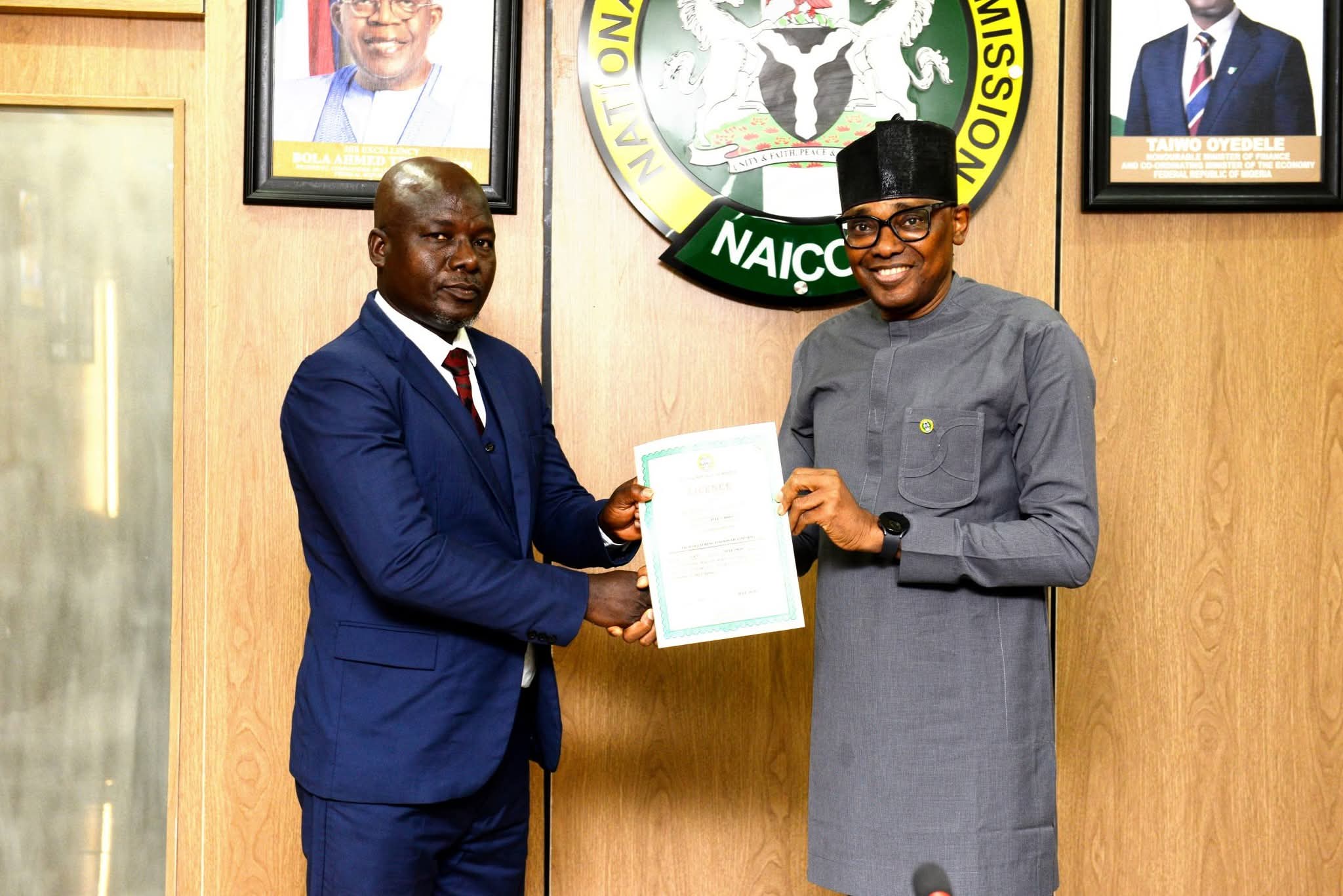
CBI Partnering Secures Insurtech Licence from NAICOM

Published

on

CBI Partnering

By Adedapo Adesanya

The National Insurance Commission (NAICOM) has formally issued an operational licence to an insurance technology (insurtech) company, CBI Partnering Insurtech Limited.

It was the first issued by the regulator in Nigeria, and it is aimed at opening up the sub-sector of the underwriting industry to boost innovation and services.

This development underscores NAICOM’s regulatory leadership in fostering innovation within a structured and consumer-focused insurance ecosystem.

The licence was presented during a formal handover ceremony, where the commission reiterated its commitment to advancing innovation, regulatory reform, and policyholder protection across the insurance sector.

In his remarks, the Deputy Commissioner for Insurance, Finance and Administration, Mr Ekerete Ola Gam-Ikon, highlighted the agency’s ongoing efforts to align Nigeria’s insurance industry with global best practices.

He referenced the recent enactment of the Nigerian Insurance Industry Reform Act (NIIRA) 2025, alongside the Commission’s pioneering insurtech guidelines, as some of the key pillars driving this transformation.

He noted that fostering innovation within a robust and well-governed regulatory framework remains a core strategic priority for the commission.

Mr Ekerete further emphasised that the licence is granted subject to strict compliance with regulatory and ethical standards, reinforcing NAICOM’s dual mandate of enabling innovation while safeguarding policyholders’ interests.

He also pointed to the growing international recognition of Nigeria’s regulatory approach, particularly in leveraging technology to accelerate insurance sector development.

While formally presenting the licence, he stated, “This milestone reflects the commission’s commitment to responsibly nurturing innovation across the insurance value chain.

“We congratulate CBI Partnering Insurtech Ltd and expect full compliance with all applicable regulations. This licence carries an obligation to uphold the highest standards of governance and ethical conduct.

“NAICOM remains committed to supporting the growth of insurtech while protecting the interests of Nigerians.”

In response, the Managing Director of CBI, Mr Suleiman Olalekan Ajani, expressed appreciation to NAICOM for its guidance and rigorous licensing process, stating:

“We are honoured to receive this licence from NAICOM. The Commission’s robust regulatory framework provides the foundation for us to scale strategic partnerships and deliver technology-driven insurance solutions that prioritise consumer trust, transparency, and protection.”


Adedapo Adesanya is a journalist, polymath, and connoisseur of everything art. When he is not writing, he has his nose buried in one of the many books or articles he has bookmarked or simply listening to good music with a bottle of beer or wine. He supports the greatest club in the world, Manchester United F.C.

Click to comment

Leave a Reply

Your email address will not be published. Required fields are marked *

Economy

Crude Oil Jumps 3% as US Revokes Iran Oil Sales License

Published

on

crude oil sales

By Adedapo Adesanya

Crude oil soared by 3 per cent on Tuesday after the United States revoked the general ‌license that authorised the sale of Iranian crude oil, amid reports of attacks on vessels near the Strait of Hormuz, reviving fears of disruptions to tanker shipping.

Brent crude futures chalked up $2.17 or 3.01 per cent to trade at $74.16 a barrel, while the US West Texas Intermediate (WTI) crude rose $1.89 or ​2.76 per cent to $70.44 a barrel.

After the license was revoked, the US warned that Iran’s actions in the Strait of Hormuz were wholly unacceptable and ‌would be met with consequences after attacks on tankers in the strategic waterway.

This comes as negotiators continued ​to work in good faith toward a final agreement with Iran despite the ⁠latest escalation.

The US move came after three tankers reported being struck by unknown projectiles in and ​near the Strait of Hormuz in recent days. The attacks and the US response threaten to put a fragile diplomatic understanding between America and Iran on shaky ground, raising the risk that further retaliation ​could derail negotiations over a broader agreement.

The Strait of Hormuz, a narrow waterway between Iran and Oman, is one of the world’s most important energy chokepoints, with roughly a fifth of global oil consumption and large volumes ​of liquefied natural gas ​(LNG) shipments passing through each ⁠day.

Any fresh disruption amid recent recovery could push up energy prices and increase pressure on consumers and governments already facing higher fuel costs.

Ukraine landed one of its most consequential blows yet against Russia’s energy sector, knocking out the country’s largest oil refinery just as the country is scrambling to contain a widening fuel crisis.

Also on Tuesday, Ukraine said its ⁠drones struck eight ​tankers from Russia’s shadow fleet of ageing vessels used to bypass sanctions.

Gulf oil producers are offering discounts to entice buyers, with Saudi Arabia’s latest price cut for Asian importers the sharpest in decades but unlikely to boost sales.

According to Reuters, Saudi Arabia cut its official selling price for crude to Asian buyers by as much as $11 per barrel, but other Gulf exporters are cutting even deeper in order to sell their barrels that have sat in the Gulf for over three months.

Continue Reading

Economy

Cross River Targets International Coffee Market by 2032 With 30 million Seedlings Initiative

Published

on

coffee seedlings

By Adedapo Adesanya

The Cross River State Government has unveiled plans to establish the state as a major player in the international coffee market by 2032 through the distribution of 30 million coffee seedlings to smallholder farmers over seven years.

The state Commissioner for Agriculture, Mr Johnson Ebokpo, disclosed the plan during a press briefing in Calabar, saying Governor Bassey Otu approved the initiative as part of efforts to diversify the state’s economy.

According to Mr Ebokpo, about 13 million coffee seedlings have already been distributed to farmers following an enumeration exercise, with the programme expected to run from 2024 to 2032.

He said the government aims to produce “flavoured coffee” that will appeal to international buyers, adding that coffee production and exports are expected to generate billions of dollars in revenue and boost livelihoods across communities.

To ensure export-quality standards, the commissioner said the state would establish communal washing and drying stations while linking farmers directly with international buyers.

Mr Ebokpo also said the government plans to establish a commodity exchange to guarantee markets for farmers and provide training for all participants in the coffee value chain to equip them with the knowledge required for export.

He noted that coffee production would be implemented in phases, with the current focus on smallholder farmers, most of whom are women, while plans are being developed to accommodate commercial farmers.

The commissioner urged residents to participate in the coffee production programme, adding that a bill to regulate the production, export and consumption of coffee is currently before the Cross River State House of Assembly.

Nigeria’s coffee industry remains relatively small compared with leading African producers, but it has significant untapped potential because of favourable growing conditions in states such as Cross River, Taraba, Plateau and parts of Kaduna, as well as increasing domestic consumption and rising global demand for speciality coffee.

Nigeria currently produces about 1,800 metric tonnes of coffee annually, ranking 48th globally, while exporting just 53 tonnes valued at less than $80,000 in 2023.

Industry experts say the country’s favourable climate and vast arable land leave significant room for growth, especially as African producers such as Ethiopia and Uganda earn billions of Dollars annually from coffee exports.

Continue Reading

Economy

Caverton Blames Resignation of Chief Financial Officer, Others for Delay in Filing FY25 Results

Published

on

Caverton

By Aduragbemi Omiyale

Caverton Offshore Support Group Plc has apologised to its shareholders and investing public for being unable to file its Audited Financial Statements for the year ended December 31, 2025.

Companies trading their stocks on the Nigerian Exchange (NGX) Limited are required to submit their audited results for a financial year, at most three months after.

For its financial statements for the 2025 fiscal year, which ended December 31, 2025, the aviation firm was required to file on or before March 31, 2026.

However, six months later, it had yet to file the results, a development which may affect its securities at the market, as it might face suspension after prolonged default.

In a notice to the exchange, Caverton partly attributed the delay to the resignation of its chief financial officer.

The company noted that the exit of the CFO during the audit process “disrupted internal review and sign-off procedures.”

It also blamed administrative delays affecting the external auditors’ regulatory clearance from the Financial Reporting Council of Nigeria (FRCN), as well as unforeseen technical issues with the Company’s Enterprise Resource Planning (ERP) system, which temporarily affected data extraction and financial reconciliations for the default.

However, the organisation promised to release the financial statements on or before Friday, July 10, 2026, noting that the audit is “now at its concluding stage.”

Continue Reading

Trending