Economy
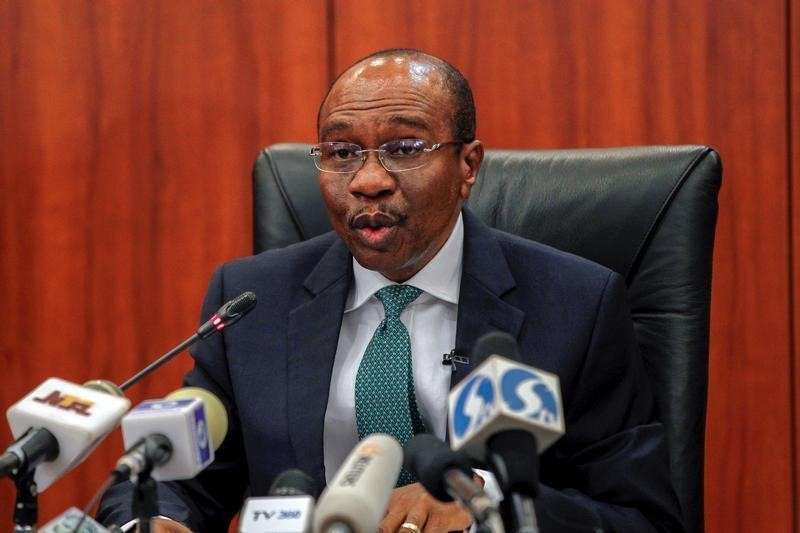
CBN Retains MPR at 14%

By Modupe Gbadeyanka
The Central Bank of Nigeria (CBN) has again failed to tamper with the Monetary Policy Rate (MPR), leaving it unchanged at 14 percent.
At the end of its Monetary Policy Committee (MPC) meeting on Tuesday, January 24, 2017, the apex bank noted that reducing the MPR could have an adverse effect on the economy, presently in recession, but already on its way to recovery.
Reading the committee’s communiqué after the meeting, the CBN Governor, Mr Godwin Emefiele, explained that the MPR was left alone at its present rate “in consideration of the headwinds in the domestic economy and the uncertainties in the global environment.”
However, he stressed that the rate would be reduced “when the conditions permit.”
According to the committee, “inflationary pressures would begin to subside as non-oil output recovers and the Naira exchange rate stabilizes.
“Until then, it stressed, a rate cut would worsen the inflationary conditions and undermine the current outlook for stability in the foreign exchange market.
“The Committee also feels that doing so would further aggravate demand pressures while undermining existing income levels in the face of the already expansionary monetary policy and increasing inflationary pressure which will make the economy unattractive for foreign and domestic investment.”
It noted that, “Given these limitations, the Committee was reluctant to lower the policy rate on this occasion but remained committed to doing so when the conditions permit.”
Also, the committee unanimously agreed to retain the CRR at 22.5 percent; retain the Liquidity Ratio at 30.00 per cent; and retain the Asymmetric corridor at +200 and -500 basis points around the MPR.
Economy
SEC Hikes Minimum Capital for Operators to Boost Market Resilience, Others
By Adedapo Adesanya
The Securities and Exchange Commission (SEC) has introduced a comprehensive revision of minimum capital requirements for nearly all capital market operators, marking the most significant overhaul since 2015.
The changes, outlined in a circular issued on January 16, 2026, obtained from its website on Friday, replace the previous regime. Operators have been given until June 30, 2027, to comply.
The SEC stated that the reforms aim to strengthen market resilience, enhance investor protection, discourage undercapitalised operators, and align capital adequacy with the evolving risk profile of market activities.
According to the circular, “The revised framework applies to brokers, dealers, fund managers, issuing houses, fintech firms, digital asset operators, and market infrastructure providers.”
Some of the key highlights of the new reforms include increment of minimum capital for brokers from N200 million to N600 million while for dealers, it was raised to N1 billion from N100 million.
For broker-dealers, they are to get N2 billion instead of the previous N300 million, reflecting multi-role exposure across trading, execution, and margin lending.
The agency said fund and portfolio managers with assets above N20 billion must hold N5 billion, while mid-tier managers must maintain N2 billion with private equity and venture capital firms to have N500 million and N200 million, respectively.
There was also dynamic rule as firms managing assets above N100 billion must hold at least 10 per cent of assets under management as capital.
“Digital asset firms, previously in a regulatory grey area, are now fully covered: digital exchanges and custodians must maintain N2 billion each, while tokenisation platforms and intermediaries face thresholds of N500 million to N1 billion. Robo-advisers must hold N100 million.
“Other segments are also affected: issuing houses offering full underwriting services must hold N7 billion, advisory-only firms N2 billion, registrars N2.5 billion, trustees N2 billion, underwriters N5 billion, and individual investment advisers N10 million. Market infrastructure providers carry some of the highest obligations, with composite exchanges and central counterparties required to maintain N10 billion each, and clearinghouses N5 billion,” the SEC added.
Economy
Austin Laz CEO Austin Lazarus Offloads 52.24 million Shares Worth N227.8m
By Aduragbemi Omiyale
The founder and chief executive of Austin Laz and Company Plc, Mr Asimonye Austin Lazarus Azubuike, has sold off about 52.24 million shares of the organisation.
The stocks were offloaded in 11 tranches at an average price of N4.36 per unit, amounting to about N227.8 million.
The transactions occurred between December 2025 and January 2026, according to a notice filed by the company to the Nigerian Exchange (NGX) Limited on Friday.
Business Post reports that Austin Laz is known for producing ice block machines, aluminium roofing, thermoplastics coolers, PVC windows and doors, ice cream machines, and disposable plates.
The firm evolved from refrigeration sales to diverse manufacturing since its incorporation in 1982 in Benin City, Edo State, though facing recent operational halts.
According to the statement signed by company secretary, Ifeanyi Offor & Associates, Mr Azubuike first sold 1.5 million units of the equities at N2.42, and then offloaded 2.4 million units at N2.65, and 2.0 million units at N2.65.
In another tranche, he sold another 2.0 million units at a unit price of N2.91, and then 5.0 million units at N3.52, as well as about 4.5 million at N3.87 per share.
It was further disclosed that the owner of the company also sold 9.0 million shares at N4.25, and offloaded another 368,411 units at N4.66, then in another transaction sold about 6.9 million units at N4.67.
In the last two transactions he carried out, Mr Azubuike first traded 10.0 million units equities at N5.13, with the last being 8.5 million stocks sold at N5.64 per unit.
Economy
NGX RegCo Delists ASO Savings from Stock Exchange
By Dipo Olowookere
ASO Savings and Loans Plc has been delisted from the daily official list of the Nigerian Exchange (NGX) Limited.
This action followed the revocation of the operating licence of the company by the Central Bank of Nigeria (CBN) in December 2025.
In a circular on behalf of the NGX Regulation (NGX RegCo) by Ugochi Eke, it was disclosed that the effective date of the delisting is today, Friday, January 16, 2026.
Already, the company has been notified of this development, according to the notice obtained by Business Post.
Before ASO Savings lost its operating licence, it had failed to meet some post-listing requirements, a part of the disclosure from the NGX RegCo stated.
“The board of NGX Regulation Limited via its decision dated January 1, 2026, approved that the step below should be taken pursuant to the process for regulatory delisting of issuers.
“The board has approved the delisting of ASO Savings and Loans Plc from the Nigerian Exchange Limited’s daily official list effective January 16, 2026.
“ASO Savings is hereby notified of this enforcement action and is advised to direct any communication in respect of the foregoing to [email protected].
“NGX RegCo was engaging the listed entity, concerning its outstanding post-listing obligations. However, due to the revocation of the operating license of ASO Savings by its primary regulator, the Central Bank of Nigeria (CBN) effective December 16, 2025; NGX RegCo will delist the entity from the daily official list effective January 16, 2026.
“In view of the foregoing, NGX RegCo has proceeded with publishing the name of the Company in the national dailies.
“The company has been duly notified of this enforcement action, and this publication serves as notification to the investing public, particularly shareholders of the company and investors in the Nigerian capital market,” the statement read.
-
Feature/OPED6 years agoDavos was Different this year
-
Travel/Tourism9 years ago
Lagos Seals Western Lodge Hotel In Ikorodu
-
Showbiz3 years agoEstranged Lover Releases Videos of Empress Njamah Bathing
-
Banking8 years agoSort Codes of GTBank Branches in Nigeria
-
Economy3 years agoSubsidy Removal: CNG at N130 Per Litre Cheaper Than Petrol—IPMAN
-
Banking3 years agoFirst Bank Announces Planned Downtime
-
Banking3 years agoSort Codes of UBA Branches in Nigeria
-
Sports3 years agoHighest Paid Nigerian Footballer – How Much Do Nigerian Footballers Earn