

Economy
CBN Unveils New Forex Policy Actions



By Modupe Gbadeyanka
In a bid to ease the huge pressure on the Naira at the foreign exchange market, the Central Bank of Nigeria (CBN) has released new policy actions aimed at achieving this goal.
In recent times, the Naira has performed woefully against the Dollar, exchanging at N522 per Dollar at the moment.
In the new policy, the apex bank said it is providing direct additional funding to banks to meet the needs of Nigerians for personal and business travel, medical needs, and school fees, effective immediately.
The CBN said it expects such retail transactions to be settled at a “rate not exceeding 20 percent above the interbank market rate,” which presently stands at N305.50k per Dollar.
The CBN explained that it took this step in continuation of efforts to increase the availability of forex in order to ease the difficulties encountered by Nigerians in obtaining funds for transactions.
The bankers’ bank said having cleared the historic backlog of matured letters of credit at the inception of the current flexible exchange rate system, it would immediately begin to provide foreign exchange to all commercial banks to meet the needs of both personal travel allowances (PTA) and business travel allowances (BTA) for onward sale to customers.
“All banks would receive amounts commensurate with their demand per week, which would be sold to customers who meet usual basic documentary requirements,” it said in a statement issued on Monday by its spokesman, Mr Isaac Okorafor.
In addition, the statement said the CBN would meet the needs of parents, guardians and sponsors who are seeking to make payments of school and educational fees for their children and wards. Such payments must be made by commercial banks directly to the institution specified by the customer.
It promised to ensure this process is as smooth as possible and that as many customers as possible get the foreign exchange they genuinely demand, noting that this would also apply to customers seeking to make payments, or purchase foreign exchange, for medical bills and paid directly to hospitals.
“The supply of FX to retail end-users (PTA, BTA, School fees, medical bills, etc) would be sustained by the CBN,” the statement said.
The apex further said that in order to further increase the availability of foreign exchange to all end-users, it has decided to significantly reduce the tenor of its forward sales from the current maximum cycle of 180 days, to no more than 60 days from the date of transaction and pointed out that as way of further easing the burden of travellers and ensure that transactions are settled at much more competitive exchange rates, it has directed all banks to open FX retail outlets at major airports as soon as logistics permit.
Also, the CBN said it will immediately begin implementing its articulated program to clear all the unfilled orders in the interbank FX market; give its plan to meet all unfilled orders, and while provision of FX to the manufacturing sector would remain its strong priority, and will no longer impose allocation/utilization rules on commercial banks.
The apex bank further it will implement an effective intervention programme to support the inter-bank market to ensure adequate liquidity necessary to deliver an efficient FX market; advise FMDQ to activate its FX Order-Book systems as soon as possible and also accelerate the on-boarding of FX clients on the FX Relationship Systems to ensure total transparency of the FX market.
“Given the CBN’s objective to continuously and vigorously pursue a transparent, liquid, and efficient FX Market, the Bank reiterates it would neither tolerate unscrupulous actions nor hesitate to bring serious sanctions on offenders, be they banks or their staff,” CBN said in the statement.
The apex urged market participants to assist in ensuring that these new measures engender the preservation of Nigeria’s external reserves, stability of the country’s financial system, and growth of the nation’s economy to the benefit of all Nigerians.











By Adedapo Adesanya
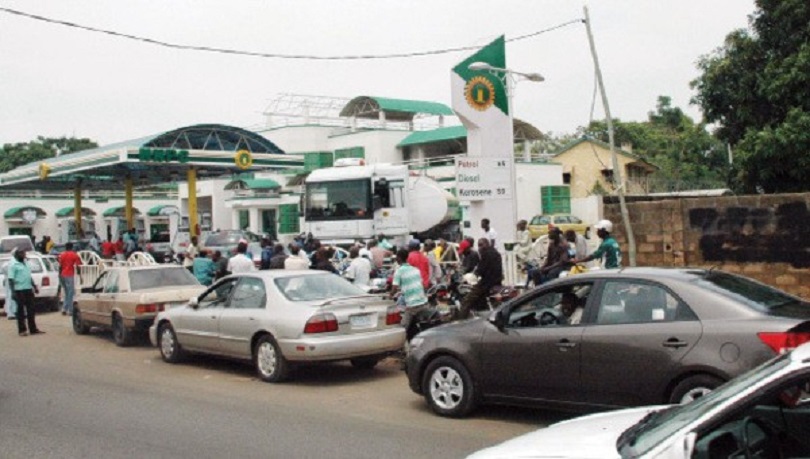
The supply of Premium Motor Spirit (PMS), also known as petrol, increased by 55.4 per cent on a month-on-month basis to 71.5 million litres per day in November 2025 from 46 million litres per day in October.
This was contained in the November 2025 fact sheet of the Nigerian Midstream and Downstream Petroleum Regulatory Authority (NMDPRA) on Monday.
The data showed that the nation’s consumption also increased by 44.5 per cent or 37.4 million litres to 52.1 million litres per day in November 2025, against 28.9 million litres in October.
The significant increase in petrol supply last month was on account of the imports by the Nigerian National Petroleum Company (NNPC) Limited into the Nigerian market from both the domestic and the international market.
Domestic refineries supplied in the period stood at 17.1 million litres per day, while the average daily consumption of PMS for the month was 52.9 million litres per day.
The NMDPRA noted that no production activities were recorded in all the state-owned refineries, which included Port Harcourt, Warri, and Kaduna refineries, in the period, as the refineries remained shut down.
According to the report, the imports were aimed at building inventory and further guaranteeing supply during the peak demand period.
Other reasons for the increase, according to the NMDPRA, were due to “low supply recorded in September and October 2025, below the national demand threshold; the need for boosting national stock level to meet the peak demand period of end of year festivities, and twelve vessels programmed to discharge into October, which spilled into November.”
On gas, the average daily gas supply climbed to 4.684 billion standard cubic feet per day in November 2025, from the 3.94 bscf/d average processing level recorded in October.
The Nigeria LNG Trains 1-6 also maintained a stable processing output of 3.5 bscf/d in November 2025, but utilisation improved slightly to 73.7 per cent compared with 71.68 per cent in October.
The increase, according to the report, was driven by higher plant utilisation across processing hubs and steady export volumes from the Nigeria LNG plant in Bonny.
“As of November 2025, Nigeria’s major gas processing facilities recorded improved output and utilisation levels, with the Nigeria LNG Trains 1-6 processing 3.50 billion standard cubic feet per day at a utilisation rate of 73.70 per cent.
“Gbaran Ubie Gas Plant processed 1.250 bscf per day, operating at 71.21 per cent utilisation, while the MPNU Bonny River Terminal recorded a throughput of 0.690 bscf per day during the period. Processing activities at the Escravos Gas Plant stood at 0.680 bscf per day, representing a 62 per cent utilisation rate, whereas the Soku Gas Plant emerged as the top performer, processing 0.600 bscf per day at 96.84 per cent utilisation,” it stated.


By Aduragbemi Omiyale
The proposed share reconstruction of a local gaming firm, Secure Electronic Technology (SET), has been suspended.
The Lagos-based company decided to shelve the exercise after negotiations with potential investors crumbled like a house of cards.
Secure Electronic Technology was earlier in talks with some foreign investors interested in the organisation.
Plans were underway to restructure the shares of the company, which are listed on the Nigerian Exchange (NGX) Limited.
However, things did not go as planned as the potential investors pulled out, leaving the board to consider others ways to move the firm forward.
Confirming this development, the company secretary, Ms Irene Attoe, in a statement, said the board would explore other means to keep the company running to deliver value to shareholders.
“This is to notify the NGX and the investing public that a meeting of the board of SET held on Tuesday, December 16, 2025, as scheduled, to consider the status of the proposed share reconstruction and recapitalisation as approved by the members at the Extraordinary General Meeting (EGM) held on April 16, 2025.
“After due deliberations, the board wishes to announce that the proposed share reconstruction will not take place as anticipated due to the inability of the parties to reach a convergence on the best and mutually viable terms.
“Thus, following an impasse in the negotiations, and the investors’ withdrawal from the transaction, the board has, in the interest of all members, decided to accept these outcomes and move ahead in the overall interest of the business.
“The board is committed to driving the strategic objectives of SEC and to seeking viable opportunities for sustainable growth of the company,” the disclosure stated.
Business Post reports that the share price of SET crashed by 3.85 per cent on Tuesday on Customs Street on Tuesday to 75 Kobo. Its 52-week high remains N1.33 and its one-year low is 45 Kobo. Today, investors transacted 39,331,958 units.

By Adedapo Adesanya
Clea, a blockchain-powered platform that allows African importers to pay international suppliers in USD while settling locally, has officially launched.
During its pilot phase, Clea processed more than $4 million in cross-border transactions, demonstrating strong early demand from businesses navigating the complexities of global trade.
Clea addresses persistent challenges that African importers have long struggled with, including limited FX access, unpredictable exchange rates, high bank charges, fraudulent intermediaries, and payment delays that slow or halt shipments. The continent also faces a trade-finance gap estimated at over $120 billion annually, limiting importers’ ability to access the FX and financial infrastructure needed for timely international payments by offering fast, transparent, and direct USD settlements, completed without intermediaries or banking bottlenecks.
Founded by Mr Sheriff Adedokun, Mr Iyiola Osuagwu, and Mr Sidney Egwuatu, Clea was created from the team’s own experiences dealing with unreliable international payments. The platform currently serves Nigerian importers trading with suppliers in the United States, China, and the UAE, with plans to expand into additional trade corridors.
The platform will allow local payments in Naira with instant access to Dollars as well as instant, same-day, or next-day settlement options and transparent, traceable transactions that reduce fraud risk.
Speaking on the launch, Mr Adedokun said, “Importers face unnecessary stress when payments are delayed or rejected. Clea eliminates that uncertainty by offering reliable, secure, and traceable payments completed in the importer’s own name, strengthening supplier confidence from day one.”
Mr Osuagwu, co-founder & CTO, added, “Our goal is to make global trade feel as seamless as a local transfer. By connecting local currencies to global transactions through blockchain technology, we are removing long-standing barriers that have limited African importers for years.”
According to a statement shared with Business Post, Clea is already working with shipping operators who refer merchants to the platform and is also engaging trade associations and logistics networks in key import hubs. The company remains fully bootstrapped but is open to strategic investors aligned with its mission to build a trusted global payment network for African businesses.










-
 Feature/OPED6 years ago
Davos was Different this year
-
Travel/Tourism9 years ago
Lagos Seals Western Lodge Hotel In Ikorodu
-

 Showbiz3 years ago
Estranged Lover Releases Videos of Empress Njamah Bathing
-
 Banking7 years ago
Sort Codes of GTBank Branches in Nigeria
-

 Economy3 years ago
Subsidy Removal: CNG at N130 Per Litre Cheaper Than Petrol—IPMAN
-

 Banking3 years ago
First Bank Announces Planned Downtime
-

 Banking3 years ago
Sort Codes of UBA Branches in Nigeria
-

 Sports3 years ago
Highest Paid Nigerian Footballer – How Much Do Nigerian Footballers Earn