Economy
Choppy Trading on Wall Street Amid Mixed Economic, Geopolitical News
By Investors Hub
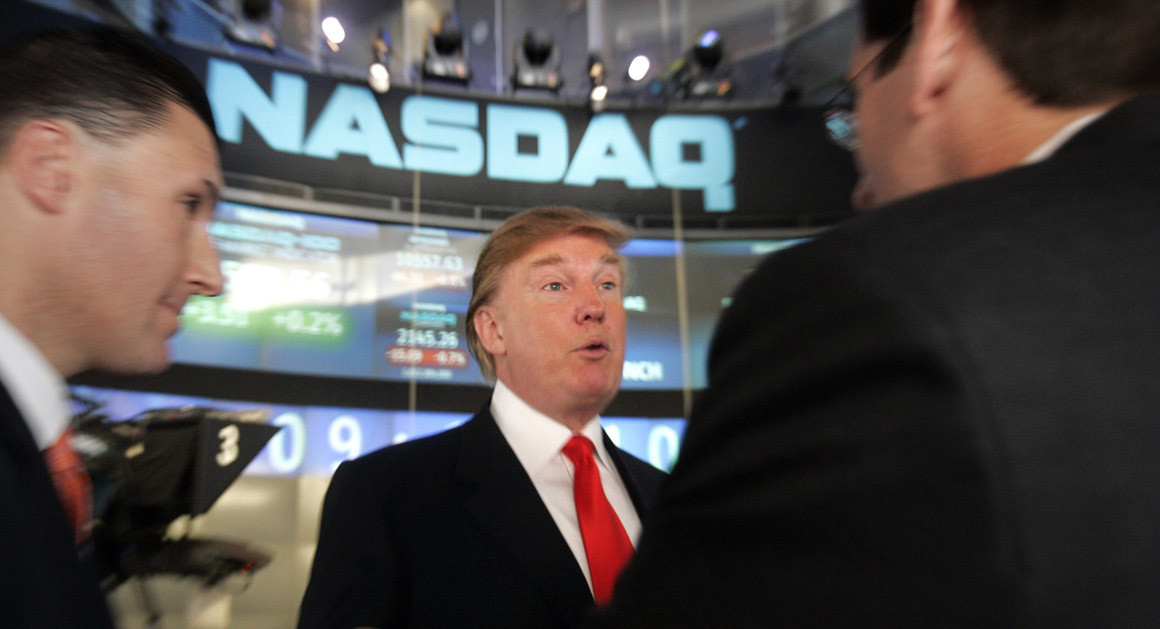
The major U.S. index futures are currently pointing to a roughly flat opening on Thursday, with stocks likely to continue to experience choppy trading.
Traders may be reluctant to make significant moves as they weigh better than expected U.S. economic data against disappointing news out of the summit between President Donald Trump and North Korean leader Kim Jong Un.
The futures recovered from earlier weakness following the release of a report from the Commerce Department showing U.S. economic growth slowed by less than expected in the fourth quarter of 2018.
Meanwhile, traders are also digesting news that the Trump-Kim summit ended abruptly without an agreement on the denuclearization of the Korean peninsula.
Trump told reporters the North Korean dictator wanted the U.S. to lift all sanctions without having to give up all of his weapons of mass destruction.
?Basically, they wanted the sanctions lifted in their entirety and we couldn’t do that,? Trump said. ?They were willing to de-nuke a large portion of the areas that we wanted, but we couldn’t give up all of the sanctions for that.?
?So we continue to work and we’ll see, but we had to walk away from that particular suggestion,? he added. ?We had to walk away from that.?
The president noted that the two sides will continue to work toward an agreement, although the lack of a deal at the summit may add to recent uncertainty on Wall Street.
Stocks once again recovered from an early move to the downside on Wednesday but showed a lack of direction over the remainder of the session.
The major averages spent the afternoon lingering near the unchanged line before closing mixed. While the Nasdaq inched up 5.21 points or 0.1 percent to 7,554.51, the Dow fell 72.82 points or 0.3 percent to 25,985.16 and the S&P 500 edged down 1.52 points or 0.1 percent to 2,792.38.
The early weakness on Wall Street came as comments from U.S. Trade Representative Robert Lighthizer partly offset recent optimism about the U.S.-China trade talks.
Lighthizer, who is described as “hawkish” on trade, told members of the House Ways and Means Committee that China needs to go beyond pledging to buy more U.S. goods to reach to a long-term trade agreement.
“We can compete with anyone in the world, but we must have rule, enforced rules, that make sure market outcomes and not state capitalism and technology theft determine winners,” Lighthizer said.
The reaction to Lighthizer’s remarks reflected the lingering uncertainty about a potential U.S.-China trade deal even after President Donald Trump decided to postpone an increase in tariffs on Chinese imports.
Selling pressure waned as the day progressed, however, as traders kept an eye on Trump’s second summit with North Korean leader Kim Jong Un, looking for more concrete signs of progress toward the denuclearization of the Korean peninsula.
“Kim Jong Un and I will try very hard to work something out on Denuclearization & then making North Korea an Economic Powerhouse,” Trump said on Twitter this morning. “I believe that China, Russia, Japan & South Korea will be very helpful!”
On the U.S. economic front, the National Association of Realtors released a report showing pending home sales rebounded by much more than anticipated in the month of January.
NAR said its pending home sales index spiked by 4.6 percent to 103.2 in January after tumbling by 2.3 percent to a downwardly revised 98.7 in December. Economists had expected pending home sales to rise by 0.4 percent.
A pending home sale is one in which a contract was signed but not yet closed. Normally, it takes four to six weeks to close a contracted sale.
Meanwhile, a government shutdown-delayed report released by the Commerce Department showed new orders for manufactured goods rose by much less than anticipated in the month of December.
The Commerce Department said factory orders inched up by 0.1 percent in December after falling by a revised 0.5 percent in November. Economists had expected orders to climb by 0.5 percent.
Most of the major sectors ended the day showing only modest moves, contributing to the lackluster performance by the broader markets.
Gold stocks showed a significant move to the downside, however, with the NYSE Arca Gold Bugs Index plunging by 1.9 percent. The weakness among gold stocks came amid a decrease by the price of the precious metal.
Considerable weakness was also visible among semiconductor stocks, as reflected by the 1.2 percent drop by the Philadelphia Semiconductor Index.
On the other hand,
biotechnology stocks moved sharply higher over the course of the
session, driving the NYSE Arca Biotechnology Index up by 2.4 percent.
The index jumped to its best closing level in over four months.
Economy
Run From Any Unregistered Online Investment Platform—SEC Warns Nigerians
By Aduragbemi Omiyale
For the umpteenth time, the Securities and Exchange Commission (SEC) has run to the rooftop to warn Nigerians against putting their hard-earned money in online investment platforms not authorised to operate in the nation’s capital market.
SEC is the apex regulatory agency in the Nigerian capital market. It issues licences to companies operating in the ecosystem.
In a statement on Thursday, the organisation expressed concerns over the rising “promotion of unregistered online investment schemes on social media applications and websites, including WhatsApp, Instagram, Telegram, Facebook, TikTok and other digital platforms.
In the notice, the SEC emphasised that, “Many of these investment schemes exhibit characteristics of Ponzi or Prohibited investment schemes, while some operators of such schemes also provide unauthorised investment services to members of the public.”
In view of these, the commission advised members of the public “to refrain from investing or participating in any unregistered online investment platform or scheme promising unrealistic or guaranteed returns.”
“Members of the public are further advised not to rely on investment advisories circulated through online platforms by persons or entities not registered by the commission, as reliance on such advisories may expose investors to significant financial losses and fraudulent schemes,” it noted.
“The public is reminded that, under the provisions of the Investments and Securities Act, 2025, only entities registered by the commission are authorised to promote investment services, provide investment advisory services or solicit funds from the public in the Nigerian capital market,” another part of the circular signed by the management noted.
The regulator urged the investing public to verify the registration status of any platform, company, or entity offering investment opportunities on its dedicated portal: https://sec.gov.ng/fintech-and-innovation- hub-finport/registered-fintech-operators/ or https://www.sec.gov.ng/cmos before transacting or investing with them.
Economy
Dangote Rejects NNPC Bid to Raise Stake in Soon-to-Be Listed Refinery
By Adedapo Adesanya
Nigerian businessman, Mr Aliko Dangote, has disclosed that he rejected requests by the Nigerian National Petroleum Company (NNPC) Limited to increase its 7.25 per cent stake in the Dangote Petroleum Refinery.
Mr Dangote stated this in a podcast with the Chief Executive Officer of the Norwegian Sovereign Wealth Fund, Mr Nicolai Tangen.
In the podcast interview, the billionaire revealed that the state oil company offered to increase its current 7.25 per cent stake in the 650,000 barrels per day plant.
However, this was rejected because the company is planning to go public and give other Nigerians the opportunity to own shares in the plant.
Recall that the refinery is planning a multi-exchange listing and targeting a valuation of $50 billion. It has appointed a consortium of three financial advisers to manage the offering. Stanbic IBTC Capital to handle international book-building process and lead engagement with foreign portfolio investors; Vetiva Capital Management to manage retail investor distribution within Nigeria; and FirstCap to focus on placements with Nigerian institutional investors, particularly pension funds.
It was reported in 2021 that the NNPC acquired the 7.25 per cent stake in the refinery for $1 billion, with an option to acquire the remaining 12.75 per cent stake by June 2024.
However, the national oil firm reneged on its decision.
During the interview with the Norwegian Sovereign Wealth Fund CEO, Mr Dangote revealed that the state oil company had made attempts to acquire more stakes in the refinery, but this was turned down.
The revelation came while he was responding to questions about what could be the biggest risks to his businesses.
“Actually, if there are civil wars, which is not in the offing at all.
“The other biggest risk is government inconsistencies in policies, and we are addressing that one because if you look at our refinery, the national oil company already owns 7.25 per cent, and they are trying to buy more. We are the ones that said no; we want to now spread it and have everybody be part of it.”
In 2024, Mr Dangote revealed that under the former Group Chief Executive Officer, Mr Mele Kyari, the NNPC reduced its stake in the refinery from 20 per cent to 7.25 per cent. He disclosed that the NNPC had only a 7.2 per cent stake in the refinery and not 20 per cent as many Nigerians believed.
“The agreement was actually 20 per cent, which we had with NNPC, and they did not pay the balance of the money up until last year; then we gave them another extension up until June (2024), and they said that they would remain where they had already paid, which is 7.2 per cent. So NNPC owns only 7.2 per cent, not 20 per cent,” Mr Dangote stated at the time.
Economy
Pathway Asset Management’s Adekunle Alade Unveils Blueprint for Sustainable Wealth, Investment Opportunities
In this interview with Mr Adekunle Alade, Founder and Director of Pathway Asset Management Limited, he discusses the blueprint for sustainable wealth and investment opportunities. Excepts;
Could you please tell us about Pathway Asset Management?
Pathway Asset Management is registered and regulated by the Securities and Exchange Commission (SEC) Nigeria as a fund and portfolio manager company with the main focus of helping individuals, retail, HNIs and institutions make smarter investment decisions and build long-term sustainable wealth. We understand how complex and unpredictable the Nigerian market can be because we operate in it every day. So, we’ve built a firm that is clear, disciplined, and driven by research, not guesswork.
Our offerings cut across Pathway Fixed Deposit Notes, Privately Managed Notes, Fixed Income Notes, Pathway Dollar Notes, Funds/Portfolio Management, Pathway Money Market Fund (coming soon), Pathway Dollar Funds (Coming Soon), and Investment Advisory services, all tailored to each client’s goal. But beyond the products, what really defines us is how we think: deep client understanding, strong governance, and a long-term mindset. That’s what guides every decision we make.
Can you walk us through Pathway Asset Management’s core investment philosophy and how it differentiates the firm in Nigeria’s asset management space?
Our philosophy is simple and profound. We are partners in our clients’ financial success. We create value, but never at the expense of disciplined risk management. Every investment is carefully assessed to ensure the returns justify the risk, helping clients move from speculation to structured, sustainable wealth building.
What sets us apart is our advisory DNA. We don’t just offer investment products; we bring an investment banker’s eye to asset management, combining strategic advice with precise execution.
We combine diversification, deep sector insight, and strong risk discipline to solve wealth preservation challenges, while prioritising transparency, client experience, and long-term outcomes.
Your portfolio includes Fixed Deposit Notes, Privately Managed Notes, and Portfolio Management services. How do these products cater to varying investor risk appetites?
We’ve designed our products to meet clients exactly where they are. For more conservative investors, our Fixed Deposit and Money Market offerings are focused on capital preservation, liquidity, and stable income. For clients looking for higher returns, our Privately Managed Notes, across fixed income, hybrid, equity and dollar structures, offer more optimised yield with a bit more structure.
For more sophisticated or institutional clients, our portfolio management services provide a fully tailored approach. Some clients prefer us to take full discretion, while others want to stay involved. Essentially, we have a vehicle specifically engineered for different investors’ financial goals.
What’s next for Pathway Asset Management? Where are you focusing growth?
With the recent unveiling of our Board of Directors, we’ve strengthened our governance and strategic direction, which is important for where we’re going.
Over the next few months, our focus is on deepening client relationships, expanding our product offerings, especially mutual funds like our upcoming Pathway Money Market Fund and positioning the firm to take advantage of emerging opportunities. For us, growth is not just about scale; it’s about scaling responsibly while maintaining the discipline and trust we’ve built.
What gap in the market is the upcoming Pathway Money Market Fund designed to fill?
For a long time, the Nigerian investment space has had a gap. You either had low-yield savings accounts or high-entry institutional investments. The Pathway Money Market fund is designed to bridge that gap.
With rising inflation, many people are losing value just by keeping money in traditional bank accounts. What we’re doing is opening access, giving everyday investors a simple, regulated way to benefit from high-quality government and corporate instruments with as low as N5,000 to start investing. We want someone with relatively small capital to still participate in opportunities that were previously out of reach. Our focus isn’t just on returns; it’s about providing a liquid, SEC-regulated vehicle where a small saver can get a big-market yield and still have capital preserved.
As a firm regulated by the Securities and Exchange Commission, how do you ensure compliance while maintaining operational efficiency?
At Pathway Asset Management Limited, we view compliance as a competitive advantage, built into how we operate every day. To maintain efficiency while meeting and compliance, we have adopted a ‘Compliance-by-Design’ approach from onboarding clients to tech-enabled reporting and risk management without over-leveraging our resources.
We’ve put in place strong internal controls, invested in the right people, have clear processes, and a culture of accountability across the firm. At the same time, we leverage technology and experienced professionals to ensure compliance is seamless, not a bottleneck.
So, for us, it’s about getting it right from the start; operating efficiently while staying fully aligned with regulatory standards.
How do you assess the impact of Nigeria’s current monetary policy direction on investment portfolios?
We’re in a transition phase, from aggressive tightening to a more stable environment.
For us, that creates opportunity. In fixed income, we’re locking in high yields now, knowing that rates may compress as inflation moderates.
At the same time, improving stability in exchange rates and interest rates creates a better environment for businesses, which supports selective equity exposure.
So, rather than reacting, we’re positioning clients to benefit from both sides: strong yields today and potential upside as the macro environment improves.
What safeguards are in place to protect investor capital across your managed portfolios?
At Pathway Asset Management, the security of investor capital is built into our operations through a multi-layered ‘Triple-Lock’ framework. We operate strictly under the license and oversight of the Securities and Exchange Commission, Nigeria. This means our operations are subject to periodic review, stringent reporting requirements, and minimum capital adequacy standards.
We don’t just follow the rules; we embrace them as a baseline for trust. But beyond that, one key safeguard is that we don’t hold client funds directly; assets (cash and securities) are held by independent SEC-approved custodians. That separation is critical for transparency and protection. We also apply disciplined investment policies. We don’t chase returns at the expense of safety. Every investment goes through a rigorous assessment process.
How does Pathway Asset Management manage downside risks, particularly in a volatile macroeconomic environment marked by inflation and FX instability?
In a market like Nigeria, volatility isn’t an anomaly; it’s a constant. Our approach to managing downside risk is built on dynamic asset allocation and financial discipline. We also hedge against currency risk by giving clients access to dollar-denominated investments, which helps preserve value.
On inflation, we focus on assets that can reprice or deliver returns above inflation over time. Our focus is not just on returns, but on protecting value and delivering consistency.
What is your outlook for Nigeria’s asset management industry over the next five years?
Nigeria’s asset management industry is entering a defining transition period, and the SEC’s recapitalisation directive is the central catalyst. Over the next five years, the industry will move from a fragmented, lightly capitalised landscape to a more consolidated, institutional, and competitive ecosystem.
Many smaller or undercapitalised firms will be unable to comply independently, leading to mergers, acquisitions, or outright exits. Within the first two to three years, the number of asset managers is likely to shrink significantly, leaving behind a smaller group of well-capitalised firms alongside a handful of specialised niche players.
In terms of growth, the outlook is structurally positive but cyclical. Assets under management (AUM) are expected to expand at a solid pace, supported by high domestic interest rates, increased financial savings, and improved macroeconomic reforms.
However, this growth will remain sensitive to macro conditions, particularly FX stability and interest rate cycles. Because a large portion of capital inflows into Nigeria is still short-term and yield-driven, the industry should expect periods of volatility rather than smooth, linear expansion.
-
Feature/OPED6 years agoDavos was Different this year
-
Travel/Tourism10 years ago
Lagos Seals Western Lodge Hotel In Ikorodu
-
Showbiz3 years agoEstranged Lover Releases Videos of Empress Njamah Bathing
-
Banking8 years agoSort Codes of GTBank Branches in Nigeria
-
Economy3 years agoSubsidy Removal: CNG at N130 Per Litre Cheaper Than Petrol—IPMAN
-
Banking3 years agoSort Codes of UBA Branches in Nigeria
-
Banking3 years agoFirst Bank Announces Planned Downtime
-
Sports3 years agoHighest Paid Nigerian Footballer – How Much Do Nigerian Footballers Earn