Economy
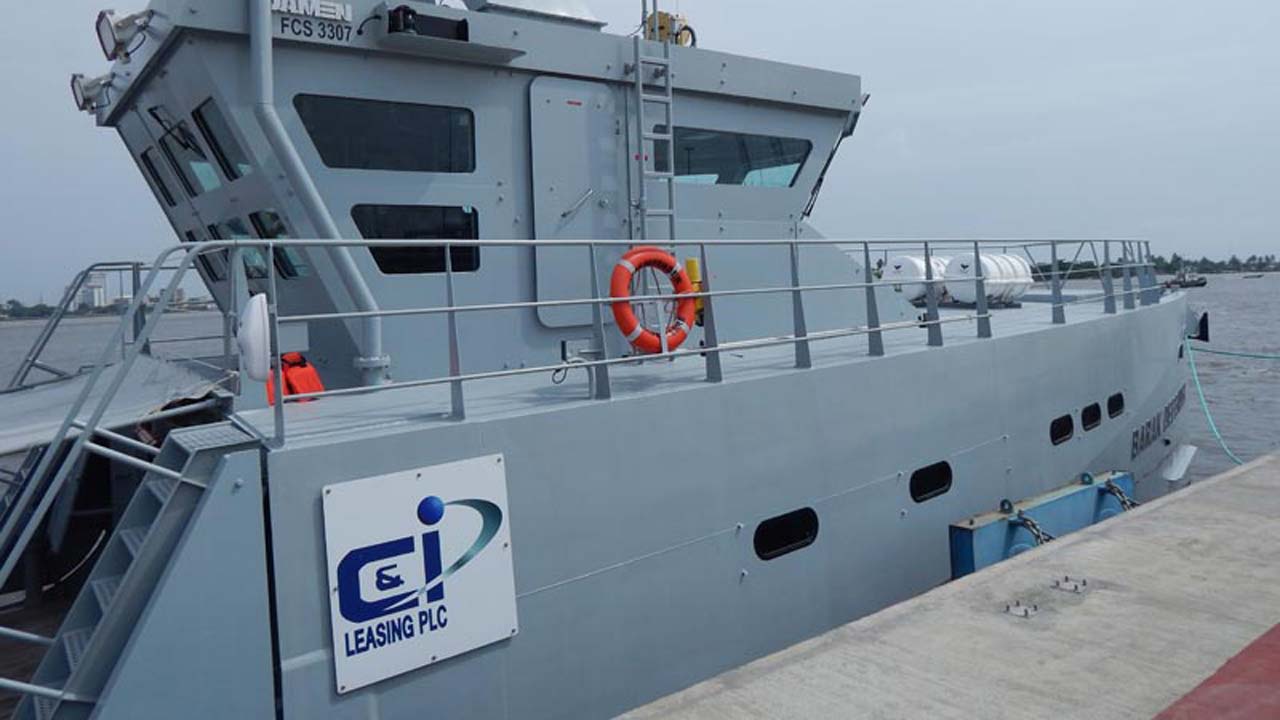
C&I Leasing Explains Delay in Completing Share Reconstruction
By Modupe Gbadeyanka
The board of C&I Leasing Plc has explained why it was yet to complete the reconstruction of its share capital, which started some weeks ago.
In December 2018, the company announced that it had received the received the approval of the Nigerian Stock Exchange (NSE) to reduce its share capital by 75 percent.
C&I Leasing had said it was cutting its share capital to about 404.3 million from 1.6 billion on a ratio of four to one.
The firm had explained that this was to allow the company have enough unissued shares to accommodate future plans to raise capital through the equity capital market.
“C&I Leasing is pleased to notify its esteemed shareholders,stakeholders, dealing members and the general public that the company has made an application to the Nigerian Stock Exchange and obtained a ‘No Objection’ to its proposal to reduce the company’s issued and paid-up share capital from N808,505,000 being 1,617,010,000 ordinary shares of 50 kobo each to N202,126,250 being 404,252,500 ordinary shares of 50 kobo each by consolidating every four ordinary shares currently held into one new share in the company,” the statement had said.
As a result of this, the NSE placed a suspension on trading of the shares of the company on Thursday, December 13, 2018 to allow for the consolidation exercise.
But since then, some shareholders were becoming worried that the share price of C&I Leasing on the local stock exchange was yet to reflect the new price.
Business Post reports that as at the close of business last Friday, the share price of C&I Leasing was still stagnant on the NSE at N1.78k per unit as a result of the suspension.
Shareholders of the firm are expecting the share price to go for N7.12k per share as soon as the suspension was lifted by the NSE.
In a statement issued by the company at the weekend, it was explained that the process was yet to be finalised, promising that it would be finalised in the coming days.
Giving reason for the delay, the company said it was “due to the delay in reconciliation of the shareholding.”
“We refer to our press release of December 10, 2018 on the application made to the Nigerian Stock Exchange (NSE) for the consolidation of every four ordinary shares currently held into one new share in the company and the placement of the shares of the company on suspension from Thursday, December 13, 2018 to Thursday, December 27, 2018 to allow for the consolidation exercise.
“Unfortunately, due to the delay in reconciliation of the shareholding, the exercise has not been completed. We are now close to completing the exercise and the suspension will be lifted in the coming days,” the statement said.
Recall that last week, it was reported that Abraaj Group was converting its $10 million loan stock to shares of C&I Leasing, which will make the company control about 70 percent state in the Nigerian firm. Chief Executive Officer of C&I Leasing, Mr Andrew Otike-Odibi, was also quoted to have said last week that the firm was planning a rights issue or an initial public offering that may dilute Abraaj’s stake to about 30 percent.
Economy
Naira Depreciates to N1,362/$1 at Official Market
By Adedapo Adesanya
The Naira further depreciated against the United States Dollar by N3.46 or 0.25 per cent to N1,362.21/$1 from N1,358.75/$1 in the Nigerian Autonomous Foreign Exchange Market (NAFEX) on Friday, June 5.
However, it appreciated against the Pound Sterling in the same market window during the session by N4.47 to trade at N1,823.59/£1 compared with the previous day’s N1,828.06/£1, and gained N7.00 against the Euro to sell at N1,574.58/€1, in contrast to Thursday’s closing price of N1,581.58/€1.
For another trading session, the Nigerian Naira maintained stability against the Dollar in the parallel market and the GTBank forex counter on Friday at N1,375/$1 and N1,372/$1, respectively.
The Naira is expected to remain strong in the near term, backed by a rise in external reserves, which are nearing $50 billion, enhancing analysts’ confidence about its outlook in the second half of 2026.
Heightened global uncertainty has reduced the incentive for importers and corporates to demand FX, as cautious trade weighs on import needs. Analysts estimate a $40 billion net FX position for the year, a projection anchored in oil windfall gains.
As for the cryptocurrency market, prices remained depressed following a strong US jobs report that spurred markets to price in higher-for-longer interest rates, sending Treasury yields and the dollar up while hammering stocks, especially AI-related names. Crypto markets saw heavy leverage washouts with about $1.6 billion in positions liquidated over 24 hours.
Ethereum (ETH) gave up 4.9 per cent to trade at $1,584.68, Solana (SOL) fell by 3.3 per cent to $63.22, Bitcoin (BTC) crashed by 1.9 per cent to $61,333.23, Dogecoin (DOGE) slipped by 1.8 per cent to $0.0821, and Ripple (XRP) moderated by 1.8 per cent to $1.09.
Further, TRON (TRX) dropped 1.6 per cent to sell at $0.3197, Binance Coin (BNB) slumped by 1.0 per cent to $581.18, and Cardano (ADA) declined by 0.4 per cent to $0.1589, while the US Dollar Tether (USDT) gained 0.07 to sell at $0.9997, and US Dollar Coin (USDC) closed flat at $0.9998.
Economy
Crude Oil Prices Fall as Fears of US-Iran Conflict Ease
By Adedapo Adesanya
Crude oil prices fell on Friday as traders gained confidence that renewed conflict between the United States and Iran was growing less likely.
The price of Brent crude futures settled at $93.09 a barrel, down $1.94 or 2.04 per cent, and the US West Texas Intermediate (WTI) crude futures finished at $90.54 a barrel, down $2.50 or 2.69 per cent.
President Donald Trump said the US will win the conflict with Iran either “militarily or on paper,” referring to the fitful negotiations with the Iranian government, and he suggested he could meet with Iran’s reclusive supreme leader “if it was to make a deal.”
He also said he had no desire to meet with Iranian Supreme Leader Mojtaba Khamenei, who has not been seen since the outbreak of violence on February 28 and was reportedly seriously injured in US-Israeli air strikes. He, however, added that if the two sides reached a deal, it was possible the two leaders would meet.
Meanwhile, Hezbollah leader Naim Qassem rejected on Thursday a US-brokered agreement between Israel and the Lebanese government to halt the fighting. Iran has made a ceasefire in Lebanon a condition for any peace deal with America.
Oman said operations at Mina al Fahal port were unaffected after it was reported that oil loading had been suspended following an explosion near its mooring berths. Oman exports 800,000 to 900,000 barrels per day of crude from the terminal.
As the US-Iran war peace talks dragged on, traffic in the Strait of Hormuz, where a fifth of the world’s oil passes, remained limited. Gains have been capped by oil inventories lasting longer than expected, rerouted exports and falling demand.
The Organisation of the Petroleum Exporting Countries and its allies (OPEC) is sticking to its oil demand growth forecast of 1.2 million barrels per day for this year, its Secretary General Haitham Al Ghais said, despite the Middle East conflict and closure of the Strait of Hormuz.
OPEC crude output fell last month, hitting its lowest level in decades as the US blockade of Iran and disruption in the Persian Gulf continued to curb production.
Output from its 11 current members dropped by 1.22 million barrels per day to 16.33 million a day in May, with Iran accounting for more than half of the decline, according to a Bloomberg survey. That was the lowest in at least 37 years. The data excludes the United Arab Emirates, which left the organisation last month after six decades.
Key members of the OPEC+ are expected to nudge up targets by a modest 188,000 barrels again in July during a video conference on Sunday. The session is one of four online meetings OPEC and its allies are due to hold that day.
Economy
OPEC Crude Output Falls to 37-Year Low Amid Iran Disruptions
By Adedapo Adesanya
Crude production under the collective Organisation of the Petroleum Exporting Countries (OPEC ) fell in May to its lowest level in at least 37 years as the blockade of Iran by the United States and disruptions in the Persian Gulf, continued to limit output.
According to a Bloomberg survey released on Friday, output from the organisation’s 11 current members, including Nigeria, dropped by 1.22 million barrels per day to 16.33 million barrels per day last month.
Iran accounted for more than half of the decline. The data excludes the United Arab Emirates (UAE), which departed the cartel last month after six decades of membership.
War between a US-Israeli alliance and Iran has reduced oil supplies from the Middle East, largely closing the Strait of Hormuz waterway. Saudi Arabia, Iraq, the UAE and Kuwait have been forced to cut crude production. Iranian shipments face additional pressure following a US blockade of its ports imposed in mid-April.
Iranian output fell by 710,000 barrels per day to a five-year low of 2.34 million barrels per day in May, the survey showed. Central Command reported that US forces have redirected 127 commercial vessels to enforce the blockade of all maritime traffic entering and exiting Iranian ports.
Kuwait recorded the second-largest decline last month, with production falling by 310,000 barrels per day to 490,000 barrels per day, less than one-fifth of pre-war levels. Saudi Arabia, the group’s leader, saw output decrease by 240,000 barrels per day to 6.57 million barrels per day.
The production reductions have not prevented OPEC and its allies from raising quotas over recent months, continuing a year-long process of restoring output halted several years ago.
This comes ahead of a meeting scheduled to be held on Sunday, June 7, where a sub-group of seven members is expected to increase targets by 188,000 barrels again in July. The session is one of four online meetings OPEC and its partners plan to hold that day.
Delegates indicated the alliance has plans for two additional monthly quota increases in August and September. UAE output rose by 300,000 barrels per day to 2.44 million barrels per day in May, according to the survey.
-
Feature/OPED6 years agoDavos was Different this year
-
Travel/Tourism10 years ago
Lagos Seals Western Lodge Hotel In Ikorodu
-
Showbiz3 years agoEstranged Lover Releases Videos of Empress Njamah Bathing
-
Banking8 years agoSort Codes of GTBank Branches in Nigeria
-
Economy3 years agoSubsidy Removal: CNG at N130 Per Litre Cheaper Than Petrol—IPMAN
-
Banking3 years agoSort Codes of UBA Branches in Nigeria
-
Banking3 years agoFirst Bank Announces Planned Downtime
-
Sports3 years agoHighest Paid Nigerian Footballer – How Much Do Nigerian Footballers Earn