Connect with us

Economy

Cocoa Can Revamp Nigeria’s Economy—CEAN

Published

on

cocoa-farmers

By Dipo Olowookere

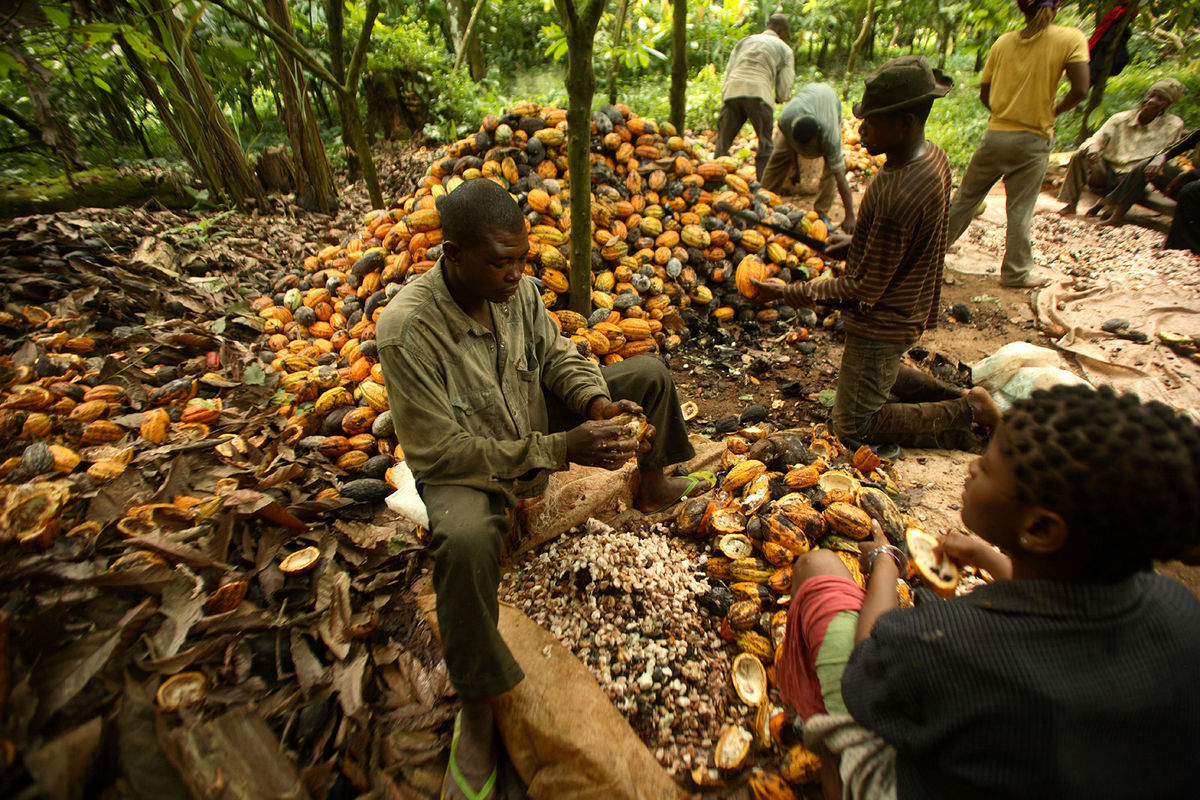
Cocoa exporters in Nigeria have appealed to the Federal Government to create an enabling environment that will return the country back to its cocoa glory days.

Speaking in Ondo State, Secretary-General of Cocoa Exporters Association of Nigeria (CEAN), Mr Kayode Babade, pointed out that Nigeria has all it takes to take over the leadership in cocoa production in the world if farmers and exporters were adequately encouraged by the government.

He recalled when the country was a top player in terms of quality and quantity in the global cocoa production in the 1960s and 1970s.

Mr Babade said, “CEAN had in the past contributed immensely to the growth and expansion of cocoa in the country by providing loans and herbicides to farmers to enable them increase production.

“With this federal government initiative, we are equally ready to further partner the farmers to ensure that the federal government vision on increased cocoa production comes to reality very soon.”

He commended President Muhammadu Buhari and Minister of Agriculture, Mr Audu Ogbeh, for inaugurating the Cocoa Re-launch Committee aimed at diversifying the economy to an agric-based. The association’s scribe noted that this development will boost the vision to make Nigeria the world’s largest cocoa producer.


Dipo Olowookere is a journalist based in Nigeria that has passion for reporting business news stories. At his leisure time, he watches football and supports 3SC of Ibadan. Mr Olowookere can be reached via [email protected]

Click to comment

Leave a Reply

Your email address will not be published. Required fields are marked *

Economy

143 Firms Jostle for 50 Oil, Gas Blocks at NUPRC Commercial Bid Conference

Published

on

seven offshore oil blocks

By Adedapo Adesanya

About 143 companies that successfully passed the technical and prequalification stages of the Nigerian Upstream Petroleum Regulatory Commission’s (NUPRC) 2025 Licensing Round will, today, compete for 50 oil and gas blocks at the commercial bid conference in Abuja, the final stage in the allocation process for the assets.

The commission said only the prequalified companies have been invited to attend the event, which will hold at the Conference Centre of the Transcorp Hilton Hotel, Abuja, stressing that participation is strictly by invitation.

The commercial bid conference will determine the successful bidders for oil and gas assets located across Nigeria’s producing and frontier basins.

The 50 blocks comprise 16 onshore blocks and 18 shallow water blocks in the Niger Delta, one deep offshore block, three onshore blocks in the Benin Basin, four in the Anambra Basin, four in the Chad Basin, and four in the Benue Trough.

According to the commission, the winning bids will be determined through a transparent evaluation process based on clearly defined commercial parameters. These include the signature bonus offered by bidders, the proposed work programme commitment and the level of performance security provided. The final selection will be based on a weighted technical and commercial score.

The licensing round is being conducted under the provisions of the Petroleum Industry Act (PIA) 2021, which requires a transparent and competitive process for the award of petroleum assets.

NUPRC had announced the commencement of the 2025 Licensing Round on November 11, 2025, before opening the online bid portal on December 1, 2025, to enable interested companies to register and participate in the exercise.

To ensure prospective investors fully understood the requirements, the commission organised a pre-bid conference on January 14, 2026, at Eko Hotels and Suites, Lagos. The event provided detailed explanations on the licensing guidelines and bidding procedures to registered participants and other stakeholders.

Registration and submission of prequalification documents closed on February 27, 2026, while the prequalification evaluation was completed on March 16, 2026.

NUPRC disclosed that 286 companies initially submitted applications for prequalification.

Following the evaluation process, 196 companies were cleared to participate in the technical and commercial bid stages.

The prequalified 143 companies eventually submitted a total of 200 bids for the available oil and gas blocks. These companies are now set to compete at the commercial bid conference, where the financial offers will be opened and evaluated to determine the eventual winners.

The licensing round is expected to attract fresh investment into Nigeria’s upstream petroleum sector, boost exploration activities across both producing and frontier basins, increase crude oil and gas reserves, and support the country’s drive to grow production and government revenue.

It also underscores the regulator’s commitment to implementing a transparent, competitive and investor-friendly licensing regime under the Petroleum Industry Act.

Continue Reading

Economy

CBN Retains Interest Rate at 26.5% as MPC Holds All Policy Parameters

Published

on

Interest Rates

By Adedapo Adesanya

The Monetary Policy Committee (MPC) of the Central Bank of Nigeria (CBN) has retained all key monetary policy parameters following the conclusion of its two-day meeting on July 21, 2026, on Tuesday, maintaining its tight monetary policy stance to curb inflation and support macroeconomic stability.

According to the Governor of the apex bank, Mr Yemi Cardoso, who chaired the committee, the Monetary Policy Rate (MPR), which serves as the benchmark interest rate, remains at 26.50 per cent. The MPC also retained the asymmetric corridor around the MPR at +50 basis points and -450 basis points.

In addition, the Cash Reserve Ratio (CRR) for commercial banks was left unchanged at 45.00 per cent, while the CRR for merchant banks remains at 16.00 per cent. The committee also retained the CRR on non-Treasury Single Account (Non-TSA) public sector deposits at 75.00 per cent, with the liquidity ratio at 30.00 per cent.

The decision reflects the apex bank’s continued commitment to containing inflationary pressures through a restrictive monetary policy while safeguarding the resilience of Nigeria’s financial system amid ongoing macroeconomic adjustments.

By keeping all policy tools unchanged, the MPC signalled its intention to continue managing excess liquidity in the banking sector and maintain stability in financial markets.

The move is also expected to provide greater policy certainty for investors and businesses monitoring the country’s monetary policy direction.

The latest decision also means borrowing costs are likely to remain elevated in the near term as the central bank continues to prioritise price stability over monetary easing.

Analysts had expected the CBN committee to retain the rate after Nigeria’s headline inflation came in at 15.91 per cent as of June 2026, marking a slight decline from 15.93 per cent in May.

However, even as overall price growth has moderated significantly compared to previous periods, food inflation remains a persistent challenge, accelerating to 17.52 per cent in June.

Continue Reading

Economy

Unilever Nigeria Declares Interim Dividend of N2

Published

on

Unilever Nigeria logo

By Aduragbemi Omiyale

Shareholders of Unilever Nigeria Plc will receive an interim dividend of N2 per share, the board of the organisation has said.

The cash reward was announced after the company released its financial statements for the first half of the year ended June 30, 2026.

The payment will be made on Friday, August 14, 2026, only to investors whose names appear on the Register of Members at the close of business on Friday, July 31, 2026.

 A quick look at the financial performance of the firm in the first six months of this year showed that revenue improved by 22.22 per cent to N119.9 billion from the N98.1 billion achieved in the corresponding period of last year.

A rise in earnings also resulted in a 16.43 per cent surge in cost of sales, though this did not shrink the gross profit, which rose by 29.93 per cent to N54.7 billion from N42.1 billion. The operating profit stood at N24.4 billion in the period under review, higher than N18.8 billion in the same period of 2025, while the net finance income contracted by 9.43 per cent to N4.8 billion from N5.3 billion due to elevated borrowing costs.

Business Post reports that despite higher taxes paid in the first six months of 2026, the net profit grew by 8.33 per cent to N15.6 billion from N14.4 billion, enabling the board to pass on value to shareholders for their faith in the firm.

Continue Reading