Economy
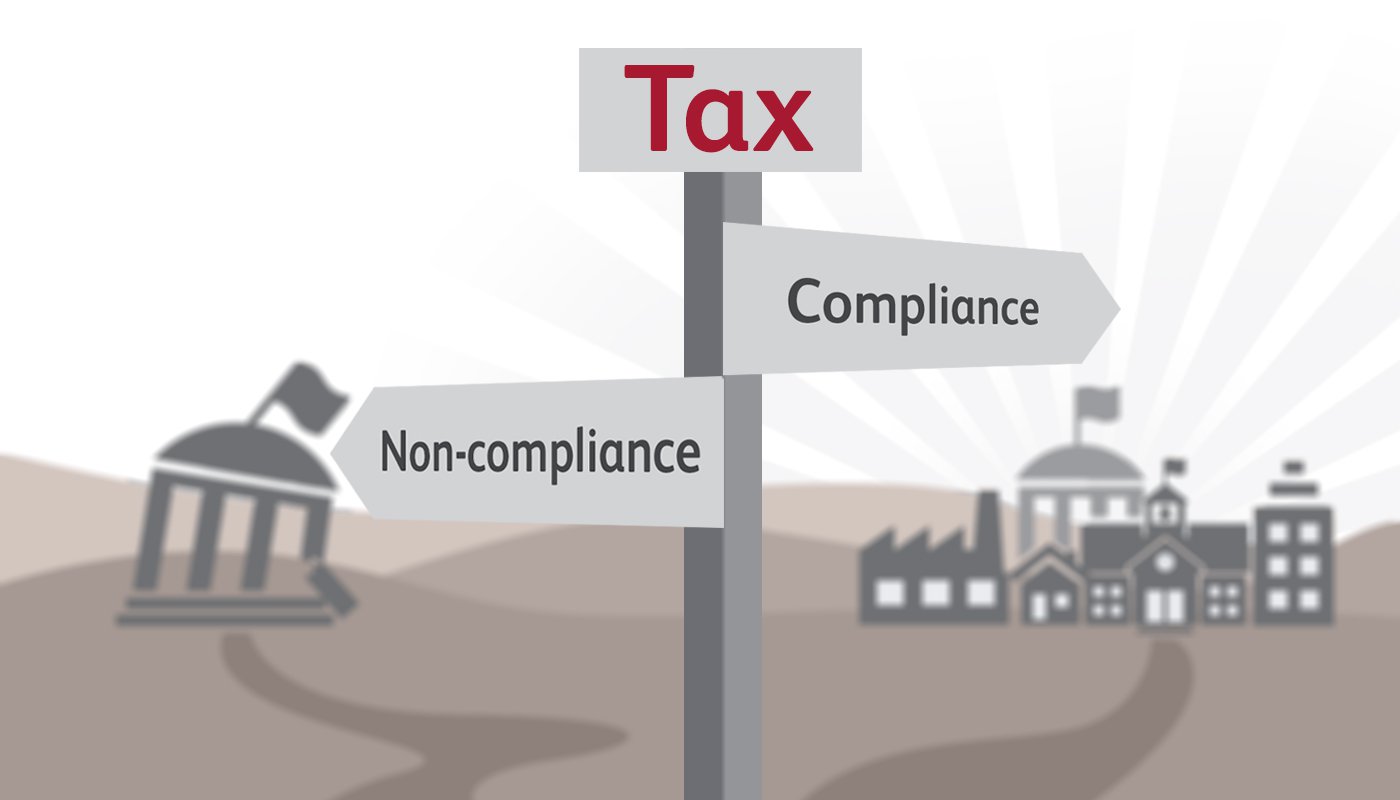
Companies on Stock Exchange More Reliable With Tax Compliance—Popoola
By Aduragbemi Omiyale
The chief executive of the Nigerian Exchange (NGX) Limited, Mr Temi Popoola, has advised the government to look into ways to attract companies to the stock market, stressing that more revenue could be generated from taxes paid by these firms.
According to him, companies on the stock exchange are more reliable with their tax compliance than other organisations, who sometimes evade tax, denying the government funds to grow the economy.
Speaking in an interview with CNBC Africa, Mr Popoola said the government could begin to explore the capital market and provide incentives that would encourage more listings in the country.
“The reality is that because listed firms must adhere to regulatory requirements and corporate governance standards in order to maintain their listing on the exchange, they are typically more consistent and reliable with their tax compliance. Consequently, the more companies we can get to list, the more revenue the government can make,” he said.
He argued that if the government took this suggestion, it would increase wealth, reduce poverty in Nigeria, and boost the tax revenue to GDP ratio, which currently stands at 6 per cent.
Mr Popoola disclosed during the interview that the bourse was looking to address some age-long issues bordering on new listings, which will, in turn, deepen trade.
Recall that in December 2022, the Securities Exchange Commission (SEC) approved NGX’s Technology Board rules which permit it to list fintech start-ups and tech companies on the exchange.
In order to push its digital transformation agenda, NGX had gone one step further and established an advisory panel on digital technology products. The panel would give the exchange a platform to communicate with the capital market community and the fintech ecosystem to enhance and increase NGX’s digital product offerings.
“We are interested in expanding beyond financial services, the construction industry and Telco. For instance, NGX admitted the first-Generation power company, Geregu Power Plc, on the exchange in 2022 and BUA foods which led to the deepening of the market and a fair representation of GDP.
“The Agric industry is one sector that has been often said to be underrepresented on the bourse. As we move to get such listings, we are also looking for companies and sectors with low representation in order to promote a market with equal representation,” he stated.
In a bid to diversify, Mr Popoola also mentioned an interest in exploring listings from free zone companies like the listing of the second tranche of the Lagos Free Zone N25 billion series 2 bonds, the first 20-year corporate infrastructure bond in Nigeria on the exchange.
Whilst citing ongoing projects within the Lagos Free Zone, which were projected to generate $461 billion in the next five decades, he added that NGX, in partnership with regulators, will be taking steps to accommodate more listings from free zones in 2023.
“Futuristically, we are looking at promoting financial literacy by exploring data dissemination through telco partnerships. We are also keen on aligning our activities to drive the UN SDGs and, more importantly, to promote the work we are doing in enabling a sustainable capital market ecosystem,” he said.
Economy
First Holdco Drives Nigerian Bourse’s 0.54% Growth
By Dipo Olowookere
The bulls regained control of the Nigerian Exchange (NGX) Limited on Friday after surrendering power to the bears a day earlier as a result of mild selling pressure.
Yesterday, the Nigerian bourse rebounded by 0.54 per cent, mainly due to the gains recorded by First Holdco and others.
Data harvested by Business Post indicated that the industrial goods and energy sectors were flat, while the banking index chalked up 3.13 per cent. The insurance space expanded by 1.08 per cent, and the consumer goods counter rose by 0.21 per cent.
Consequently, the All-Share Index (ASI) went up by 1,316.52 points to 243,462.13 points from 242,145.61 points, and the market capitalisation grew by N850 billion to N157.057 trillion from N156.207 trillion.
The market breadth index was bullish during the last trading session of this week, printing 31 appreciating stocks and 23 depreciating stocks, representing strong investor sentiment.
First Holdco led the advancers’ log after it climbed 9.97 per cent to N95.95, Haldane McCall appreciated by 9.94 per cent to N3.65, LivingTrust Mortgage Bank soared by 9.73 per cent to N3.72, LASACO Assurance jumped by 5.26 per cent to N2.00, and Thomas Wyatt gained 5.10 per cent to quote at N3.09.
On the flip side, Red Star Express declined by 9.50 per cent to N20.00, Omatek slipped by 6.08 per cent to N1.70, C&I Leasing shrank by 5.93 per cent to N5.55, Jaiz Bank crashed by 5.03 per cent to N8.50, and Livestock Feed fell by 3.89 per cent to N8.65.
As for the activity chart, market participants bought and sold 685.9 million equities for N42.7 billion in 44,134 deals on Friday versus the 498.5 million equities worth N34.9 billion traded in 39,484 deals on Thursday, implying a rise in the trading volume, value, and number of deals by 37.59 per cent, 22.35 per cent, and 11.78 per cent, respectively.
Investors’ darling for the day was First Holdco, with a turnover of 225.9 billion units valued at N21.0 billion, Guinea Insurance sold 53.4 million units for N45.2 million, Zenith Bank traded 41.5 million units worth N4.7 billion, Access Holdings exchanged 29.1 million units valued at N720.6 million, and UBA exchanged 27.5 million units for N1.2 billion.
Economy
Freight Forwarders Seek Wider Sensitisation on Green Tax, Others
By Modupe Gbadeyanka
The Africa Association of Professional Freight Forwarders and Logistics of Nigeria (APFFLON) has appealed to the Nigeria Customs Service (NCS) to deepen its sensitisation on the newly introduced Green Tax Surcharge Policy.
The chairman of APFFLON, Mr Akeem Ayobiojo, made this plea on behalf of his colleagues on Tuesday, July 14, 2026, at the Customs House in Abuja, during a stakeholders’ engagement with the agency.
He also called for improvements in the administration of Pre-Arrival Assessment Reports and Post Clearance Audit and the African Continental Free Trade Area (AfCFTA).
Mr Ayobiojo stated that freight forwarders were happy to work with the customs, commending the organisation for implementing Chapter 99, describing it as a major relief for manufacturers.
He, however, emphasised that a deeper understanding of the new tax was necessary for his members, saying more predictable procedures would reduce delays and unexpected costs for importers and freight forwarders.
In his remarks, the Comptroller-General of Customs, Mr Adewale Adeniyi, assured manufacturers, freight forwarders and other players in the nation’s trade sector that the NCS would continue to engage them on fiscal policies affecting their businesses, saying sustained dialogue remains key to resolving implementation challenges and improving the country’s trading environment.
He also promised them the service’s resolve to enhance and facilitate trade, acknowledging that, “Your feedback is important because it helps us understand what is happening in the field, and where necessary, we will take your concerns to the Federal Ministry of Finance and other relevant government institutions.”
Speaking about Authorised Economic Operator (AEO), Mr Adeniyi further explained that Nigeria would not lower the standards required under the Authorised Economic Operator Programme as the initiative is guided by global benchmarks established by the World Customs Organisation (WCO).
On her part, the Deputy Comptroller-General of Customs for Tariff and Trade, Ms Caroline Niagwan, clarified that electric vehicles can be imported without payment of duty only by holders of Import Duty Exemption Certificate (IDEC) issued by the Federal Ministry of Finance.
She also urged importers facing classification disputes to take advantage of the Advance Ruling system, noting, “Once an Advance Ruling is issued based on genuine documentation, importers have certainty on classification, valuation or origin before the goods arrive, thereby reducing unnecessary disputes during clearance.”
Economy
Naira Firms to N1,380/$ as FX Market Rally Continues
By Adedapo Adesanya
The Naira appreciated against the US Dollar in the Nigerian Autonomous Foreign Exchange Market (NAFEX) on Friday, July 17, by N1.35 or 0.07 per cent to N1,380.18/$1 from N1,381.53/$1.
It also improved its value against the Pound Sterling in the same market segment during the session by N11.75 to trade at N1,854.42/£1 compared with the previous day’s N1,866.17/£1, and gained N5.69 against the Euro to sell at N1,576.99/€1 versus Thursday’s closing price of N1,582.68/€1.
In the same vein, the Naira chalked up N1 against the United States currency yesterday at the GTBank forex desk to quote at N1,388/$1, in contrast to the preceding day’s N1,389/$1, but closed flat at the black market at N1,405/$1.
The appreciation of the Nigerian currency on Friday came amid fresh signals that Nigeria is building its external reserves for protection against shocks and excessive currency volatility.
The Governor of the Central Bank of Nigeria (CBN), Mr Yemi Cardoso, said the country’s gross reserves had risen above approximately $52 billion by 15 July, while net reserves had increased from about $3 billion when the current CBN leadership took office to more than $40 billion.
Mr Cardoso linked the increase in reserves to reforms that had restored greater confidence in the foreign exchange system. He also pointed to efforts to diversify foreign currency inflows, including policies designed to increase remittances through official channels.
He noted that monthly diaspora remittances had risen above $600 million and the CBN expected them to reach approximately $1 billion by the end of 2026. The target is part of a broader effort to grow reserves through recurring inflows rather than temporary measures.
The improvement, he argued, had strengthened Nigeria’s capacity to respond when unexpected events threatened market stability.
The apex bank has also launched a new digital platform that will track every foreign exchange transaction involving Bureau De Change (BDC) operators, marking a major step in its efforts to improve transparency and strengthen oversight of Nigeria’s retail forex market.
As for the crypto market, prices were up as markets overlooked geopolitical developments and macro forces weighing on the whole market ecosystem rather than anything crypto-specific, with Cardano (ADA) up by 4.6 per cent to $0.1661.
Bitcoin (BTC) jumped by 1.8 per cent to $63,968.32, Ethereum (ETH) improved by 0.9 per cent to $1,843.88, Dogecoin (DOGE) also rose by 0.9 per cent to $0.0723, Solana (SOL) soared by 0.6 per cent to $74.90, Ripple (XRP) also appreciated by 0.6 per cent to $1.08, and Binance Coin (BNB) advanced by 0.1 per cent to $567.32.
However, TRON (TRX) depreciated by 0.2 per cent to close at $0.3218, while the US Dollar Tether (USDT) and the US Dollar Coin (USDC) remained unchanged at $1.00 each.