
Economy
Cotton Sector Has Annual Turnover of $50bn—Expert

By Modupe Gbadeyanka
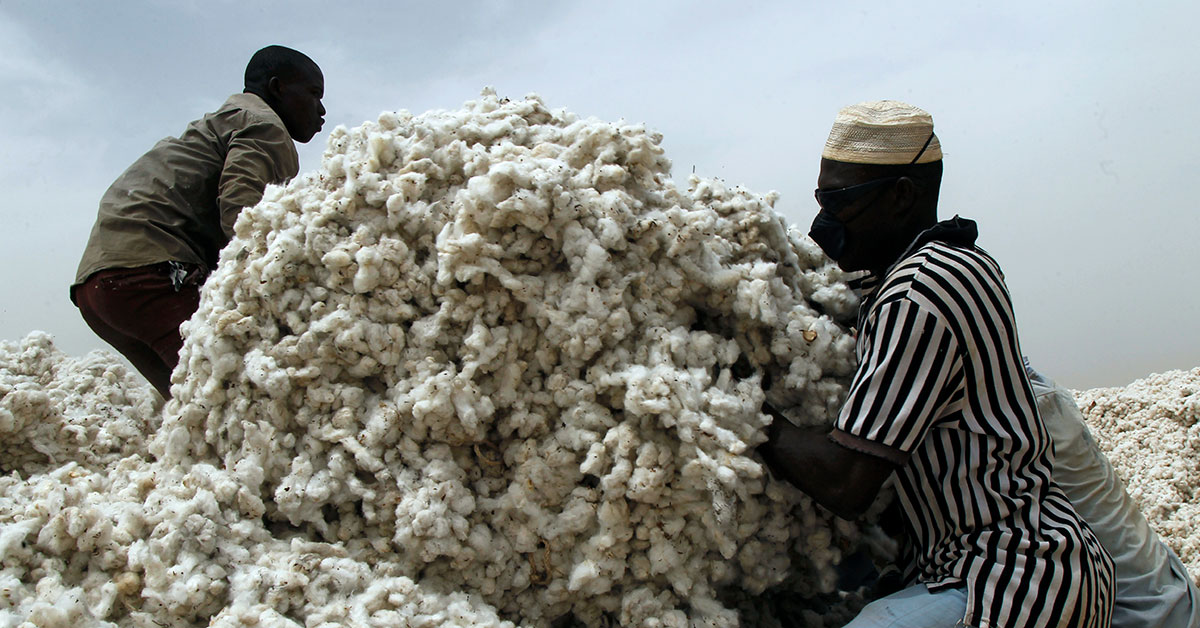
The possibility of rural communities in Nigeria to tap into the cotton industry, which boasts of an annual turnover of $50 billion has been emphasised by the Director-General of the Food and Agriculture Organisation (FAO), Mr Qu Dongyu.
At an event to mark the World Cotton Day event last Thursday at the World Trade Organization’s headquarters, the agric expert said managing trade policy and climate risks were critical to supporting the more than 25 million farmers who grow cotton.
According Mr Dongyu, “Cotton represents so much more than just a commodity: It is a culture, a way of life, and a tradition that finds its roots at the heart of human civilization.”
Continuing, he said, “Cotton provides employment and income for some of the poorest or most remote rural areas in the world.”
World Cotton Day is being held at the initiative of the C-4 countries – Benin, Burkina Faso, Chad and Mali – and is being hosted at the WTO with the collaboration of FAO, the UN Conference on Trade and Development and other organizations.
“It is critical that the cotton sector meets the highest standards of sustainability at all stages of the value chain,” the Director-General said.
Natural fibres are opportunity
Mr Dongyu also stated that apart from having an annual turnover of around $50 billion with a production of 25 million tonnes in 75 countries, international trade in cotton is estimated at $18 billion annually.
It was because of this the event came up to discuss market and policy trends for the cotton sector because it is a major source of livelihoods and incomes for many rural smallholders and laborers, including women, providing employment and income to some of the poorest rural areas in the world.
In many, regions, cotton is the only viable economic activity available to rural households and communities and the sector benefits more than 100 million families worldwide.
For example, cotton export earnings help to finance 50 percent of the food import bills for Mali and 22.5 percent of those for Chad, while they more than offset the cost of food imports in Burkina Faso, accounting for as much as 60 percent of the country’s export revenues.
A particular focus of the discussion was how to tackle the opportunities offered by growing demand for natural fibres in recent years, as part of a marked trend toward sustainability which has provided further market opportunities for cotton fibres. Despite this there is a loss in market share for the natural fiber triggered by robust demand for the man-made fibres, most notably polyester. In addition, there are exogenous risks because of climate change.
Efforts of FAO
FAO has long offered developing countries technical and policy support for boosting productivity and creating more opportunities in the cotton value chain. There is a need to keep increasing productivity, investment and bring innovation and sustainable standards to increase the benefits of the cotton sector.
FAO’s South-South framework has also been leveraged in the cotton sector, in which China and India are the biggest producers and Brazil the second exporter after the United States of America.




By Aduragbemi Omiyale
The Debt Management Office (DMO) has asked retail investors interested in investing in the FGN savings bonds to begin to talk to their financial advisers.
This is because subscription for the retail bonds for March 2026 has commenced and will close on Friday, March 6, according to a circular issued by the agency on Monday.
The debt office is selling two tenors of the debt instrument, with the shorter note maturing in two years’ time and the longer maturing a year later.
Details of the notice showed that the two-year paper is being offered at a coupon of 12.906 per cent, and the three-year paper at 13.906 per cent.
Both notes are sold at a unit price of N1,000, with a minimum subscription of N5,000 and in multiples of N1,000 thereafter, subject to a maximum subscription of N50 million. They can be purchased via approved stockbroking firms in Nigeria.
The FGN savings bond qualifies as a security in which trustees may invest under the Trustee Investment Act. It also serves as government securities within the meaning of the Company Income Tax Act (CITA) and the Personal Income Tax Act (PITA) for tax exemption for pension funds, amongst other investors.
It can be used as a liquid asset for liquidity ratio calculation for banks, and is listed on the Nigerian Exchange (NGX) Limited for trading at the secondary market.
The bond is backed by the full faith and credit of the Federal Government of Nigeria (FGN) and charged upon the general assets of the country.

By Adedapo Adesanya
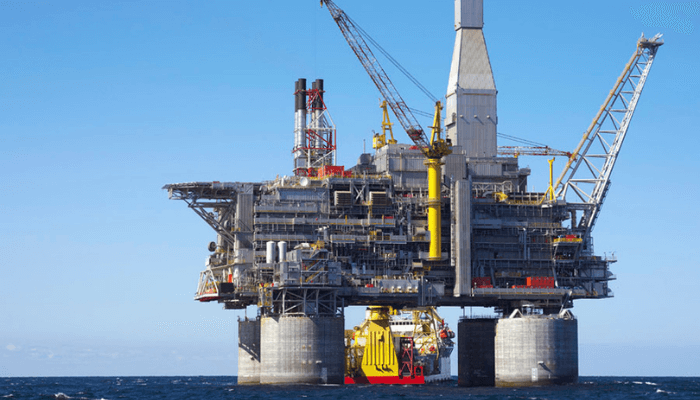
Nigeria has broken up the OPL 245 oil block into four new assets to be operated by Eni and Shell, potentially settling the future of the field at the centre of one of the oil industry’s biggest historic corruption trials.
According to Reuters, the agreement clears the way for the development of OPL 245, one of Nigeria’s biggest deepwater reserves that has remained untapped for almost three decades amid overlapping lawsuits in multiple countries.
The final contracts are expected to be signed starting Monday, the report said, citing a source familiar with the situation.
The Nigerian government had signalled for years that it was keen to find a solution that would bring the block into production. The source wished to remain anonymous as they are not authorised to comment on government policy before an official announcement.
Located in the Niger Delta’s deepwaters, the field has languished since its initial award in 1998 to Malabu Oil and Gas, a shadowy firm controlled by Mr Dan Etete, Nigeria’s oil minister at the time. The block is estimated to hold up to 9 billion barrels of oil equivalent in reserves—enough to rival Nigeria’s entire proven reserves if fully developed.
Mr Etete controversially awarded the lucrative licence to his own company for a nominal $20 million fee, sparking immediate controversy over conflicts of interest.
The saga escalated in 2011 when Malabu sold its rights to a Shell-Eni joint venture for $1.3 billion.
Italian and Nigerian prosecutors alleged that over $1 billion of that sum was siphoned off through bribes to politicians, middlemen, and Mr Etete himself, including hefty payments to then-President Goodluck Jonathan’s associates.
The two European energy giants and some of their former and current executives, including Eni CEO, Mr Claudio Descalzi, faced trial in Italy but all were acquitted in 2021, having denied all wrongdoing.
Shell and Eni have consistently denied wrongdoing, insisting the payments complied with due diligence.
The anti-graft agency, the Economic and Financial Crimes Commission (EFCC), has pursued parallel probes, recovering over $200 million in frozen funds, but progress stalled amid political shifts.
Operations at the Nigerian oil block have been halted for more than a decade by a series of trials and competing legal claims.
In 2023, the federal government withdrew civil claims totalling $1.1 billion against Eni, ending the long battle.

By Modupe Gbadeyanka
The price of Premium Motor Spirit (PMS), otherwise known as petrol, has been increased by at least N100 per litre at the pump.
This followed the recent increase in the price of crude oil in the global market as a result of the bombardment of Iran by the United States and Israel over the weekend.
The air strikes killed the Supreme Leader of Iran, Mr Ayatollah Ali Khamenei, and several others.
Iran has responded by firing missiles at US facilities in some Gulf countries, including Saudi Arabia, Qatar, Kuwait, Bahrain, the UAE, and others.
Crude oil prices rose to about $80 per barrel on the market from about $70 per barrel before the Middle East crisis.
Oil marketers in Nigeria have responded to the tension and have raised the prices of petroleum products.
At most MRS Oil retail stations in Lagos, the new price notice showed an increase of about N100 per litre.
As of Monday, the price of PMS was N837 per litre, but on Tuesday morning, it had changed to N938 per litre, while at NNPC retail stations, it was N930 per litre instead of the previous N830 per litre.












-
 Feature/OPED6 years ago
Davos was Different this year
-
Travel/Tourism10 years ago
Lagos Seals Western Lodge Hotel In Ikorodu
-

 Showbiz3 years ago
Estranged Lover Releases Videos of Empress Njamah Bathing
-
 Banking8 years ago
Sort Codes of GTBank Branches in Nigeria
-

 Economy3 years ago
Subsidy Removal: CNG at N130 Per Litre Cheaper Than Petrol—IPMAN
-

 Banking3 years ago
Sort Codes of UBA Branches in Nigeria
-

 Banking3 years ago
First Bank Announces Planned Downtime
-

 Sports3 years ago
Highest Paid Nigerian Footballer – How Much Do Nigerian Footballers Earn