Economy
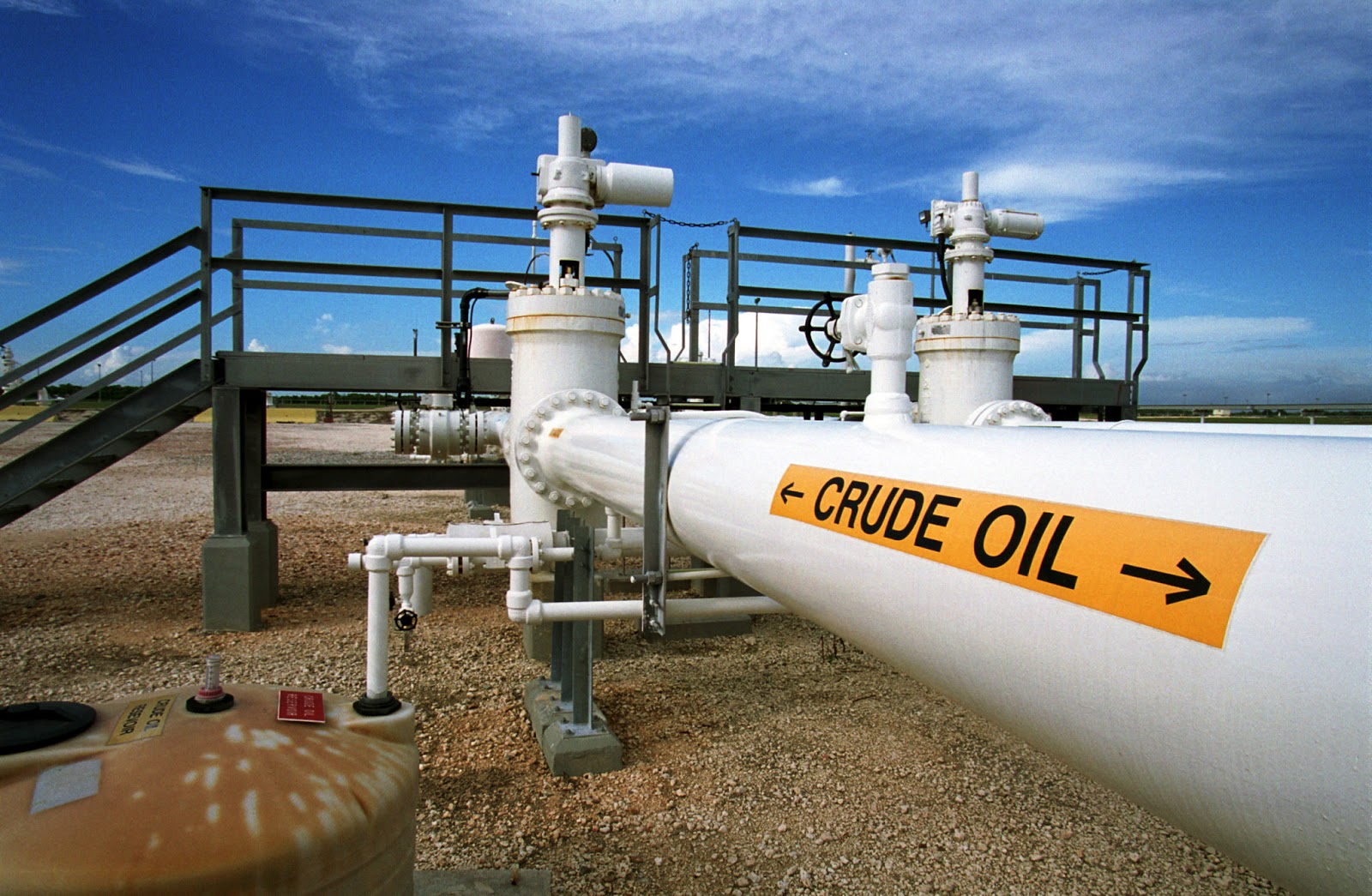
Crude Oil Prices Drop 20% in 2023
By Adedapo Adesanya
The price of Brent and West Texas Intermediate Crude futures rose slightly on Friday by 12 cents and 16 cents apiece to close at $77.27 per barrel and $71.93 per barrel.
Both crude benchmarks ended 2023 about 10 per cent lower each after two years of gains as geopolitical concerns and oil production cuts drove wild fluctuations in prices.
Prices fell sharply on Thursday as some shipping companies said they would resume movements through the Red Sea, easing supply concerns.
Major firms had stopped using Red Sea routes after Yemen’s Houthi militant group began targeting vessels in retaliation to Israel’s attacks in Gaza.
However, some crude oil and refined product tankers are still opting for the longer route around Africa to avoid potential conflicts in the region.
Geopolitical tensions in the Middle East continued to support prices as Israel intensified its attacks in southern Gaza.
Data released on Friday by the US Energy Information Administration (EIA) showed that strong oil demand in October also offered some support to prices.
This year, oil saw heightened volatility this year again, as concerns about demand pulled prices lower while the cuts by the Organisation of the Petroleum Exporting Countries and its allies, OPEC+, and extra cuts by Saudi Arabia only offset to an extent the drop in prices.
OPEC is facing weakening demand for its crude in the first half of 2024 just as its global market share declines to the lowest level since the pandemic on output cuts and Angola’s exit from the group.
Overall, the OPEC+ group’s efforts to prop up prices have failed this year, as non-OPEC oil supply – led by the United States – grew faster than previously expected.
The higher non-OPEC+ production, courtesy also of Brazil, Canada, and Norway, among others, prompted analysts to revise downward their expectations of a market deficit at the end of this year and early next year.
China’s economy was also a major concern for oil market participants, with a mixed bag of monthly reports about manufacturing activity and crude oil imports.
The rising interest rates in the United States also weighed on the market, which feared a recession would follow the rate hikes and depress oil demand.
The Hamas-Israel conflict, which added to the Russian war in Ukraine to increase geopolitical risks, hasn’t pushed up oil prices this year, either. This was because major oil players didn’t actively play as they did in 1973.
Economy
Tinubu Signs Deep Offshore Tax Incentives to Unlock $50bn Investment
By Modupe Gbadeyanka
To unlock about $50 billion in deep offshore investment, President Bola Tinubu has signed the Deep Offshore Oil and Gas Projects Incentives (Tax Remission) Order, 2026, stressing that the aim is “to make Nigeria Africa’s regional hub for deep offshore project execution.”
In a statement personally signed by him on Wednesday, the Nigerian leader disclosed that he approved the executive order to create a clear and predictable framework for the sector.
According to him, the approval has already attracted approximately $10 billion for the Bonga South West project.
He stated that for projects accessing the supplementary incentives, the Order requires activities to be performed in Nigeria, subject to clearly defined exceptions and Nigerian content requirements.
The President noted that this part was included because “I want the work to come home to Nigeria. I want our engineers involved, our fabrication yards working, Nigerian marine and technical service companies securing contracts, and our young people acquiring world-class skills.”
“For me, the real measure of $50 billion will be what Nigerians see from it: good jobs, stronger Nigerian businesses, greater production, more revenue for the Federation and capabilities built here at home. Our natural resources must work harder for our people,” he added.
Mr Tinubu stated that this order is the tenth major policy directive of his administration targeted specifically at the oil and gas sector.
“We have been deliberate about removing the constraints holding back investment, production and value creation.
“For too long, some of our biggest offshore opportunities have remained stalled. We cannot afford to leave that opportunity beneath our waters for another decade. Capital moves, countries compete for it, and investors committing billions of dollars over many years need certainty,” he disclosed.
According to him, “We are providing that certainty, with a clear window for existing deep offshore leases to reach Final Investment Decision by 31 December 2029 and qualify for the full standard incentive.”
Economy
Unlisted Securities Exchange Sheds 1.81% as Market Cap Drops to N2.748trn
By Adedapo Adesanya
The NASD Over-the-Counter (OTC) Securities Exchange extended its stay in the red territory for a second consecutive session on Tuesday, August 11, declining by 1.81 per cent.
This pulled back the market capitalisation by N8.94 billion to N2.748 trillion from N2.798 trillion, and the NASD Security Index (NSI) dropped 84.44 points to 4,578.74 points from 4,663.18 points.
The market breadth index was at equilibrium yesterday, as there were four price gainers and four price losers.
On the red side, Central Securities Clearing System (CSCS) Plc depreciated by N12.86 to N116.88 per share from N129.74 per share, Afriland Properties Plc declined by N1.95 per cent to N22.00 per unit from N23.95 per unit, Food Concepts Plc weakened by 25 Kobo to N2.50 per share from N2.75 per share, and Geo-Fluids Plc lost 22 Kobo to sell at N2.05 per unit versus Monday’s N2.27 per unit.
On the green side, FrieslandCampina Wamco Nigeria Plc gained N11.50 to finish at N156.50 per share compared with the previous day’s N145.00 per share, Nitrox Industrial Gases Plc expanded by N2.11 to N23.36 per unit from N21.15 per unit, NASD Plc advanced by N1.90 to N36.00 per share from N34.10 per share, and Nipco Plc surged by 50 Kobo to N457.00 per unit from N456.50 per unit.
During the session, the volume of securities rose by 31.2 per cent to 1.5 million units from 1.1 million units, the value of securities improved by 315.9 per cent to N42.3 million from N10.2 million, and the number of deals skyrocketed by 45.7 per cent to 51 deals from Monday’s 35 deals.
Great Nigeria Insurance (GNI) Plc ended as the most active stock by value (year-to-date), with 3.4 billion units valued at N8.4 billion, trailed by Infrastructure Credit Guarantee (Infracredit) Plc with 2.3 billion units sold for N6.5 billion, and CSCS Plc with 77.0 million units transacted for N5.5 billion.
GNI Plc also closed as the most active stock by volume (year-to-date), with 3.4 billion units worth N8.4 billion, followed by Infracredit Plc with 2.3 billion units exchanged for N6.5 billion, and Resourcery Plc with 1.1 billion units traded for N415.7 million.
Economy
Profit-taking Crashes NGX All-Share Index by 0.73%
By Dipo Olowookere
The Nigerian Exchange (NGX) Limited tumbled by 0.73 per cent on Tuesday on the back of profit-taking by investors.
The consumer goods counter shed 0.96 per cent, and the banking space crashed by 0.46 per cent due to selling pressure. But the insurance index gained 0.24 per cent, and the energy segment improved by 0.03 per cent, while the industrial goods sector closed flat.
When the bourse closed for the session, the All-Share Index (ASI) gave up 1,806.18 points to 246,723.57 points from 248,529.75 points, and the market capitalisation depreciated by N1.166 trillion to N159.256 trillion from N160.422 trillion.
Thomas Wyatt lost 9.97 per cent to quote at N2.89, AVA Capital declined by 9.60 per cent to N8.95, International Energy Insurance dipped by 6.32 per cent to N4.00, International Breweries dropped 5.98 per cent to close at N11.00, and Guinea Insurance shed 5.13 per cent to 74 Kobo.
On the flip side, UPDC REIT gained 10.00 per cent to end at N14.85, FTN Cocoa appreciated by 9.88 per cent to N8.90, C&I Leasing surged by 8.26 per cent to N5.90, Sovereign Trust Insurance went up by 6.74 per cent to N1.90, and Regency Alliance climbed 6.33 per cent to 84 Kobo.
Yesterday, Fortis Global Insurance was the busiest equity, leading the activity chart with a turnover of 3.3 billion units worth N9.6 billion. Trans-Nationwide Express transacted 84.6 million units for N181.9 million, Access Holdings sold 66.1 million units valued at N1.9 billion, Consolidated Hallmark exchanged 54.3 million units worth N379.4 million, and Fidelity Bank traded 46.9 million units for N1.0 billion.
Investors bought and sold 3.9 billion units worth N32.4 billion in 45,608 deals compared with the 1.1 billion units valued at N27.0 billion traded in 59,185 deals a day earlier. This indicated that the number of deals retreated by 22.94 per cent, the trading volume increased by 254.55 per cent, and the trading value soared by 20.00 per cent.