Economy
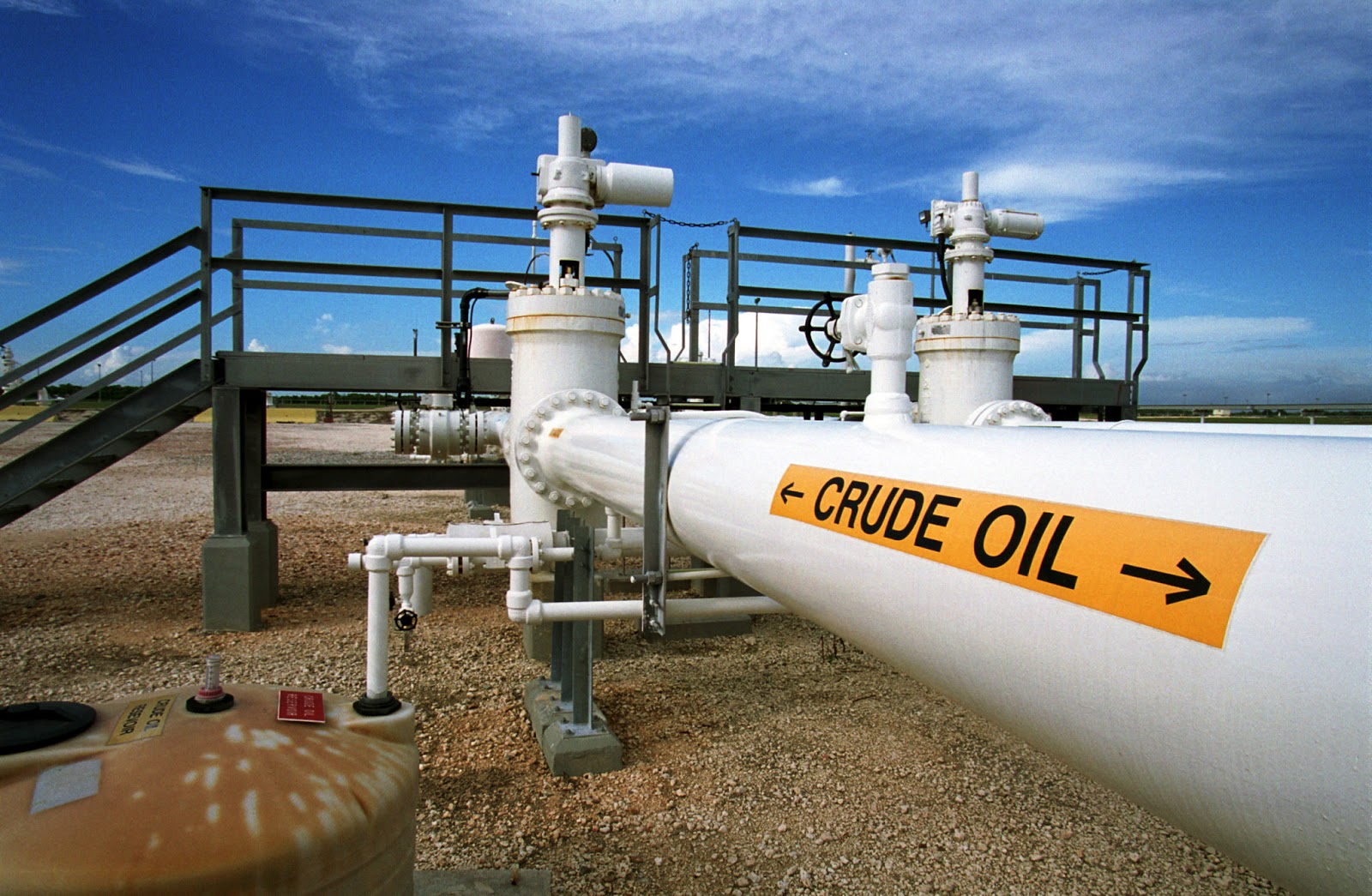
Crude Oil Prices Rise Despite Growing Supply Worries
By Adedapo Adesanya
Crude oil prices closed stronger on Monday despite predictions that rising supply will outweigh demand in the months ahead, while hopes of progress in ending a government shutdown in the United States raised investors’ risk appetite.
Brent crude futures increased by 26 cents or 0.4 per cent to trade at $63.89 a barrel and the US West Texas Intermediate (WTI) crude futures gained 23 cents or 0.4 per cent to finish at $59.98 a barrel.
The market keeps looking at expectations that crude oil supply will exceed demand in the months ahead due to higher production from the Organisation of the Petroleum Exporting Countries and allies (OPEC+) and record US output.
Earlier this month, OPEC+ agreed to increase output slightly by 137,000 barrels per day in December.
Market analysts noted that while the group also paused further hikes in the first quarter, that may not limit supplies enough to support prices.
Crude inventories are also on the rise in the US while the volume of oil stored aboard ships in Asian waters has doubled in recent weeks after tightening Western sanctions curtailed imports into China and India.
Oil from offshore Brazil, Guyana, Suriname, and Argentina’s Vaca Muerta shale play will be key sources of cost-competitive non-OPEC oil supply through 2030, Rystad Energy has predicted.
Rystad has predicted that global liquids demand will peak in the 2030s at around 107 million barrels per day, maintain a plateau above 100 million barrels per day through the 2040s before declining to around 75 million barrels per day by 2050. According to the Norwegian energy consultancy, non-OPEC+ supply will be key to balancing the global market, with cheap oil from South America helping to offset slower US shale growth.
Non-OPEC+ producers are expected to account for around 5.9 million barrels per day, or nearly 60 per cent, of new conventional oil currently under development through 2030 (total new capacity).
Doubts over the effectiveness of the latest US sanctions against Russia are also weighing on crude prices.
Russian oil producer Lukoil has declared force majeure at Iraq’s giant West Qurna-2 oilfield after Western sanctions on the Russian oil major hampered its operations. Lukoil’s operations faced mounting disruptions as a US deadline for companies to cut off business with the Russian company looms on November 21 and after an agreement to sell the operations to Swiss trader Gunvor collapsed.
Also, the US Senate moved forward on Sunday on a measure aimed at reopening the federal government and ending a shutdown. The move boosted investors’ risk appetite.
Economy
Naira Slips to N1,343/$ at NAFEX
By Adedapo Adesanya
The Naira sold at N1,343.64/$1 Nigerian Autonomous Foreign Exchange Market (NAFEX) on Friday, April 17, after shedding N1.34 or 0.10 per cent against the greenback from the previous day’s rate of N1,342.30/$1.
In the same vein, the Nigerian currency depreciated against the Pound Sterling in the same market window during the session by N5.03 to quote at N1,824.39/£1 versus the previous rate of N1,819.36/£1, and lost N10.05 against the Euro to sell at N1,591.14/€1 versus N1,581.09/€1.
At the GTBank FX desk, the exchange rate of the Naira to the Dollar remained unchanged at N1,355/$1, and it also maintained stability in the parallel market at N1,375/$1.
Interbank liquidity increased to N124.34 million from N74.255 million the previous day, data from the Central Bank of Nigeria (CBN) showed.
Meanwhile, external reserves remain at $48.70 billion, down from the 2009 peak of $50 billion amidst uncertainties in the global commodities market.
Global oil prices dropped sharply on Friday after Iran signalled that the Strait of Hormuz would remain open to commercial shipping during a temporary ceasefire in the Middle East.
Crypt assets also gained on the news from Iran’s foreign minister, who declared the Strait of Hormuz open, drawing a positive response from President Donald Trump. The development helped ease worry around risky assets like crypto.
Meanwhile, the cryptocurrency market was bullish, as traders weighed possible scenarios ahead of next week’s US-Iran cease-fire deadline.
Ethereum (ETH) appreciated by 3.2 per cent to $2,410.53, Bitcoin (BTC) jumped by 2.8 per cent to $77,124.22, Ripple (XRP) rose by 2.7 per cent to $1.47, Binance Coin (BNB) expanded by 2.5 per cent to $643.97, Dogecoin (DOGE) added 1.0 per cent to close at $0.0988, Cardano (ADA) improved by 0.9 per cent to $0.2578, Solana (SOL) soared by 0.4 per cent to $88.53, and TRON (TRX) gained 0.4 per cent to sell at $0.3275, while the US Dollar Tether (USDT) and the US Dollar Coin (USDC) traded flat at $1.00 apiece.
Economy
Brent, WTI Tumble Over 9% on Hormuz Reopening Signal
By Adedapo Adesanya
Oil prices plunged by 9 per cent on Friday after Iran said passage for all commercial vessels through the Strait of Hormuz was open for the remaining ceasefire period.
Brent crude futures lost $9.01 or 9.07 per cent to trade at $90.38 a barrel, while the US West Texas Intermediate (WTI) crude futures depreciated by $10.48 or 11.45 per cent to finish at $83.85 a barrel.
Iran said Friday that the Strait of Hormuz is “completely open” for the remainder of the Israel-Lebanon ceasefire, bolstering hopes of a breakthrough in the weeks-long crisis over the crucial oil route.
Iran had maintained its blockade of the strait despite a two-week ceasefire with the US, which expires on Tuesday, and previously said it would not open the key waterway while Israel continued to strike Lebanon.
Business Post had reported that oil prices weakened to around $88 per barrel after Iranian Foreign Minister Seyed Abbas Araghchi posted on X that “all commercial vessels” would be allowed to pass through the strait throughout the remainder of the ten-day ceasefire in Lebanon.
US President Donald Trump thanked Iran on Truth Social, but stressed that the US naval blockade of the regime’s ports would remain “in full force and effect” until a peace deal was completed. “This process should go very quickly in that most of the points are already negotiated,” he added.
A second round of truce talks between the US and Iran is expected to take place as oil tankers are beginning to test the waters at the Strait of Hormuz.
Despite the fact that all ships can sail through the Strait of Hormuz, this passage needs to be coordinated with Iran’s Islamic Revolutionary Guard Corps (IRGC).
Market analysts noted that if these initial tankers make it through, flows will begin to partially normalise. However, a handful of vessels does not equal restored capacity. The backlog alone will take significant time to clear, and producers across the region are still dealing with disrupted output and logistics.
Prices had already fallen earlier in the Friday session as possible further talks between the US and Iran over the weekend and a 10-day ceasefire between Lebanon and Israel raised investors’ hopes that the war in the Middle East could be nearing an end.
The American President also said on Friday that the US has banned Israel from further bombing in Lebanon, using a harsher tone than usual with the longtime US ally.
Economy
Nigerian Exchange Extends Stock Trading Hours to 4:00 pm
By Dipo Olowookere
The daily stock trading hours on the floor of the Nigerian Exchange (NGX) have been expanded by an hour to 4.00 pm after extensive stakeholder engagement, ensuring alignment and operational readiness ahead of the go-live date.
A statement from the bourse on Friday said the extension was approved by the Securities and Exchange Commission (SEC).
Before now, trading activity on Customs Street resumed from 9.30 am to 2:30 pm, but from Monday, April 27, 2026, the resumption time would be 9.00 am, and the closing gong would be struck by 4.00 pm from Monday to Friday.
It was explained that this action was taken “to deepen market liquidity, enhance price discovery, and broaden investor access.”
The NGX has witnessed renewed investor interest due to increased awareness of equities lately, especially as the nation and the global community await the much-anticipated listing of Dangote Refinery shares later in the year, all things being equal.
The statement also noted that this extended trading window would provide greater flexibility for investors, improve responsiveness to market-moving information, and support broader participation across the market.
The development builds on the momentum of Nigeria’s recent reclassification to Frontier Market status by FTSE Russell, reinforcing NGX’s global positioning and enhancing its attractiveness to a broader pool of domestic and international investors.
It further stated that this reform reflects strong regulatory collaboration and underscores the SEC’s continued commitment to advancing market development initiatives. Alongside Nigeria’s Frontier Market reclassification, it signals a deliberate shift towards a more accessible, liquid, and globally competitive market.
With this development, NGX reinforces its position as a leading multi-asset exchange, deepening liquidity, improving market access, and supporting efficient capital formation within Nigeria’s financial markets.
-
Feature/OPED6 years agoDavos was Different this year
-
Travel/Tourism10 years ago
Lagos Seals Western Lodge Hotel In Ikorodu
-
Showbiz3 years agoEstranged Lover Releases Videos of Empress Njamah Bathing
-
Banking8 years agoSort Codes of GTBank Branches in Nigeria
-
Economy3 years agoSubsidy Removal: CNG at N130 Per Litre Cheaper Than Petrol—IPMAN
-
Banking3 years agoSort Codes of UBA Branches in Nigeria
-
Banking3 years agoFirst Bank Announces Planned Downtime
-
Sports3 years agoHighest Paid Nigerian Footballer – How Much Do Nigerian Footballers Earn