Economy
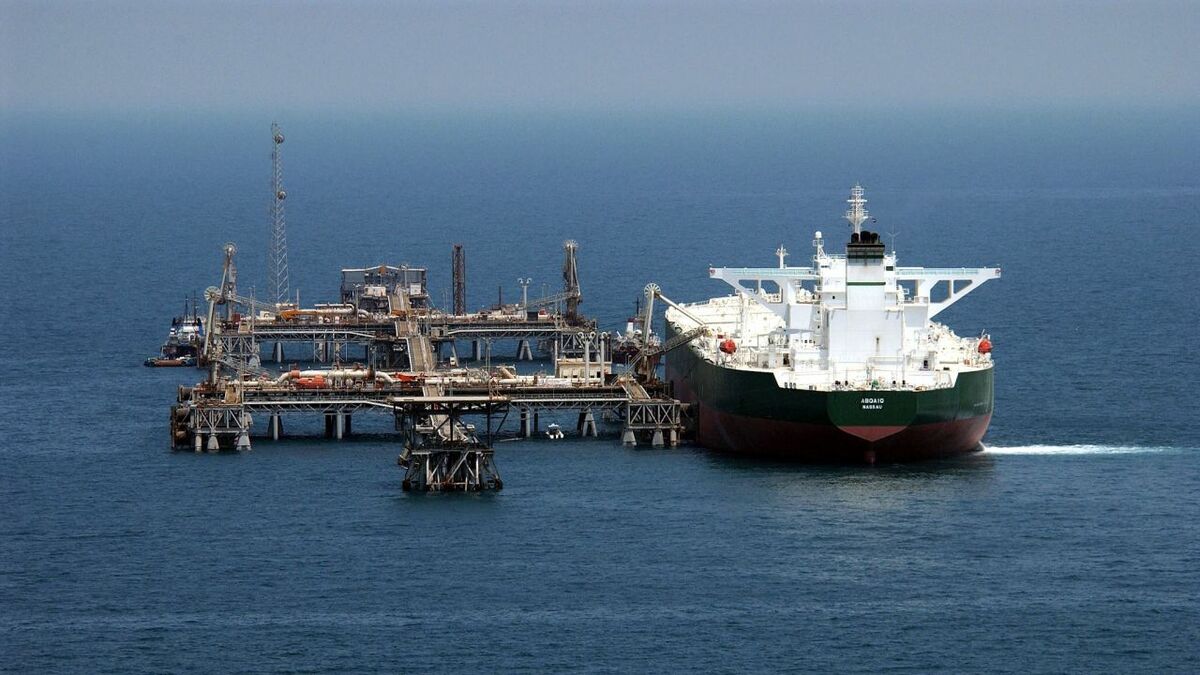
Crude Oil Rises 3% as Iran Hesitates on US Peace Talks
By Adedapo Adesanya
Crude oil climbed about 3 per cent on Tuesday after Iran said it had yet to decide whether to attend peace talks with the United States.
With one day left before the ceasefire runs out in the Iran war, US President Donald Trump said he hoped to reach a deal to end the war. However, he said he did not want to extend the ceasefire, adding that the US military was “raring to go” if negotiations were not successful.
This development raised the price of Brent futures by $3 or 3.1 per cent to $98.48 a barrel, and lifted the US West Texas Intermediate (WTI) futures by $2.52 or 2.8 per cent to $92.13 per barrel.
Crude oil prices have spent most of March-April seesawing up and down, reacting to Iran’s closure of the Strait of Hormuz and President Trump’s Truth Social posts.
The lack of progress in US-Iran talks and their continuous postponement are keeping the oil market on edge, with the American President’s latest comments about no extension sending another wave of anxiety across market watchers.
Shipping traffic through the Strait of Hormuz, which normally handles about 20 per cent of global oil and liquefied natural gas supplies, remained broadly halted on Tuesday with only three ships passing the waterway in the past 24 hours. Over 1 billion barrels of crude have been disrupted due to the blockade.
Meanwhile, the Israeli military said Hezbollah fired rockets at Israeli troops in southern Lebanon, accusing the Iran-backed group of violating a ceasefire ahead of US-mediated talks between the government of Israel and Lebanon this week.
The European Union (EU) said it will provide guidance to airlines on how to handle issues such as airport slots, passenger rights and public service obligations in the event of jet fuel shortages because of the Iran war.
Countries continued to feel the effects of the war. In Germany, the biggest economy in Europe, investor morale declined to its lowest level in more than three years in April, while in the US, retail sales increased more than expected in March as the war in Iran boosted gasoline prices.
Ukrainian President Volodymyr Zelenskiy said the Druzhba oil pipeline, which pumps Russian oil to Europe, is ready to resume operations, signalling that Ukraine now expects an over $106 billion aid package to be unblocked.
The American Petroleum Institute (API) estimated that crude oil inventories in the US fell by 4.4 million barrels in the week ending April 17. In the week prior, US crude oil inventories rose by 6.10 million barrels. Official data from the Energy Information Administration (EIA) will be released later on Wednesday.
Economy
FG Enlists DSS, EFCC, Police to Tackle Cooking Gas Hoarding, Smuggling
By Adedapo Adesanya
The Federal Ministry of Petroleum Resources has conscripted the Department of State Services (DSS), the Economic and Financial Crimes Commission (EFCC), and the Nigeria Police Force to address the hoarding and diversion of Liquefied Petroleum Gas (LPG), also known as cooking gas, to neighbouring countries.
A statement by the Nigerian Midstream and Downstream Petroleum Regulatory Authority (NMDPRA) on Monday stated that the move followed the recent increase in LPG (cooking gas) prices and developed coordinated measures to improve supply, affordability, and market stability across the country.
Business Post reports that in recent weeks, prices of the fuel have gone as high as N2,400 per kg in some areas in Lagos and Ogun State, but have since dropped to around N1,900 and N2,000 in the last few days.
In a statement by the Nigerian Midstream and Downstream Petroleum Regulatory Authority (NMDPRA) on Monday, the meeting also brought together other key government officials, regulators, producers, marketers, terminal operators, and industry associations to examine factors contributing to rising LPG prices and agree on practical interventions to strengthen the value chain.
Speaking at the engagement, the Permanent Secretary, Ministry of Petroleum Resources, Mrs Patience Oyekunle, described LPG as a critical energy source for households and an important component of Nigeria’s energy transition agenda.
She noted that rising LPG prices are putting additional pressure on household budgets and increasing the cost of essential goods, stressing the need for collective action to improve access to affordable cooking gas.
While speaking at the meeting, the Minister of State for Petroleum Resources (Gas), Ekperikpe Ekpo, stated that President Bola Tinubu is concerned about the impact of rising LPG prices on Nigerians and has directed relevant agencies to take proactive steps to address the situation.
He emphasised that increased supply must be supported by efficient logistics, improved infrastructure, and transparent pricing mechanisms to ensure consumers benefit from interventions across the sector.
The chief executive of the NMDPRA, Mr Rabiu Umar, noted that high landing costs continue to influence cooking gas prices but expressed optimism that ongoing measures across the value chain would begin to ease market pressures in the coming weeks.
He added that the authority is working with producers and other stakeholders to increase domestic supply, strengthen market oversight, and support interventions that will improve availability.
Economy
NNPC, Dangote Import 38,000 Barrels Daily in May as Petrol Imports Rebound
By Adedapo Adesanya
The Nigerian National Petroleum Company (NNPC) Limited and Dangote Refinery imported a total of 38,000 barrels per day of petrol in May 2026 as the country returned actively to the importation of the fuel.
According to a report by Argus, gasoline (petrol) deliveries to Nigeria were a four-month high of 57,000 barrels a day in the review month.
This came after import permits were issued for the second quarter and market participants flagged maintenance works at independently-owned Dangote’s 700,000 barrels per day Lekki refinery.
The platform reported that petrol exports from Nigeria were 23,000 barrels per day, of which Dangote carried out 65 per cent of the product at 15,000 barrels per day.
This meant Nigeria returned to net gasoline importer status in the month, after net exporting 49,000 barrels per day in April and 6,000 barrels per day in March, citing Kpler data.
The sole destination of all Nigeria’s petrol imports in May came from Europe. A breakdown showed that Nigeria got 37 per cent (21,000 barrels per day) from Norway, Italy provided 16 per cent (9,000 barrels per day), and France covered 14 per cent (8,000 barrels per day).
Out of the 57,000 barrels per day of product brought into the country, Dangote Refinery bought 27,000 barrels per day while the state-owned NNPC brought in 11,000 per day.
Argus, citing Kpler, said the buyer or buyers of the remaining 19,000 barrels per day. These were likely independent marketers who were issued import licenses during the month.
This means Dangote remains the top petrol producer and importer in the country. The refinery owner brought in 29,000 barrels per day of the 67,000 barrels per day total petrol imports in January-May.
According to the Argus report, Nigerian petrol imports have been elevated so far in June, with license holders likely to exercise their allocations before expiry at month-end. AA Rano has landed 56,000 barrels per day, and NNPC has imported 121,000 barrels per day. The 177,000 barrels per day of petrol cargo arrivals in June to date are three times higher than in May and up from 140,000 barrels per day in June 2025.
Economy
Agama Calls for Greater Collaboration Among African Capital Markets
By Adedapo Adesanya
The Director-General of the Securities and Exchange Commission (SEC), Mr Emomotimi Agama, has called for stronger collaboration among African capital markets to enhance regional integration, promote cross-border investments, and drive economic growth across the continent.
Mr Agama made the call in Abuja on Monday during the signing of a Memorandum of Understanding (MoU) between Nigeria’s Securities and Exchange Commission and the Capital Markets Authority (CMA) of Rwanda.
The agreement is aimed at strengthening cooperation between the two regulatory bodies in areas including investor education, capital market development, information exchange on regulatory and market developments, capacity building, technical assistance, and cooperation on enforcement and supervisory matters.
According to the MoU, both parties recognise the importance of collaboration in fostering confidence, innovation, market development, and sound practices within their respective capital markets, while also supporting regional and international engagement.
Speaking at the signing ceremony, Mr Agama emphasised the need for African countries to deepen cooperation and invest in one another’s markets to build a more interconnected and prosperous continent.
“We are excited about this opportunity to help develop your capital market. We need to cooperate in Africa, invest in each other’s markets and grow our continent. In so doing, we will build collaboration so that, as Africans, we can have a common focus and create a strong interconnection. The time is now for us to look inwards,” he said.
The SEC Director-General commended Rwanda’s economic progress and acknowledged the country’s achievements in attracting investment and promoting commerce.
“We appreciate the strength of the Rwandan economy and the efforts made to rekindle the real value of the African race. On our part, we have a very strong capital market structure, and we want to see what role the capital market can play in advancing Africa’s development agenda,” Agama stated.
He described the capital market as the nerve centre of the economy, stressing the need for citizens to understand and utilise it as a tool for wealth creation and improved living standards.
“The capital market is an enabler of economic development, and we believe there is much Rwanda can learn from Nigeria’s experience to strengthen its market. We are willing to contribute to the success of other nations because our relationship and integration will help build both markets and improve the lives of our citizens,” he said.
Mr Agama further urged African governments to leverage long-term capital from the market to finance infrastructure projects, describing the capital market as a critical solution for mobilising sustainable development financing.
“We see the capital market as a solution provider for moving economies forward. We want to make Africa better and a destination of choice for investors. We are committed to working jointly with other regulators to achieve this objective,” he added.
In his remarks, Chief Executive Officer of the Capital Markets Authority of Rwanda, Mr Romeo Ngarambe, welcomed the partnership and expressed confidence that the collaboration would support the growth of Rwanda’s capital market.
“We are here to learn from Nigeria, which has a more advanced capital market. We are confident that the lessons and experiences shared will contribute significantly to the development of our market. Whatever knowledge you provide, we will make good use of it, and we look forward to a fruitful partnership,” Mr Ngarambe said.
The MoU is expected to strengthen regulatory cooperation between both countries and support broader efforts toward the integration and development of African capital markets.
-
Feature/OPED6 years agoDavos was Different this year
-
Travel/Tourism10 years ago
Lagos Seals Western Lodge Hotel In Ikorodu
-
Showbiz3 years agoEstranged Lover Releases Videos of Empress Njamah Bathing
-
Banking8 years agoSort Codes of GTBank Branches in Nigeria
-
Economy3 years agoSubsidy Removal: CNG at N130 Per Litre Cheaper Than Petrol—IPMAN
-
Banking3 years agoSort Codes of UBA Branches in Nigeria
-
Banking3 years agoFirst Bank Announces Planned Downtime
-
Sports3 years agoHighest Paid Nigerian Footballer – How Much Do Nigerian Footballers Earn