Connect with us

Economy

Crude Recovers After Saudi Output Heads to Pre-COVID Levels

Published

on

crude oil market

By Adedapo Adesanya

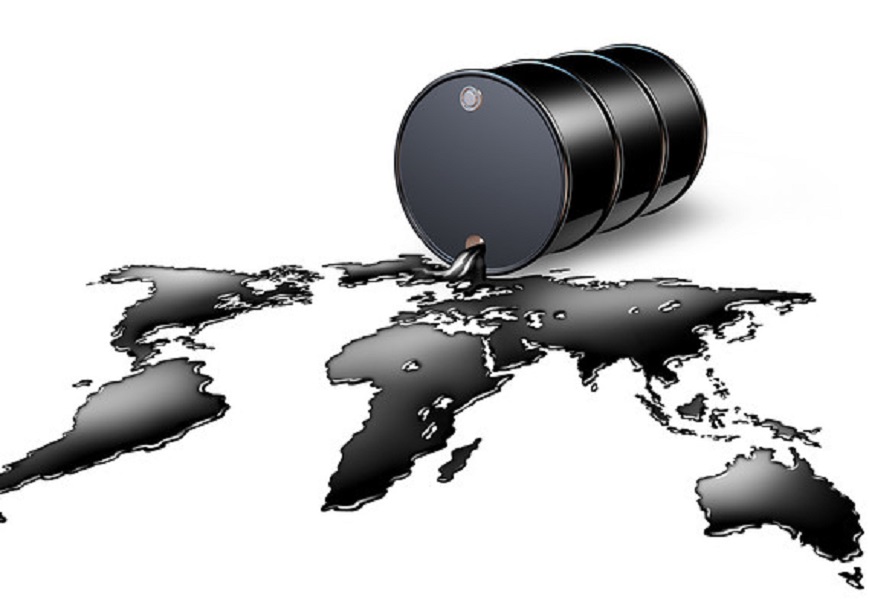
Crude prices returned to the bullish region after sinking on a volatile trading Thursday due to a reversal as a result of information that Saudi Arabia’s oil output will soon surpass 10 million barrels per day for the first time since the outset of the COVID-19 pandemic.

Consequently, the Brent crude rose by 75 cents or 0.93 per cent to settle at $81.29 after initially falling to $80.54 a barrel, while the United States West Texas Intermediate (WTI) crude returned to $79.72 after first depreciating to $78.81 a barrel.

Saudi-owned Al Arabiya TV reported that the world’s largest oil exporter would see its export hit the pre-COVID levels after the nation, along with other Organisation of the Petroleum Exporting Countries and its allies (OPEC+) agreed to stick to previously agreed-upon production increases.

Saudi Arabia and Russia, the OPEC and non-OPEC groups leaders within OPEC+, respectively, will each have a production ceiling of just over 10 million barrels per day—at 10.018 million barrels per day each.

OPEC+ will roll over its August programme to gradually increase oil production by 400,000 barrels per day each month ignoring pressure from big players like the US to help cool the market.

According to Russian Energy Minister Alexander Novak after the meeting, “The decision was made previously to increase production by 400,000 barrels per day every month, and I underscore every month, until the end of 2022. Today the decision was reiterated to maintain current parameters which were decided on earlier.”

He added that the market was not heeding the requests and complaints from other countries because they were maintaining market balance and remaining wary of potential changes in demand especially due to uncertain elements like COVID-19.

On his part, the Nigerian Minister of State for Petroleum Resources, Mr Timipre Sylva said “OPEC has made it clear that we are not looking at prices, we are looking at supply and demand. And the supply is not enough to react to what is happening in the market. Especially when you compare it to what is happening in the gas market. As a responsible organisation, it is time to just watch the market.”

Oil prices have recently hit their highest levels since 2014, and crude-importing countries have had to face the brunt.

Recently, US President, Mr Joe Biden, blamed the reluctance of the alliance to pump more oil for the sharp rise in energy prices in the US and around the world.

As per the production table provided by OPEC, the producers will have a collective quota of required production of 40.094 million barrels per day in December, of which the 10 OPEC members bound by the pact should pump no more than 24.3 million barrels per day, and the non-OPEC producers led by Russia will have a ceiling of 15.794 million barrels per day.


Adedapo Adesanya is a journalist, polymath, and connoisseur of everything art. When he is not writing, he has his nose buried in one of the many books or articles he has bookmarked or simply listening to good music with a bottle of beer or wine. He supports the greatest club in the world, Manchester United F.C.

Economy

Strong Competitive Position Earns Fidson Healthcare Rating Upgrade

Published

on

fidson healthcare

By Aduragbemi Omiyale

The national scale long-term issuer rating of Fidson Healthcare Plc has been upgraded to A+(NG) from A(NG), with its short-term issuer ratings of A1(NG) affirmed.

This action was taken by GCR Ratings, which also accorded the leading healthcare organisation in Nigeria with a stable outlook in a statement obtained by Business Post.

It was explained that the company achieved this latest development amid its strong competitive position and improved financial profile.

GCR said Fidson Healthcare’s debt metrics remain moderate, bolstered by a successful N21 billion rights issue expected in Q2 2026 and robust cash flows that support strong liquidity, though large expansionary investments and heightened working capital requirements slightly constrain the rating.

Fidson is a prominent pharmaceutical manufacturer in Nigeria, with over 350 products registered with the National Agency for Food and Drug Administration and Control (NAFDAC). Its product portfolio encompasses a wide range of therapeutic categories, including antibiotics, infusion products, over-the-counter products, and lifestyle healthcare solutions.

The company is enhancing its market position through ongoing investments in manufacturing capacity, product innovation, automation, and operational efficiency.

The firm operates through an extensive network of over 120 distributors across Nigeria, ensuring strong retail visibility and market penetration.

To further strengthen its competitive position, the company is investing in a greenfield automated manufacturing facility, additional infusion lines, and expanded tablet lines, all expected to become operational in the near term. This capital expenditure will significantly increase productive capacity, improve operational efficiency, and enhance export competitiveness in the medium term.

In terms of its liquidity assessment, its 12-month sources versus uses coverage at 1.6x and 24-month coverage at 1.4x, supported by access to diverse funding sources.

Estimated liquidity sources include forecasted operating cash flow of N15.1 billion, cash holdings of N4.7 billion, inventory valued at approximately N17.5 billion, and cash of N21 billion from the equity raise. These resources are sufficient to cover anticipated near-maturing debt obligations of N23.4 billion and forecast medium-term capital spending of around N20 billion, as well as a dividend payout of N3.7 billion in 2026.

Continue Reading

Economy

Esiet Promises Open-door Policy at Customs Eastern Marine Command

Published

on

Esien Etim Esiet

By Bon Peters

The new acting Comptroller of the Eastern Marine Command of the Nigeria Customs Service (NCS), Mr Esien Etim Esiet, a Deputy Comptroller of Customs, has promised to maintain an open-door policy with stakeholders, including licensed agents and partners.

He gave this assurance when he officially assumed leadership of the command on Wednesday, May 20, 2026, according to a statement issued by the command’s spokesman, Mr Joshua Iliya, a Deputy Superintendent of Customs (DSC), in Port Harcourt, Rivers State.

In a proactive move to strengthen maritime security and trade facilitation, he immediately initiated an extensive tour of operational facilities and high-level engagements across the region, including Rivers (Abonnema and Onne Outstations), Akwa Ibom (Oron Outstation), and Cross River (Calabar Outstation) States.

During the visitations, Mr Esiet conducted rigorous inspections of equipment and personnel readiness, emphasising that the success of the command relied on a united front, adding that a “sustained synergy is our greatest weapon in combating smuggling and maritime crimes,” insisting that a united front was non-negotiable for national security.

On the inter-agency level to foster a one-service approach, DC Esiet held strategic meetings with the Customs Area Controllers of Port Harcourt II (Onne), the Oil and Gas Free Trade Zone, and the Cross River/Calabar Free Trade Zone/Akwa Ibom Area Command.

To further reinforce maritime safety, he equally paid courtesy visits to top maritime security brass, including the Commander, NNS Pathfinder, Port Harcourt, the Commanding Officer, Navy Forward Operation Base (FOB), Ibaka, the Flag Officer Commanding (FOC), Eastern Naval Command, and the Cross River State Commissioner of Police.

On community and private sector partnership and in recognition of the vital role of grassroots support, DC Esiet visited monarchs in the region, underscoring commitment to maintaining deep-rooted ties with host communities, among others.

On fiscal policy compliance, he reiterated his administration’s resolve to strictly align with the policy direction of the Comptroller-General of Customs, Mr Bashir Adewale Adeniyi, emphasising that his leadership would focus on streamlining maritime enforcement protocols, ensuring officers were motivated and equipped while maintaining an open-door policy with licensed agents and partners.

The Eastern Marine Command, which is a specialised wing of customs, is dedicated to patrolling the nation’s Eastern Waterways, preventing smuggling, and ensuring the security of maritime trade.

Continue Reading

Economy

OTC Securities Exchange Slips 0.02% Amid Surge in Trading Activity

Published

on

Nigerian OTC securities exchange

By Adedapo Adesanya

The NASD Over-the-Counter (OTC) Securities Exchange recorded a marginal loss of 0.02 per cent on Tuesday, May 26, due to selling pressure, as investors cut down their exposure to unlisted stocks.

During the session, the volume of securities traded by investors jumped by 45.6 per cent to 2.2 million units from the previous day’s 1.5 million units, the value of securities increased by 119.5 per cent to N129.9 million from the N59.2 million recorded a day earlier, and the number of deals soared by 92.6 per cent to 52 deals from the preceding day’s 27 deals.

At the close of business, Great Nigeria Insurance (GNI) Plc remained the most traded stock by value on a year-to-date basis, with 3.4 billion units worth N8.4 billion, trailed by Infrastructure Credit Guarantee (Infracredit) Plc with 2.3 billion units sold for N6.5 billion, and Central Securities and Clearing System (CSCS) Plc with 61.2 million units exchanged for N4.1 billion.

GNI Plc was also the most active stock by volume on a year-to-date basis, with 3.4 billion units valued at N8.4 billion, followed by Infracredit Plc with 2.3 billion units valued at N6.5 billion, and Resourcery Plc followed with 1.1 billion units traded for N415.7 million.

Five securities recorded various movements yesterday at the OTC securities exchange, with three price gainers and two price losers.

For the advancers, they were led by 11 Plc, which added N22.11 to its share price to close at N243.11 per unit versus N221.10 per unit, CSCS Plc grew by N2.95 to N77.80 per share from N74.85 per share, and IPWA Plc expanded by 80 Kobo to N8.83 per unit from N8.03 per unit.

On the flip side, FrieslandCampina Wamco Nigeria Plc shrank by N12.11 to N167.89 per share from N180.00 per share, and Geo-Fluids Plc lost 2 Kobo to sell at N2.98 per unit versus Monday’s N3.00 per unit.

As a result, the market capitalisation dropped N600 million to close at N2.571 trillion compared with the previous day’s N2.571 trillion, and the NASD Unlisted Security Index (NSI) fell by 1.00 points to 4,297.17 points from 4,298.17 points.

The market will be closed on Wednesday (May 27) and Thursday (May 28) for the Eid al-Kabir holidays.

Continue Reading

Trending