
Economy
Crude Slides as OPEC Production Rises in September

By Adedapo Adesanya
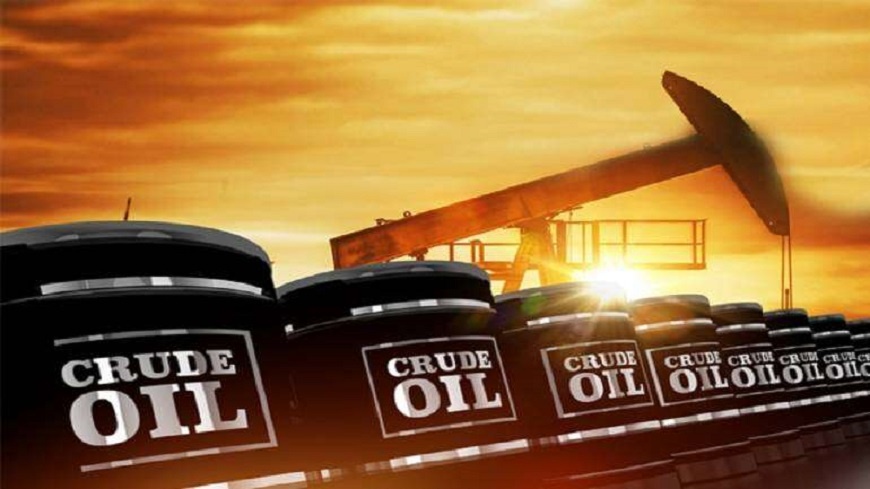
The major crude benchmarks took a nosedive of more than 3 per cent at the international oil market on Thursday as data showed that production from the Organisation of the Petroleum Exporting Countries (OPEC) and its allies increased in September.
The Brent crude futures fell by 3.48 per cent or $1.42 to trade at $40.88 per barrel while the West Texas Intermediate (WTI) crude futures depreciated by 3.8 per cent or $1.59 to $38.64 per barrel.
OPEC+’s September seaborne exports jumped to 22.84 million barrels per day from the 22.11 million barrels per day exported by the cartel through the sea in August.
For OPEC specifically, its exports rose from 17.53 million barrels per day in August to 18.2 million barrels per day in September.
A Reuters survey showed that OPEC’s production for September was up 160,000 barrels per day from the previous month but still showed that the oil cartel is still in compliance with its planned cuts.
The increase in the production came mostly from Iran and Libya, both of whom are exempted from the production quotas due to various unrest.
The market is interpreting this production increase as a viable threat to any oil market rebalancing especially as worries about rising cases of COVID-19 worldwide continue to feed expectations for a slowdown in energy demand.
Crude oil investors will continue to monitor rising cases and its impact on demand. In Europe, countries have started implementing or planning to reinstitute new social-distance restrictions as COVID-19 cases climb.
According to reports, in Spain, the majority of the country’s regions will limit public service and retail to 50 per cent capacity, while France may introduce new restrictions.
Spain, France and the Netherlands have the highest rate of new cases over the last seven days of the world’s largest countries.
Investors also watched developments among US lawmakers over a possible new round of coronavirus stimulus, which could also provide a potential lift to the energy sector, providing funding to out-of-work Americans and troubled businesses.
Also affecting prices are expectations for more oil from Libya which have continued to weigh on the market following Libya military commander Khalifa Haftar lifting an eight-month blockade on crude exports.
The uptick of production in Libya, which promises to restore 1 million daily barrels in an already oversupplied market, raises additional supply concern especially during this time of weak demand.
Also, the market, which hopes for a coronavirus vaccine, was met with disappointing news as reports show that two separate vaccine trials have resulted in unpleasant side effects, including high fever, body aches, bad headaches, and exhaustion.
Analysts noted that news of working vaccines will be crucial in stabilizing the oil market and would impact the pace of economic recovery.



By Adedapo Adesanya
The Organisation of the Petroleum Exporting Countries and its allies (OPEC+) agreed to raise its oil output quotas by 206,000 barrels per day for May.
Eight members of OPEC+, comprising Saudi Arabia, Russia, Iraq, the UAE, Kuwait, Kazakhstan, Algeria, and Oman, agreed to the increase in May quota at a virtual meeting on Sunday, OPEC+ said in a statement.
However, the rise will be in theory, as its key members are unable to raise production due to the US-Israeli war with Iran, which has affected production.
The war has effectively shut the Strait of Hormuz, the world’s most important oil route, since the end of February and cut exports from some OPEC+ members, including Saudi Arabia, the UAE, Kuwait and Iraq. These are the only countries in the group which were able to significantly raise production even before the conflict began.
Besides the disruptions affecting Gulf members, others, such as Russia, are unable to increase output due to Western sanctions and damage to infrastructure inflicted during the war with Ukraine. For Nigeria, even as Africa’s largest producer, it has not been able to keep production quotas steady.
The OPEC+ quota increase of 206,000 barrels per day represents less than 2 per cent of the supply disrupted by the Hormuz closure, but it signals readiness to raise output once the waterway reopens.
Also meeting on Sunday, a separate OPEC+ panel called the Joint Ministerial Monitoring Committee (JMMC), expressed concern about attacks on energy assets, saying they were expensive and time-consuming to repair and so have an impact on supply.
May’s OPEC+ increase is the same as the eight members had agreed for April at their last meeting held on March 1, just as the war began to disrupt oil flows.
A month later, the largest oil supply disruption on record is estimated to have removed as many as 12 to 15 million barrels per day or up to 15 per cent of global supply.
The eight OPEC+ members have raised production quotas by about 2.9 million barrels per day from April 2025 through December 2025, before pausing increases for January to March 2026. The sub-group holds its next meeting on May 3.
Market analysts have warned that oil prices could hit $150 per barrel if the closure of the strait is prolonged and continues, due to damage to energy assets across the critical Middle East region.
As of the time of this report, Brent crude is trading at $108 per barrel, below the US West Texas Intermediate (WTI) crude at $109 per barrel.
By Adedapo Adesanya
Workers at Seplat Energy will resume work after a strike action that impacted production was called off by the Petroleum and Natural Gas Senior Staff Association of Nigeria (PENGASSAN) over the weekend, with the company issuing written commitments on pay rises.
Top employees began an indefinite strike last Friday as talks over a collective bargaining agreement and staff welfare issues broke down. The action came at a time when Nigeria is seeking to maximise production amid rising global oil prices.
According to Reuters, in an April 4 letter to the chief executive of Seplat Nigeria, Mr Roger Brown, PENGASSAN said it had directed members at the local energy firm to immediately suspend industrial action after negotiations resumed with the Nigerian National Petroleum Company (NNPC) Limited. Other less-skilled workers are covered by the Nigeria Labour Congress (NLC) and did not partake in the strike with PENGASSAN.
The union said talks on a 2026 collective bargaining agreement would continue, with the aim of concluding outstanding issues by April 13. However, according to the publication, the union did not disclose more details about its financial demands.
“We can confirm that the union has suspended its notice of industrial action to allow negotiations to conclude on outstanding items within an agreed framework,” Seplat spokesperson, Mr Ogechukwu Udeagha, said, adding that “operations are recommencing at our various locations.”
Seplat Energy’s group production averaged 131,506 barrels of oil equivalent per day in 2025, according to its latest audited results. That is the equivalent of around 7 per cent–9 per cent of Nigeria’s total liquids production.
The company expects output to rise to 155,000 barrels of oil equivalent per day, making any sustained disruption particularly sensitive for Nigeria’s supply outlook. This comes as it seeks to scale production while remaining a major supplier of gas to Nigeria’s domestic power market.
With the company’s output expected to rise, any prolonged disruption would have significantly impacted Nigeria’s oil supply and fiscal outlook.


By Dipo Olowookere
The weekly turnover of the Nigerian Exchange (NGX) Limited shrank by 27.70 per cent or 1.094 billion equities, partly due to the inability of market participants to trade last Friday as a result of the Good Friday public holiday declared by the federal government.
In the week, investors bought and sold 2.856 billion equities worth N113.597 billion in 215,287 deals versus the 3.950 billion equities valued at N201.312 billion transacted in 359,642 deals in the preceding week.
The activity chart was led by the financial services industry with 1.811 billion shares valued at N61.901 billion in 86,818 deals, contributing 63.41 per cent and 54.49 per cent to the total trading volume and value, respectively.
The services sector traded 299.895 million stocks worth N2.966 billion in 13,797 deals, and the ICT segment exchanged 183.233 million equities for N14.654 billion in 25,287 deals.
Wema Bank, Access Holdings, and Secure Electronic Technology accounted for 734.659 million shares worth N14.134 billion in 12,319 deals, contributing 25.72 per cent and 12.44 per cent to the total trading volume and value apiece.
Data from the NGX said 29 stocks gained weight versus 47 stocks of the previous week, as 57 shares lost weight versus 45 shares in the preceding week, while 62 equities closed flat versus 56 equities a week earlier.
Multiverse led the gainers’ chart after it gained 20.66 per cent to trade at N20.15, UPDC REIT appreciated by 15.49 per cent to N8.20, International Energy Insurance chalked up 12.54 per cent to quote at N3.32, Austin Laz grew by 10.47 per cent to N4.43, and Unilever Nigeria rose by 10.00 per cent to N103.40.
Conversely, Secure Electronic Technology topped the losers’ table after it lost 21.54 per cent to close at N1.02, John Holt declined by 18.47 per cent to N15.45, May and Baker depreciated by 16.57 per cent to N35.00, Aluminium Extrusion moderated by 16.27 per cent to N10.55, and Legend Internet slipped by 16.00 per cent to N6.30.
Business Post reports that the All-Share Index (ASI) was up by 0.39 per cent to 201,698,89 points, and the market capitalisation rose by 0.65 per cent to N129.806 trillion.
In the same vein, all other indices finished higher apart from the main board, insurance, MERI Value, consumer goods, industrial goods and growth indices, which went down by 0.29 per cent, 4.25 per cent, 0.36 per cent, 1.74 per cent, 0.24 per cent, and 0.06 per cent, respectively, while the sovereign bond index closed flat.
-
 Feature/OPED6 years ago
Davos was Different this year
-
Travel/Tourism10 years ago
Lagos Seals Western Lodge Hotel In Ikorodu
-

 Showbiz3 years ago
Estranged Lover Releases Videos of Empress Njamah Bathing
-
 Banking8 years ago
Sort Codes of GTBank Branches in Nigeria
-

 Economy3 years ago
Subsidy Removal: CNG at N130 Per Litre Cheaper Than Petrol—IPMAN
-

 Banking3 years ago
Sort Codes of UBA Branches in Nigeria
-

 Banking3 years ago
First Bank Announces Planned Downtime
-

 Sports3 years ago
Highest Paid Nigerian Footballer – How Much Do Nigerian Footballers Earn