
Economy
Cryptocurrency Trading Strategies: Tips for Maximizing Profits


Cryptocurrency trading has offered a new way for investors to participate in the growing realm of digital assets. Unfortunately, navigating cryptocurrency trading requires a solid understanding of trading strategies and techniques for success.
As such, besides completing a crypto trading course, crypto traders should keep tabs on various tips to maximize their profits.
Learning various crypto trading principles, risk management strategies, and proper market analysis increases the chances of success. Here are a few tips to help you maximize profits.
Start Small and Scale Up Gradually
Most people venture into crypto trading anticipating overnight success and wealth. However, this is rarely the case for all. Instead, you should start your crypto trading journey with a small investment and increase your portfolio gradually as you gain experience.
Adopting this trading approach allows you to test and familiarize yourself with various trading strategies and market dynamics before risking significantly. Starting small also allows you to manage your emotions better, and you will be less likely to succumb to panic buying or selling.
Starting small also allows you to learn from your mistakes without incurring significant losses. You can gradually increase your investments as you get comfortable with the market and your trading strategy.
Use Stop-Loss Orders and Risk Management Strategies
The crypto market is very volatile, and your investments can disappear in minutes. Therefore, effectively managing your risks is crucial to long-term success. It also preserves your capital. The stop-loss order is among the many risk-management strategies you should always use at any given time.
It will allow you to set a predetermined price at which the trade automatically closes if the market goes against your predictions, limiting potential losses. Other risk management strategies include:
- Diversification – spreading your investments across different crypto coins and sectors is prudent. It reduces the risk on your investment portfolio and lowers the impact of poor-performing assets.
- Set realistic targets – you should establish realistic profit targets for your trades. Doing this helps you maintain discipline, as you won’t be stuck in the same position waiting for unrealistic profits.
- Review and adjust your strategy regularly – monitor and adjust your trading strategies as needed. Refine your choice of assets, entry/exit criteria, and risk management options.
Stay Informed
The cryptocurrency market is dynamic and widely known for rapid fluctuations. Therefore, traders should always be in the know and ready to adjust to market changes. Industry news, trends, and developments will give valuable insights to guide your trading decisions. Simple ways to stay informed include:
- Following reputable news sources – you should subscribe to reliable crypto websites, blogs, and newsletters to stay updated on recent market developments, regulatory changes, and tech advancements.
- Monitor social media platforms and influencers – social platforms and influencers are good news sources. However, you shouldn’t follow them blindly. Assess and weigh your options before doing anything.
- Engage with the crypto community – you should be active in online forums, chat platforms, and social media groups with discussions revolving around cryptocurrencies.
The Bottom Line
While there’s no pre-defined strategy for maximizing cryptocurrency trading profits, adhering to some best practices increases your chances of success. Develop a trading strategy, diversity your portfolio, stay updated on market news and use take profit and stop loss orders. Never trade blindly.











By Adedapo Adesanya
The Nigerian Midstream and Downstream Petroleum Regulatory Authority (NMDPRA) has raised the natural gas price for power generation companies (GenCos) to $2.18 per million metric British thermal units (MMBTU).
This marks a $0.05/MMBTU hike from the earlier rate of $2.13 per MMBTU.
In a circular released on Tuesday, the regulator outlined the updated domestic base price (DBP) and wholesale natural gas prices for 2025.
The DBP represents the lowest price at which natural gas can be offered in the domestic market.
The document states that the adjustment will begin today (April 1, 2026).
“Taking into account the Petroleum Industry Act (PIA) provisions, current market conditions, and the official Gas Pricing and Domestic Demand Regulations, the NMDPRA sets the new Domestic Base Price at USD 2.18/MMBtu, along with wholesale prices for the strategic sector, starting April 1, 2026,” the circular stated.
In the directive signed by NMDPRA CEO, Mr Saidu Mohammed, the regulator also indicates that commercial buyers will now pay $2.68 per MMBTU, up from $2.63 per MMBTU previously.
Additionally, the authority fixed prices for gas-based industries (such as ammonia, urea, methanol, and low-sulphur diesel) at a floor of $0.90 per MMBTU and a ceiling of $2.18 per MMBTU.
NMDPRA explained that the domestic base price at the marketable gas delivery point—per section 167(1) of the PIA—follows regulations based on key principles:
“a) A rate sufficient to encourage upstream producers to voluntarily supply enough gas to the domestic market.
“b) No higher than the average natural gas prices in major emerging producer nations.
“c) Based on the lowest supply costs under a three-tier framework.
“d) Aligned with market rates and international benchmarks.”
This change could affect the country’s power sector, already strained by massive debt and a lack of gas supply.
Last month, the Association of Power Generation Companies (APGC), an umbrella body for power generation companies, warned that gas suppliers might halt deliveries to thermal plants due to debt of around N6.5 trillion.
The federal government disclosed plans in December to raise N1.23 trillion by the first quarter (Q1) of 2026 to settle verified arrears owed to generation companies and gas suppliers. On January 27, the government said it had successfully issued a N501 billion inaugural bond under the presidential power sector debt reduction programme (PPSDRP).
However, the APGC has said that this is inadequate, comparing the debt to “garri soaked in water.”
By Adedapo Adesanya
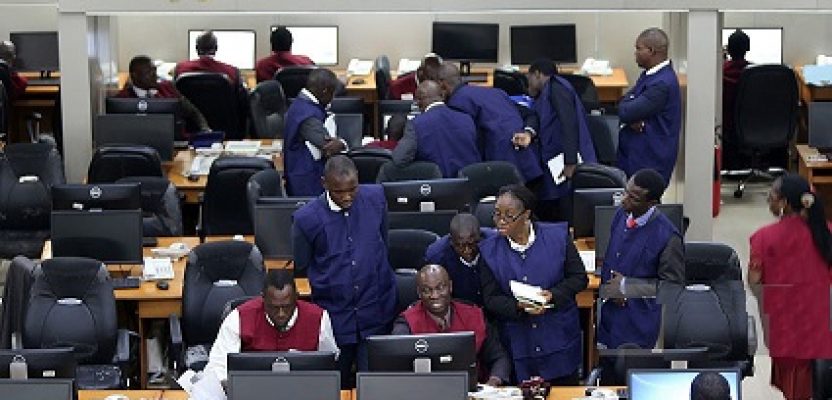
The NASD Over-the-Counter (OTC) Securities Exchange further declined by 0.23 per cent, with the Unlisted Security Index (NSI) down by 9.63 points on Tuesday, March 31, to 4,100.11 points from 4,109.74 points.
In the same vein, the market capitalisation went down by N5.76 billion to finish at N2.453 trillion from the N2.458 trillion it closed a day earlier.
The mood of the market was flat yesterday as there were three price losers and three price gainers, led by Central Securities Clearing System (CSCS) Plc, which gained N1.51 to sell at N78.68 per unit compared with the previous day’s N77.17 per unit. UBN Property Plc appreciated by 15 Kobo to N2.20 per share from N2.05 per share, and Geo-Fluids Plc improved by 3 Kobo to N3.25 per unit from N3.22 per unit.
On the flip side, 11 Plc lost N31.05 to close at N285.00 per share versus Monday’s closing price of N316.50 per share, FrieslandCampina Wamco Nigeria Plc dropped 95 Kobo to trade at N98.05 per unit versus N99.00 per unit, and Industrial and General Insurance (IGI) Plc went down by 2 Kobo to 52 Kobo per share from 57 Kobo per share.
During the trading day, the volume of securities jumped by 137.9 per cent to 50.8 million units from 21.3 million units, the number of deals rose 28.9 per cent to 49 deals from the preceding session’s 38 deals, while the value of securities went down by 65.2 per cent to N226.9 million from N651.1 million.
CSCS Plc remained the most traded stock by value (year-to-date) with 56.8 million units worth N3.8 billion, followed by Okitipupa Plc with 27.5 million units valued at N1.8 billion, and Infrastructure Guarantee Credit Plc with 400 million units traded for N1.2 billion.
Resourcery Plc was the most traded stock by volume (year-to-date) with 1.1 billion units sold for N415.7 million, followed by Infrastructure Guarantee Credit Plc with 400 million units transacted for N1.2 billion, and Geo-Fluids Plc with 183.0 million units exchanged for N673.8 million.
By Adedapo Adesanya
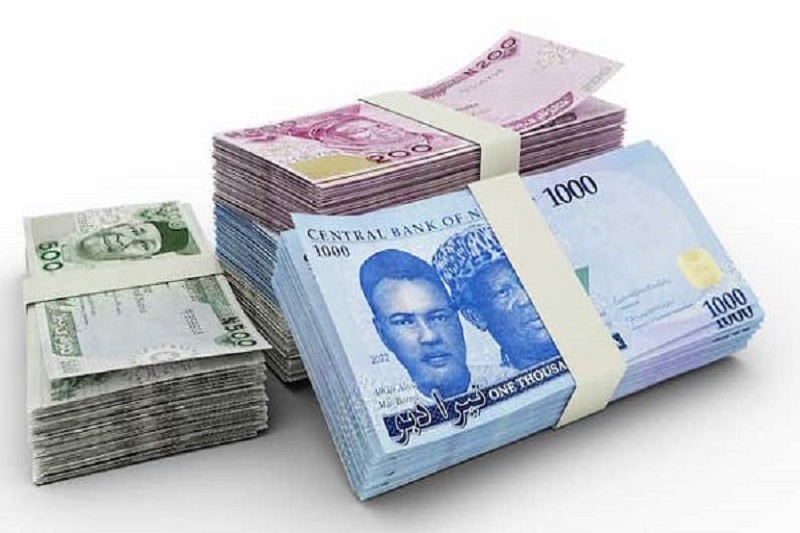
The Naira weakened against the US Dollar in the Nigerian Autonomous Foreign Exchange Market (NAFEX) on Tuesday, March 31, by 0.23 per cent or N3.14 to N1,386.72/$1 from the N1,383.58/$1 it was traded on Monday.
Similarly, the Nigerian currency depreciated against the Pound Sterling in the same market window by N14.40 to close at N1,839.34/£1 compared with the previous day’s N1,824.94/£1, and against the Euro, it lost N12.88 to settle at N1,599.16/€1 versus N1,586.28/€1.
In the same vein, the Naira stumbled against the Dollar yesterday by N1 to quote at N1,395/$1 versus N1,394/$1, and in the black market, it remained unchanged at N1,410/$1.
The Naira remains under pressure as FX liquidity shrank, as evidenced by the number of interbank FX deals published by the Central Bank of Nigeria (CBN).
Last week, forex intervention operations saw the apex bank inject $95 million into the supply side, but as high demand for the Dollar as a safe-haven asset continues, it strengthened the Dollar index, while the Euro, British Pound and other major trading partners weakened.
The country’s external reserves recorded a marginal decline, falling by 0.7 per cent to $49.48 billion, reflecting a depletion of about $350 million and signalling continued pressure on Nigeria’s FX buffer.
In the cryptocurrency market, reports of comments by Iran’s President Masoud Pezeshkian hinted at eased geopolitical tensions, which triggered gains across some assets.
Mr Pezeshkian reportedly signalled Iran would be willing to end the conflict in exchange for security guarantees, raising hopes for a diplomatic off-ramp and reducing fears of a wider regional war.
Ethereum (ETH) gained 4.4 per cent to trade at $2,150.11, Ripple (XRP) jumped 2.8 per cent to $1.36, Bitcoin (BTC) added 2.5 per cent to sell at $69,079.14, Cardano (ADA) which also rose by 2.5 per cent to $0.2518, Dogecoin (DOGE) improved by 2.4 per cent to $0.0941, Solana (SOL) grew by 1.3 per cent to $84.43, and Binance Coin (BNB) increased by 1.2 per cent to $618.86, while TRON (TRX) dipped 1.8 per cent to $0.3153, with the US Dollar Tether (USDT) and the US Dollar Coin (USDC) flat at $1.00 apiece.












-
 Feature/OPED6 years ago
Davos was Different this year
-
Travel/Tourism10 years ago
Lagos Seals Western Lodge Hotel In Ikorodu
-

 Showbiz3 years ago
Estranged Lover Releases Videos of Empress Njamah Bathing
-
 Banking8 years ago
Sort Codes of GTBank Branches in Nigeria
-

 Economy3 years ago
Subsidy Removal: CNG at N130 Per Litre Cheaper Than Petrol—IPMAN
-

 Banking3 years ago
Sort Codes of UBA Branches in Nigeria
-

 Banking3 years ago
First Bank Announces Planned Downtime
-

 Sports3 years ago
Highest Paid Nigerian Footballer – How Much Do Nigerian Footballers Earn