
Economy
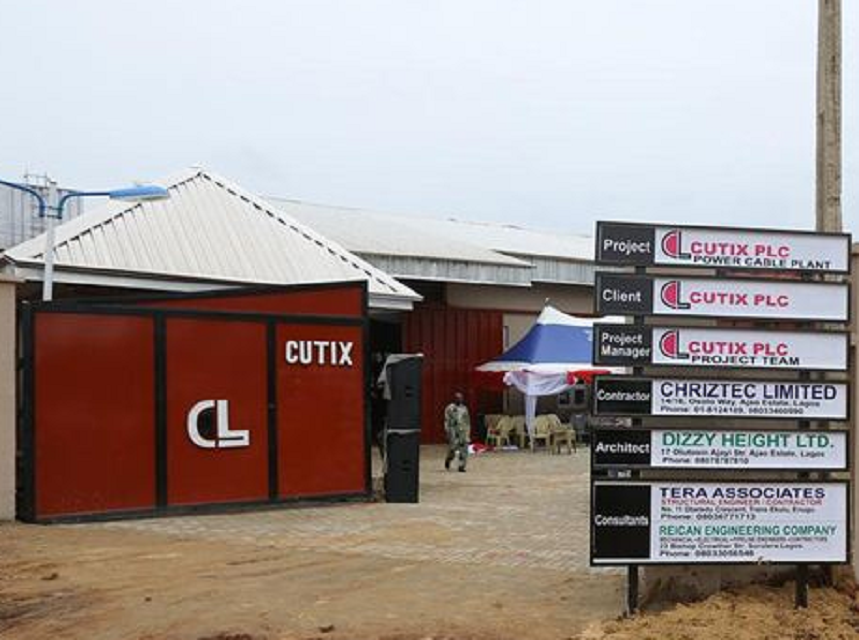
Cutix Plans Major Acquisition for Expansion, Profit

By Dipo Olowookere
If the latest move by the board and management of Cutix is anything to go by, then shareholders may soon begin to smile because they will get value for their investment in the organisation.
Recently, Cutix announced its intention to acquire one of the players in its market, Adswitch Plc, which was delisted on the Nigerian Stock Exchange (NSE) in 2016.
According to reports, the board of Cutix wants this company to enhance its business expansion and boost the profitability of the company, which should in turn lead to more reward for investors.
But to make this a reality, the board has put a special resolution on the acquisition as one of the items for approval of shareholders at the forthcoming annual general meeting on Friday, October 25, 2019.
The board wants authorisation to enter into any agreements and execute any other documents necessary for and incidental to effecting the resolution on acquisition of Adswitch.
Information about Cutix
Cutix is an indigenous wire and cable company incorporated in 1982, which has gradually transformed from a private limited liability company formed and owned by friends and family members to become a publicly quoted company.
Cutix recently invested about N300 million on a new extension of its factory as part of efforts to increase the installed production capacity of the cables-manufacturing company.
The new factory extension was expected to impact positively on the production capacity and efficiency of the company and to enable it to further improve its performance notwithstanding the increasing competition in the cable industry.
Information about Adswitch
Adswitch Plc is a related electrical switchgears Nigerian company also incorporated in 1982 and it has a close relationship with Cutix Plc.
The firm was delisted from the NSE due to harsh operating environment. The company was listed as a second-tier stock in 1991 and filed for voluntary delisting at the NSE.
Prior to its delisting, Adswitch had struggled with dwindling margins and sales. Audited report and accounts of Adswitch for the year ended April 30, 2012 showed that turnover dropped from N32.72 million in 2011 to N30.7 million in 2012. It posted a loss before tax of N10.34 million in 2012, albeit a better position that loss of N19.04 million recorded in 2011. Loss after tax also stood at N10.73 million in 2012 as against N19.69 million in 2011.
Market analysts then described the harsh business climate as operational challenges due to influx of fake and substandard products and uncompetitive manufacturing costs in Nigeria as well as the costs and requirements of maintaining the listing.



By Adedapo Adesanya
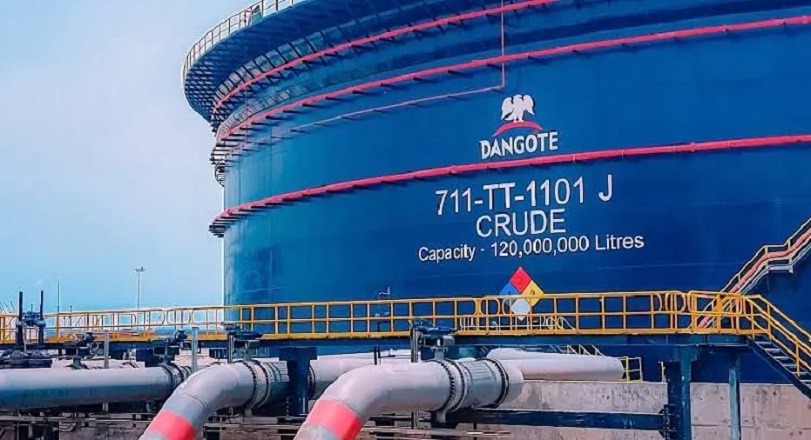
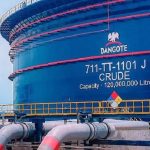
The Dangote Group has appointed Stanbic IBTC Capital, Vetiva Capital Management, and First Capital as lead issuing houses and financial advisers for its planned listing of its $20 billion Dangote Petroleum Refinery and Petrochemicals on the Nigerian Exchange (NGX) Limited in the coming months.
According to reports, which cited sources familiar with the matter, the listing could mark Africa’s largest equity offering, with plans to float 5-10 per cent of the refinery at a debut valuation of $40-50 billion. This could potentially boost the Nigerian main bourse’s market cap past N200 trillion from the current almost N125 trillion.
Stanbic IBTC, part of Standard Bank, will handle international book-building and foreign investor outreach, while Vetiva, with prior Dangote listing experience, focuses on local retail and regulations.
Late last month, the chairman of Dangote Group, Mr Aliko Dangote, said that within the next five months, Nigerians should be able to purchase shares of the refining subsidiary of his conglomerate.
The Lagos-based refinery is the largest single-train refinery in the world with 650,000 barrels per day refining capacity. There are efforts to boost the capacity to 1.4 million barrels per day soon.
“Nigerians too will have an opportunity in the next, maybe a maximum of four to five months. There will actually be an opportunity to buy the shares,” he said during a tour of the facility by the chief executive of the Nigerian National Petroleum Company (NNPC) Limited, Mr Bayo Ojulari, alongside members of the company’s executive management.
The facility, which is now operating at full capacity, a world-record milestone for a single-train refinery, comes after the completion of an intensive performance testing on the refinery’s Crude Distillation Unit and Motor Spirit production block.
The refinery is now positioned to supply up to 75 million litres of petrol daily to the domestic market, an increase from the 45 million – 50 million litres delivered during the recent festive period.
The development can reshape Nigeria’s energy landscape and reduce the country’s longstanding dependence on imported refined products while positioning the country as a net exporter to West African markets.
Yet, the refinery faces difficulty securing adequate crude oil supplies from Nigerian producers, forcing it to import feedstock from the US, Brazil, Angola, and other countries.
By Adedapo Adesanya
Nigeria’s net foreign exchange reserves rose 50.6 per cent to $34.80 billion at the end of 2025, marking a sharp improvement in the country’s external liquidity position.
Net foreign exchange reserves refer to a country’s readily available external reserve assets after deducting short-term foreign liabilities. This is unlike gross foreign exchange reserves, which are the full stock of external reserve assets held by a country’s central bank, without subtracting any liabilities or commitments.
In a statement issued on Monday by the Central Bank of Nigeria (CBN), citing the Governor, Mr Yemi Cardoso, it was disclosed that net reserves increased from $23.11 billion at the end of 2024 to $34.80 billion at the close of 2025, representing a $11.69 billion rise within one year.
The figure also reflects a significant recovery from $3.99 billion at the end of 2023, signalling what the apex bank described as a marked improvement in reserve quality over a two-year period.
“The Governor of the Central Bank of Nigeria (CBN), Mr Olayemi Cardoso, has stated that Nigeria’s gross and net foreign reserves showed significant improvement at the end of 2025, reflecting stronger external sector fundamentals and sustained policy reforms.
“Following his disclosure at the post-Monetary Policy Committee (MPC) press briefing on Tuesday, February 24, 2026, where he said the country’s gross external reserves stood at $50.45 billion as of February 16, 2026, Mr. Cardoso, at the weekend, said the net foreign exchange reserves, as at the end of December 2025, rose to $34.80 billion,” the statement said.
Notably, the 2025 net reserve position exceeded Nigeria’s total gross external reserves recorded at the end of 2023, which stood at $33.22 billion.
This means that the country’s liquid and unencumbered foreign exchange buffers as of end-2025 were stronger than the entire headline gross reserve level just two years earlier.
According to Mr Cardoso, gross external reserves rose from $40.19 billion at end-2024 to $45.71 billion at end-2025, reflecting a $5.52 billion increase. As of February 16, 2026, gross reserves had climbed further to $50.45 billion.
He said the improvement in both gross and net reserves reflects stronger external sector fundamentals and sustained policy reforms.
The apex bank governor attributed the surge to improved transparency and credibility in foreign exchange management, which he said boosted investor confidence and attracted stronger FX inflows.
He added that enhanced reserve management practices were aimed at preserving capital, ensuring liquidity and supporting long-term sustainability.
According to him, the expansion highlights Nigeria’s improved capacity to meet external obligations, support exchange rate stability and reinforce overall macroeconomic resilience.
He described the end-2025 reserve position as validation of the Bank’s ongoing reforms and external sector adjustments, reaffirming the CBN’s commitment to maintaining adequate buffers and orderly foreign exchange market operations.

By Aduragbemi Omiyale
Selling price inflation reached its lowest level in over six years in February 2026, as the Purchasing Managers’ Index (PMI) settled at 53.2 points compared with 49.7 points in January, according to Stanbic IBTC Bank Nigeria, which takes the readings.
In the month under review, the Nigerian private sector returned to growth after a muted start to 2026, with a rise in new orders, triggered by an accelerated increase in business activity.
It was observed that the contraction in selling price inflation was influenced by an improvement in the strength of the currency.
“After the dip seen in January, the Nigerian private sector returned to growth, with the headline PMI settling higher at 53.2 points in February from 49.7 in January. This was in line with higher customer demand, which drove higher new product offerings at competitive pricing.
“Accordingly, output (55.8 vs January: 50.2) regained momentum in February while new orders (55.5 vs January: 49.9) also increased markedly in the month. Notably, the wholesale and retail sector, which had dipped in January, returned to growth, thereby ensuring that all four monitored sectors by the survey increased in February,” the Head of Equity Research West Africa at Stanbic IBTC Bank, Mr Muyiwa Oni, commented.
“Local currency appreciation helped to support softer input and output prices in February, as the Naira has been trading below N1,400 against the USD consistently since 29 January,” he added.
“Strengthening external account, higher offshore FX flows, and improvement in remittances continue to support higher FX supplies with the CBN also stepping in by buying USD in the FX market to moderate the pace of local currency appreciation,” he further stated.
Mr Oni projected that likely lower interest rates in line with lower inflation and exchange rate stabilisation should support private consumption and business investments in 2026.
“Because of these factors, we see more sectors contributing to real GDP growth rate in 2026 compared to 2025, likely translating to an improvement in the quality of lives of the citizens compared to the last two years when the citizens witnessed the full negative impact of the government’s flagship reforms,” he submitted.








-
 Feature/OPED6 years ago
Davos was Different this year
-
Travel/Tourism10 years ago
Lagos Seals Western Lodge Hotel In Ikorodu
-

 Showbiz3 years ago
Estranged Lover Releases Videos of Empress Njamah Bathing
-
 Banking8 years ago
Sort Codes of GTBank Branches in Nigeria
-

 Economy3 years ago
Subsidy Removal: CNG at N130 Per Litre Cheaper Than Petrol—IPMAN
-

 Banking3 years ago
Sort Codes of UBA Branches in Nigeria
-

 Banking3 years ago
First Bank Announces Planned Downtime
-

 Sports3 years ago
Highest Paid Nigerian Footballer – How Much Do Nigerian Footballers Earn