

Economy
Dangote Refinery May Benefit from Planned Russia Diesel Exports Ban

By Adedapo Adesanya
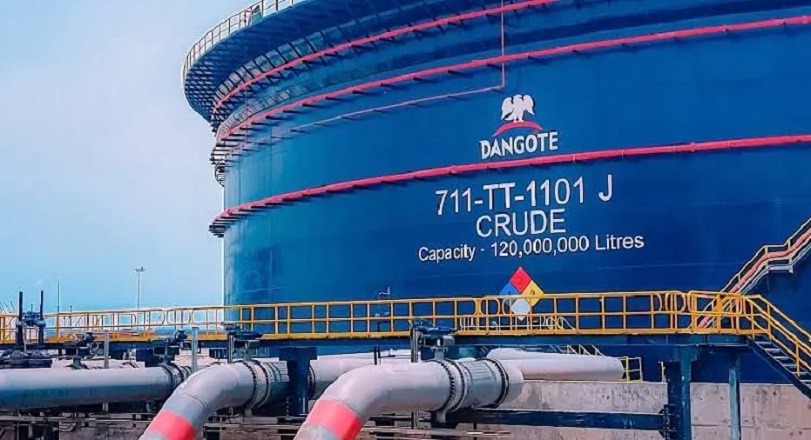
Nigeria’s 650,000 barrels per day Dangote Refinery could play a crucial role in cushioning West Africa from potential supply shocks if Russia goes ahead with a proposed ban on diesel exports, Argus Media has reported.
According to the media publication, Russia currently supplies around 20 per cent of diesel imported into West Africa, with deliveries averaging 35,000 barrels per day so far this year.
However, the region faces heightened exposure to disruption should Russia limit supply to local use in response to shortages and sanctions.
The Russian government is considering banning diesel exports until the end of this year and extending petroleum export restrictions, Argue said, citing the country’s news agency, Tass. This comes as Ukraine, which has been at war with Russia since 2022, has stepped up attacks against Russian energy infrastructures to weaken a major source of revenue for the country.
The report noted that while West Africa’s imports have slumped to a four-year low of 164,000 barrels per day in 2025 to date, increased flows from Dangote are beginning to replace Russian volumes. Nigerian diesel exports, which were negligible before Dangote came online in 2024, have since risen steadily to 53,000 barrels per day this year.
A source close to Dangote told Argus the refinery could “certainly” increase supplies to regional buyers to plug any gaps left by Russia. Another Nigerian market participant affirmed that the plant “could fill the gap,” underscoring its growing role in regional energy security.
The largest buyers of Russian diesel in West Africa are Senegal at 10,000 barrels per day, Cote d’Ivoire at 9,000 barrels per day, and Ghana at 6,000 barrels per day.
However, Dangote faces steep competition from other producing countries like the United Arab Emirates (UAE), and Spain, with the media publication reporting that the Emirates as the third-largest diesel supplier to the region has doubled its supply to more than 30,000 barrels per day.


