Connect with us

Economy

Dangote Retains Position as Most Admired African Brand

Published

on

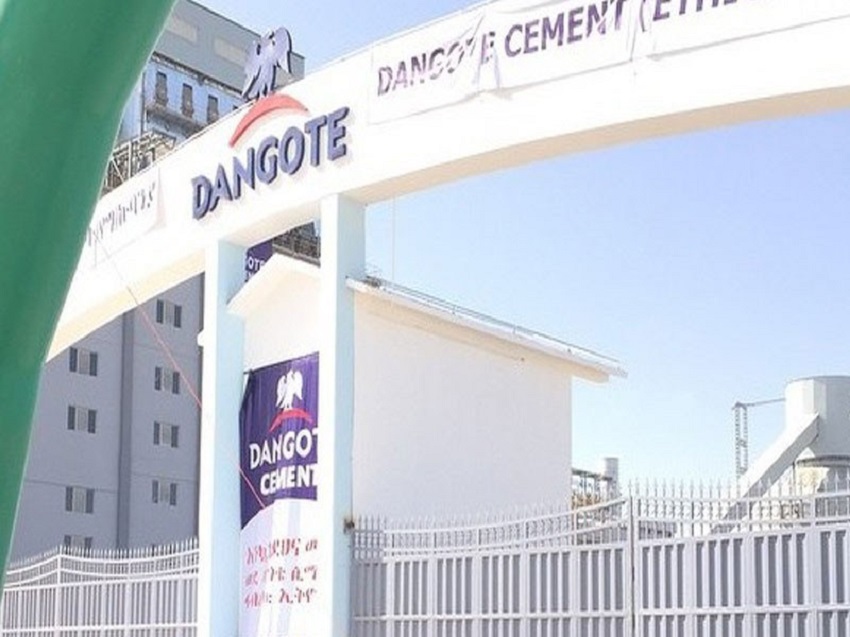
Dangote Cement shares

For the second straight year, a Nigerian company, Dangote Group, has emerged as the most admired African brand, of African continent origin, by consumers ahead of the telecommunication giant, MTN in a survey of 100 Africa best brands announced in Johannesburg at the weekend.

According to the South Africa based Brand Africa in a survey carried out in collaboration with the Johannesburg Stock Exchange (JSE), the seventh edition which was released at the weekend, of 15,000 brands mentioned, Dangote ranked first brand when consumers are prompted to recall the most admired African brand.

In the top 100 list, the United State sports and fitness mega brand, Nike, a non-African brand retains the overall number one brand in Africa spontaneously recalled by consumers.

South African telecoms brand, MTN, is the number one African brand spontaneously recalled brand, while surging Ethiopian brand Anbessa Shoes, at number two, swopped positions with Nigerian conglomerate, Dangote, which is the number three most admired brand of African of origin.

However, when consumers are prompted to recall the most admired African brand, Dangote retains the number one position. Just last year Dangote brand was named the most valuable brand among the top 50 brands in Nigeria for 2018 by Brand Nigeria.

Further analysis of the ranking indicates that Overall, the 2018/19 Brand Africa 100 list, which is calculated from 15,000 brand mentions illustrates a very diversified range of brands in Africa and shows year on year consistency with 80 per cent of the top 100 brands having been in the top 100 Most Admired Brands in previous years.

Overall, African brands faltered to an all-time low 14 percent share of the top 100 most admired brands in Africa. However, MTN (South Africa), Dangote (Nigeria) and Safaricom (Kenya) are the most admired highest listed brands on sub-Sahara’s leading bourses, the JSE, Nigeria Stock Exchange and Nairobi Securities Exchange respectively.

Faced with a relentless focus on the African opportunity and investment by non-African brands, Africa’s share of the most admired brands has been rapidly declining over the past three years from a high of 25 percent in 2013/14 to lows of 16 percent in 2015/16, 16 percent in 2016/17 and 17 percent in 2017/18.

“Today at the JSE, at an event with industry leaders from across Africa, hosted by the JSE in partnership with Geopoll, Kantar and Brand Leadership, Brand Africa announced the Top 100 brands in Africa in their 7th annual Brand Africa 100:  Africa’s Best Brands. Nike, MTN, Dangote, Ecobank and BBC were recognised as the most admired brands on the continent,” a statement from the Brand Africa read.

“Non-African brands have entrenched their positions in Africa, with North American brands, dominated exclusively by United States of America brands (28%), leading with a growth of 17% versus 2017/8.  The strength of USA brands was boosted by the entry and/or re-entry of stalwart American brands such as number 71 Levi’s, number 91 Chevrolet and Pepsi’s Miranda at number 80, who are all among the 20 new entrants.  European brands (41%) are up by 2,5% and Asian brands (17%) down by 10%, round up the continental spread of brands Africans admire.

The Brand Africa 100 rankings are based on a survey among a representative sample of respondents 18 years and older, conducted in 25 countries across Africa.  Covering all African economic regions, collectively these countries account for an estimated 80% of the continent’s population and 75% of the GDP.

In a reconfigured category listing where technology and electronics and telecoms categories were separated and new categories of luxury and personal care were introduced or re-introduced, the Top 100 is dominated by technology and electronic brands (18%) and telecoms (7%), consumer (non-cyclical) (16%), auto manufacturers (11%), luxury (10%), automobile (11%), apparel (8%), retail (7%), food (4%), non-alcoholic beverages (5%), personal care (4%), sports & fitness (4%) and media (1%) categories are the top categories.

Thebe Ikalafeng, Founder and Chairman of Brand Africa and Brand Leadership said of the outcome of survey “It is disappointing that despite its vibrant entrepreneurial environment, Africa is not creating new competitive brands to meet the needs of its growing consumer market.

“These rankings are an important metric of and challenge for creating home-grown competitive African brands that will transform the African promise and change its narrative and image as a competitive continent.  African brands have an important role in helping to build the African brand”, he added.

Brand Africa 100 was developed by pan-African branding and reputation advisory firm, Brand Leadership Group supported by GeoPoll, the leader in mobile-based market research throughout Africa, and strategic analysis and insights by Kantar TNS, the world’s leading data, insights and consulting company.

It is an inter-generational movement to inspire a great Africa through promoting a positive image of Africa, celebrating its diversity and driving its competitiveness. It is a brand-led movement which recognizes that in the 21st century, brands are an asset and a vector of image, reputation and competitiveness of nations. Brand Africa seeks to inspire a brand-led African renaissance.

Its ranking of Africa’s 100 Best Brands is an initiative to survey, rank and recognize the best brands in Africa in recognition of the growth of African brands, which were beginning to challenge global brands in Africa or lead global brands in new categories such as telecommunications. The aim of Brand Africa is to identify, acknowledge and promote African and global brands that are catalysts for Africa’s growth, reputation and value.

In his reaction, Group Chief Corporate Communication Officer of the Dangote Group, Mr Anthony Chiejina, said the management was not unexpected of the ranking because the company has a long-standing reputation for quality, relevance compliance and social stewardship. “Our mission and vision engage and inspire us to by extension connects us to with both our internal and external stakeholders.

“We fervently believe that only Africans can develop Africa, and this gives us stronger sense of relevance in all the countries where we have our operations. we are touching lives by providing their basic needs and empowering Africans more than ever before creating jobs reducing capital flight, helping government conserve foreign exchange drain by supporting different industrial infrastructural projects of African government.”

Mr Chiejina stated further that Dangote Cement has been producing high quality and affordable cement, reducing poverty, engaging in unprecedented philanthropy and above all respecting the laws of the land where we operate.

“All these are our credo and we do not compromise it; it is our way. And the ranking is just an acknowledgement of all these by our stakeholders, we keep our brand promise and stay authentic,” he concluded.


Dipo Olowookere is a journalist based in Nigeria that has passion for reporting business news stories. At his leisure time, he watches football and supports 3SC of Ibadan. Mr Olowookere can be reached via [email protected]

Click to comment

Leave a Reply

Your email address will not be published. Required fields are marked *

Economy

NASD Exchange Falls 0.22% After Investors Lose N4.8bn

Published

on

NASD securities exchange

By Adedapo Adesanya

The NASD Over-the-Counter (OTC) Securities Exchange weakened by 0.22 per cent on Tuesday, April 28, with the market capitalisation down by N4.8 billion to N2.420 trillion from N2.425 trillion, and the NASD Unlisted Security Index (NSI) down by 9.01 points to 4,044.96 points from 4,053.97 points.

During the session, the price of Central Securities Clearing System (CSCS) Plc went down by N1.82 to N767.05 per share from N78.87 per share, while FrieslandCampina Wamco Nigeria Plc appreciated by N1.90 to N100.00 per unit from N98.10 per unit.

According to data, the value of trades increased by 265.7 per cent to N27.1 million from N7.4 million units, and the volume of transactions surged by 305.2 per cent to 1.3 million units from 319,831 units, while the number of deals decreased by 6.9 per cent to 27 deals from 29 deals.

Great Nigeria Insurance (GNI) Plc remained the most traded stock by value on a year-to-date basis, with the sale of 3.4 billion units valued at N8.4 billion, followed by CSCS Plc with 59.8 million units exchanged for N4.0 billion, and Okitipupa Plc with 27.8 million units traded for N1.9 billion.

GNI Plc also finished as the most traded stock by volume on a year-to-date basis, with a turnover of 3.4 billion units worth N8.4 billion, trailed by Resourcery Plc with 1.1 billion units transacted for N415.7 million, and Infrastructure Guarantee Credit Plc with 400 million units sold for N1.2 billion.

Continue Reading

Economy

Naira Crashes to N1,380/$ at Official Market, N1,390/$1 at Black Market

Published

on

forex black market

By Adedapo Adesanya

Pressure is beginning to mount on the Nigerian Naira in the different segments of the foreign exchange (FX) market despite an oil windfall triggered by the Middle East crisis.

On Monday, April 27, the domestic currency further weakened against the United States Dollar in the Nigerian Autonomous Foreign Exchange Market (NAFEX) by N16.47 or 1.2 per cent to N1,380.71/$1 from the previous day’s N1,364.24/$1.

It was not different against the Pound Sterling in the same market window, as it lost N16.04 to trade at N1,863.76/£1 versus Monday’s closing rate of N1,847.72/£1, and against the Euro, it slipped by N12.72 to close at N1,615.01/€1 versus N1,602.29/€1.

The Naira also depreciated against the Dollar at the black market yesterday by N5 to quote at N1,390/$1 compared with the previous price of N1,385, and at the GTBank forex counter, it further crashed by N9 to settle at N1,379/$1 compared with the preceding session’s N1,370/$1.

The continued decline of the Naira comes as traders increasingly seek other safe-haven currencies amid continued global disruptions.

The benefit awash in the global market is making foreign portfolio investors stay short in Nigerian markets. Despite this, the daily FX publication released showed that interbank turnover rose to $98.829 million across 78 deals, up from $76.65 million.

Meanwhile, the cryptocurrency market remained cautious, with Bitcoin (BTC) trading at $77,216.66 despite surging oil prices and geopolitical tensions over a potential extended US naval blockade of the Strait of Hormuz.

Analysts say the supply overhang has finally dried up, and the sellers who were spooked by macro shifts or quantum fears have already exited, leaving the market much thinner on the sell-side.

Investors will await decisions made by central banks this week. The US Federal Reserve will announce its rate decision later on Wednesday, while the European Central Bank (ECB) follows on Thursday.

Ethereum (ETH) gained 1.5 per cent to trade at $2,324.59, Dogecoin (DOGE) chalked up 1.4 per cent to sell for $0.1016, Solana (SOL) appreciated by 0.6 per cent to $84.85, Cardano (ADA) grew by 0.5 per cent to $0.2483, and Binance Coin (BNB) advanced by 0.2 per cent to $627.15.

However, TRON (TRX) depreciated by 0.6 per cent to $0.3224, and Ripple (XRP) lost 0.03 per cent to sell at $1.39, while the US Dollar Tether (USDT) and the US Dollar Coin (USDC) were unchanged at $1.00 each.

Continue Reading

Economy

Oil up 3% as Hormuz Disruption Outweighs UAE OPEC Exit

Published

on

Oil Licensing Round

By Adedapo Adesanya

Oil was up by nearly 3 per cent on Tuesday as persistent worries about supply constraints from the closed Strait of Hormuz continued, with Brent futures for June rising by $3.03 or 2.8 per cent to $111.26 a barrel, and the US West Texas Intermediate (WTI) crude futures growing by $3.56 or 3.7 per cent to $99.93 a barrel.

An earlier round of negotiations between the United States and Iran collapsed last week after face-to-face talks failed.

Ship-tracking data showed significant disruptions in the region, with six Iranian oil tankers forced to turn back due to the US blockade, but some traffic is still moving.

Prices trimmed some of the advances after the United Arab Emirates (UAE), the fourth-largest producer in the Organisation of the Petroleum Exporting Countries (OPEC), said on Tuesday it would exit the group on this Friday, May 1, 2026.

This dealt a blow to the oil-exporting group and its de facto leader, Saudi Arabia.

The UAE could quickly ⁠add between 1 million and 1.5 million barrels per day of output. However, with the Strait of Hormuz effectively closed, analysts said that there’s nowhere for that supply to go.

The UAE joined OPEC in 1967, but tension with Saudi Arabia over production quotas has been building for years.

Under the OPEC+ deal, the country has been held to roughly 3 million barrels per day while sitting on capacity above 4 million. It has been pushing toward 5 million barrels per day by 2027, and that target is hard to achieve with quotas built around someone else’s view of the market.

The war in Yemen broke whatever was left of diplomatic patience.

President Donald Trump said he was unhappy with the latest Iranian proposal to end the war. The proposal would avoid addressing the nuclear programme until hostilities cease and Gulf shipping disputes are resolved.

The Idemitsu Maru, ‌a Panama-flagged ⁠tanker carrying 2 million barrels of Saudi oil, and an LNG tanker managed by the Abu Dhabi National Oil Company (ADNOC) crossed the Strait on Tuesday, shipping data showed.

Vortexa data showed that the amount of crude oil held around the world on tankers that have been stationary for at least seven days rose to 153.11 million barrels as of April 24.

The American Petroleum Institute (API) estimated that crude oil inventories in the United States fell by 1.79 million barrels in the week ending April 24. The official data from the US Energy Information Administration (EIA) will be released later on Wednesday.

Continue Reading

Trending