

Economy
DHL Express Rewards 4000 Employees

By Modupe Gbadeyanka
Nearly 4,000 DHL Express employees in Sub-Saharan Africa have been recognized for their contributions to success of the company.
The workers were honoured at the annual DHL Employee Appreciation Week, where special meals, giveaways, fun team activities and long service awards were doled out to them.
Vice President, Human Resources, DHL Express Sub Saharan Africa, Mr Paul Clegg, said the rewards were “just few of the ways we are celebrating, recognizing and rewarding our employees across the continent.”
“While the focus is on fun, the initiative is meant to recognize and reward our teams across Africa who make it possible for us to deliver excellence to our customers.
“One of Deutsche Post DHL Group’s three bottom lines is to be the ‘Employer of Choice’, so our efforts are focused on creating a great place to work. We believe how we think influences what we say and do and the only way to maintain our ‘Insanely Customer Centric Culture’ is if we have highly motivated, well-trained, emotionally-engaged and happy employees,” he added.
In Deloitte’s, 2017 Global Human Capital Trends, it is shown that while employee engagement is increasingly being recognized across the globe as an integral component to business success, relatively few companies have begun to build programs, strategies and teams that understand and continuously improve employee engagement.
On top of recommending taking a proactive role in understanding and improving employee experience in the company, especially those that operate in competitive global economies—like DHL Express—the study also suggests that pushing out these engagement programs and strategies is becoming increasingly vital to business bottom-lines. This is because when companies succeed in attracting and retaining skilled employees, these employees will in turn provide excellent customer experiences.
“It’s easy to say that employees are at the heart of your business – but it still comes down to strategic planning and program implementation. Companies should have a robust employee engagement program in order to get the best out of their teams,” Mr Clegg adds.
“At DHL Express, we have a full scope of supporting programs, such as Certified International Specialist (CIS), a cultural change program that all employees across sub-Saharan Africa go through, along with regular reinforcement training and our Certified International Manager program, which focuses on ensuring that leaders have the right leadership and social skills to support and develop their teams. We also have an annual, independent Employee Opinion Survey and regular recognition schemes, such as Employee Appreciation Week and Employee of the Quarter/ Year. I believe a large part of our success lies in the fact that our leaders are measured on employee engagement as part of their performance criteria – this ensures that it remains top of mind.”
“While recognition of employees remains a key element, it is increasingly important to train and retain talent, especially in emerging markets; employees need to be continually engaged and developed in order to thrive. The transition from ‘Africa Rising’ to ‘Africa Thriving’ can only be achieved through the retention, recognition and development of talent on this continent,” concludes Mr Clegg.
DHL Express Sub Sahara Africa’s “Top Employer Africa 2017” certification for the third year running also reaffirms the company’s commitment to providing exceptional employee conditions on the continent.




By Aduragbemi Omiyale
The series 1 of the N10 billion Commercial Paper (CP) issuance of Legend Internet Plc recorded an oversubscription of 19.7 per cent from investors.
This reaffirmed the strong confidence in the company’s financial stability and growth trajectory.
The exercise is a critical component of Legend Internet’s N10 billion multi-layered financing programme, designed to support its medium- to long-term growth.
Proceeds are expected to be used for broadband infrastructure expansion to deepen nationwide penetration, optimise the organisation’s working capital for operational efficiency, strategic acquisitions that will strengthen its market position and accelerate service innovation.
The telecommunications firm sees the acceptance of the debt instruments as a response to its performance, credit profile, and disciplined operational structure, noting it also reflects continued trust in its ability to execute on its strategic vision for nationwide digital infrastructure expansion.
“The strong investor participation in our Series 1 Commercial Paper issuance is both encouraging and validating. It demonstrates the market’s belief in our financial integrity, operational strength, and long-term vision for digital infrastructure growth. This support fuels our commitment to building a more connected, competitive, and digitally enabled Nigeria.
“This milestone is not just a financing event; it is a strategic enabler of our expansion plans, working capital needs, and future acquisitions. We extend our sincere appreciation to our investors, advisers, and market partners whose confidence continues to propel Legend Internet forward,” the chief executive of Legend Internet, Ms Aisha Abdulaziz, commented.
Also commenting, the Chief Financial Officer of Legend Internet, Mr Chris Pitan, said, “This achievement is powered by our disciplined financing framework, which enables us to scale sustainably, innovate continuously, and consistently meet the evolving needs of our customers.
“We remain committed to building a future where every connection drives opportunity, productivity, and growth for communities across Nigeria.”

By Adedapo Adesanya
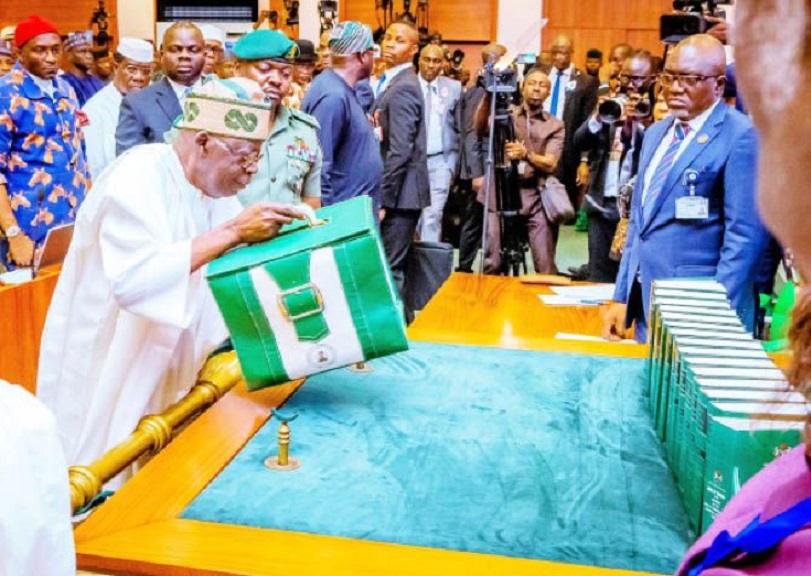
President Bola Tinubu will, on Friday, present the 2026 Appropriation Bill to a joint session of the National Assembly.
The presentation, scheduled for 2:00 pm, was conveyed in a notice issued on Wednesday by the Office of the Clerk to the National Assembly.
According to the notice, all accredited persons are required to be at their duty posts by 11:00 am on the day of the presentation, as access into the National Assembly Complex will be restricted thereafter for security reasons.
The notice, signed by the Secretary, Human Resources and Staff Development, Mr Essien Eyo Essien, on behalf of the Clerk to the National Assembly, urged all concerned to ensure strict compliance with the arrangements ahead of the President’s budget presentation.
The 2026 budget is projected at N54.4 trillion, according to the approved 2026–2028 Medium-Term Expenditure Framework (MTEF) and Fiscal Strategy Paper (FSP).
Meanwhile, President Tinubu has asked the National Assembly to repeal and re-enact the 2024 appropriation act in separate letters to the Senate and the House of Representatives on Wednesday and read during plenary by the presiding officers.
The bill was titled Appropriation (Repeal and Re-enactment Bill 2) 2024, involving a total proposed expenditure of N43.56 trillion.
In a letter dated December 16, 2025, the President said the bill seeks authorisation for the issuance of a total sum of N43.56 trillion from the Consolidated Revenue Fund of the Federation for the year ending December 31, 2025.
A breakdown of the proposed expenditure shows N1.74 trillion for statutory transfers, N8.27 trillion for debt service, N11.27 trillion for recurrent (non-debt) expenditure, and N22.28 trillion for capital expenditure and development fund contributions.
The President said the proposed legislation is aimed at ending the practice of running multiple budgets concurrently, while ensuring reasonable – indeed unprecedentedly high – capital performance rates on the 2024 and 2025 capital budgets.
He explained that the bill also provides a transparent and constitutionally grounded framework for consolidating and appropriating critical and time-sensitive expenditures undertaken in response to emergency situations, national security concerns, and other urgent needs.
President Tinubu added that the bill strengthens fiscal discipline and accountability by mandating that funds be released strictly for purposes approved by the National Assembly, restricting virement without prior legislative approval, and setting conditions for corrigenda in cases of genuine implementation errors.
The bill, which passed first and second reading in the House of Representatives, has been referred to the Committee on Appropriations for further legislative action.

By Adedapo Adesanya
The federal government has imposed an immediate nationwide ban on the export of wood and allied products, revoking all previously issued licenses and permits to exporters.
The announcement was made on Wednesday by the Minister of Environment, Mr Balarabe Lawal, during the 18th meeting of the National Council on Environment in Katsina State.
Mr Lawal said the directive, outlined in the Presidential Executive Order titled Presidential Executive Order on the Prohibition of Exportation of Wood and Allied Products, 2025, became necessary to curb illegal logging and deforestation across the country.
“Nigeria’s forests are central to environmental sustainability, providing clean air and water, supporting livelihoods, conserving biodiversity, and mitigating the effects of climate change,” the Minister said, warning that the continued exportation of wood threatens these benefits and the long-term health of the environment.
The order, published in the Extraordinary Federal Republic of Nigeria Official Gazette No. 180, Vol. 112 of 16 October 2025, relies on Sections 17(2) and 20 of the 1999 Constitution (as amended), which empower the state to protect the environment, forests, and wildlife and prevent the exploitation of natural resources for private gain.
Under the new policy, security agencies and relevant ministries are expected to enforce a total clampdown on illegal logging activities nationwide.
On his part, the Katsina State Deputy Governor, Mr Faruk Lawal Jobe highlighted the state’s history of pioneering socio-economic policies that have influenced national policy. He emphasized the importance of collaboration in addressing environmental challenges across the country.
“Environmental sustainability is critical to achieving growth and improving the quality of life of our people,” he said. “Our administration has prioritised initiatives aimed at combating desertification and promoting afforestation.”
The ban reflects the government’s commitment to safeguarding Nigeria’s shrinking forest cover and addressing climate change, while ensuring sustainable use of natural resources for future generations.








-
 Feature/OPED6 years ago
Davos was Different this year
-
Travel/Tourism9 years ago
Lagos Seals Western Lodge Hotel In Ikorodu
-

 Showbiz3 years ago
Estranged Lover Releases Videos of Empress Njamah Bathing
-
 Banking7 years ago
Sort Codes of GTBank Branches in Nigeria
-

 Economy3 years ago
Subsidy Removal: CNG at N130 Per Litre Cheaper Than Petrol—IPMAN
-

 Banking3 years ago
First Bank Announces Planned Downtime
-

 Banking3 years ago
Sort Codes of UBA Branches in Nigeria
-

 Sports3 years ago
Highest Paid Nigerian Footballer – How Much Do Nigerian Footballers Earn