Connect with us

Economy

Drop in Food Prices to Ease Inflation in July to 11.19%—Meristem

Published

on

inflation rate Nigeria

By Dipo Olowookere

There are strong indications that headline inflation will slow down by 0.03 percent year-on-year to 11.19 percent for July 2019, Meristem Research has said.

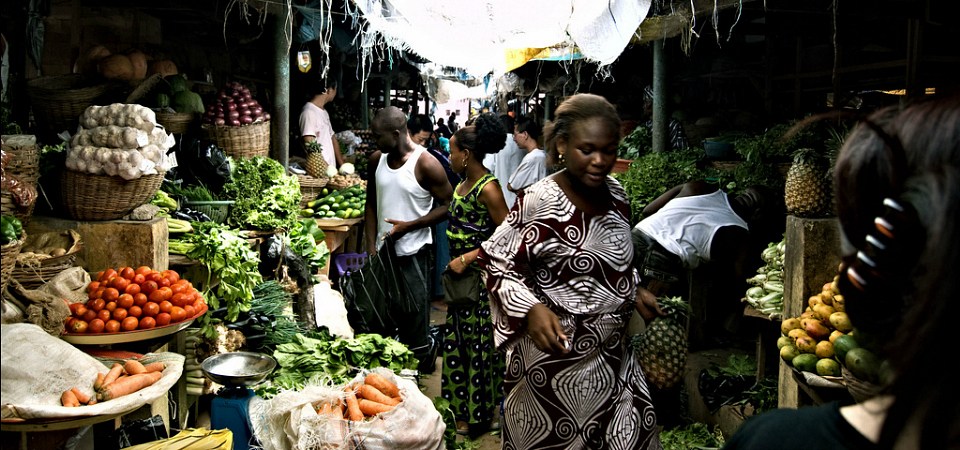
This is because the harvests of essential agricultural commodities are expected to reduce domestic inflationary pressures from crops; owing to increased volume.

Same as June 2019, data from countrywide agro-commodity surveys reflect a decline in food prices just as energy prices stayed flat in July as supplies continue to remain stable, dispelling any form of price increases due to scarcity.

In addition, data from the Central Bank of Nigeria’s PMI survey also reflected moderation in prices as survey respondents reported slower expansion of 59.50 and 52.20 points (vs. 62.50 points and 52.40 points) in the input and output prices respectively during July.

According to Meristem Research, overall, inflationary pressures across board remain tempered, building a substantial case for a further slowdown in growth

On the global scene, economic metrics across developed and emerging markets continue to signal a slowdown in economic activities.

It said the lingering trade war between the United States and China, geopolitical challenges in the Middle East and structural deficiencies in the Eurozone remain primary headwinds facing the world economy.

In response, the monetary authorities have taken an accommodative stance in support of economic growth, like the US, South Korea, Australia and South Africa cutting rates in July while China and the EU continued to maintain the stimulus environment to drive growth and induce inflation.

In comparison with prices in June, oil prices inched up by 1.89 percent while International food prices as measured by the FAO Food Price Index (FFPI) declined by 1.1 percent, keeping the import price paid by the country in check.

Consequently, the effect of inflationary pressures from the external environment remains tempered, increasing the probabilities of continued moderation in core inflation.


Dipo Olowookere is a journalist based in Nigeria that has passion for reporting business news stories. At his leisure time, he watches football and supports 3SC of Ibadan. Mr Olowookere can be reached via [email protected]

Click to comment

Leave a Reply

Your email address will not be published. Required fields are marked *

Economy

Nigeria Records Five-Year Peak in Oil Output at 1.71mbpd

Published

on

crude oil output

By Adedapo Adesanya

Nigeria’s oil production recorded a five-year high of 1.71 million barrels per day, marking a significant rebound for the country’s upstream sector amid renewed efforts to restore output and improve operational stability.

The latest figure, released by Nigerian National Petroleum Company (NNPC) Limited, covers the period from April 2025 to April 2026 and underscores a steady recovery in crude production after years of disruptions caused by theft, pipeline vandalism and underinvestment.

According to the chief executive of the national oil company, Mr Bayo Ojulari, the performance reflects measurable progress across the company’s upstream, gas and downstream operations, with production gains supported by improved asset management and stronger field performance.

Within its exploration and production business, NNPC recorded a peak daily output of 365,000 barrels in December 2025, the highest level ever achieved by its upstream subsidiary. The company also advanced key contractual reforms, including revised production-sharing terms for deepwater assets aimed at unlocking additional gas reserves.

Nigeria’s gas ambitions are also gaining traction. Gas supply rose to 7.5 billion standard cubic feet per day in 2025, driven by major infrastructure milestones such as the River Niger crossing on the Ajaokuta-Kaduna-Kano pipeline and the commissioning of the Assa North-Ohaji South gas processing plant.

These investments are beginning to strengthen domestic gas utilisation. New supply agreements with major industrial consumers, including Dangote Refinery, Dangote Fertiliser and Dangote Cement, are expected to deepen gas penetration across manufacturing and power generation.

On the downstream front, NNPC has continued crude supply to Dangote Refinery under the crude-for-naira arrangement, a policy designed to reduce foreign exchange demand, support local refining and improve fuel market stability. The company also reaffirmed its 7.25 per cent equity stake in the refinery as part of its long-term energy security strategy.

Financially, the national oil company said it has resumed full monthly remittances to the Federation Account since July 2025. It has also reinstated regular performance reporting and held its first earnings call, moves widely seen as part of a broader push towards greater transparency and corporate accountability.

Despite the progress, challenges remain. Crude theft, pipeline outages and infrastructure bottlenecks continue to threaten production stability. Sustaining this recovery will depend on stronger security, reliable infrastructure and policy consistency as Nigeria seeks to maximise the benefits of rising domestic refining capacity.

Continue Reading

Economy

UAE to Leave OPEC May 1

Published

on

Nigeria OPEC

By Adedapo Adesanya

The United ‌Arab Emirates has announced its decision to quit the Organisation of the Petroleum Exporting Countries (OPEC) to focus on national interests.

This dealt ⁠a heavy ⁠blow to the oil-exporting group at a time when the US-Israel war on Iran had caused ⁠a historic energy shock and rattled the global economy.

The move, which will take effect on May 1, 2026, reflects “the UAE’s long-term strategic and economic vision and evolving energy profile”, a statement carried by state media said on Tuesday.

“During our time in the organisation, we made significant contributions and even greater sacrifices for the benefit of all,” it added. “However, the time has come to focus our efforts on what our national interest dictates.”

The loss of the UAE, a longstanding OPEC member, could create disarray and weaken the oil cartel, which has usually sought to show a united ⁠front despite internal disagreements over a range of issues from geopolitics to production quotas.

UAE Energy Minister Suhail Mohamed al-Mazrouei said the decision was taken after a careful look at the regional power’s energy strategies.

“This is a policy decision. It has been done after a careful look at current and future policies related to the level of production,” the minister said.

OPEC’s Gulf producers have already been struggling to ship exports through the Strait of Hormuz, a ‌narrow chokepoint between Iran and Oman through which a fifth of the world’s crude oil and liquefied natural gas supplies normally pass, because of threats and attacks against vessels during the war.

The UAE had been a member of OPEC first through its emirate of Abu Dhabi in 1967 and later when it became its own country in 1971.

The oil cartel, based in Vienna, has seen some of its market power wane as the US has increased its production of crude oil in recent years.

Additionally, the UAE and Saudi Arabia have increasingly competed over economic issues and regional politics, particularly in the Red Sea area.

The two countries had joined a coalition to fight against Yemen’s Iran-backed Houthis in 2015. However, that coalition broke down into recriminations in late December when Saudi Arabia bombed what it described as a weapons shipment bound for Yemeni separatists backed by the UAE.

Continue Reading

Economy

NASD OTC Exchange Inches Up 0.03% as CSCS Outshines Four Price Decliners

Published

on

Nigerian OTC securities exchange

By Adedapo Adesanya

Central Securities Clearing System (CSCS) Plc bested four price decliners on the NASD Over-the-Counter (OTC) Securities Exchange on Monday, April 27. The alternative stock market opened the week bullish during the session with a 0.03 per cent uptick.

According to data, the security depository company added N2.61 to its share price to close at N76.26 per unit compared with the preceding session’s N78.87 per unit.

As a result, the market capitalisation of the platform increased by N820 million to N2.425 trillion from N2.424 trillion, and the NASD Unlisted Security Index (NSI) gained 1.38 points to finish at 4,053.97 points compared with the 4,052.58 points it ended last Friday.

The four price losers were led by NASD Plc, which slumped by N3.80 to sell at N34.70 per share versus N38.50 per share. FrieslandCampina Wamco Nigeria Plc fell by N1.45 to N98.10 per unit from N99.55 per unit, Food Concepts Plc slid by 27 Kobo to N2.43 per share from N2.70 per share, and Geo-Fluids Plc dipped by 9 Kobo to N2.91 per unit from N3.00 per unit.

The value of securities transacted by market participants went down by 82.0 per cent to N7.4 million from N41.3 million units, the volume of securities declined by 28.5 per cent to 319,831 units from 447,403 units, and the number of deals dropped by 34.1 per cent to 29 deals from 44 deals.

Great Nigeria Insurance (GNI) Plc was the most active stock by value on a year-to-date basis with 3.4 billion units worth N8.4 billion, followed by CSCS Plc with 59.6 million units sold for N4.0 billion, and Okitipupa Plc with 27.8 million units exchanged for N1.9 billion.

Also, GNI Plc was the most traded stock by volume on a year-to-date basis with 3.4 billion units valued at N8.4 billion, followed by Resourcery Plc with 1.1 billion units traded for N415.7 million, and Infrastructure Guarantee Credit Plc with a turnover of 400 million units worth N1.2 billion.

Continue Reading

Trending