Economy
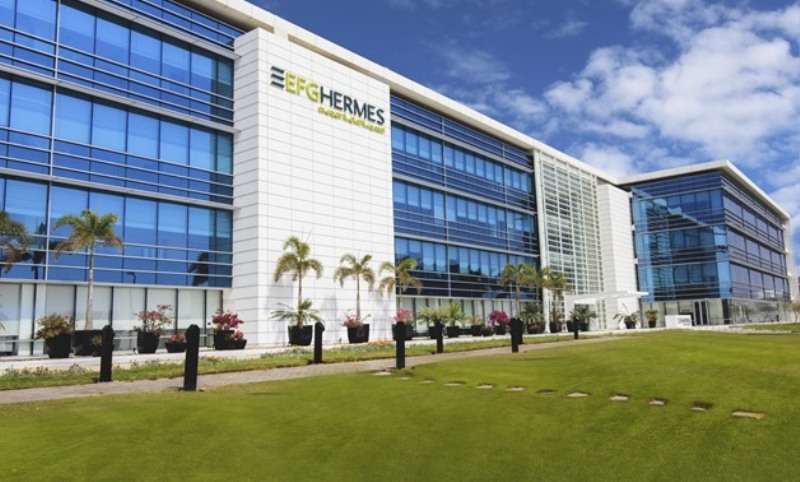
EFG Hermes Emerges Most Active Stockbroker for March
By Dipo Olowookere
The role of stockbrokers in the capital market can never be pushed aside because they are a very critical part of the ecosystem.
In fact, investors, both retail and institutional cannot transact securities available at the market without going through them. They are just like the part of the Bible which says no one gets to the Father except through Me.
However, the choice of stockbrokers by investors at the equity market is swayed by different factors. Some traders prefer those who offer lower commission, while others like stockbrokers who are customer friendly.
Every brokerage firm wants to be the most preferred, pulling the highest volume and value of transactions and due to this, many try to position themselves before investors to be able to maintain leadership position in the business.
Data gathered by Business Post showed that in March 2020, EFG Hermes Nigeria Limited emerged the most active stockbroker both by volume and value.
During the period under consideration, the brokerage company traded a total of 2.693 billion units of shares, accounting for 12.33 percent of the market’s turnover for the month.
Rencap Securities, which occupied the second position, managed 1.468 billion units, accounting for 6.72 percent, while Stanbic IBTC Stockbrokers, which was the most active for February 2020, dropped to the third place in March after transacting 1.409 billion stocks, accounting for 6.45 percent.
Cardinalstone Securities traded 1.232 billion securities (5.64 percent), CSL Stockbrokers Ltd traded 907.8 million stocks (4.16 percent), Morgan Capital exchanged 767.3 million units (3.51 percent), Quantum Zenith Securities and Investment Ltd traded 729.5 million shares (3.34 percent), ARM Securities transacted 665.3 million equities (3.05 percent), FCSL Asset Management Company exchanged 662.6 million shares (3.03 percent), while Coronation Securities Ltd transacted 644.9 million stocks (2.95 percent).
The above 10 brokerage firms pulled a total of 11.180 billion units of stocks traded at the Nigerian Stock Exchange (NSE) last month, resulting in 51.18 percent of the total volume.
By value, as earlier stated, EFG Hermes Nigeria Ltd was the most active stockbroking firm last month, pulling stocks worth N39.651 billion in the month, accounting for 16.30 percent of the total value of transactions for the month.
Stanbic IBTC Stockbrokers, which came second, traded shares worth N30.163 billion to account for 12.40 percent of the overall transaction value, while Rencap Securities transacted stocks valued at N20.721 billion to account for 8.52 percent of the trades.
CSL Stockbrokers exchanges equities worth N12.996 billion (5.34 percent), Tellmer Capital Ltd transacted N11.298 billion shares (4.65 percent), ARM exchanged N10.155 billion stocks (4.18 percent), Cardinalstone Securities transacted N9.187 billion equities (3.78 percent), Cordros Securities Ltd traded N7.520 billion shares (3.09 percent), Chapel Hill Denham Securities transacted N6.723 billion stocks (2.76 percent), while Quantum Zenith Securities and Investment Ltd traded N6.463 billion equities (2.66 percent).
In all, these 10 stockbroking firms traded shares worth N154.9 billion in the month under review, contributing 63.68 percent to the total value of transactions recorded in March.
Economy
NASD OTC Exchange Inches Up 0.03% as CSCS Outshines Four Price Decliners
By Adedapo Adesanya
Central Securities Clearing System (CSCS) Plc bested four price decliners on the NASD Over-the-Counter (OTC) Securities Exchange on Monday, April 27. The alternative stock market opened the week bullish during the session with a 0.03 per cent uptick.
According to data, the security depository company added N2.61 to its share price to close at N76.26 per unit compared with the preceding session’s N78.87 per unit.
As a result, the market capitalisation of the platform increased by N820 million to N2.425 trillion from N2.424 trillion, and the NASD Unlisted Security Index (NSI) gained 1.38 points to finish at 4,053.97 points compared with the 4,052.58 points it ended last Friday.
The four price losers were led by NASD Plc, which slumped by N3.80 to sell at N34.70 per share versus N38.50 per share. FrieslandCampina Wamco Nigeria Plc fell by N1.45 to N98.10 per unit from N99.55 per unit, Food Concepts Plc slid by 27 Kobo to N2.43 per share from N2.70 per share, and Geo-Fluids Plc dipped by 9 Kobo to N2.91 per unit from N3.00 per unit.
The value of securities transacted by market participants went down by 82.0 per cent to N7.4 million from N41.3 million units, the volume of securities declined by 28.5 per cent to 319,831 units from 447,403 units, and the number of deals dropped by 34.1 per cent to 29 deals from 44 deals.
Great Nigeria Insurance (GNI) Plc was the most active stock by value on a year-to-date basis with 3.4 billion units worth N8.4 billion, followed by CSCS Plc with 59.6 million units sold for N4.0 billion, and Okitipupa Plc with 27.8 million units exchanged for N1.9 billion.
Also, GNI Plc was the most traded stock by volume on a year-to-date basis with 3.4 billion units valued at N8.4 billion, followed by Resourcery Plc with 1.1 billion units traded for N415.7 million, and Infrastructure Guarantee Credit Plc with a turnover of 400 million units worth N1.2 billion.
Economy
Naira Opens Week Weaker at N1,364/$ at NAFEX After N5.80 Loss
By Adedapo Adesanya
The first trading day of the week in the currency market was bearish for the Naira in the Nigerian Autonomous Foreign Exchange Market (NAFEX) on Monday, April 27.
Yesterday, it lost N5.80 or 0.43 per cent against the United States Dollar to trade at N1,364.24/$1, in contrast to the N1,358.44/$1 it was traded last Friday.
In the same vein, the Nigerian currency depreciated against the Pound Sterling in the official market by N13.70 to close at N1,847.72/£1 versus the preceding session’s N1,834.02/£1, and slumped against the Euro by N11.56 to sell at N1,602.29/€1 versus N1,590.73/€1.
Also, the Nigerian Naira tumbled against the greenback during the trading day by N5 to quote at N1,385/$1 compared with the previous rate of N1,380/$1, and at the GTBank FX desk, it traded flat at N1,370/$1.
The poor performance of the domestic currency could be attributed to liquidity shortage at the official currency market on Monday, which came amid surging demand for international payments. At $76.50 million, interbank liquidity printed higher across 79 deals, up from the $43.572 million reported on Friday.
Nigeria’s gross external reserves declined to $48.45 billion amid a month-long decline in inflows, amid uncertainties in the global commodity market. The depletion of foreign reserves could be partly attributed to the Central Bank of Nigeria’s intervention in the FX market.
The market remains perturbed by persistent concerns over liquidity constraints, policy transparency, and weakening confidence in Nigeria’s FX market, while boosters, including oil prices, continue to look rocky due to stalled discussions and unclear ceasefire negotiations between the US and Iran.
A look at the cryptocurrency market, Bitcoin (BTC) has been rejected near $79,000 three times in eight sessions, leaving the level as the de facto ceiling of its current trading range even as major cryptocurrencies trade lower over the past day. It lost 0.9 per cent to sell at $77,003.61.
Analysts say that upcoming US Federal Reserve policy decisions and top tech firms’ earnings this week could provide the catalyst to push bitcoin decisively above $80,000.
The market also continued to weigh Iran’s interim deal proposal to reopen the Strait of Hormuz, which failed to advance over the weekend. The White House said US officials were discussing the latest Iranian proposal but maintained “red lines” on any deal to end the eight-week war.
Solana (SOL) dropped 1.8 per cent to $84.25, Ripple (XRP) went down by 1.6 per cent to $1.39, Ethereum (ETH) depreciated by 1.3 per cent to $2,290.00, Binance Coin (BNB) declined by 0.5 per cent to $625.18, and Cardano (ADA) fell by 0.2 per cent to $0.2480.
However, Dogecoin (DOGE) rose by 2.0 per cent to $0.1002, and TRON (TRX) appreciated by 0.2 per cent to $0.3242, while the US Dollar Tether (USDT) and the US Dollar Coin (USDC) remained unchanged at $1.00 apiece.
Economy
NASCON Targets Deeper Cost Optimisation, Accelerated Digital Transformation, Others
By Aduragbemi Omiyale
One of the leading salt makers in Nigeria, NASCON Allied Industries Plc, has set its eyes on some strategies aimed to deliver more value to shareholders.
The chief executive of the company, Mrs Aderemi Saka, said efforts are being made to surpass the performance of last year.
In the 2025 financial year, the organisation recorded a 27 per cent growth in revenue, while post-tax profit grew by over 100 per cent to N33.5 billion, with the earnings per share (EPS) expanding by 115 per cent to N12.41 from N5.77 Kobo in the previous year.
The impressive performance, attributed to a clear strategic vision, disciplined execution and sustained focus on cost-saving initiatives across production, logistics and fleet management, resulted in a 200 per cent increase in dividend payout to shareholders to N6 per share.
Mrs Saka, at the firm’s Annual General Meeting (AGM) in Lagos, said the strategic priorities for the coming year include deeper cost optimisation, expanded market penetration, strengthened energy diversification and sustainability initiatives, as well as accelerated digital transformation and process automation.
Earlier, the chairman of NASCON, Mr Olakunle Alake, informed shareholders that the achievements for last year were due to improved operational efficiency, strict cost management and the dedication of the company’s workforce.
“The operating environment in 2025 was characterised by economic volatility, persistent inflation and structural changes across key sectors. Yet, NASCON remained resilient and strategically focused, delivering outstanding value to shareholders,” Mr Alake said.
He noted that operational sustainability remains a core pillar of the organisation’s strategy, stressing that during the year, NASCON introduced Compressed Natural Gas (CNG) trucks into its logistics fleet to reduce fuel costs and minimise exposure to diesel price volatility.
In addition, the company’s state-of-the-art salt refinery, its largest production facility, now runs entirely on natural gas, significantly boosting efficiency while reinforcing NASCON’s commitment to environmental sustainability.
A director in the organisation, Mrs Tonya Lawani, emphasised that the firm remains firmly committed to the principles that have driven its excellent performance, noting that NASCON approaches the new financial year from a position of strength, with further opportunities for growth and improvement.
Speaking on behalf of shareholders, Mr Faruk Umar expressed strong confidence in the company’s trajectory, citing NASCON’s rising share price, which recently crossed the N100 mark, and projecting further appreciation.
He commended the quality of the Board and management team, noting that strong leadership and recent executive appointments have positioned the entity to deliver even greater value to all stakeholders.
-
Feature/OPED6 years agoDavos was Different this year
-
Travel/Tourism10 years ago
Lagos Seals Western Lodge Hotel In Ikorodu
-
Showbiz3 years agoEstranged Lover Releases Videos of Empress Njamah Bathing
-
Banking8 years agoSort Codes of GTBank Branches in Nigeria
-
Economy3 years agoSubsidy Removal: CNG at N130 Per Litre Cheaper Than Petrol—IPMAN
-
Banking3 years agoSort Codes of UBA Branches in Nigeria
-
Banking3 years agoFirst Bank Announces Planned Downtime
-
Sports3 years agoHighest Paid Nigerian Footballer – How Much Do Nigerian Footballers Earn