Economy
Eko DisCo Wants Speacial Courts for Electricity Offenders
By Adedapo Adesanya
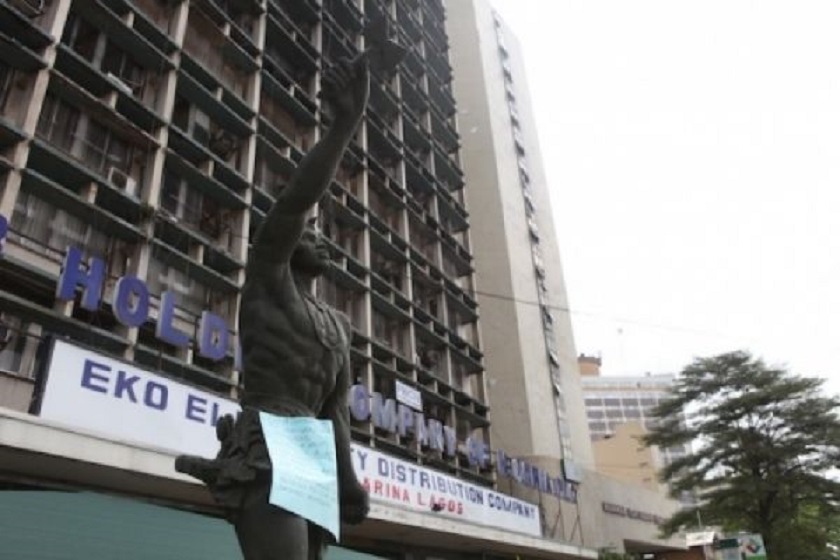
The Eko Electricity Distribution Company (EKEDC) has asked the National Assembly to consider legislation against energy theft and the establishment of electricity special courts to try offenders in the country.
The managing director of Eko DisCo, Mr Adeoye Fadeyibi, suggested this when the Senate Committee on Privatisation visited the company recently.
He also sought the intervention of the Senate for the recovery of N21 billion owed by some ministries, departments and agencies (MDAs).
Mr Fadeyibi explained that the MDAs were the biggest debtor to EKEDC to date, adding that various efforts had been made to recover the debt but they have been unsuccessful.
The managing director said the inability of the DisCo to recover its debts from customers was impeding its efforts to invest in infrastructure upgrades — to improve power supply to customers under its network.
According to him, “The biggest threat to our operations are vandals and customers who illegitimately connect to the lines causing revenue loss.
“Prosecution of these types of cases are often prolonged and difficult to conclude because of the technical expertise required by the bench.”
The chairman of the Senate committee on privatisation, Mr Theodore Orji, agreed that the debt by the MDAs was huge and also an impediment to its mandate of providing a quality supply of electricity to its customers.
Mr Orji said: “We believe that there is a need to repay this debt because EKEDC has thousands of Nigerians as employees and the company is providing a critical service which is electricity.
“We will also be looking at the issue of unauthorised persons carrying out electrical installation duties in the country because it is creating problems for the power sector.
“We want to commend the management of EKEDC for being resilient in the face of these challenges.”
Economy
Nigerian Exchange Further Down 0.35%
By Dipo Olowookere
The Nigerian Exchange (NGX) Limited further weakened by 0.35 per cent on Tuesday due to persistent selling pressure across the key sectors of the bourse.
During the session, the banking index shed 1.63 per cent, the consumer goods space lost 0.50 per cent, the insurance counter declined by 0.44 per cent, and the energy segment slipped by 0.04 per cent, while the industrial goods sector was flat.
Consequently, the All-Share Index (ASI) decreased by 874.00 points to 246,686.66 points from 247,560.66 points, and the market capitalisation went down by N479 billion to N158.219 trillion from N158.698 trillion.
Like the preceding day, investor sentiment was bearish after Customs Street ended with 18 price gainers and 35 price losers, representing a negative market breadth index.
PZ Cussons lost 10.00 per cent to trade at N88.20, CWG also shrank by 10.00 per cent to N21.60, ABC Transport crashed by 9.95 per cent to N6.88, Wema Bank slumped by 9.09 per cent to N30.00, and Sovereign Trust Insurance crumbled by 8.16 per cent to N2.70.
On the flip side, CWG gained 9.86 per cent to finish at N5.46, Trans-Nationwide Express chalked up 7.14 per cent to trade at N5.10, Neimeth appreciated by 6.80 per cent to N11.00, LivingTrust Mortgage Bank rose by 5.00 per cent to N4.20, and Abbey Mortgage Bank improved by 4.44 per cent to N7.05.
A look at the activity log showed that Access Holdings led with 113.1 million shares worth N2.7 billion, Zenith Bank transacted 38.1 million equities valued at N4.8 billion, Consolidated Hallmark exchanged 35.4 million stocks for N243.4 million, Neimeth sold 28.8 million shares worth N298.8 million, and Sterling Holdings traded 28.2 million equities valued at N220.1 million.
At the close of transactions, market participants bought and sold 718.8 million stocks for N29.3 billion in 71,683 deals compared with the 1.1 billion stocks worth N44.3 billion transacted in 91,880 deals a day earlier. This indicated that the trading volume, value, and number of deals depreciated by 34.66 per cent, 33.86 per cent, and 21.98 per cent, respectively.
Economy
Brent, WTI Climb 1% Amid Hopes of Iran-US War Truce
By Adedapo Adesanya
The prices of the two major crude oil grades climbed about 1 per cent on Tuesday as the market waited for news on the Iran war, with the Iranian government reviewing a proposed agreement with the United States to halt the conflict.
Brent futures rose $1.02 or 1.1 per cent to $96.00 a barrel, while the US West Texas Intermediate (WTI) crude increased by $1.60 or 1.7 per cent to $93.76 per barrel.
Iran is examining the proposed deal with the US to halt their war but has not communicated with the American government for a few days, according to Iranian media.
This is even as US President Donald Trump said on Monday that negotiations had been going on, adding there would be a deal in the coming days to extend a ceasefire agreed to in April and reopen the strait.
Meanwhile, US Secretary of State Marco Rubio told lawmakers yesterday that Iran has agreed to negotiate aspects of its nuclear programme that it previously refused to discuss, but said that was not a guarantee that negotiations would lead to a deal.
More than three months after the US and Israel launched strikes against Iran, the conflict is stuck in a stalemate, with a shaky ceasefire in place while the pivotal Strait of Hormuz remains largely shut to maritime traffic.
Iran has effectively halted most non-Iranian shipping in and out of the Gulf since the war began, choking off about a fifth of global oil and liquefied natural gas flows and driving prices up by 50 per cent or more. The US has also maintained a blockade on Iranian ports.
The European Union (EU) signalled willingness to support a durable agreement through maritime operations, economic incentives and conditional sanctions relief. This is contingent on a temporary peace agreement between the US and Iran.
The International Energy Agency (IEA) warned that global oil markets could enter a “red zone” in July and August as rapidly depleting crude inventories coincide with the onset of peak summer fuel demand.
According to the energy watchdog, global oil inventories fell by over 250 million barrels between March and May, with on-land commercial and strategic stockpiles draining at a record pace.
The closure of the Strait of Hormuz has knocked out roughly 10 per cent of global oil supply, making this the largest oil supply shock in history. Net cumulative losses from Gulf producers exceed 1 billion barrels, with approximately 14 million barrels per day shut in. Global supply is projected to fall by around 3.9 million barrels per day across 2026, with the IEA projecting that the global oil deficit will average 1.78 million barrels per day for the full year.
Economy
Lagos Illustrates Digital Expansion Plans With $22m FDI Commitments
By Adedapo Adesanya
The Lagos State Government has secured about $22 million in Foreign Direct Investment (FDI) commitments to expand digital infrastructure across the state, in a move aimed at strengthening its position as Nigeria’s leading technology and innovation hub.
The investment was facilitated through the Lagos State Infrastructure Maintenance and Regulatory Agency (LASIMRA) and is expected to accelerate the deployment of fibre optic networks, improve broadband penetration and support smart-city development initiatives.
Speaking recently during the 2026 Ministerial Press Briefing held in Alausa, Ikeja, the Special Adviser to the Governor on Infrastructure, Mr Olufemi Daramola, disclosed that LASIMRA attracted foreign direct investment commitments worth about $22 million targeted at the rollout of high-capacity fibre optic infrastructure across Lagos State.
He said the development aligns with the government’s broader strategy to expand the state’s digital economy and enhance technology-driven growth in Africa’s most populous commercial centre.
Mr Daramola explained that the agency also facilitated additional investments for the deployment of about 30,000 kilometres of 28-way fibre duct infrastructure along strategic corridors across the state, building on the existing 3,000 kilometres of fibre already installed.
He noted that the expansion would significantly improve internet connectivity, boost broadband access and strengthen operations within Lagos’ rapidly growing digital ecosystem.
Beyond foreign investment inflows, he revealed that LASIMRA recorded a 300 per cent increase in revenue generation during the review period, driven by improved permit processing systems, enhanced regulatory compliance and the introduction of digital workflow platforms.
He further disclosed that the agency is advancing the Automated Telecom Infrastructure Registration System (TIRS), a digital platform designed to automate infrastructure registration, improve compliance monitoring and accelerate permit approvals for telecom operators.
“As part of its smart-city agenda, Lagos has deployed Geographic Information System (GIS) technology for mapping and monitoring fibre routes, telecommunications masts and towers, while also advancing the rollout of 5G-enabled smart poles across the state,” he said.
Mr Daramola added that the ongoing initiatives are aimed at building a resilient and future-ready digital infrastructure ecosystem capable of attracting further investments, fostering innovation and supporting long-term economic growth.
This marks the latest government move in tech following its plans to expand the city’s data centre capacity to over 250 megawatts (MW) by 2030 as part of efforts to strengthen the digital infrastructure ecosystem.
-
Feature/OPED6 years agoDavos was Different this year
-
Travel/Tourism10 years ago
Lagos Seals Western Lodge Hotel In Ikorodu
-
Showbiz3 years agoEstranged Lover Releases Videos of Empress Njamah Bathing
-
Banking8 years agoSort Codes of GTBank Branches in Nigeria
-
Economy3 years agoSubsidy Removal: CNG at N130 Per Litre Cheaper Than Petrol—IPMAN
-
Banking3 years agoSort Codes of UBA Branches in Nigeria
-
Banking3 years agoFirst Bank Announces Planned Downtime
-
Sports3 years agoHighest Paid Nigerian Footballer – How Much Do Nigerian Footballers Earn