Economy
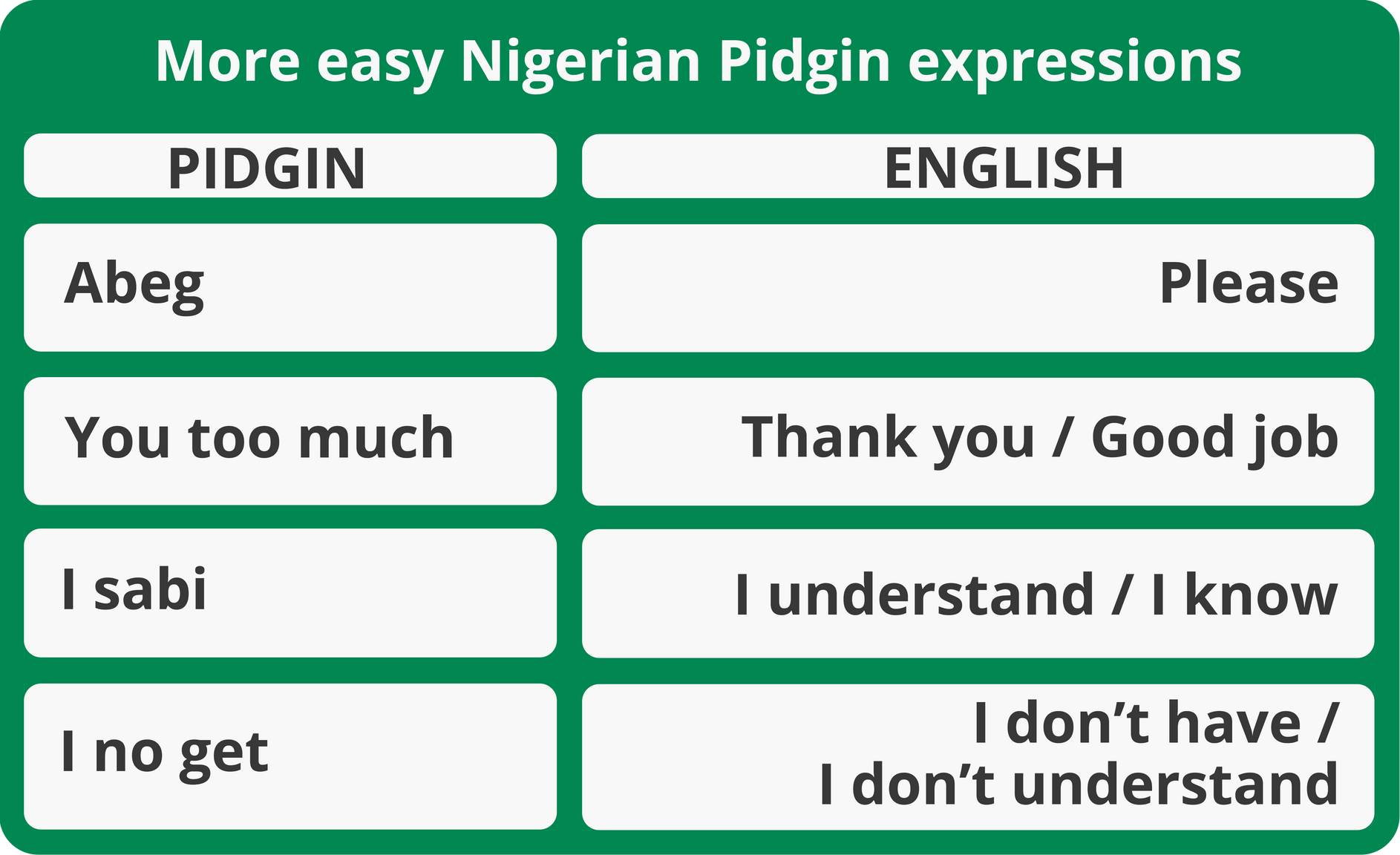
Enhancing Economic Growth Through Online Education in Nigerian Pidgin
Nigerian Pidgin, spoken by about 121 million people in 2025, is a key linguistic asset driving communication and economic participation in Nigeria’s diverse population. With 5 million native and 116 million second-language speakers, it’s Africa’s most widely spoken language.
This interest has spurred the creation of effective tools and resources to support language learning. Online education platforms leverage Pidgin to boost literacy, fostering economic growth and new business opportunities by improving access to education and empowering communities.
Economic Significance of Nigerian Pidgin
Nigerian Pidgin, a unifying lingua franca, bridges Nigeria’s diverse ethnic and socioeconomic groups. Its use in media, trade and informal settings enhances information access, enabling broader participation in economic activities. Improved Pidgin literacy reduces communication barriers, especially for the 38% of Nigerians with limited internet access, promoting inclusivity in the digital economy. Research shows Pidgin’s role in media and education fosters unity and cultural expression, yielding economic benefits through better social cohesion and market engagement.
Enhanced Pidgin literacy improves job market access, particularly in informal sectors like trade and media, where Pidgin thrives. This aligns with Nigeria’s digital literacy goals, as over 50% of the population lacks digital skills, per the World Bank. Better literacy enables online commerce, freelancing and entrepreneurship, reducing unemployment, which affects 80% of graduates lacking digital skills.
Impact of Online Education Platforms
Platforms like Naija.guru enhance Pidgin proficiency with resources like dictionaries and interactive forums, addressing the needs of Nigeria’s diverse population. These tools eliminate geographical and socioeconomic barriers, democratizing education. Projects like AfriDataHub and the Nigerian Pidgin ASR dataset support digital infrastructure for Pidgin, enabling educational tools and natural language processing applications.
The global digital education market, projected to reach $133 billion by 2030, offers opportunities for Pidgin-focused platforms. Subscription-based models, premium content, or corporate training for Pidgin-speaking regions can generate revenue. Partnerships with media like BBC Pidgin or tech firms can create new income streams. These platforms also foster entrepreneurship by enabling monetised digital content creation on platforms like YouTube.
Economic Benefits of Literacy Improvement
Improved Pidgin literacy boosts participation in Nigeria’s informal economy, which accounts for over 50% of GDP. Better literacy supports clearer market transactions and enhances advertising effectiveness, as Pidgin is widely used in media campaigns. Integrating Pidgin into education, as per Nigeria’s 2013 National Policy on Education, improves academic outcomes and employability in a country where only 62% of adults are literate.
Literacy also enables participation in global freelancing platforms like Upwork, expanding income opportunities. Additionally, documenting Pidgin traditions boosts cultural tourism and creative industries like Nollywood, which generates over $1 billion annually, contributing to Nigeria’s GDP.
Business Opportunities and Community Empowerment
EdTech startups can develop Pidgin-focused platforms targeting Nigeria’s 121 million speakers and diaspora, integrating AI-driven tools for personalised learning. Businesses can leverage Pidgin’s cultural significance for tailored marketing or e-commerce platforms, tapping into Nigeria’s digital economy. Community empowerment through literacy fosters grassroots innovation, enabling individuals to create monetised Pidgin content and engage in civic activities.
Pidgin’s role as a unifying language strengthens community ties, encouraging collaborative economic ventures. By promoting Pidgin, platforms ensure its relevance, supporting long-term economic stability through cultural continuity.
Online education in Nigerian Pidgin drives economic growth by enhancing literacy among 121 million speakers, improving workforce participation, consumer engagement and cultural preservation. The digital education market offers opportunities for EdTech innovation. As Nigeria pursues 95% digital literacy by 2030, Pidgin-focused education will foster economic inclusivity and prosperity.
Economy
Heavy Sell-Offs Weaken NASD Index by 0.64%, Erase N16.5bn from Market
By Adedapo Adesanya
NASD Over-the-Counter (OTC) Securities Exchange remained in the negative territory after it further depreciated by 0.64 per cent on Friday, July 24, despite recording four price gainers.
The NASD Security Index (NSI) dropped 27.4 points at the close of business to settle at 4,294.75 points versus the previous day’s 4,383.48 points, while the market capitalisation gave up N16.49 billion to end at N2.577 trillion, in contrast to the N2.594 trillion it ended a day earlier.
The bourse was down during the session amid heavy sell-offs, with the volume of transactions skyrocketing by 693.9 per cent to 2.99 million units from Thursday’s 377,635 units.
Equally, the value of trades went up by 71.6 per cent to N69.4 million from N40.4 million, and the number of deals increased by 41.0 per cent to 55 deals from the preceding day’s 39 deals.
Great Nigeria Insurance (GNI) Plc remained the most active stock by value on a year-to-date basis, with 3.4 billion units worth N8.4 billion, trailed by Infrastructure Credit Guarantee (Infracredit) Plc with 2.3 billion units sold for N6.5 billion, and Central Securities Clearing System (CSCS) Plc with 75.6 million units traded for N5.4 billion.
GNI Plc was also the most active stock by volume on a year-to-date basis, with 3.4 billion units exchanged for N8.4 billion, trailed by Infracredit Plc with 2.3 billion units transacted for N6.5 billion, and Resourcery Plc with 1.1 billion units valued at N415.7 million.
The market ended the session with four price gainers and two price losers, led by FrieslandCampina Wamco Nigeria Plc, which lost N7.44 to trade at N136.19 per share compared with the previous day’s N143.63 per share, and CSCS Plc, which declined by N1.64 to N93.63 per unit from N95.27 per unit.
But MRS Oil gained N13.50 to sell at N148.50 per share versus N135.00 per share, Afriland Properties Plc advanced by 56 Kobo to N17.41 per unit from N16.85 per unit, UBN Property Plc surged by 18 Kobo to N1.93 per share from N1.75 per share, and Food Concepts Plc climbed by 1 Kobo to N2.50 per unit from N2.49 per unit.
Economy
Profit-taking Crashes Nigeria’s Stock Exchange by 0.19%
By Dipo Olowookere
Nigeria’s stock exchange succumbed to profit-taking on Friday, losing 0.19 per cent when the closing gong was hit at 4 pm.
Shares in the banking and energy sectors influenced the decline suffered by the Nigerian Exchange (NGX) Limited during the session, as they respectively closed lower by 0.40 per cent and 0.04 per cent.
The industrial goods index was flat yesterday, while the insurance counter gained 0.68 per cent and the consumer goods space chalked up 0.25 per cent. The gains by these two segments could not keep Customs Street in the green territory at the close of business.
As a result, the All-Share Index (ASI) retreated by 474.00 points to 247,357.40 points from 247,831.40 points, and the market capitalisation decreased by N306 billion to N159.588 trillion from N159.894 trillion.
Presco dropped 10.00 per cent during the trading day to close at N2,070.00, Thomas Wyatt crumbled by 9.93 per cent to N3.63, Trans-Nationwide Express plunged by 8.44 per cent to N2.82, Royal Exchange slipped by 7.86 per cent to N1.29, and LivingTrust Mortgage Bank shrank by 7.32 per cent to N3.80.
On the flip side, C&I Leasing improved by 9.48 per cent to N6.35, Cornerstone Insurance rose by 9.09 per cent to N6.00, RT Briscoe jumped by 8.61 per cent to N13.25, Honeywell Flour expanded by 7.38 per cent to N17.45, and Africa Prudential increased by 6.98 per cent to N13.80.
Despite the poor performance, the local bourse recorded a positive market breadth index after finishing with 35 price gainers and 25 price losers, representing strong investor sentiment.
It was a relatively quiet market on Friday, as the activity level dropped, with the trading volume down by 27.72 per cent to 565.5 million units from 782.4 million units, and the trading value contracted by 46.89 per cent to N29.9 billion from N56.3 billion, while the number of deals executed by investors soared by 16.03 per cent to 53,688 deals from 46,273 deals.
Access Holdings was the busiest stock for the session, with a turnover of 128.0 million units sold for N3.8 billion, First Holdco transacted 35.4 million units worth N4.3 billion, Chams exchanged 34.8 million units valued at N154.3 million, Zenith Bank traded 30.4 million units for N3.9 billion, and UBA sold 30.4 million units worth N1.5 billion.
Economy
Naira Trades N1,362/$1 at Official FX Market, as Bitcoin Falls
By Adedapo Adesanya
The Naira marked a whole week of appreciation against the United States Dollar on Friday, July 24, further gaining N5.67 or 0.41 per cent to close at N1,362.09/$1 in the Nigerian Autonomous Foreign Exchange Market (NAFEX) compared with N1,367.76/$1 it ended on Thursday.
Equally, the local currency appreciated against the Pound Sterling in the official FX market yesterday by N10.83 to trade at N1,813.62/£1 versus the preceding day’s N1,824.45/£1, and improved against the Euro by N7.68 to settle at N1,549.10/€1, in contrast to the N1,556.78/€1 it was exchanged a day earlier.
However, at the parallel market and GTBank forex counter, the Nigerian currency remained unchanged against the greenback during the session at N1,400/$1 and N1,379/$1, respectively.
The Central Bank of Nigeria (CBN) buffer has been strengthened with sustained foreign portfolio inflows and robust foreign reserves, which stand above $52 billion.
The apex bank’s policy signals that the Naira will be stronger in the near term, with Nigeria clearing hurdles with FX reforms and settlement of all backlogs.
However, some traders expect that pressure may come due to foreign-currency buying from fuel importers as they make Dollar purchases to build inventories.
Meanwhile, Bitcoin (BTC), in the digital currency landscape, trimmed recent gains as it fell by 2.3 per cent to $63,787.73.
The weak action in the AI momentum trade is feeding through to crypto as well.
Further, Cardano (ADA) dropped 3.7 per cent to close at $0.1615, Solana (SOL) dipped by 2.8 per cent to $73.71, Ripple (XRP) crashed by 2.3 per cent to $1.08, Ethereum (ETH) slid by 1.9 per cent to $1,851.58, Dogecoin (DOGE) retreated by 0.8 per cent to $0.0694, Binance Coin (BNB) contracted by 0.7 per cent to $564.18, and TRON (TRX) lost 0.5 per cent to trade at $0.3292, while the US Dollar Tether (USDT) and the US Dollar Coin (USDC) traded flat at $1.00 each.