Economy
European Shares Fall on Cancellation of US-China Talks
By Investors Hub
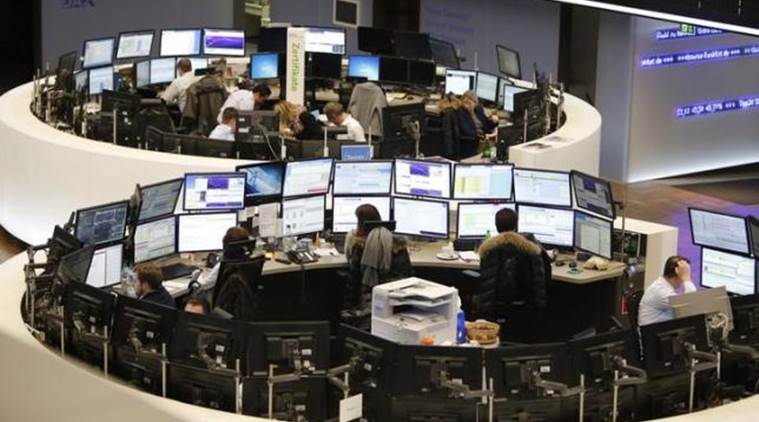
European stocks fell on Monday as Beijing cancelled planned talks with the Washington and a new round of U.S. tariffs on Chinese goods kicked in, triggering fears of a protracted trade dispute between the world’s two largest economies.
Downbeat business confidence data from Germany also weighed on markets. The corresponding index fell to 103.7 from 103.9 in August, survey data from Mannheim-based Ifo institute showed.
The pan-European Stoxx Europe 600 index was down 0.37 percent at 382.87 in late opening deals after six consecutive sessions of gains.
The German DAX was losing 0.4 percent, while France’s CAC 40 index and the U.K.’s FTSE 100 were moving down around 0.3 percent.
The British pound bounced back against the dollar after falling as much as 1.4 percent on Friday, its biggest single-day percentage loss since June 2017, as EU leaders turned down Theresa May’s Chequers blueprint at a summit in Salzburg, giving a major blow to her chances of reaching a deal post-Brexit.
Novartis slid half a percent. The Swiss pharmaceutical company announced that it plans to file ex-US for a new indication in ROP to bring transformative treatment to premature infants facing severe vision loss.
Roche Group shed 0.8 percent. The drug major announced the global availability of blood-based genomic profiling test, FoundationOne Liquid.
Shares of Sky Plc jumped nearly 9 percent in London after the media giant urged its shareholders to immediately accept a superior cash offer of 17.28 pounds by Comcast Corp.
Randgold Resources jumped 6 percent after it agreed merger terms with Canada’s Barrick Gold.
Travel operator Thomas Cook Group tumbled 3.2 percent. The company slashed its profit outlook “following unprecedented months of hot weather”. German peer TUI fell over 2 percent.
French grocery retailer Carrefour Group rose slightly after it denied having ever solicited Casino for merger talks. Casino shares declined half percent.
Volkswagen dropped 1 percent. Porsche will no longer offer diesel versions of its cars, becoming the first German auto maker to drop the engines in the wake of the emissions-cheating scandal.
BMW and Daimler also fell around 1 percent after carmakers and the German government representatives failed to reach a compromise on Sunday over how to tackle the problem of older diesel cars.
Economy
Brent Climbs Above $84, WTI Near $80 as Iran Tensions Stoke Oil Rally
By Adedapo Adesanya
Oil prices climbed about 2 per cent to a one-month high on Tuesday after the US reportedly reimposed a naval blockade on Iran, which will reduce oil flows from the region through the Strait of Hormuz.
Brent futures rose by $1.43 or 1.7 per cent to settle at $84.73 per barrel, while the US West Texas Intermediate (WTI) crude increased by $1.20 or 1.5 per cent to $79.34 a barrel.
Brent closed at its highest since June 12, and WTI at its highest since June 15. The closing price increase kept Brent in technically overbought territory for a second day in a row for the first time since March.
Before the Iran war, about 20 per cent of global oil supplies flowed through the strait.
US President Donald Trump stepped back from a proposal to charge a 20 per cent fee to guard the Strait of Hormuz as part of the conflict with Iran, saying he would instead seek investment deals with Gulf states.
US forces had carried out waves of attacks for the third night after Iran said it had closed the strait. President Trump on Monday reinstated a blockade of Iranian shipping and proposed the fee, but hours before the fee was to take effect, the American President said the strait was open to all shipping traffic except that of Iran.
The renewed attacks have fed doubts that a memorandum of understanding signed last month will lead to a permanent halt in the war that has disrupted global energy supplies and stoked inflation fears.
Data showed that US consumer inflation slowed more than expected in June as energy prices retreated, but financial markets still expect an interest rate hike from the Federal Reserve.
The Federal Reserve Chairman Kevin Warsh on Tuesday vowed to “do my job” if challenged by President Trump, who has said he wants the US central bank to cut interest rates and boost economic growth.
The American Petroleum Institute (API) estimated that crude oil inventories in the US fell by 564,000 barrels in the week ending July 10. In the week prior, US crude oil inventories fell by 399,000 barrels.
Although commercial crude oil inventories excluding the SPR have been falling rapidly for three months now, shedding just over 60 million barrels over the last twelve weeks, US crude inventories are only down 9.2 million barrels so far this year. The US Energy Information Administration (EIA) will release its report later on Wednesday.
Economy
Dangote Refinery Stops Pricing Petrol, Diesel, Jet Fuel in Naira, Opts for Dollars
By Adedapo Adesanya
The 700,000 barrels per day Dangote Petroleum Refinery has begun pricing fuel products for the local market in US Dollars amid crude supply challenges.
The company cited difficulties securing sufficient crude under the government’s Naira-for-crude programme and rising global oil prices as reasons for the development.
The Naira-for-crude programme, launched in October 2024, allowed domestic refiners to purchase crude in the local currency and reduced pressure on the foreign exchange market.
Mr Edwin Devakumar, the vice president of the Dangote Group, said the refinery had been absorbing a currency mismatch by selling products in Naira while sourcing crude in Dollars, but limited crude supply under the Naira-for-crude programme had undermined the arrangement’s viability.
Dangote has now set the ex-depot price of petrol at $0.779 per litre, diesel at $1.087 per litre and aviation fuel at $0.942 per litre, according to a pricing template circulated to marketers.
Although the Nigerian National Petroleum Company (NNPC) Limited increased Dangote’s allocation to seven cargoes in May from about five previously, the refiner has said it requires 13 to 15 cargoes a month and has been forced to import the remainder at international prices.
The decision could boost demand for Dollars among fuel marketers and make domestic fuel prices more sensitive to exchange-rate fluctuations.
Dangote Refinery is steadily ramping up operations toward full capacity after a gradual start since late 2023. In April alone, it received 21 separate crude cargoes, with all supplies coming from West Africa, mainly Nigerian crude grades, with one cargo from Cameroon; however, it boosted international cargoes in recent months.
The refinery has been broadening the range of crude grades it processes as part of its ambition to operate as a fully merchant refinery. In 2025, about 70 per cent of the refinery’s crude imports came from Nigeria, while 24 per cent originated from the United States.
Dangote plans to double the refinery’s processing capacity to 1.4 million barrels per day by the end of 2028, a level that would enable it to process about 80 per cent of Nigeria’s recent crude oil production in a single day.
Economy
Nigeria Customs Seeks Slash in N34trn Import Duty Waivers
By Adedapo Adesanya
The Nigeria Customs Service (NCS) is seeking a reduction in import duty exemptions, which rose to N34 trillion, limiting its ability to increase its revenue generation threshold.
The Comptroller-General of the Customs Service, Mr Adewale Adeniyi, disclosed that the value of import duty exemption certificate approvals increased to that level in 2025, describing the policy as one of the major factors restricting its revenue generation.
At an investigative session of the Senate Committee on Finance with revenue-generating agencies in Abuja on Monday, Mr Adeniyi explained that government fiscal policies have continued to impact the revenue-generating capacity of the Customs Service, both positively and negatively.
“The NCS would have generated significantly higher revenue over the years if not for government-approved import duty waivers and other external factors affecting collections,” he said.
He added that the Import Duty Exemption Certificate scheme, introduced in March 2020, accounted for about N34 trillion in approvals in 2025, with nearly 60 per cent covering duty-free importation of military hardware due to Nigeria’s prevailing security challenges.
Other government-backed duty waivers, he noted, covered the importation of Compressed Natural Gas (CNG), electric and hybrid vehicles, healthcare equipment and medical supplies, industrial machinery and manufacturing inputs, as well as food import intervention programmes.
While acknowledging the impact of the waivers on Customs revenue, Mr Adeniyi argued that fiscal policy should not be assessed solely on the basis of revenue generation but also on its broader economic and social objectives.
He, however, urged the federal government to establish stronger monitoring mechanisms to ensure beneficiaries of duty waivers deliver the intended economic outcomes, including lower consumer prices, increased local production and improved healthcare access.
The committee also expressed displeasure over the absence of several heads of government agencies invited to the hearing, including the Nigerian Civil Aviation Authority (NCAA), Small and Medium Enterprises Development Agency of Nigeria (SMEDAN), Industrial Training Fund (ITF), and the Federal Medical Centre (FMC), Jabi.
The Chairman of the Senate Committee on Finance, Mr Sani Musa, warned that the affected chief executives must appear at the committee’s next sitting or face severe sanctions under the Senate’s rules.