Economy
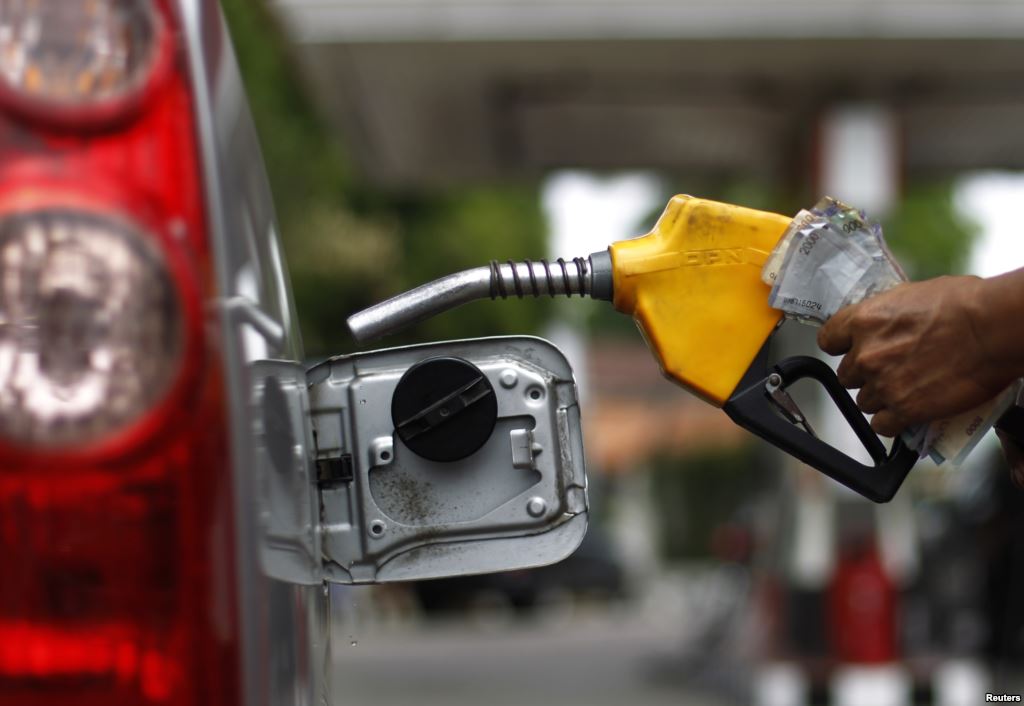
FG Admits Paying Petrol Subsidy, May Gulp N5.4trn in 2024
By Adedapo Adesanya
The Minister of Finance and Coordinating Minister of the Economy, Mr Wale Edun, has presented the Accelerated Stabilisation and Advancement Plan (ASAP) designed to address key challenges affecting the reform initiatives and stimulate development in various sectors of the economy.
The document officially acknowledges that the government has continued subsidising premium motor spirit (PMS), popularly known as petrol, as it revealed that the “government is still supporting downstream consumption.”
“At current rates, expenditure on fuel subsidy is projected to reach N5.4 trillion by the end of 2024. This compares unfavourably with N3.6 trillion in 2023 and N2.0 trillion in 2022,” the plan noted.
This showed that the amount has ballooned to almost the amount paid in 2022 and 2023.
The presentation of the stabilisation plan to the President on Tuesday occurred about 48 hours after Mr Edun, during a television interview on Sunday, said a stabilisation package was underway to help the Nigerian economy.
Recall that President Bola Tinubu had recently reiterated that his administration removed fuel subsidies, with the oil minister, Mr Heineken Lokpobori also echoing his principal last month despite admissions from oil marketers, workers, and global institutions.
A draft copy of the plan presented to Mr Tinubu on Tuesday with an accompanying Executive Order to bolster the plan gave an insight into how the administration seeks to address some of the many problems which seem to be trying to torpedo its reforms, among others.
The plan is structured to advance President Tinubu’s economy-related eight priority areas and is broken down into Agriculture and Food Security Sub-Committee plan, Energy Sub-Committee plan: Oil, Energy Sub-Committee plan: Gas, Energy Sub-Committee plan: Power, Health and Social Welfare Sub-Committee plan, and Business Support Sub-Committee plan.
The document cited persistent high inflation, high interest rates which make it difficult for businesses to borrow, and a volatile exchange rate with the consequent uncertainty disruptive of economic activity, among others.
It also outlined the various sectoral challenges with specific remedial steps to be applied in addressing them.
It noted that Nigeria’soil sector is currently faced with problems of extensive pipeline vandalisation; high cost of production with 40 per cent cost premium above other jurisdictions; production level at 1.4 million barrels per day, below the budgeted level of 1.78 million barrels per day, thereby straining country’s fiscal position, adding that “government still supporting downstream consumption.”
The plan therefore recommended the immediate implementation of presidential directives (such as removal of signature bonuses) to attract investments, and support the achievement of Final Investment Decision (FID) for three identified blueprint projects in 2024 and for other projects enabled to attain FID by 2026.
Economy
BNB Price Reflects Changing Dynamics in the Digital Asset Market
Economy
NASD Unlisted Security Index Crosses 4,000-point Benchmark Again
By Adedapo Adesanya
The NASD Over-the-Counter (OTC) Securities Exchange achieved a milestone on Friday, April 24, 2026, after five securities on the platform helped with a 1.85 per cent growth.
Data showed that the NASD Unlisted Security Index (NSI) again crossed the 4,000-point benchmark yesterday.
The index chalked up 73.64 points during the trading day to close at 4,052.59 points compared with the preceding session’s 3,978.95 points, while the market capitalisation added N5.38 billion to finish at N2.424 trillion versus Thursday’s closing value of N2.380 trillion.
The price gainers were led by Okitipupa Plc, which grew by N25.00 to sell at N305.00 per share compared with the previous price of N280.00 per share. Central Securities Clearing System (CSCS) Plc gained N6.92 to close at N76.26 per unit versus N69.34 per unit, Afriland Properties Plc appreciated by N1.00 to N17.00 per share from N18.00 per share, FrieslandCampina Wamco Nigeria Plc improved by 55 Kobo to N99.55 per unit from N99.00 per unit, and Food Concepts Plc increased by 5 Kobo to N2.70 per share from N2.65 per share.
However, there was a price loser, MRS Oil, which dipped by N21.75 to N195.75 per unit from N217.50 per unit.
During the final session of the week, the value of securities jumped 75.2 per cent to N41.3 million from N23.6 million units, and the number of deals expanded by 62.9 per cent to 44 deals from 27 deals, while the volume of securities declined marginally by 0.9 per cent to 447,403 units from 451,522 units.
At the close of trades, Great Nigeria Insurance (GNI) Plc was the most traded stock by volume (year-to-date) with 3.4 billion units worth N8.4 billion, trailed by Resourcery Plc with 1.1 billion units valued at N415.7 million, and Infrastructure Guarantee Credit Plc with 400 million units traded for N1.2 billion.
GNI was also the most active stock by value (year-to-date) with 3.4 billion units sold for N8.4 billion, followed by CSCS Plc with 59.6 million units transacted for N4.0 billion, and Okitipupa Plc with 27.8 million units exchanged for N1.9 billion.
Economy
Naira Slips to N1,358/$1 as FX Reserves, Policy Uncertainty Concerns
By Adedapo Adesanya
It was not a good day for the Nigerian Naira in the currency market on Friday, April 24, as its value depreciated against the major foreign currencies at the close of transactions.
In the Nigerian Autonomous Foreign Exchange Market (NAFEX), it lost N4.53 or 0.33 per cent against the United States Dollar yesterday to trade at N1,358.44/$1, in contrast to the N1,353.91/$1 it was exchanged on Thursday.
Equally, the domestic currency slipped against the Pound Sterling in the official market during the session by N8.14 to close at N1,834.02/£1, compared with the previous rate of N1,825.88/£1 and dropped N8.01 against the Euro to sell at N1,590.73/€1 versus N1,582.72/€1.
Also, the Naira depreciated against the US Dollar at the GTBank FX desk on Friday by N4 to quote at N1,370/$1 compared with the previous session’s N1,366/$1, and at the parallel market, it depleted by N5 to settle at N1,380/$1 versus the preceding day’s N1,375/$1.
Data published by the Central Bank of Nigeria (CBN) indicated that NFEM interbank turnover surged to N43.562 million across 68 deals, up from N28.117 million the previous day.
Despite the CBN’s reassurance that the recent drop in external reserves is not worrisome, the market remains unsettled by persistent concerns over liquidity constraints, policy transparency, and weakening confidence in Nigeria’s FX market as gross reserves continue to decline to $48.4 billion.
The outlook for the Dollar appears supported by broader macro risks, including elevated oil prices tied to the tanker traffic disruptions in the Strait of Hormuz and a continued US-Iran standoff over ceasefire negotiations.
A look at the digital currency market showed that investors are sitting on the edge as the US Dollar rebounded amid geopolitical and inflation risks despite continued inflows into US spot bitcoin Exchange Traded Funds (ETFs).
Solana (SOL) rose by 1.2 per cent to sell $86.45, Cardano (ADA) appreciated by 1.1 per cent to $0.2517, Dogecoin (DOGE) grew by 0.9 per cent to $0.0989, Ripple (XRP) improved by 0.3 per cent to $1.43, Ethereum (ETH) soared by 0.2 per cent to $2,316.83, and Binance Coin (BNB) chalked up 0.1 per cent to sell for $637.44.
However, TRON (TRX) depreciated by 1.3 per cent to $0.3235, and Bitcoin (BTC) lost 0.2 per cent to close at $77,562.27, while the US Dollar Tether (USDT) and the US Dollar Coin (USDC) closed flat at $1.00 each.
-
Feature/OPED6 years agoDavos was Different this year
-
Travel/Tourism10 years ago
Lagos Seals Western Lodge Hotel In Ikorodu
-
Showbiz3 years agoEstranged Lover Releases Videos of Empress Njamah Bathing
-
Banking8 years agoSort Codes of GTBank Branches in Nigeria
-
Economy3 years agoSubsidy Removal: CNG at N130 Per Litre Cheaper Than Petrol—IPMAN
-
Banking3 years agoSort Codes of UBA Branches in Nigeria
-
Banking3 years agoFirst Bank Announces Planned Downtime
-
Sports3 years agoHighest Paid Nigerian Footballer – How Much Do Nigerian Footballers Earn