
Economy
FG Begins Pre-Offer Roadshow for N100b Sukuk

By Dipo Olowookere
Federal Government has commenced activities in preparation for the issuance of the N100 billion non-interest bearing bond otherwise known as Sukuk.
The exercise is to be carried out by the Debt Management Office (DMO) on behalf of the Nigerian government.
A national roadshow kicked off on Thursday and will hit major cities in the country like Lagos, Port Harcourt, Kano and Kaduna.
The aim is to attract investors to subscribe to the offer as proceeds from the Sukuk issuance would be used to finance specific road projects in the country.
A statement issued by the debt office disclosed that the roadshow is led by the DMO Director-General, Ms Patience Oniha, and accompanied by Financial Advisers, Lotus Capital Financial Services Limited and FBN Merchant Bank Plc.
“Apart from serving as alternative source of funding for the Government, the Sukuk will also serve to diversify the investor base for FGN Securities, promote financial inclusion and deepen the domestic capital market.
“Sukuk are asset-based securities, not debt instruments, and represents ownership in a tangible asset, service, project, business or joint venture.
“This is why Sukuk fits into the DMO debt strategy of borrowing to finance capital projects contained in the budget.
“This ensures that Government borrowings are used to finance development projects which have multiple economic and social benefits for citizens,” the DMO said in the statement.
It was gathered that the debut N100 billion sovereign Sukuk is with a tenor of seven years, and has been certified as ethically compliant by the Financial Regulation Advisory Council of Experts of the Central Bank of Nigeria.
The Offer for Subscription will open in the week after the roadshow and will be advertised in major newspapers.







By Aduragbemi Omiyale
The securities of DN Tyre and Rubber Plc, and Greif Nigeria Plc have been delisted by the regulatory arm of the Nigerian Exchange (NGX) Group Plc, NGX Regulation Limited.
A statement signed by the Head of the Issuer Regulation Department of NGX RegCo, Mr Godstime Iwenekhai, said the delisting became effective on Thursday, April 9, 2026.
In the notice issued yesterday, it was further disclosed that the action complied with the provisions of Clause 14 of the Amended Form of General Undertaking, for Listing on Nigerian Exchange Limited General Undertaking.
According to this clause, “The exchange reserves the right to, at its sole and absolute discretion, suspend trading in any listed securities of the Issuer, delist such securities, or remove the name of the issuer (listed company) from the daily official list of the exchange with or without prior notice to the issuer, upon failure of the issuer to comply with any one or more of the provisions of this General Undertaking, or when in its sole discretion, the exchange determines that such suspension of trading or delisting is in the public interest, or otherwise warranted.”
It was explained that the shares of the two firms were delisted because they fell below the listing standards.
“The securities of DN Tyre and Rubber Plc and Greif Nigeria have been delisted from the facilities of Nigerian Exchange Limited (NGX) effective Thursday, April 9, 2026, on the grounds that the companies are operating below the listing standards of NGX and their securities are no longer considered suitable for continued listing and trading in the market,” the disclosure noted.

By Adedapo Adesanya
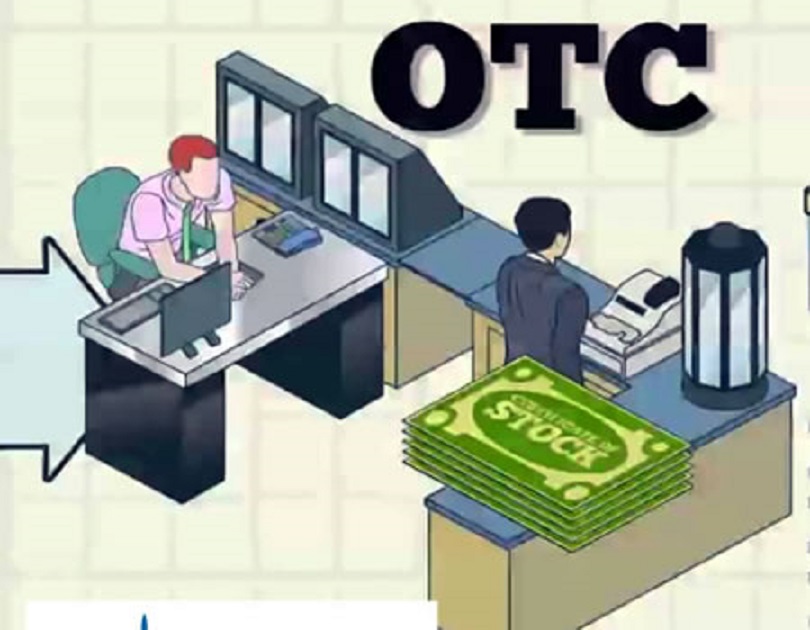
The NASD Over-the-Counter (OTC) Securities Exchange declined by 0.95 per cent on Thursday, April 9, plunging the Unlisted Security Index (NSI) by 37.41 points to 3,893.50 points from 3,930.91 points.
In the same vein, the market capitalisation lost N22.38 billion during the session to N2.329 trillion from the N2.351 trillion it ended at midweek.
The OTC securities exchange was under selling pressure yesterday, resulting in a negative market breadth index after three securities lost weight and one gained weight.
Central Securities Clearing System (CSCS) Plc led the losers’ table after it shed N3.74 to sell at N64.21 per unit versus N67.95 per unit. Food Concepts Plc went down by 19 Kobo to N2.68 per share from N2.87 per share, and Free Range Farms Plc dropped 10 Kobo to settle at 90 Kobo per unit versus N1.00 per unit.
On the flip side, MRS Oil gained N5 to close at N165.00 per share compared with the preceding day’s N160.00 per share.
At the trading session, there was a 23.5 per cent jump in the value of securities to N40.4 million from N32.7 million, but the volume of securities fell by 81.9 per cent to 1.04 million units from 5.7 million units, and the number of deals went down by 29.7 per cent to 26 deals from the preceding session’s 37 deals.
At the close of transactions, Great Nigeria Insurance (GNI) Plc remained the most active stock by value on a year-to-date basis with 3.4 billion units valued at N8.4 billion, followed by CSCS Plc with 57.5 million units exchanged for N3.9 billion, and Okitipupa Plc with 27.5 million units traded for N1.8 billion.
Also, GNI Plc ended the trading day as the most traded stock by volume on a year-to-date basis with the sale of 3.4 billion units worth N8.4 billion, trailed by Resourcery Plc with 1.1 billion units worth N415.7 million, and Infrastructure Guarantee Credit Plc with 400 million units sold for N1.2 billion.
By Adedapo Adesanya
The Naira further appreciated against the US Dollar in the various segments of the foreign exchange (FX) market on Thursday, April 9.
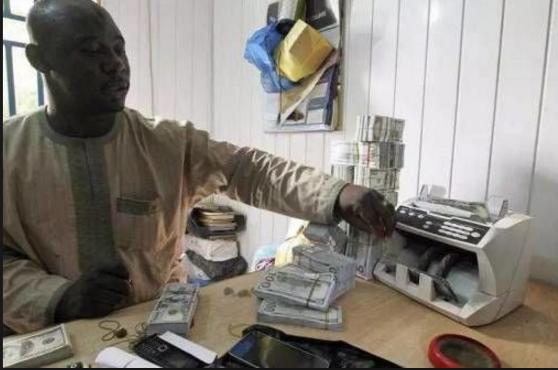
At the black market, the Nigerian currency improved its value yesterday by N20 to quote at N1,390/$1 compared with the previous day’s rate of N1,410/$1.
In the Nigerian Autonomous Foreign Exchange Market (NAFEX) window, the domestic currency gained N12.50 or 0.9 per cent against the greenback to trade at N1,359.32/$1, in contrast to midweek’s price of N1,371.82/$1.
In the same official market, the local currency gained N14.89 against the Euro to sell at N1,589.18/€1 versus N1,604.07/€1, and traded flat against the Pound Sterling at N1,844.83/£1.
Data from the Central Bank of Nigeria (CBN) showed that turnover increased to N71.156 million across 115 deals, suggesting that banks’ customers’ demand for foreign payments eased slightly on the day.
The local currency has been in strong demand from foreign portfolio investors seeking to purchase OMO bills and other fixed-income instruments.
External reserves, which provide the CBN with firepower to support the currency, declined for the 13th consecutive session, falling by about $840 million to $49.18 billion as of April 1 from $50.02 billion recorded on March 11, according to CBN data.
The persistent drawdown reflects mounting external pressures tied to heightened geopolitical tensions in the Middle East, which analysts say have dampened investor appetite for frontier markets and weakened capital inflows into Nigeria.
In the cryptocurrency market, prices tapped into optimism as geopolitical tensions over a fragile Iran ceasefire and a partial reopening of the Strait of Hormuz keep markets cautious and oil prices volatile.
Market analysts noted that if the ceasefire survives through the weekend and the Strait opens further, momentum will build for risk assets like crypto. However, if Iran’s grievances escalate or President Donald Trump’s rhetoric shifts, prices may crater.
Bitcoin (BTC) appreciated by 1.6 per cent to $71,989.47, Dogecoin (DOGE) expanded by 1.5 per cent to $0.0928, Solana (SOL) added 1.4 per cent to sell for $83.34, Ripple (XRP) jumped 1.1 per cent to $1.34, Cardano (ADA) went up by 0.8 per cent to $0.2518, TRON (TRX) grew by 0.7 per cent to $0.3195, Ethereum (ETH) increased by 0.6 per cent to $2,192.07, and Binance Coin (BNB) climbed 0.4 per cent to $601.29, while the US Dollar Tether (USDT) and the US Dollar Coin (USDC) remained unchanged at $1.00 each.
-
 Feature/OPED6 years ago
Davos was Different this year
-
Travel/Tourism10 years ago
Lagos Seals Western Lodge Hotel In Ikorodu
-

 Showbiz3 years ago
Estranged Lover Releases Videos of Empress Njamah Bathing
-
 Banking8 years ago
Sort Codes of GTBank Branches in Nigeria
-

 Economy3 years ago
Subsidy Removal: CNG at N130 Per Litre Cheaper Than Petrol—IPMAN
-

 Banking3 years ago
Sort Codes of UBA Branches in Nigeria
-

 Banking3 years ago
First Bank Announces Planned Downtime
-

 Sports3 years ago
Highest Paid Nigerian Footballer – How Much Do Nigerian Footballers Earn