Connect with us

Economy

FG Unveils Industrial Policy to Raise Manufacturing Contribution to 25%

Published

on

manufacturing-companies-in-nigeria

By Adedapo Adesanya

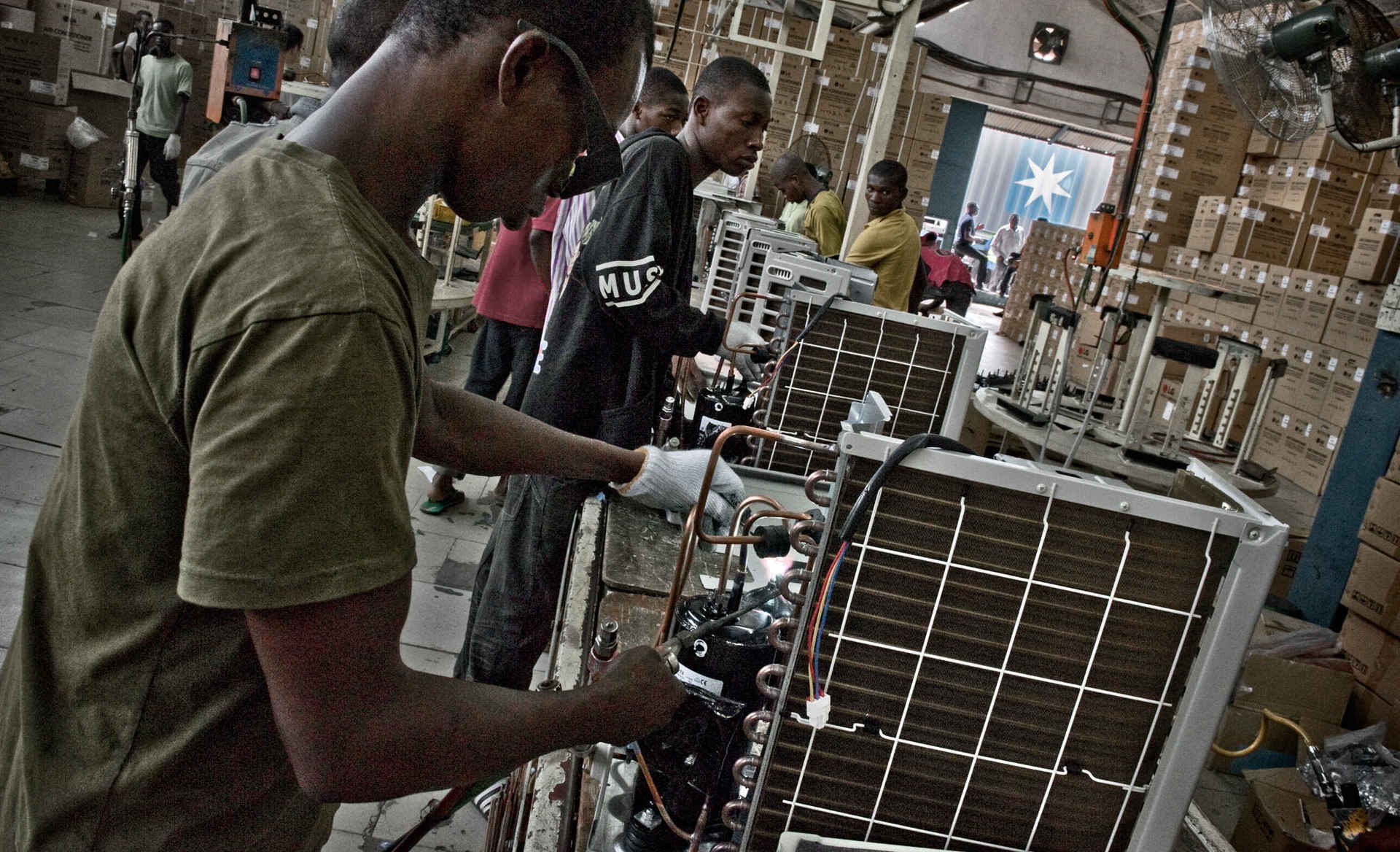
The federal government plans to boost the manufacturing sector’s contribution to the Nigerian economy to 15 per cent by 2030 and 25 per cent by 2035, from its current 8.2 per cent.

This was revealed in the newly launched Nigeria Industrial Policy (NIP), which was unveiled by the Federal Ministry of Industry, Trade and Investment (FMITI).

According to data, the sector employs 13 million Nigerians, mainly in food processing, cement production, textiles, pharmaceuticals, and the automotive industry.

The FG stated that the aim of NIP frameworks is “to drive economic growth, reduce dependence on oil exports, and promote sustainable development” and contribute to achieving Nigeria’s aspiration of attaining the $1 trillion economy by 2030.

The government said the plan would “accelerate Nigeria’s industrial transformation by leveraging its natural and human capital to promote inclusive, sustainable, and competitive manufacturing, deepen economic diversification, and generate mass employment through innovation, infrastructure development, investment, and export.”

It explained that the policy direction of its NIP is anchored on the development of four sectors, namely metals and solid minerals, oil and gas, construction, and manufacturing.

Over the past decade, the agro-allied industry has contributed an average of 25 per cent (27 per cent rebased) to Nigeria’s real GDP and currently accounts for 35 per cent of total employment. It serves as a primary source of raw materials for key manufacturing sectors, including food processing, leather goods, and textiles, reinforcing its pivotal role in driving industrial linkages and inclusive economic development.

The report noted, however, that the industry faces challenges such as limited mechanisation and outdated farming techniques, post-harvest losses, and insecurity.

The government assured that relevant legal and institutional frameworks are in place to address key challenges such as inadequate power supply, low access to finance, and competition from cheap imported products, limiting the performance of the sector.

The Minister of State, FMITI, Mr John Owan Enoh, described the NIP as “a comprehensive framework that reaffirms our national resolve to diversify the economy, create inclusive prosperity, and secure Nigeria’s rightful place as a leading industrial hub in Africa and the wider global economy.”

The government said that each of the four sectors comprises multiple sub-sectors that offer strategic opportunities for industrial development.

“These sectors have been prioritised due to strong comparative advantages, potential to generate large-scale employment, and deepen local value addition and expand exports.

“The future outlook for the industry is bright with abundant natural resources, massive investment in the development of Special Economic Zones (SEZs), the growing market size, and participation of Nigeria in AfCFTA and ECOWAS Trade Liberalisation Scheme (ETLS)”, the report added.


Adedapo Adesanya is a journalist, polymath, and connoisseur of everything art. When he is not writing, he has his nose buried in one of the many books or articles he has bookmarked or simply listening to good music with a bottle of beer or wine. He supports the greatest club in the world, Manchester United F.C.

Click to comment

Leave a Reply

Your email address will not be published. Required fields are marked *

Economy

NMDPRA Authorises Six Companies to Import Petrol Into Nigeria

Published

on

West Africa's petrol imports

By Adedapo Adesanya

Six Nigerian oil marketers have been granted the licence to import petrol into the country to liberalise the local market and encourage competition.

The licences were issued by the Nigerian Midstream & Downstream Petroleum Regulatory Authority (NMDPRA), allowing them to import a total of about 600,000 metric tons or roughly a quarter of the country’s domestic consumption. The firms are Matrix, AA Rano, AYM Shafa, Nipco and Bono.

They will import between 60,000 and 150,000 metric tonnes of petrol, subject to the permit type.

This development is a shift in policy that has seen the NMDPRA heavily regulate foreign arrivals of Nigeria’s main motor fuel in order to support the 650,000 barrels per day Dangote Refinery in Lagos.

After an initial clampdown in October 2025, the NMDPRA issued six companies with limited petrol import licenses in late March 2025, but left them to expire at the end of the first quarter, leaving uncertainty over its future policy trajectory.

In its latest permitting round, the authority has continued to restrict the number of companies authorised to import foreign petrol, but has substantially increased permit volumes to cover more than triple the previously approved volume.

Such entities will typically buy products from the nearby offshore Lome market, where larger international trading houses and oil companies will send the fuel and load it onto smaller ships.

This comes as ex-Dangote Cement official, Mr Rabiu Abdullahi Umar, was selected to replace Mr Saidu Mohammed after just four months in office by President Bola Tinubu. His appointment had raised worries about possible unfair practices.

According to the latest NMDPRA figures, the Dangote refinery ran at 94 per cent of its capacity in March and produced enough fuel to cover the country’s entire domestic gasoline consumption. However, supplies to the local market fell.

S&P Global Commodities at Sea data shows Nigeria imported 60,000 barrels per day, equivalent to 218,000 metric tonnes of petrol in April, more than double March’s all-time low but still less than half of the 2026 average.

Continue Reading

Economy

Airtel Africa Pushes Mobile Money Listing to Second Half of 2026

Published

on

Airtel Money

By Adedapo Adesanya

Airtel Africa will delay the planned ​Initial Public Offering ​(IPO) of its mobile money ⁠business, Airtel Money, to the ​second half of ​2026, citing market uncertainties amid the ongoing Middle East ​war.

The telecoms ​group had earlier planned to list Airtel ‌Money ⁠in the first half of this year, but said that rising ​energy ​costs ⁠stemming from the war would ​likely result in ​higher ⁠inflation, which would weigh on its ⁠near-term ​profit margins.

The company controlled by billionaire Sunil Mittal’s Bharti Enterprises Limited could now raise between $1.5 billion and $2 billion selling shares in London, from a previously expected $4 billion.

London emerged as the most likely venue, although exchanges in the United Arab Emirates (UAE) and other parts of Europe have also been considered.

The delay will make it possible to finalise decisions on timing, valuation, and location.

The planned IPO reflects a broader strategy by Airtel Africa to unlock value from its mobile money unit, which has become a key growth driver as traditional telecom revenues face pressure.

Airtel Africa, which operates in 14 countries and is dual-listed in London and Lagos, is majority-owned by Indian billionaire Sunil Mittal through Bharti Enterprises.

The group has long signalled plans to spin off or list Airtel Money after years of rapid expansion as the mobile money sector in Africa continues to expand rapidly, driven by a young population increasingly adopting technology for financial services, making the continent a key market for fintech companies.

In September 2025, the telco reportedly picked Citigroup Incorporated as advisors for the planned IPO, which will see Airtel Money become a standalone entity before it can attain the prestige of trading on a stock exchange.

Estimating Airtel Money at around $2 billion is lower than its valuation of $2.65 billion in 2021. In 2021, Airtel Money received significant investments, including $200 million from TPG Incorporated at a valuation of $2.65 billion and $100 million from Mastercard. Later that same year, an affiliate of Qatar’s sovereign wealth fund also acquired an undisclosed stake in the unit.

Its customer base is over 52 million, compared to around 44.6 million users it had as of June 2025.

Continue Reading

Economy

Tax Filing: NRS Offices to Operate Saturdays till June 27

Published

on

tax-to-GDP ratio

By Modupe Gbadeyanka

The Nigeria Revenue Service (NRS) has announced that from Saturday, May 9, 2026, to Saturday, June 29, 2026, its offices across the country will operate at weekends.

In a statement signed by its chairman, Mr Zacch Adedeji, on Thursday, the organisation said this is in anticipation of a rush in filing of tax returns during this period.

It was disclosed that the offices would open their doors to taxpayers on Saturdays from 10:00 am – 3:00 pm, urging taxpayers “to take advantage of this opportunity to resolve any tax- related matters, seek guidance, and ensure timely compliance with their obligations.”

The extended Saturday operations, according to the NRS, will provide additional assistance to taxpayers requiring support with the new system, facilitate seamless compliance during the June peak Companies Income Tax (CIT) filing period, and improve access to tax services outside regular weekday hours.

Recently, the tax agency launched a new tax administration platform known as Rev360. Taxpayers are still navigating their way around this initiative.

To provide additional support and service delivery to taxpayers on the rollout of the Rev360 Phase I Tax Administration System for medium and emerging taxpayers, NRS came up with the Saturday services.

In yesterday’s statement, the organisation said it remains dedicated to delivering efficient, transparent, and taxpayer-focused services.

Continue Reading

Trending