
Economy
Financial Empowerment: Taking Control of Your Money


Have you ever wished for financial independence to indulge your interests, explore the world, or just to live life without concern for money? You are not alone, though! Taking charge of your finances and using them to accomplish your goals is the definition of financial empowerment. In this post, we’ll look at the thrilling process of managing your money such that it’s fun and powerful. Prepare for a wild adventure through the realm of money!
Key Takeaways
- The ability to manage your money effectively gives you the capacity to reach your financial objectives.
- The foundation of financial empowerment is budgeting, saving, and investing.
- In order to make your money work for you, learn about Ada Staking.
Budgeting Analysis: Where Does Your Money Go
The financial superhero outfit you should wear is a budget. It makes it easier for you to comprehend where and how your money is being spent. Consider your budget as your wise money partner, assisting you in making deft financial judgments.
- To keep tabs on your earnings and spending, create a monthly budget.
- Decide what expenses are necessary (such as rent and groceries) and what expenses are optional (such as that daily specialty coffee).
- For financial stability and to realize your aspirations, set attainable savings goals.
Compound Interest’s Magical Effects When Saving

Photo by Fabian Blank on Unsplash
It’s similar to sowing seeds in a garden to save. Compound interest, a financial phenomenon, allows your money to increase as you save more. The process is comparable to watching your financial garden grow over time.
- To increase your interest on money, open a high-yield savings account.
- To benefit from compound interest, make consistent contributions to your retirement accounts, such as a 401(k) or IRA.
- Create an emergency fund to shield yourself against unforeseen financial turbulence.
Make Your Money Work for You By Investing
Your finances really take off when you invest. It doesn’t only stay within, it leaves and grows everywhere. Imagine doing it as if you were sending your money on a treasure quest with the possibility of earning large rewards.
- Increase portfolio diversity to lower risk. You shouldn’t invest all of your resources on just one thing!
- When it comes to investing, take into account stocks, bonds, property, and even cryptocurrencies.
- Discover Ada Staking which is a method of generating passive revenue by keeping and staking Ada (the coin of Cardano) on the blockchain.
Ada Staking
Are you interested in learning more about Ada Staking? In the realm of cryptocurrency, it’s an intriguing idea. Ada is the native cryptocurrency of the Cardano blockchain, and staking entails keeping and “staking” Ada coins in order to participate in the network’s consensus mechanism. You contribute to the network’s security by doing this, and you’ll be rewarded with extra Ada coins as a result. It’s a method to have your Ada investments work for you and gradually grow your cryptocurrency assets.
Emotions vs. Logic in the Psychology of Money
Both psychology and math play a role in the world of money. When we should be conserving, our emotions might cause us to spend impulsively on new technology. A key component of financial empowerment is being able to identify and control these emotions.
- Establishing a “cooling-off” interval before making large purchases will help you to avoid emotional buying.
- Focus on what you have instead of what you lack by practicing mindfulness and thankfulness.
- To be motivated and held accountable, surround oneself with a sympathetic financial community.
The Power of Knowledge in Financial Education

Photo by Scott Graham on Unsplash
Education is your compass as you travel the path to financial empowerment. Your ability to negotiate the complicated world of money will improve as you gain more knowledge.
- To increase your understanding, read books, attend classes, and pay attention to financial gurus.
- To make knowledgeable judgments, keep up with the latest financial and economic news.
- Never hesitate to ask financial planners or advisors for their expert opinion when necessary.
Getting Where You Want Financially: One Step at a Time
Financial empowerment is a marathon, not a sprint, so keep that in mind. It has to do with creating a safe and rewarding future for yourself. Your financial journey is entirely unique to you, whether it involves exploring the world, establishing a business, or retiring early.
- Establish specific financial objectives and divide them into manageable segments.
- No matter how minor they may appear, remember to honor your financial achievements.
- As things in life change, make adjustments to your financial strategy and remain flexible.
Financial Wisdom: Laying a Firm Foundation

Photo by krakenimages on Unsplash
You must develop wise financial practices to build financial empowerment. You may successfully navigate the complicated world of money by adopting these habits, which form the basis of your financial success. To improve your financial path, adopt the following critical behaviors:
- A monthly budget can help you understand your income and spending, so budget like a pro. Sort your expenditures into categories, give the necessities first priority, and set aside money for your financial objectives.
- Automated Savings: Configure recurring deposits to your savings and investment accounts. This guarantees that, despite life’s interruptions, you continuously set aside and invest a percentage of your money.
- Review your financial objectives frequently by doing regular goal check-ins. Are you on schedule to meet them? To keep your strategy in line with your goals, make any necessary adjustments.
- Lifelong Financial Education: Make a commitment to continuous learning. To stay educated and make informed judgments, read books, keep up with financial news, and consult experts.
- Building an Emergency reserve: To prepare for unforeseen financial issues, keep a healthy emergency reserve. Try to put aside enough cash so that you can pay your bills for three to six months.






By Modupe Gbadeyanka
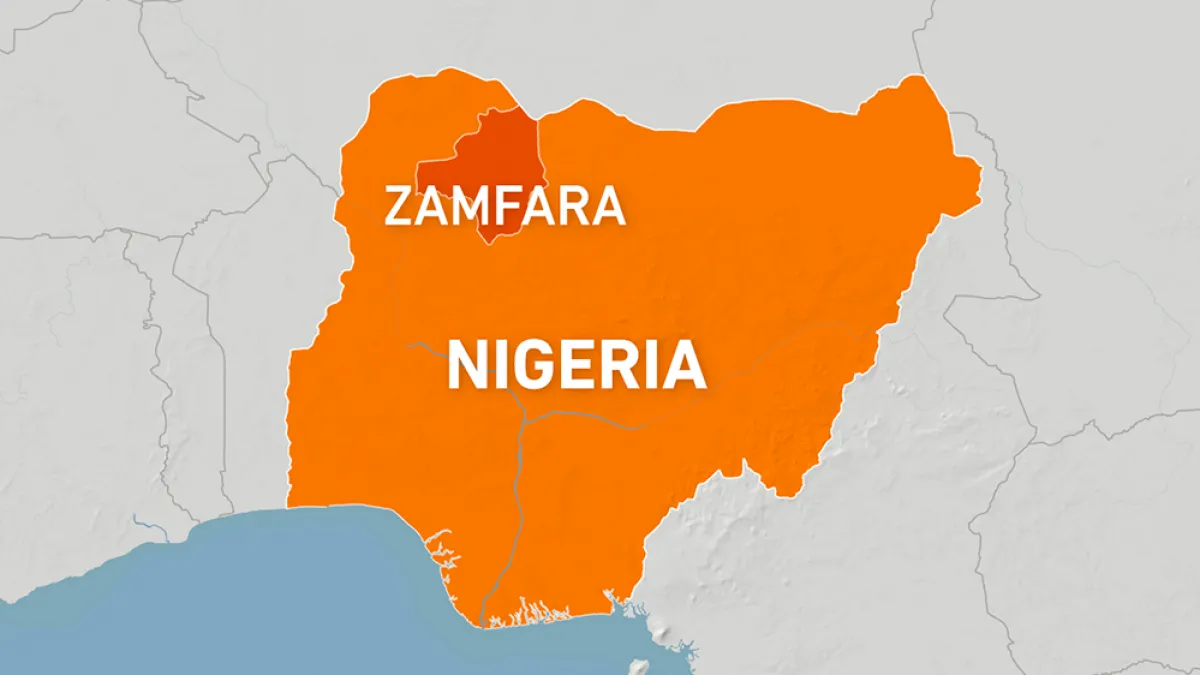
The United Nations has expressed its readiness to assist in attracting investors to Zamfara State, especially in the mining and agricultural sectors.
The Deputy Secretary General of the global body, Mrs Amina Mohammed, during a visit on Thursday, said the northern Nigerian state is now ready for business and that the UN was willing to be a genuine partner to the state.
“Investors want an enabling environment. Peace is what you need today for people to come. The Zamfara narrative focuses on conflict related to solid minerals, and this needs to change,” she was quoted as saying in a statement issued on Friday by the spokesperson for the Zamfara Governor, Mr Sulaiman Bala Idris.
The former Nigerian Minister further said, “What you show us today is first and foremost your passion for what you want us to do, and that is what investors want. They want to know what you want.
“I am happy today to be here in Zamfara, because I really want to show the world that we should pay attention to what is happening at the local level. Because this is where people are weakest, where governance is weakest, and where there are the fewest resources.
“When we visit, we give visibility to the effort that has been made and to the impact of what is happening elsewhere in the world on people who have nothing to do with what caused it in the first place.
“Zamfara State is accessible today. And it would be even more accessible because the road we travelled on is still under construction. When it is finished, it will revive the businesses and markets around it, and hopefully, by then, we will witness more peace.
“I see the mining, I see the potentials, I see the market and the demand, but I also see the leadership here who is willing to look at the institution, framework and partner to get the job done.
“There is a lot of hope and potential here. Everyone must play their role; this is not something the governor will do alone. The United Nations is willing to be a genuine partner to Zamfara State.”
On his part, Governor Dauda Lawal said Zamfara is at a turning point, with a population of 5.3 million, and the state’s economy is agriculture-driven, with 82 per cent of the population depending on agriculture.
“Zamfara’s Six-Point Rescue Agenda is a deliberate strategy to stabilise, rebuild, and transition the state toward inclusive and sustainable development,” he told his guest.

By Adedapo Adesanya
The federal government has inaugurated the Governing Board of the Nigeria Commodity Exchange (NCX) to strengthen commodity trading and accelerate Nigeria’s transition to a non-oil, export-driven economy.
The Minister of Industry, Trade and Investment, Mrs Jumoke Oduwole, who inaugurated the board on Thursday in Abuja, said it was part of efforts to modernise commodity markets and boost export competitiveness.
According to her, the initiative seeks to formalise commodity trade and unlock value in agriculture and solid minerals, supporting the government’s agenda on diversification, job creation and food security.
The minister described the development as a major step toward repositioning Nigeria in regional and global markets.
She noted that Nigeria’s vast resources and access to over 1.4 billion consumers under the African Continental Free Trade Area (AfCFTA) present significant export opportunities.
She emphasised the need to address poor traceability, informal trading systems and infrastructure gaps affecting commodity markets.
Mrs Oduwole said the reactivation of the exchange would strengthen transparency, standardise trading and improve price discovery.
She added that the NCX would attract investment into market infrastructure and help Nigerian commodities meet international export standards.
On his part, the Permanent Secretary of the ministry, Mr Chris Isokpunwu, described the inauguration as a landmark step in strengthening Nigeria’s commodity export ecosystem.
Mr Isokpunwu, represented by the Director of the Commodity Exchange Department of the ministry, Mr Obasi Edozie, urged the newly inaugurated board to discharge their duties with diligence and professionalism.
He assured the board of the ministry’s support toward achieving measurable economic outcomes.
Mr Abubakar, Chairman of the governing board, pledged the board’s commitment to repositioning the exchange as a globally competitive trading platform.
He listed priorities to include strengthening governance, upgrading warehouses and digital trading systems and building capacity for farmers and market operators.
He also emphasised the need to deepen partnerships with financial institutions and international commodity markets.
“The inauguration underscores the Federal Government’s commitment to repositioning the NCX to drive export growth, rural prosperity and sustainable economic development.”


**Revokes Trading Licences of LMB, Platinum Stockbrokers
By Aduragbemi Omiyale
A stockbroking company, Premium Capital and Stockbrokers Limited, has been fined N5 million for engaging in “unauthorised sale of its clients’ securities.”
A circular issued by the Nigerian Exchange (NGX) Regulation Limited disclosed that the trading licence of the organisation has also been revoked.
In the notice signed by the Head of Market Regulation for NGX RegCo, Chinedu Akamaka, Premium Capital violated Rule 11.9 of the Rulebook of The Exchange, 2015 (Dealing Members’ Rules), which focuses on the Prohibition of Unauthorised Sale of Securities.
Business Post reports that Premium Capital was not the only stockbroker that had its trading licence withdrawn, as it also affected others.
The licence of LMB Stockbrokers Limited was revoked by NGX RegCo for prolonged inactivity, which falls contrary to Rule 6.4: Revocation of Inactive Dealing Members’ Licences, Rulebook of The Exchange, 2015 (Dealing Members’ Rules), as amended.
The same also affected Platinum Stockbrokers Limited, which has not witnessed activity on the floor of the NGX Limited for a while.
Similarly, the authorised dealing clerkship of Mr Bernard Oluwole Ilori, was taken back with immediate effect in alignment with an earlier determination by the Securities and Exchange Commission’s (SEC) Administrative Proceedings Committee (APC), which arose from his involvement in regulatory infractions connected to Mutual Alliance Investment and Securities Limited and resulted in his 10-year ban from the Nigerian capital market since March 25, 2021.
Investors have been “strongly advised not to engage in any activity with the firms” whose trading licenses have been revoked.
-
 Feature/OPED6 years ago
Davos was Different this year
-
Travel/Tourism10 years ago
Lagos Seals Western Lodge Hotel In Ikorodu
-

 Showbiz3 years ago
Estranged Lover Releases Videos of Empress Njamah Bathing
-
 Banking8 years ago
Sort Codes of GTBank Branches in Nigeria
-

 Economy3 years ago
Subsidy Removal: CNG at N130 Per Litre Cheaper Than Petrol—IPMAN
-

 Banking3 years ago
Sort Codes of UBA Branches in Nigeria
-

 Banking3 years ago
First Bank Announces Planned Downtime
-

 Sports3 years ago
Highest Paid Nigerian Footballer – How Much Do Nigerian Footballers Earn