Connect with us

Economy

Financial Industry Players Must Collaborate to Satisfy Customers Needs

Published

on

financial industry players

By Aduragbemi Omiyale

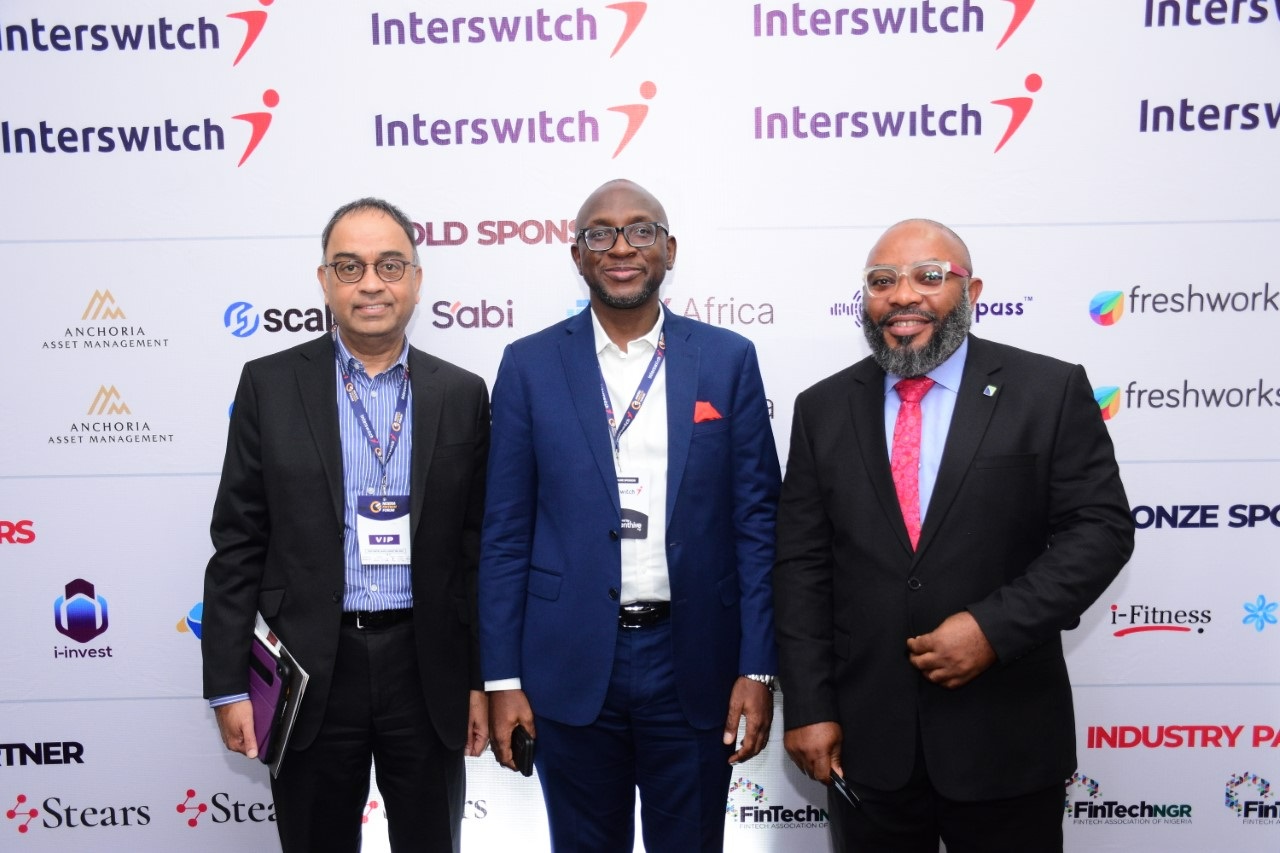
The Managing Director of Interswitch Purepay, Mr Akeem Lawal, has called on critical players in the Nigerian financial service industry to put heads together to provide innovative solutions and unique offerings to customers.

According to him, customers deserve the best from financial industry players like banks, telecommunications companies and financial technology (fintech) firms in order to meet the 95 per cent financial inclusion target by 2024.

Mr Lawal, who delivered a presentation at the recently-concluded Nigerian Fintech Forum at the Civic Centre, Lagos, stated that the partnership will accelerate growth and deepen financial inclusion in the country.

He said despite the growth of the financial sector, customers are yearning for more innovative and seamless payment solutions, which must be designed to meet their needs strengthen the financial industry.

The tech expert said at the event themed Building Partnership for Growth, Exploring the Intersection of Banks, Telcos and Fintech Companies that the Nigeria financial industry has evolved tremendously over the years with customers transitioning from banking halls transactions to adopting digital payment services.

“As headline platinum sponsor, we are delighted to be sponsoring the Nigeria Fintech Forum because we believe that a platform like this will provide the opportunity for critical stakeholders in the financial industry to engage and proffer solutions that will consequently drive the growth of the financial Industry.

“At Interswitch, we will continue to design tailor-made solutions that speak to the need of every customer. Therefore, it is important for players in the financial industry, including the banks, telcos and fintechs to leverage collaboration to provide innovative and seamless solutions to customers. This is the only way we can meet the 95% financial inclusion target by 2024,” Mr Lawal stated.

Speaking during the panel session tagged Regulating Nigeria’s Fintech Industry, Building Investors Confidence Without Stifling Growth, another speaker, Mr Tyoyila Aga, who is Group Head, Financial Services Business at Interswitch, said it was important that players in the industry collaborate with regulators, keep abreast of new regulations and help strengthen compliance levels to grow the financial industry.

“At Interswitch, our approach to regulators is to work in harmonious ways with them and that is what we have been doing for two decades. This has helped us to understand regulations better and we urge other players to do same to grow the industry,” Mr Aga said.


Aduragbemi Omiyale is a journalist with Business Post Nigeria, who has passion for news writing. In her leisure time, she loves to read.

Economy

Nigeria’s Public Debt Nears N160trn

Published

on

total debt stock

By Adedapo Adesanya

Nigeria’s total public debt rose from N153.29 trillion at the end of September 2025 to N159.28 trillion in December 2025, according to the latest data released by the Debt Management Office (DMO) on Tuesday.

The increase indicates a quarter-on-quarter increase of N5.98 trillion or 3.9 per cent.

The debt office noted that the December 2025 figures are provisional and were converted using the Central Bank of Nigeria’s official exchange rate of N1,435.25/$, while the September 2025 figures were converted using N1,474.85/$.

On a year-on-year basis, the debt profile marked an increase of N14.61 trillion or 10.1 per cent, from N144.67 trillion in December 2024 to N159.28 trillion in December 2025, representing a rise from $94.23 billion to $110.97 billion, an increase of $16.75 billion, in Dollar terms.

Domestic debt remained the largest, rising from N81.82 trillion in September 2025 to N84.85 trillion in December 2025.

This represents a quarter-on-quarter increase of N3.03 trillion or 3.7 per cent compared to December 2024, when domestic debt stood at N74.38 trillion – the figure increased by N10.47 trillion or 14.1 per cent year-on-year.

In Dollar terms, domestic debt rose from $55.47 billion in September 2025 to $59.12 billion in December 2025, and from $48.44 billion in December 2024. This highlights a sustained reliance on the domestic market for financing.

The federal government accounted for the bulk of domestic debt at N80.49 trillion, representing 50.53 per cent of total public debt, while states and the Federal Capital Territory (FCT) accounted for N4.36 trillion.

Nigeria’s external debt stood at N74.43 trillion as of December 2025, representing 46.73 per cent of total public debt.

This reflects a quarter-on-quarter increase of N2.95 trillion from N71.48 trillion in September 2025, and a year-on-year increase of N4.14 trillion from N70.29 trillion recorded in December 2024.

In Dollar terms, external debt rose from $48.46 billion in September 2025 to $51.86 billion in December 2025, and from $45.78 billion in December 2024.

The federal government continued to dominate external borrowing, accounting for N66.27 trillion of the total external debt, while states and the FCT accounted for N8.16 trillion.

However, the structure of Nigeria’s debt portfolio remained broadly stable despite the increase in overall debt.

While domestic debt accounted for 53.27 per cent of total debt in December 2025, compared to 53.37 per cent in September 2025 and 51.41 per cent in December 2024, external debt stood at 46.73 per cent in December 2025, compared to 46.63 per cent in September 2025 and 48.59 per cent a year earlier.

Continue Reading

Economy

Daily Petrol Consumption in Nigeria Slips to 47.3 million Litres Amid Price Hike

Published

on

daily petrol consumption

By Dipo Olowookere

The volume of premium motor spirit (PMS), commonly known as petrol, consumed daily in Nigeria stood at 47.3 million litres in March 2026 compared with the 56.9 million litres recorded in February 2026.

This information was revealed by the Nigerian Midstream and Downstream Petroleum Regulatory Authority (NMDPRA) in its latest factsheet.

The decline in daily petrol consumption in Nigeria coincided with a hike in the price of the product, triggered by a rise in global crude oil prices as a result of the Middle East crisis.

The United States and Israel launched airstrikes in Iran in late February, with crude oil rising above $100 per barrel and even above $110 per barrel at one point.

The price is currently below $100 per barrel on the global market after the President of the United States, Mr Donald Trump, signalled his intention to negotiate with Iran amid the blockage of the Strait of Hormuz.

Data by NMDPRA also showed that diesel consumption eased to 14.5 million litres per day from the previous month’s 20.3 million litres per day, while aviation fuel stood at 2.1 million litres per day versus 2.9 million litres per day in February 2026.

It was also disclosed that PMS daily supply for the month under review increased to 40.1 million litres per day from the preceding month’s 39.5 million litres per day.

From this, domestic supply came down by 6.30 per cent to 34.2 million litres per day from 36.5 million litres per day, while imported petrol stood at 5.9 million litres per day versus 3.0 million litres per day a month earlier.

Business Post observed that Dangote Refinery supplied about 34.2 million litres per day of PMS into the Nigerian market from the 48.2 million litres per day it produced. The private refiner produced 16.5 million litres of diesel per day in March 2026, supplying 2.2 million litres per day into the domestic market.

In the period, the Warri and Kaduna refineries were totally shut down, while the Port Harcourt refinery, according to the report, though it was shut down, witnessed the evacuation of about 0.048 million litres of diesel per day while it was operational.

Continue Reading

Economy

PETROAN Reiterates Calls for Fuel Import Licences to Stabilise Prices

Published

on

PETROAN

By Adedapo Adesanya

The Petroleum Products Retail Outlets Owners Association of Nigeria (PETROAN) has thrown its weight behind the World Bank call for the reinstatement of petrol import licences, warning that limited competition in Nigeria’s downstream sector is driving price instability and inflation risks.

Reacting to the World Bank’s position, PETROAN President, Mr Billy Gillis-Harry, said the recommendation reinforces the association’s long-standing advocacy for a fully liberalised petroleum market.

“Competition remains the most effective tool for stabilising prices and ensuring energy security,” Mr Gillis-Harry stated.

According to him, the restriction of supply sources has contributed to rising petrol prices, with Premium Motor Spirit (PMS) selling above import parity levels.

PETROAN noted that the World Bank had warned that continued supply rigidity, combined with rising global oil prices, could worsen inflationary pressures across the Nigerian economy.

Aligning with this position, Mr Gillis-Harry stressed that reintroducing petrol import licences would diversify supply, curb monopolistic tendencies, and protect consumers from exploitative pricing.

“A competitive and liberalised market framework is essential for ensuring price moderation, product availability, and operational efficiency,” he said.

The association also argued that the current pricing challenges could have been mitigated if Nigeria’s government-owned refineries were fully functional or properly privatised.

It called for a dual strategy of sustained fuel importation and full privatisation or restructuring of refineries in Port Harcourt, Warri, and Kaduna to drive efficiency and eliminate bottlenecks.

Drawing parallels with the telecoms sector, PETROAN cited the impact of private sector participation by firms such as MTN Nigeria and Airtel Nigeria, noting that liberalisation led to improved services, wider access, and reduced costs.

The group maintained that healthy competition would complement, not undermine, local refining efforts, including output from the Dangote Petroleum Refinery.

“Healthy competition is not a threat to local refining but a necessary mechanism to stabilise the market while domestic capacity continues to grow,” Mr Gillis-Harry said.

PETROAN urged the Federal Government, the Nigerian Midstream and Downstream Petroleum Regulatory Authority, and NNPC Limited to urgently implement policies that encourage open market participation and ensure fair pricing across the downstream value chain.

The association reaffirmed its commitment to working with stakeholders to build a “resilient, transparent, and competitive petroleum distribution system” to support economic stability.

Continue Reading

Trending