
Economy
FMDQ to Accept Nigeria’s $1b Eurobonds Inaugural Listing


By Modupe Gbadeyanka
The inaugural listing of Nigeria’s $1 billion Eurobonds under its $1.00bn Global Medium-Term Note Programme is set to be admitted by the FMDQ OTC Securities Exchange.
This is in consolidation of the strategic and value-adding initiatives spearheaded by FMDQ in developing the Nigerian financial markets.
Following a series of engagements by FMDQ on the importance of promoting and supporting economic development in the country through the opening of Eurobonds to the domestic DCM via the OTC Exchange’s platform, this welcome and laudable development, which market participants believe will set the pace for global competitiveness and invariably deepen the Nigerian financial markets, in no small measure, lays credence to the underlying objectives for the birth and operational mandate of FMDQ.
The issuance of the $1 billion FGN Eurobond is aimed at fostering economic development and will serve to rejuvenate the vibrancy of the nation’s FX market.
Remarkably so, this is the first-time the sovereign’s Eurobond will be considered for listing on a domestic exchange, following the nation’s first and second outings to the international capital markets in 2011 and 2013 respectively.
This most commendable consideration follows the decision of the Debt Management Office (DMO), Nigeria, (the authority under which the FGN issues Bonds and Treasury Bills) and the Ministry of Finance to list the Eurobond on an efficient domestic securities exchange such as FMDQ to deepen and support the development of the local DCM.
In streamlining its processes and ensuring an efficient time to market for debt securities, FMDQ, being Nigeria’s foremost debt capital-focused OTC securities exchange has continued to provide a highly resourceful platform for the registration, listing of Bonds (Sovereign, Agency, Sub-national, Corporate, Supranational, as well as Eurobonds and Sukuk), Funds and the quotation of Commercial Papers, Treasury Bills and other short-term securities as may arise from time to time, to meet the needs of the market participants. Whilst currently providing improved transparency, effective price formation and enhanced secondary market liquidity through its Dealing Members, who are responsible for circa 99.00% of the secondary market trading activity in FGN Bonds and Nigerian Treasury Bills on FMDQ, the OTC Exchange, in admitting the $1.00bn Eurobond for listing and trading, will continue to lend itself as a worthy and operationally excellent platform, serving as the point of integration between the domestic and international markets.
The OTC Exchange, since its debut into the Nigerian financial market landscape, already granted permitted trading status for $1.50bn of the previously issued FGN Eurobonds and $3.15bn of Eurobonds issued by Nigerian companies.
With its audacious vision to be No. 1 in the fixed income and currencies markets in Africa by 2019, the listing and eventual trading of the FGN Eurobonds on FMDQ, the first of its kind in the nation, will see the securities gain access to the full complement of the FMDQ Listings and Quotations service, which includes efficient clearing and settlement structures, unprecedented transparency, and improved network effects, among others.
FMDQ, in its capacity as a market organiser and information repository provides credible market infrastructures to aggregate and transmit all trade reports from its Dealing Members acting as liquidity providers to the Eurobonds, ensuring continuous information symmetry.
In appreciation of the important role which a transparent and regulated market plays in boosting investor confidence, the OTC Exchange will also publish relevant market data and information as necessary.
FMDQ, through effective collaboration, continues to garner the support of its varied stakeholders and has remained committed to transforming and positioning the Nigerian financial markets towards becoming a regional financial centre.
From the introduction of short-term and private companies’ bonds, the standardisation of the repurchase agreements with collateral management trading, to financial markets education, and most recently, the strategic partnership with S&P Dow Jones Indices for the co-branding of Nigerian fixed income indices, FMDQ, in 2017, will, despite the economic headwinds, relentlessly champion initiatives, aimed at empowering the global competitiveness of the Nigerian debt capital, currencies and OTC derivatives markets, towards promoting sustainable development for corporate and commercial entities, and ultimately, the nation’s economy.








By Adedapo Adesanya
A 1.61 per cent fall was recorded by the NASD Over-the-Counter (OTC) Securities Exchange on Tuesday, April 7, on the back of selling pressure.
The profit-taking chopped off N38.87 from the market capitalisation of the trading platform, leaving it at N2.378 trillion compared with the N2.417 trillion it ended last Thursday, when the bourse last witnessed trading activity.
Similarly, the NASD Unlisted Security Index (NSI) dropped 22.57 points to close the session at 3,975.34 points, in contrast to the preceding session’s 4,040.30 points.
The market breadth index was at equilibrium yesterday after recording three price gainers and three price losers, led by Okitipupa Plc, which depleted by N15.00 to N260.00 per share from N275.00 per share. Central Securities Clearing System (CSCS) Plc dipped by N6.31 to N71.69 per unit from N78.00 per unit, and FrieslandCampina Wamco Nigeria Plc went down by N1.00 to N92.00 per share from N93.00 per share.
Conversely, First Trust Mortgage Bank Plc appreciated by 20 Kobo to N2.28 per unit from N2.08 per unit, UBN Property Plc also improved by 20 Kobo to N2.18 per share from N1.98 per share, and Impresit Bakalori Plc gained 19 Kobo to sell at N2.20 per unit versus N2.01 per unit.
During the session, the volume of securities dipped by 99.7 per cent to 797,264 units from 260.2 million units, the value of securities went down by 83.1 per cent to N26.1 million from N154.2 million, and the number of deals decreased by 28.3 per cent to 33 deals from 46 deals.
Great Nigeria Insurance (GNI) Plc remained the most traded stock by value (year-to-date) with 3.4 billion units worth N8.4 billion, trailed by CSCS Plc with 57.1 million units sold for N3.9 billion, and Okitipupa Plc with 27.5 million units valued at N1.8 billion.
GNI Plc was also the most traded stock by volume (year-to-date) with 3.4 billion units traded for N8.4 billion, followed by Resourcery Plc with 1.1 billion units exchanged for N415.7 million, and Infrastructure Guarantee Credit Plc with 400 million units transacted for N1.2 billion.
By Adedapo Adesanya
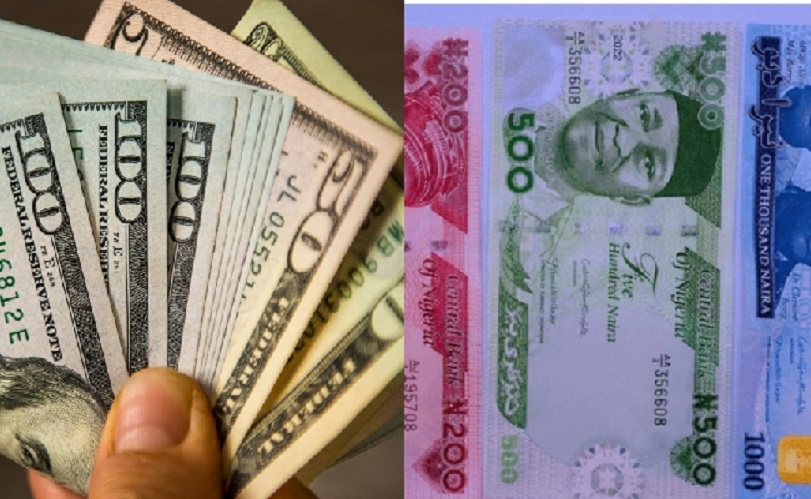
The Naira suffered a decline of N5.87 or 0.43 per cent against the US Dollar in the Nigerian Autonomous Foreign Exchange Market (NAFEX) on Tuesday, April 7, to trade at N1,386.66/$1 compared with the previous value of N1,380.79/$1.
It was the first trading day in the local currency market after it closed last Friday and Monday for the Easter holiday.
In the same market window, the Nigerian Naira also depreciated against the Pound Sterling during the session by N13.71 to sell for N1,838.57/£1 versus N1,824.86/£1, and lost N13.69 on the Euro to quote at N1,605.61/€1 versus N1,591.92/€1.
In the black market, the Nigerian currency maintained stability against the Dollar yesterday to remain unchanged at N1,4010/$1.
Despite the recent movement, analysts remain optimistic about the outlook of the currency in 2026, citing ongoing reforms by the Central Bank of Nigeria (CBN).
The Centre for the Promotion of Private Enterprise (CPPE) said Naira stability in the first quarter of the year boosted business confidence, noting that the currency remains relatively stable during the period, trading within the N1,340 to N1,430 per Dollar band.
It attributed the stability to improved foreign exchange liquidity, stronger oil earnings, and rising external reserves, which had climbed above 50 billion dollars.
In the cryptocurrency market, prices rose after US President Donald Trump announced a two-week cease-fire with Iran, abruptly reversing days of bearish positioning.
The spike triggered roughly $595 million in crypto liquidations, with short positions making up about $427 million, marking the most aggressive short squeeze since early March. Short positions occur when investors profit from a decline in the price of an asset, so when prices rise, losses occur for the shorts.
Cardano (ADA) rose by 8.3 per cent to $0.2629, Ethereum (ETH) appreciated by 7.3 per cent to $2,249.69, Solana (SOL) added 6.6 per cent to sell for $84.67, Ripple (XRP) jumped 5.8 per cent to $1.38, Dogecoin (DOGE) expanded by 5.1 per cent to $0.0949, Bitcoin (BTC) grew by 5.0 per cent to $71,897.41, Binance Coin (BNB) increased by 3.3 per cent to $616.35, and TRON (TRX) gained 0.1 per cent to trade at $0.3160, while the US Dollar Tether (USDT) and the US Dollar Coin (USDC) traded flat at $1.00 apiece.

By Dipo Olowookere
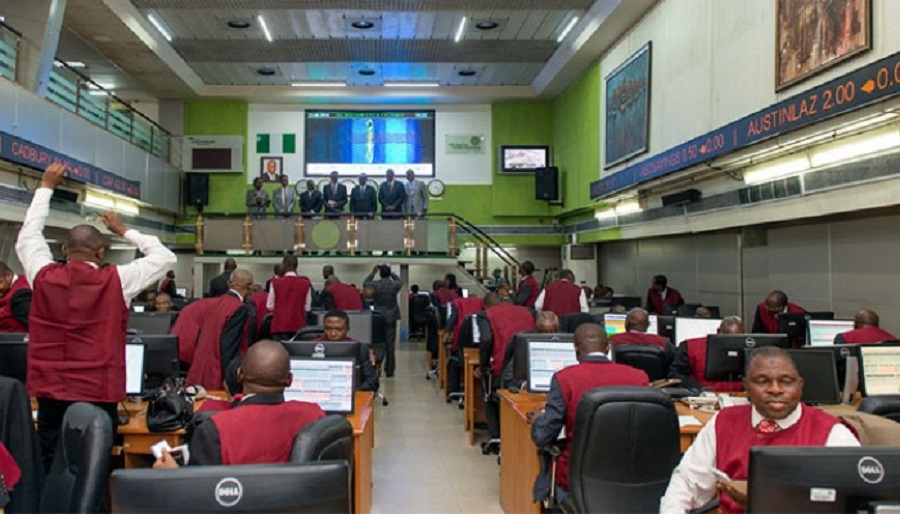
The first trading session on the floor of the Nigerian Exchange (NGX) Limited after the two-day break for Easter ended on a positive note, with a 0.16 per cent rise on Tuesday, April 7, 2026.
The local stock exchange last opened its doors to investors last Thursday, and at the resumption of trading activities yesterday, market participants showed enthusiasm, mopping up shares in the banking ecosystem, and rescuing the bourse from the bears.
This returned Customs Street to the green territory, with the All-Share Index (ASI) growing by 324.21 points to 202,023.10 points from 201,698.89 points, and the market capitalisation up by N209 billion to N130.015 trillion from N129.806 trillion.
The expansion experienced during the session was inspired by three sectors, with the banking index up by 1.46 per cent, the energy space up by 0.12 per cent, and the consumer goods counter up by 0.10 per cent. But the insurance sector lost 1.37 per cent, and the industrial goods sector depreciated by 0.31 per cent.
Business Post reports that investor sentiment was bearish on Tuesday after a negative market breadth index caused by 25 price gainers and 36 price losers.
Ellah Lakes slumped by 10.00 per cent to N10.80, DAAR Communications gave up 9.95 per cent to trade at N1.72, Chams decreased by 9.87 per cent to N3.38, John Holt lost 9.71 per cent to finish at N13.95, and Sunu Assurances slipped by 9.68 per cent to N4.20.
On the flip side, Trans Nationwide Express gained 9.86 per cent to quote at N3.12, Omatek appreciated by 9.76 per cent to N2.25, Cadbury Nigeria improved by 9.53 per cent to N75.25, First Holdco rose by 9.10 per cent to N54.55, and Fortis Global Insurance chalked up 6.50 per cent to close at N1.31.
Trading data revealed that activity level improved during the session, with the trading volume up by 114.29 per cent to 1.2 billion shares from 560.0 million shares, the trading value surged by 108.81 per cent to N40.3 billion from N19.3 billion, and the number of deals soared by 57.03 per cent to 78,006 deals from 49,676 deals.
Wema Bank transacted 282.6 million equities valued at N7.3 billion, Access Holdings exchanged 125.2 million stocks worth N3.3 billion, VFD Group traded 106.8 million shares for N1.1 billion, First Holdco sold 63.0 million equities worth N3.2 billion, and GTCO exchanged 56.6 million shares valued at N7.1 billion.
-
 Feature/OPED6 years ago
Davos was Different this year
-
Travel/Tourism10 years ago
Lagos Seals Western Lodge Hotel In Ikorodu
-

 Showbiz3 years ago
Estranged Lover Releases Videos of Empress Njamah Bathing
-
 Banking8 years ago
Sort Codes of GTBank Branches in Nigeria
-

 Economy3 years ago
Subsidy Removal: CNG at N130 Per Litre Cheaper Than Petrol—IPMAN
-

 Banking3 years ago
Sort Codes of UBA Branches in Nigeria
-

 Banking3 years ago
First Bank Announces Planned Downtime
-

 Sports3 years ago
Highest Paid Nigerian Footballer – How Much Do Nigerian Footballers Earn