Connect with us

Economy

Foreign Investors Want Consistent FX Policies, Lower Transaction Costs, Others in Nigeria

Published

on

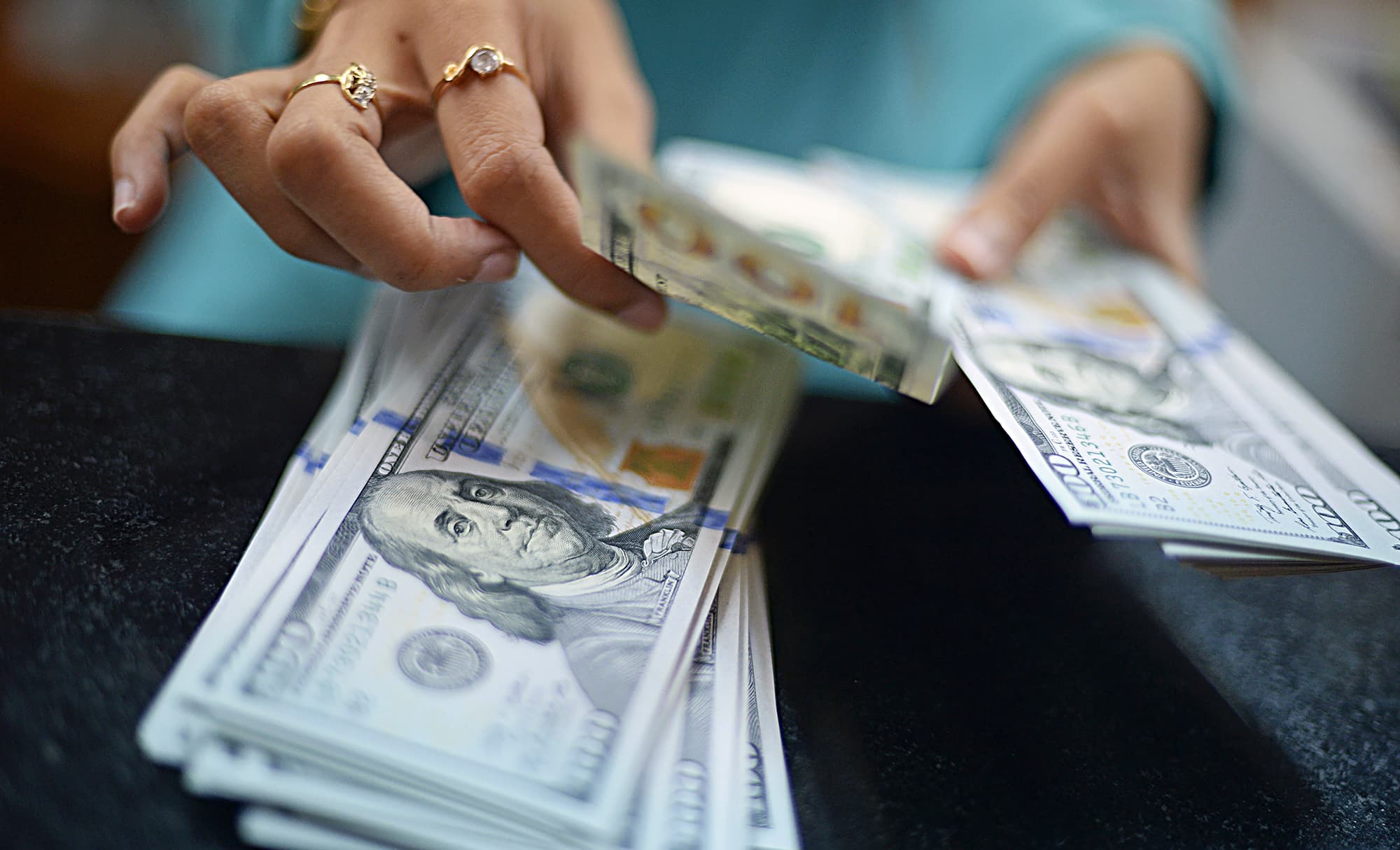
FX Speculation

By Dipo Olowookere

Foreign and domestic investors have called on the Nigerian government to address some issues to make investing in the country attractive to them.

They made this call at a strategic investment forum hosted at the Nasdaq MarketSite in New York, USA, on Thursday, April 17, 2025. The event was organized by the Central Bank of Nigeria (CBN) in collaboration with Nigerian Exchange (NGX) Group Plc, JPMorgan, and the African Private Capital Association (AVCA).

The forum was put together to woo global capital and enhance investor’s confidence because it had in attendance leaders from the Nigerian diaspora, global investment institutions, and corporate executives.

While the investors welcomed Nigeria’s reform agenda, they emphasised that sustained confidence would require consistent foreign exchange (FX) policies, lower transaction costs, reduced regulatory friction, clearer direction on non-oil revenue reforms, an improved ease of doing business, and continued transparency in monetary and fiscal communication.

The Governor of the CBN, Mr Yemi Cardoso, in a fireside chat with Nobel Prize-winning economist, Mr James Robinson, outlined Nigeria’s monetary policy direction, growth prospects, and efforts to deepen its financial markets.

He reaffirmed the CBN’s commitment to disciplined policy management, market-friendly reforms, and enhanced transparency to foster a stable, investor-friendly environment.

“We inherited a crisis of confidence, but we chose a different path. We’re not turning back,” Mr Cardoso declared.

He also stressed the importance of strong collaboration between regulators like the CBN, market operators such as NGX Group and Nigerians in diaspora, describing it as critical to building a resilient financial system and mobilizing long-term investments.

On his part, the chief executive of NGX Group, Mr Temi Popoola, who moderated a panel on how Nigeria’s reforms are repositioning the country as an increasingly attractive destination for global capital, said, “Today’s dialogue marks a pivotal step in reshaping global perceptions of Nigeria’s investment story.”

“The candid engagement between policymakers, market operators, and investors reflects the real progress Nigeria is making. NGX Group remains committed to supporting reforms that strengthen market structures, drive innovation, and accelerate economic growth,” he added.


Click to comment

Leave a Reply

Your email address will not be published. Required fields are marked *

Economy

Nigeria’s External Reserves Hit $52.5bn, Cover Nine Months of Imports

Published

on

Nigeria's external reserves

By Adedapo Adesanya

The Governor of the Central Bank of Nigeria (CBN), Mr Yemi Cardoso, disclosed that Nigeria’s external reserves had risen to $52.5 billion, enough to finance about nine months of imports.

He disclosed this on Tuesday at the end of the 306th meeting of the Monetary Policy Committee (MPC) held in Abuja, where the Monetary Policy Committee (MPC) retained the benchmark interest rate at 26.50 per cent as well as the standing facilities corridor at +50/-450 basis points around the MPR.

Similarly, the Cash Reserve Requirement (CRR) was maintained at 45 per cent for Deposit Money Banks, 16 per cent for Merchant Banks, and 75 per cent for non-Treasury Single Account (TSA) public sector deposits.

Speaking on FX developments, the central banker said at the $52 billion level, the country’s external reserves were significantly above the internationally recommended threshold of three months of import cover.

On the Naira exchange rate, Mr Cardoso said the foreign exchange market had deepened and was now operating on a transparent willing-buyer, willing-seller basis.

He said the apex bank remained committed to maintaining a liquid and functional foreign exchange market, adding that daily market turnover sometimes exceeded $1 billion.

According to him, the long-term stability of the naira would depend on key economic fundamentals, including increased oil exports, foreign direct investment, and improved domestic productivity to reduce dependence on imports.

He also added that the MPC welcomed the federal government’s renewed commitment to stronger policy coordination, particularly collaboration between fiscal and monetary authorities, which he said had helped reduce the impact of the Middle East crisis on the Nigerian economy.

Mr Cardoso said members of the committee also commended efforts to improve crude oil production and urged relevant agencies to intensify reforms in other sectors, including solid minerals, to boost government revenue.

On the regulatory forbearance granted to banks during the COVID-19 period, he reiterated that this had been discontinued because it had served its purpose.

According to him, the policy had “outlived its time” and was no longer necessary in assessing the health of the banking sector.

“Forbearance, we felt, had outlived its time. Many of you will recall this is something that came as a result of COVID. And now we are in 2026; we did not see the reason why that should continue to form part of the analysis of the banking system,” he said.

Mr Cardoso explained that banks had begun recalibrating their portfolios following the end of the policy, leading to a temporary reduction in outstanding risk assets.

He, however, assured that the development was part of a transition towards a stronger and more sustainable credit environment.

“It reflects a transition to a more sustainable and better quality credit environment, which is what we all want. We don’t want unanticipated shocks that come in a boom-and-bust fashion,” he said.

Continue Reading

Economy

FrieslandCampina Leads to NASD OTC Exchange to 1.17% Growth

Published

on

FrieslandCampina

By Adedapo Adesanya

The NASD Over-the-Counter (OTC) Securities Exchange extended its recent positive run by 1.17 per cent on Tuesday, July 21, triggered by appreciation seen in four bellwethers.

Leading the pack was FrieslandCampina Wamco Nigeria Plc, which added N12.00 to its value to close at N153.15 per share compared with the previous day’s N141.15 per share. NASD Plc appreciated by N1.90 to N36.00 per unit from N34.10 per unit, Food Concepts Plc improved by 23 Kobo to N2.48 per share from N2.25 per share, and Afriland Properties Plc grew by a marginal 1 Kobo to N15.01 per unit from N15.00 per unit.

As a result, the market capitalisation of the bourse increased by N30.40 billion to N2.637 trillion from Monday’s N2.606 trillion, and the NASD Security Index (NSI) gained 50.70 points to finish at 4,393.97 points, in contrast to the 4,343.27 points it ended a day earlier.

The unlisted securities exchange recorded a price loser yesterday, and it was Geo-Fluids Plc, which shed 1 Kobo to settle at N2.30 per share versus N2.31 per share.

During the trading day, the volume of securities traded by market participants on Tuesday dropped 99.4 per cent to 322,147 units from the previous day’s 52.6 million units, the value of securities dipped by 89.8 per cent to N19.4 million from the preceding session’s N191.2 million, and the number of deals contracted by 3.6 per cent to 27 deals from 28 deals.

Great Nigeria Insurance (GNI) Plc ended the day as the most traded stock by value on a year-to-date basis, with 3.4 billion units traded for N8.4 billion, followed by Infrastructure Credit Guarantee (Infracredit) Plc with 2.3 billion units transacted for N6.5 billion, and Central Securities Clearing System (CSCS) Plc with 75.4 million units exchanged for N5.3 billion.

GNI Plc also closed the day as the most traded stock by volume on a year-to-date basis, with 3.4 billion units worth N8.4 billion, followed by Infracredit Plc with 2.3 billion units valued at N6.5 billion, and Resourcery Plc with 1.1 billion units sold for N415.7 million.

Continue Reading

Economy

Naira Strengthens to N1,375/$ as Dollar Slides in Official Market

Published

on

Official FX Market

By Adedapo Adesanya

The Naira gained N4.80 or 0.35 per cent against the US Dollar in the Nigerian Autonomous Foreign Exchange Market (NAFEX) on Tuesday, July 21, to trade at N1,375.31/$1, in contrast to the previous day’s N1,380.11/$1.

Also, the local currency appreciated against the Pound Sterling in the official market yesterday by N16.22 to quote at N1,857.35/£1 versus Monday’s closing price of N1,854.42/£1, and improved against the Euro by N8.17 to settle at N1,567.78/€1 compared with the previous day’s rate of N1,575.95/€1.

In the same vein, the Nigerian currency strengthened against the US Dollar by N1 at the GTBank FX counter during the session to exchange at N1,388/$1 compared with the preceding day’s rate of N1,389/$1, and maintained stability in the parallel market at N1,405/$1.

Data from the Central Bank of Nigeria (CBN) showed that interbank FX turnover increased sharply by more than 21 per cent to $322.644 million from $266.227 million the previous day.

Interbank FX deal count also climbed to 110, from 66, as banks bid for international payments on behalf of their corporate clients increased.

Latest data from the CBN revealed external reserves topped $52 billion due to sustained FX inflows across multiple sources, including hydrocarbon sales receipts. Gross external reserves surged to $52.024 billion from $51.942 billion.

Also, the central bank retained the Monetary Policy Rate (MPR), the country’s benchmark interest rate, at 26.5 per cent as it seeks to sustain the gradual decline in inflation while shielding the economy from growing global uncertainties.

In the crypto market, benchmarked tokens fell after traders took profit, following rallies driven by a semiconductor boon which has driven crypto all month while the Japanese yen sank to its weakest level in four decades.

Bitcoin (BTC) came in flat at $65,885.77, but Cardano (ADA) slumped by 3.1 per cent to $0.1706, Solana (SOL) dropped 1.8 per cent to sell at $77.12, Binance Coin (BNB) lost 1.5 per cent to trade at $567.38, Dogecoin (DOGE) declined by 1.1 per cent to $0.0723, Ethereum (ETH) depreciated by 0.9 per cent to $1,916.21, and Ripple (XRP) dipped by 0.3 per cent to $1.13, while TRON (TRX) gained 0.7 per cent to close at $0.3286, with the US Dollar Tether (USDT) and the US Dollar Coin (USDC) flat at $1.00 each.

Continue Reading